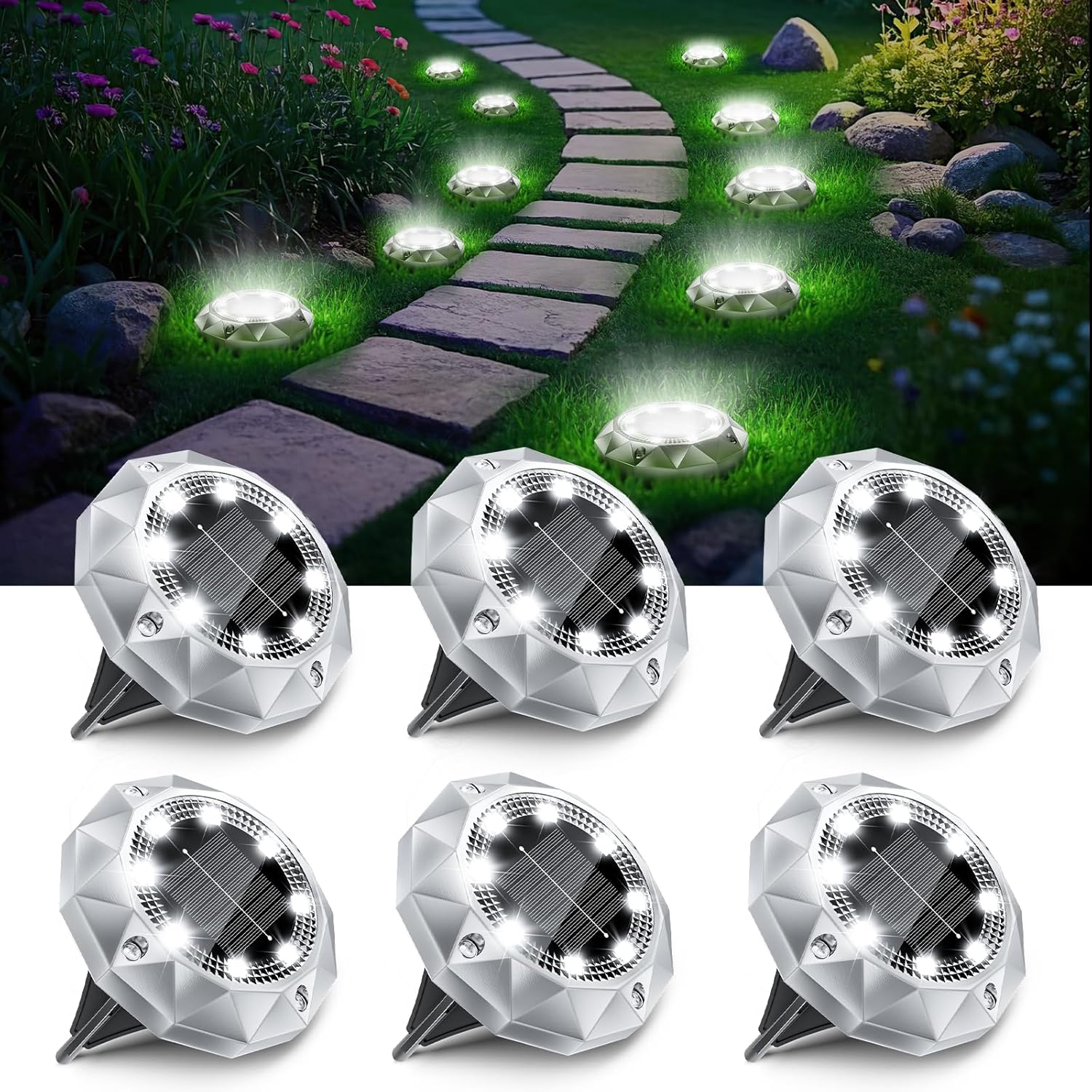
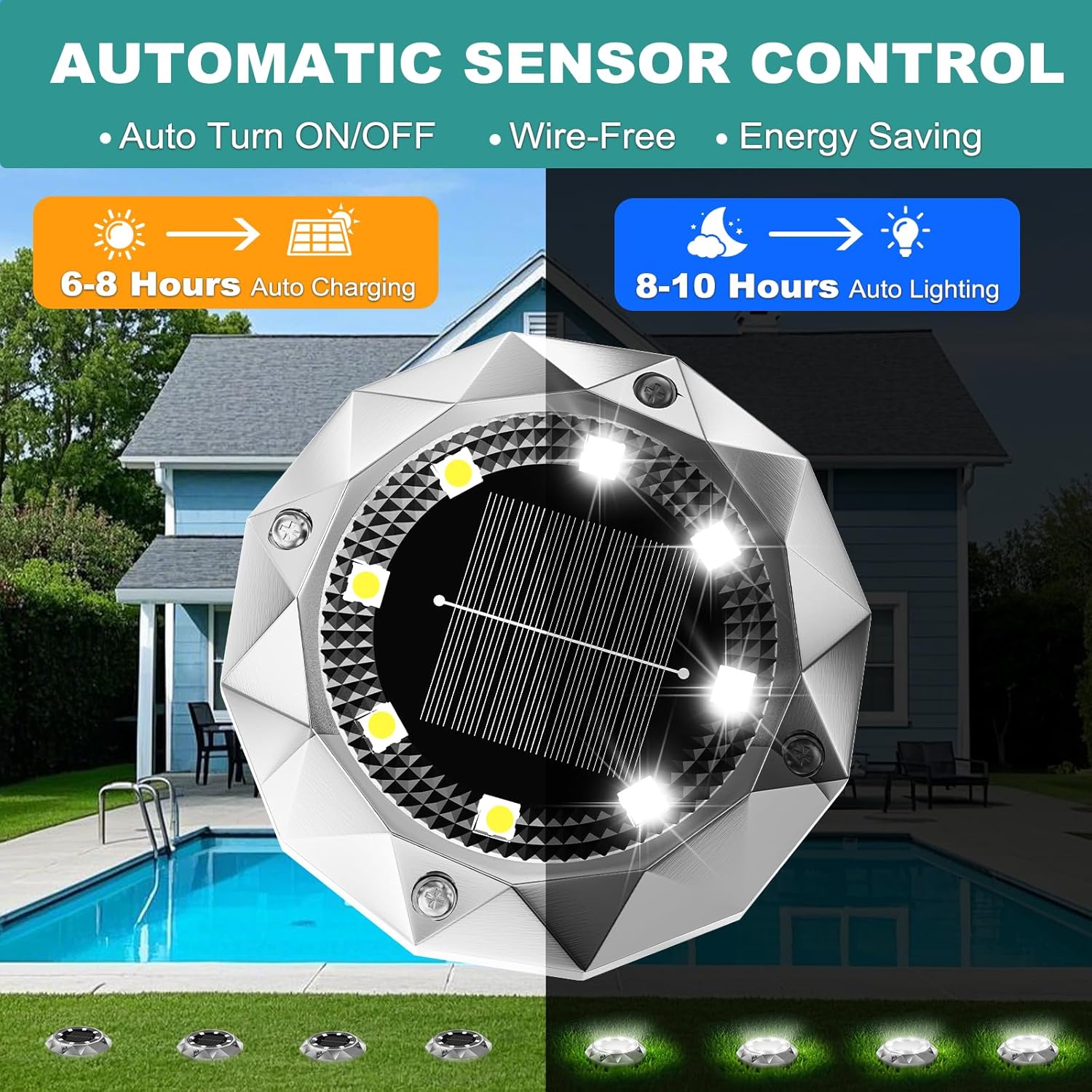
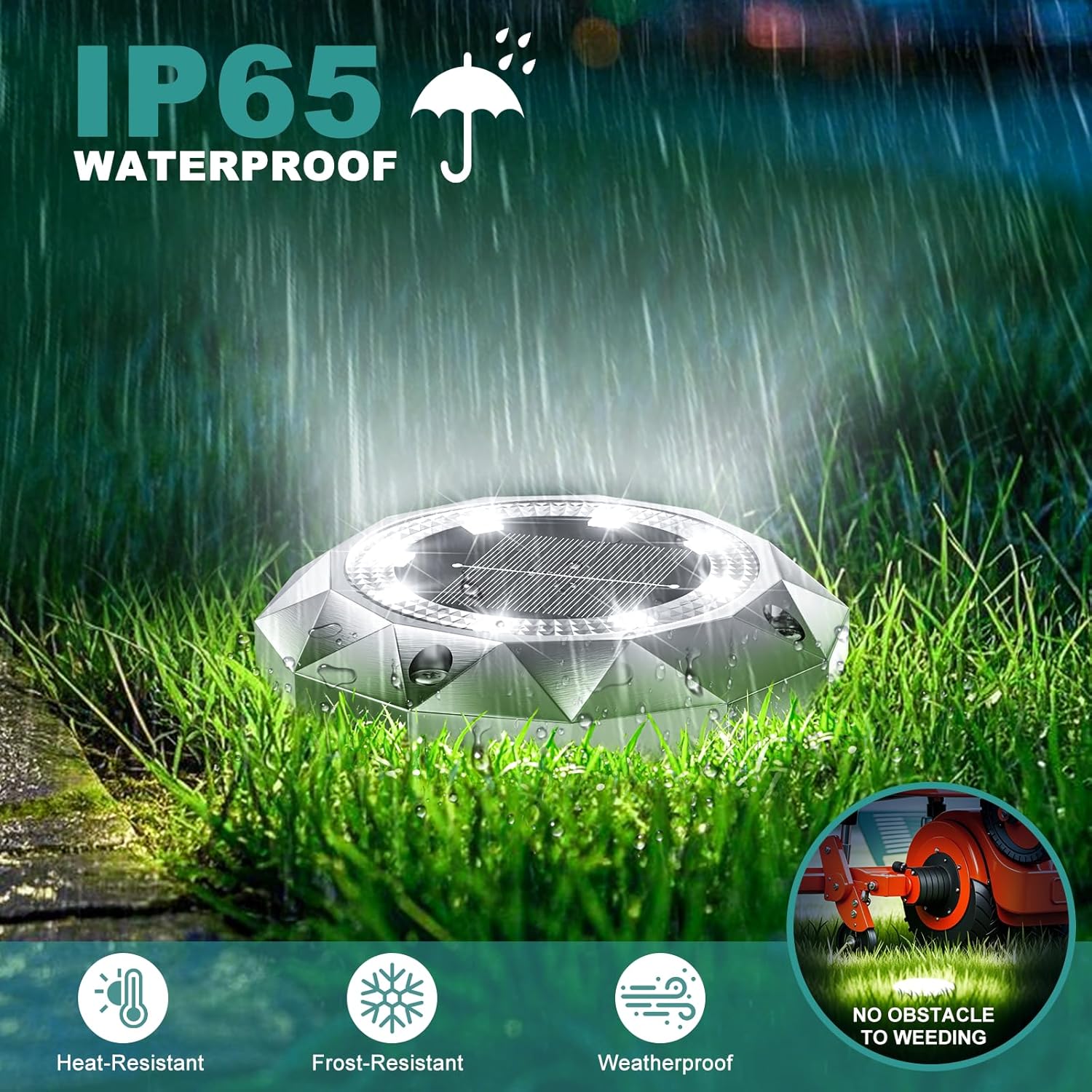
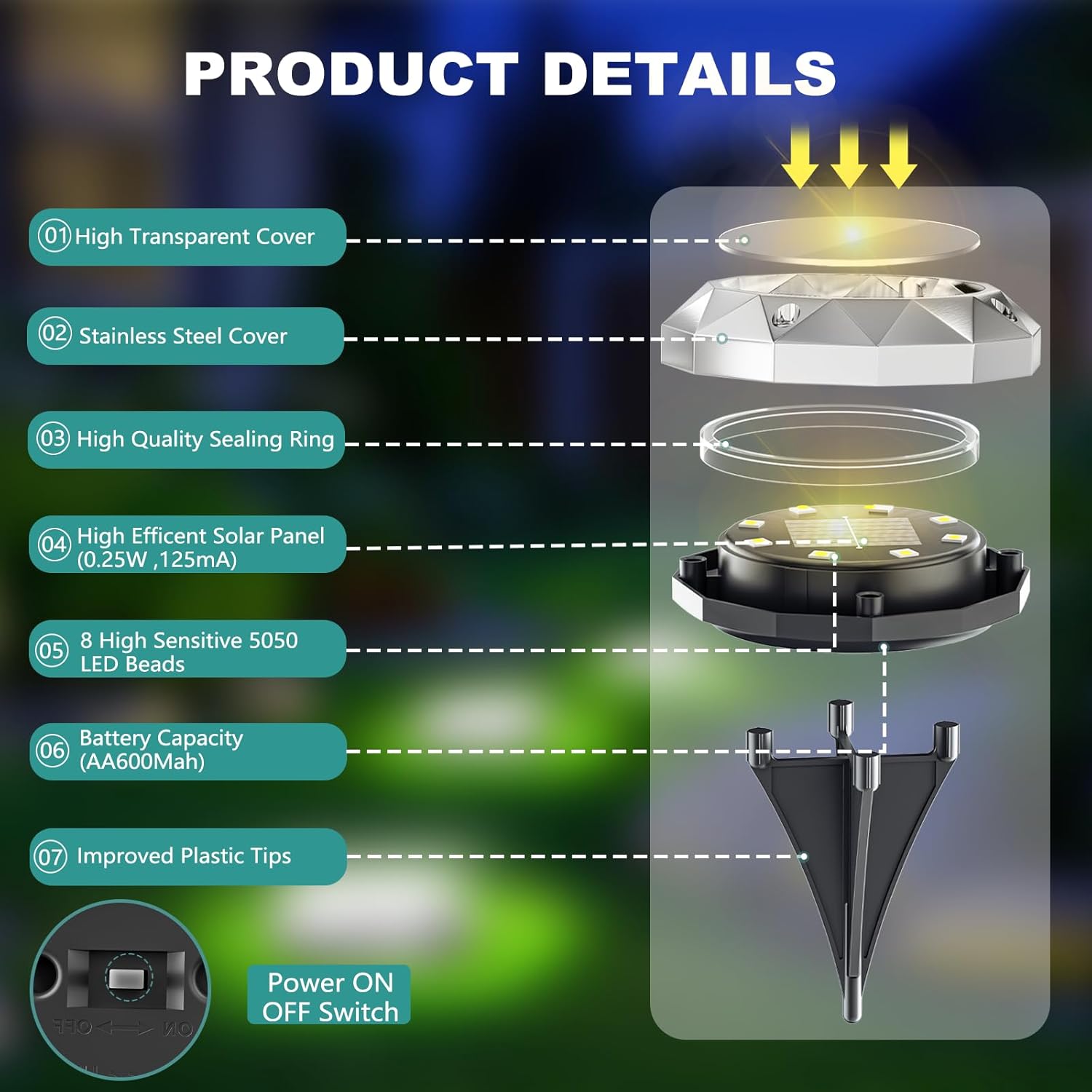
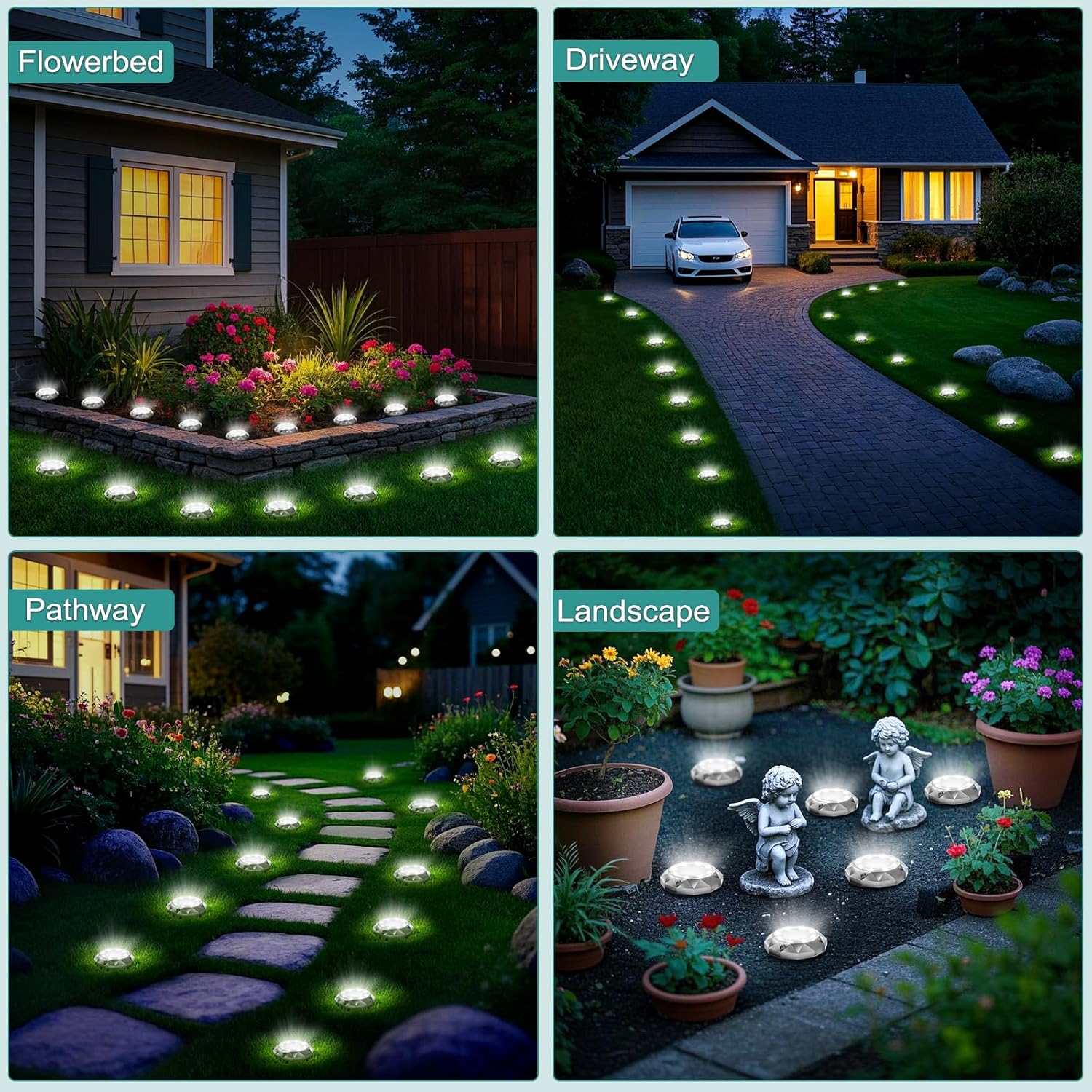
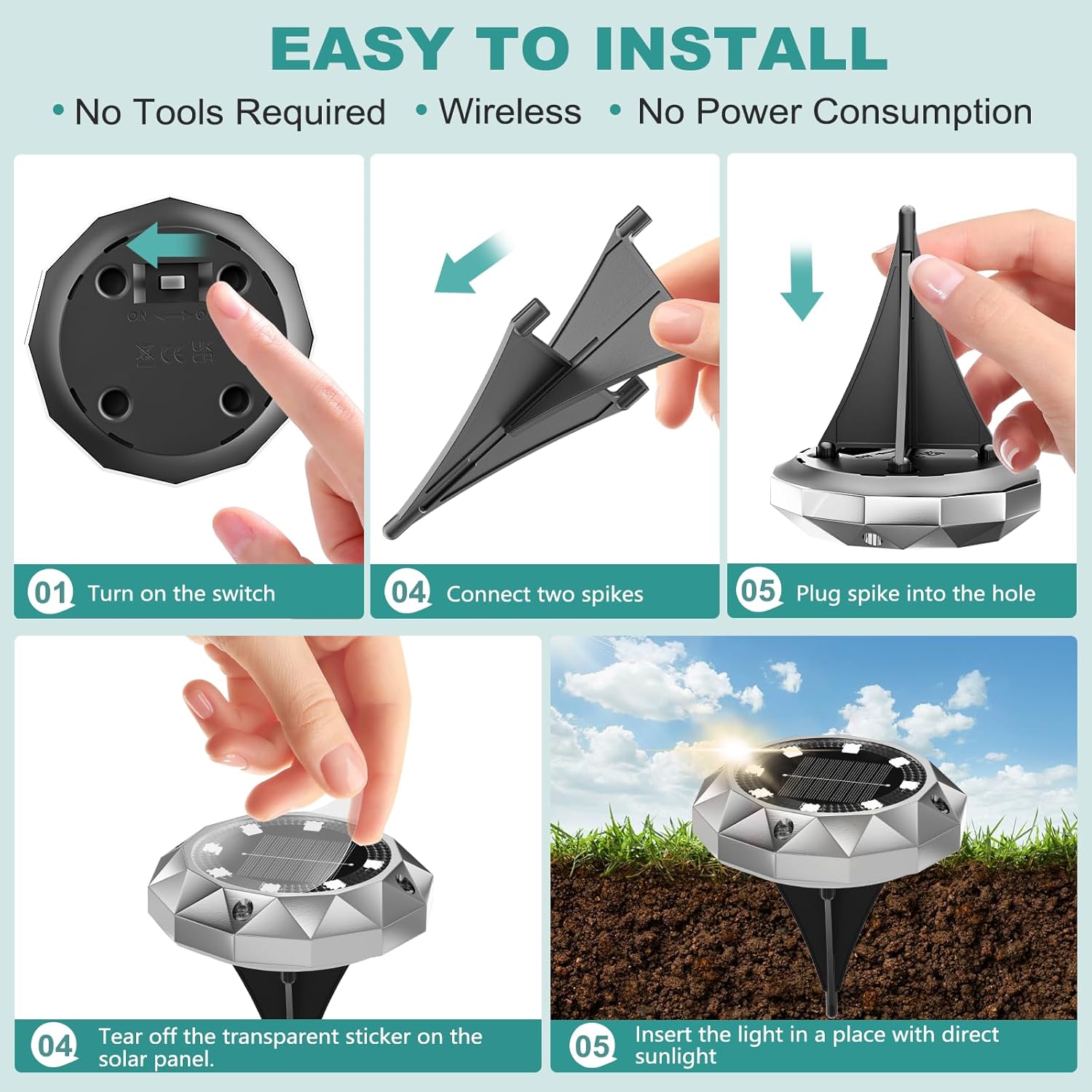
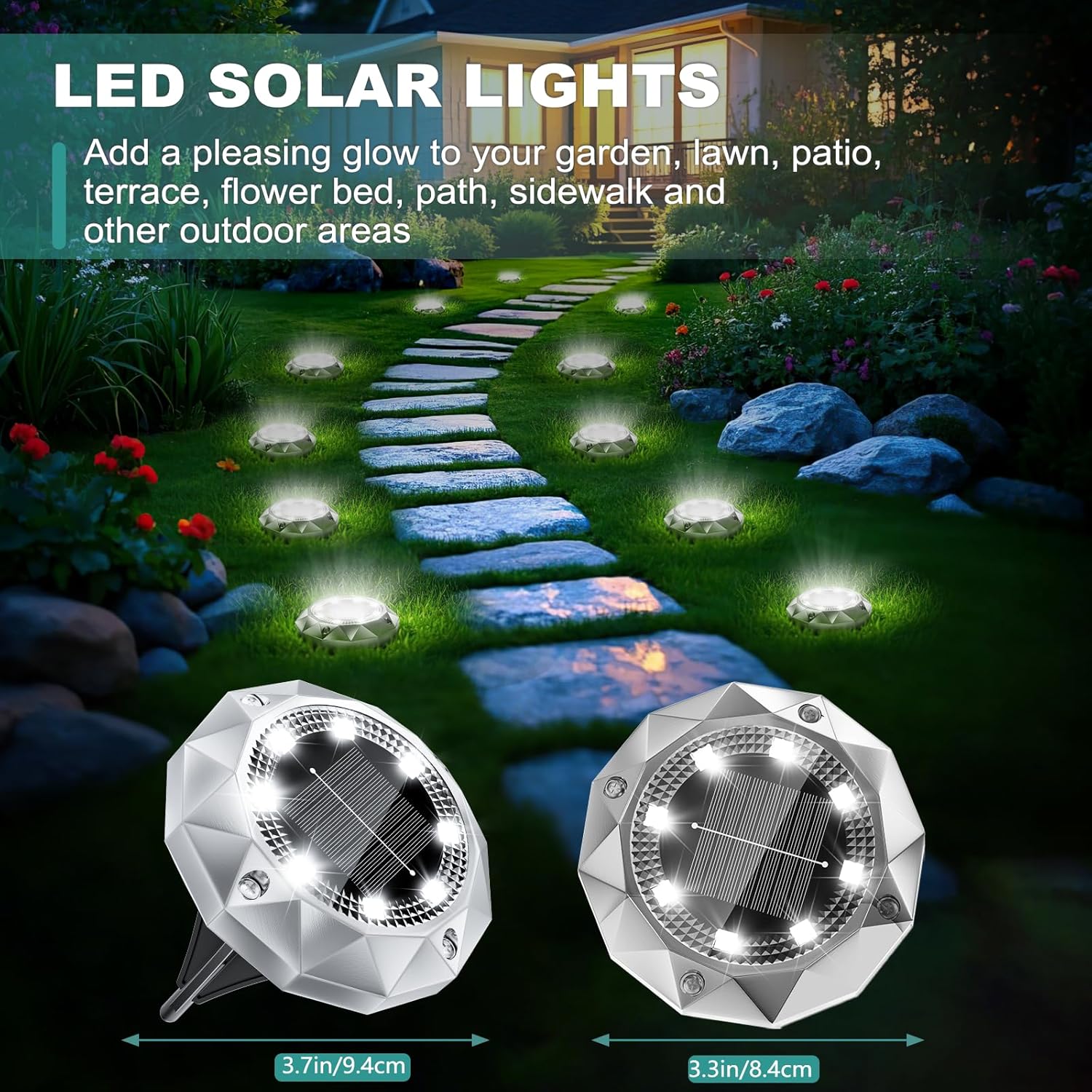
What it is and what it’s for\nThese FIFlying solar ground lights are a compact, wire-free lighting solution designed to illuminate paths, driveways, patios and borders. They run on a built‑in solar panel and 600mAh battery, and each light houses 8 LEDs to deliver a bright, steady glow without any connection to mains power. On the surface, they aim to combine simple installation with dependable night-time illumination for small to medium outdoor spaces.\n\n## How they perform on paper\nWith 14% solar conversion, they charge in around 4–6 hours of sunlight and are designed to provide 8–10 hours of automatic lighting after dark. The LED package is rated for a long life (claimed up to 100,000 hours) and the unit itself is built from rust‑proof stainless steel with an IP65 rating, meaning it should handle UK weather reasonably well, including rain and frost. The lights sit low to the ground on a diamond‑shaped housing, intended to blend into lawns, gravel paths or garden edging.\n\n## What works well in daily use\nInstallation is intentionally simple: push the stake into damp soil and switch the unit ON before placing it in direct sun. No wiring is required, so you can reposition or extend your layout as your garden evolves. The design is relatively discreet, designed to sit flush with grass or gravel rather than standing tall.\n\n## Not perfect, but practical\nIf you prioritise a neat, maintenance‑free look for driveways or borders, these can be a sensible choice. On the downside, performance depends heavily on daylight and weather. In winter or consistently overcast conditions, charging may be slower and night illumination could shorten. A tip from experience: wipe snow from the panel and check battery contacts annually to sustain charging efficiency.\n\n## Suitable for whom\nThey are well suited to British gardens where a low‑profile, weather‑resistant light is preferred for marking paths and edging without overpowering the space. They work best in areas with regular sun exposure and where a softly warm to cool white glow is desired to complement landscaping.\n\n## When to think twice\nIf you need very bright, long‑lasting illumination through long winter nights, or you expect heavy use in shaded or consistently gloomy spots, these may not keep up. They are also reliant on a solar cycle, so in late winter or persistent cloud, you may notice shorter run times.\n\n## What to check before buying\n- Position them in direct sun for optimal charging.\n- Remove any solar panel film to maximise light absorption.\n- Ensure the soil is soft enough for easy insertion of the stakes.\n- Consider proximity to areas where you want the glow most, the low profile helps blend in but may be less conspicuous from a distance.\n\n## Practical use scenarios\nImagine a midnight stroll along a gravel path where each step is softly guided by diamond‑shaped lights. On a patio edge, they can create a gentle boundary without the clutter of wired fittings. The lights’ design is aligned with landscaping aesthetics rather than high‑powered security lighting.\n\n## FAQ (quick reference)\n- How long do the lights stay on per night? Typically 8–10 hours after dusk, subject to charging conditions.\n- Do they require maintenance? Minimal, occasional battery contact checks and cleaning the solar panel help maintain performance.\n- Are they suitable for very soft soil? They rely on stakes, so ensure the ground is penetrable or adjust placement to a slightly firmer, damp base.\n\n## Is it worth it?\nWorth considering if you want a low‑hassle, energy‑efficient option for marking paths and borders in a UK garden, with the appeal of a stylish diamond silhouette and a weatherproof build. If your space needs stronger night lighting or you expect winter performance to be paramount, you might prefer a model with higher lumen output or a different charging profile.