

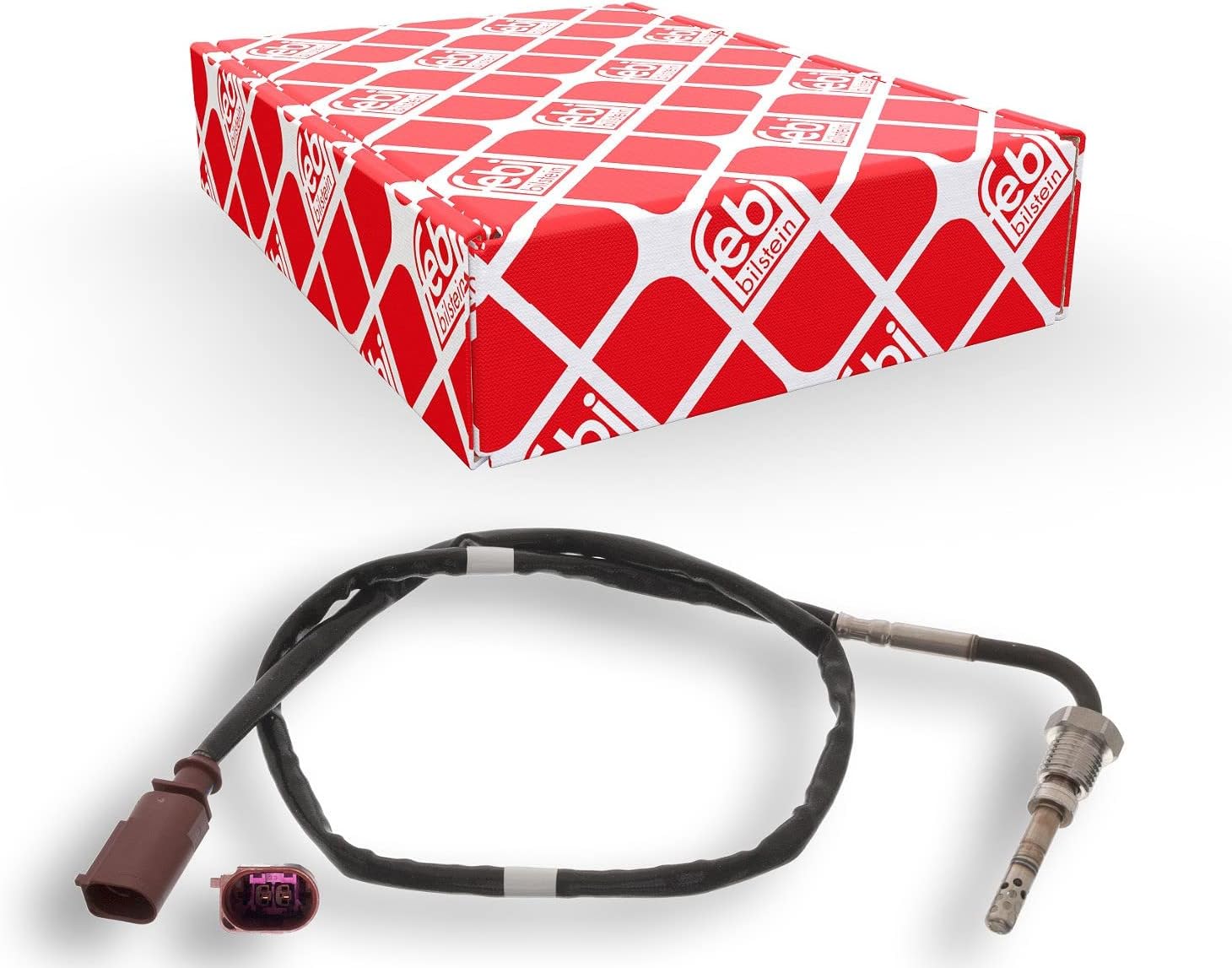
febi bilstein 48841 Exhaust Gas Temperature Sensor (pack of one)
Product description
What this sensor does (and why you might need it)
An exhaust gas temperature sensor is the kind of part you rarely think about until something stops behaving as it should. In modern diesel exhaust systems it helps the engine management make sense of operating temperatures, and that can affect how the vehicle runs when you’re driving normally, not just under workshop conditions.
The febi bilstein 48841 is supplied as a single replacement sensor (pack of one). It’s an “original spare part” style offering, positioned as a like-for-like replacement approach rather than an experimental upgrade. On paper, it’s designed to sit where the vehicle expects the sensor to be, which matters more than marketing language when you’re trying to get a correct fit and a proper signal path back into the system.
Key fitment details to check before ordering
Before you buy, the biggest practical point is compatibility. The listing itself stresses using your vehicle identification (typically at the top of the page in the seller’s flow) to confirm it matches your car, and to follow any restrictions.
A few placement details are also worth noting, because sensors are easy to mix up: - Number of connections: 2 - Fitting side/position: before the soot particulate filter
If you’re dealing with exhaust or DPF-related fault symptoms, it’s especially sensible to confirm the “before soot particulate filter” position matches your existing sensor. If it doesn’t, you can end up spending time on returns rather than getting the repair done.
Where it fits in the exhaust system (in plain English)
This febi sensor is specified to be installed before the soot particulate filter. In everyday terms, that means it’s measuring exhaust temperatures in the upstream section—so it’s not just a generic “heat sensor” hanging anywhere. The position influences what temperature it sees and how the vehicle interprets exhaust conditions.
You can think of it like placing the thermometer at the right point on a pipe: even if the device is the same style, the reading and what the car “expects” can be different if the location is wrong.
Vehicle coverage (what the listing names)
The listing provides example fitment across a range of Audi, Seat, Skoda and VW models, including several A3, TT, Altea/Altea Freetrack, Leon, Octavia, Superb, Yeti, Beetle, Eos, Golf variants, Jetta, Passat, Passat CC, and Scirocco models.
That’s useful as a starting point, but it doesn’t replace the need to verify your exact vehicle with your identification/registration details through the provided compatibility check. Model names can be shared across different engine variants and exhaust layouts, so the safe approach is to let the compatibility tool do the deciding.
What you’ll like about this approach
If you want a straightforward replacement, this sensor is aimed at that. The part is presented as an original febi bilstein spare part with reference OE numbers for comparison purposes.
The practical upside of choosing this kind of part (based on the listing details) is that it’s not trying to be something different. You’re generally buying for: - Correct connection count (2 connections) - Correct installation position (before the soot particulate filter) - Vehicle-system alignment, so it can meet the expectations of the ECU and exhaust configuration
It’s not perfect as a choice if your goal is a “performance” style modification—this is a repair/replacement part, not a tuning component.
Potential limitations (what to watch for)
It’s a pack of one sensor, so if your vehicle needs multiple sensors or has more than one exhaust temperature measuring point, you may need more than this purchase—depends quite a bit on the exact fault and your car’s layout.
Also, the listing includes OE numbers “for comparison purposes only”. That’s normal, but it’s a reminder that your vehicle ID compatibility check is where you should place the confidence, not the OE cross-reference alone.
Everyday use example: when this makes sense
Say your car is throwing an exhaust-related fault and you’ve narrowed it down to temperature sensing upstream of the DPF. In that situation, replacing a failed sensor with the correct type and position is exactly the kind of job you want to get right first time. With this part specified to fit before the soot particulate filter and use 2 connections, it matches the kind of replacement profile you’d be looking for.
Should you buy it?
Final verdict
If you’re trying to fix a suspected exhaust gas temperature sensor issue and your compatibility check confirms it matches your vehicle, the febi bilstein 48841 is a sensible replacement-style option. The listing’s emphasis on the correct fitting position (before the soot particulate filter) and 2 connections is the kind of detail that can save you hassle.
It may not be the best match if you’re not confident about your car’s exact exhaust layout, or if your fault suggests multiple sensors and you only need one. It’s also not the sort of part you’d choose for anything other than getting correct sensing back into the system.
Mini FAQ
How do I confirm this part fits my car?
Use your vehicle identification via the compatibility check mentioned by the listing, and ensure all restrictions are observed.
Where exactly does it fit in the exhaust system?
The listing specifies fitting before the soot particulate filter.
Does it come as a single sensor?
Yes. It’s supplied as a pack of one.
Does the listing include connection info?
Yes, it states the sensor has 2 connections.
What if my car needs more than one temperature sensor?
This listing is for a single sensor, so you’d need to confirm whether your vehicle’s setup requires more than one replacement.