

Eventek Infrared Thermometer Gun (-50°C to 600°C) digital laser pyrometer for non-contact temperature checks
Reviews
Price
Product description
What it is and why people buy it
An infrared thermometer gun is one of those tools you don’t miss until you need it: you point, pull the trigger, and get a temperature reading without touching the surface. The Eventek Infrared Thermometer Gun is built around that idea, covering a wide measurement range from -50°C up to 600°C, so it can be used for everything from kitchen cooking tasks to industrial-style checks.
On paper, it’s aimed at users who want something straightforward but not clueless—non-contact measurements, a laser for aiming, and options that help when the surface is not ideal for infrared readings (for example, the ability to adjust emissivity). If you’re trying to monitor hot equipment quickly or document temperatures for routine checks, that’s where this kind of gun tends to make sense.
Key takeaways (in plain English)
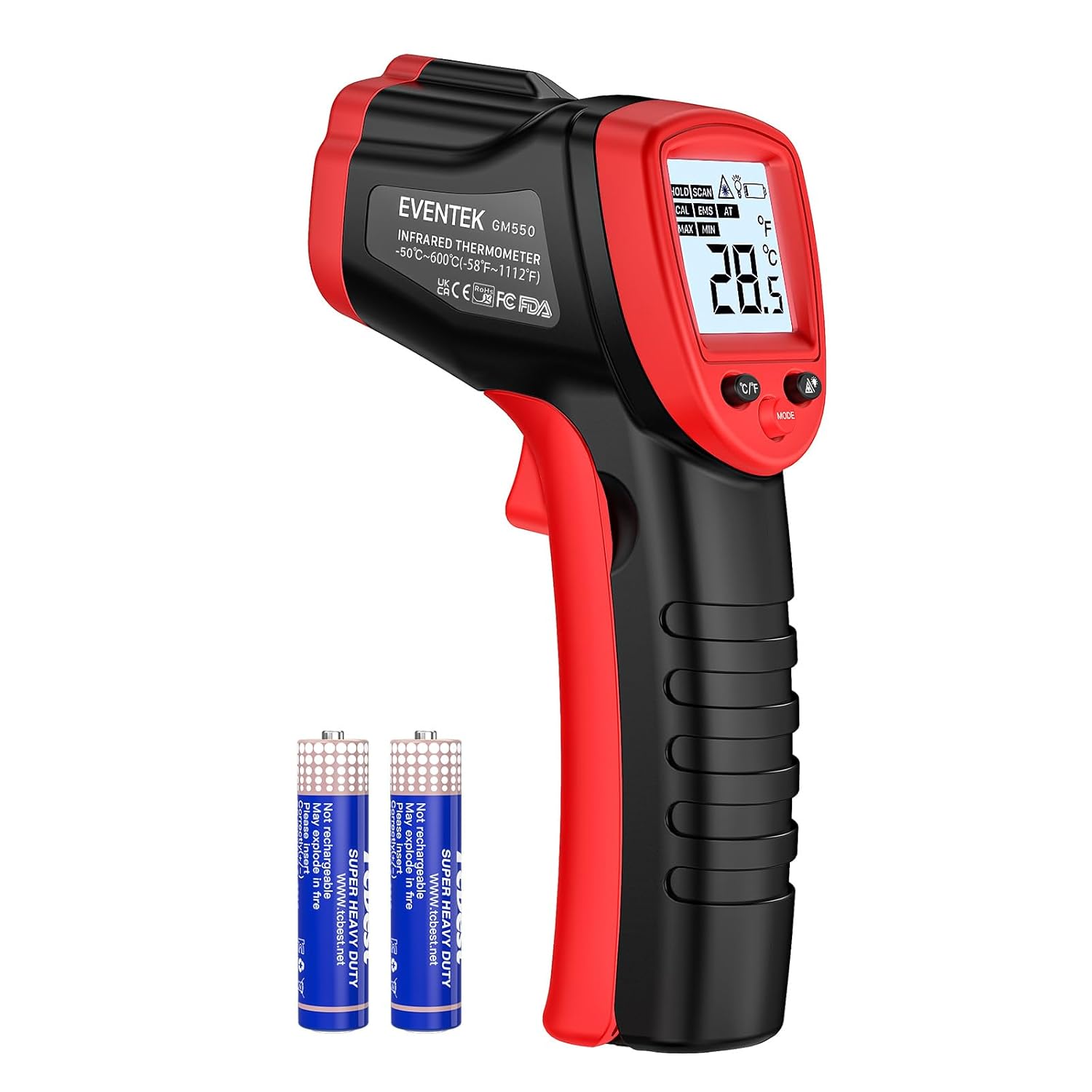
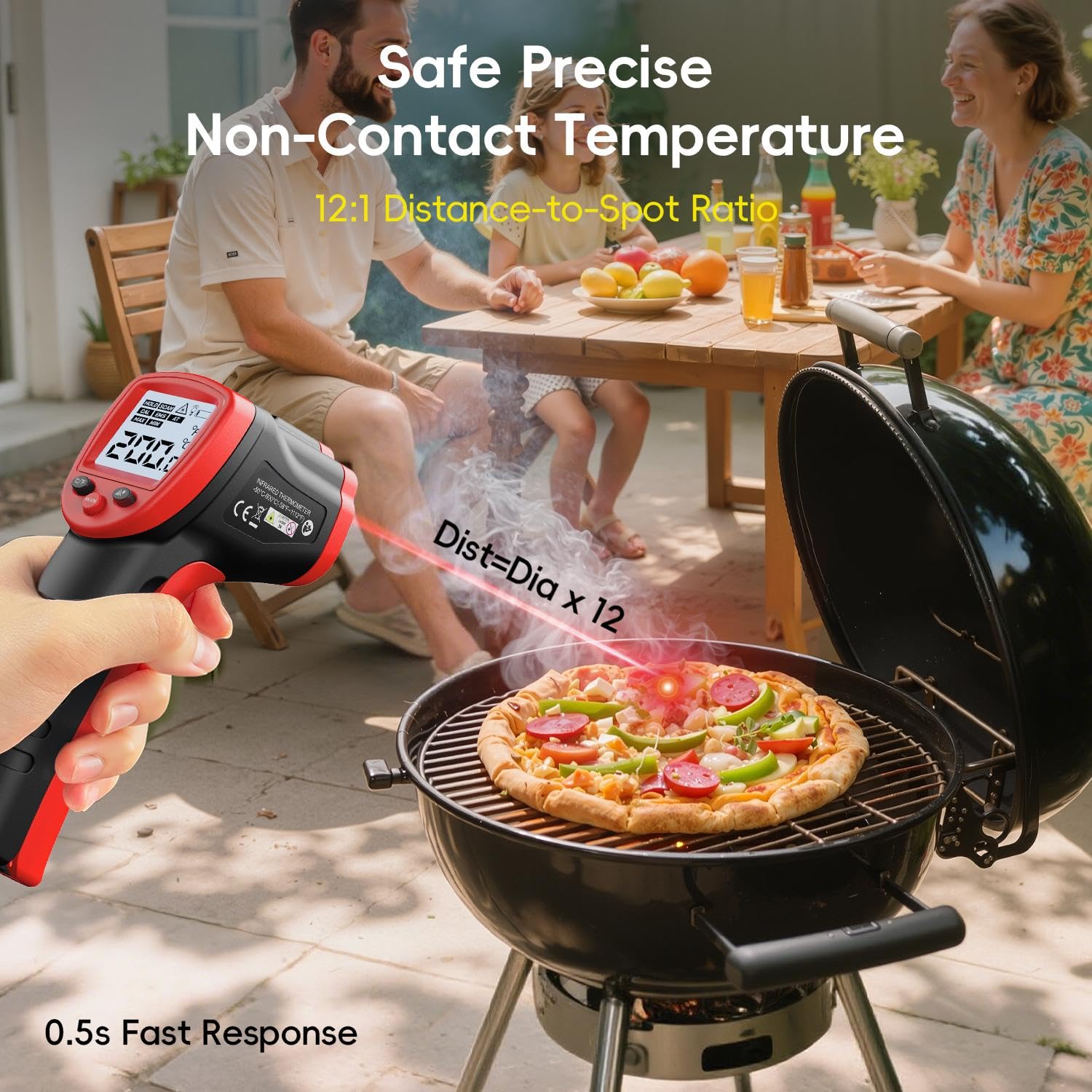
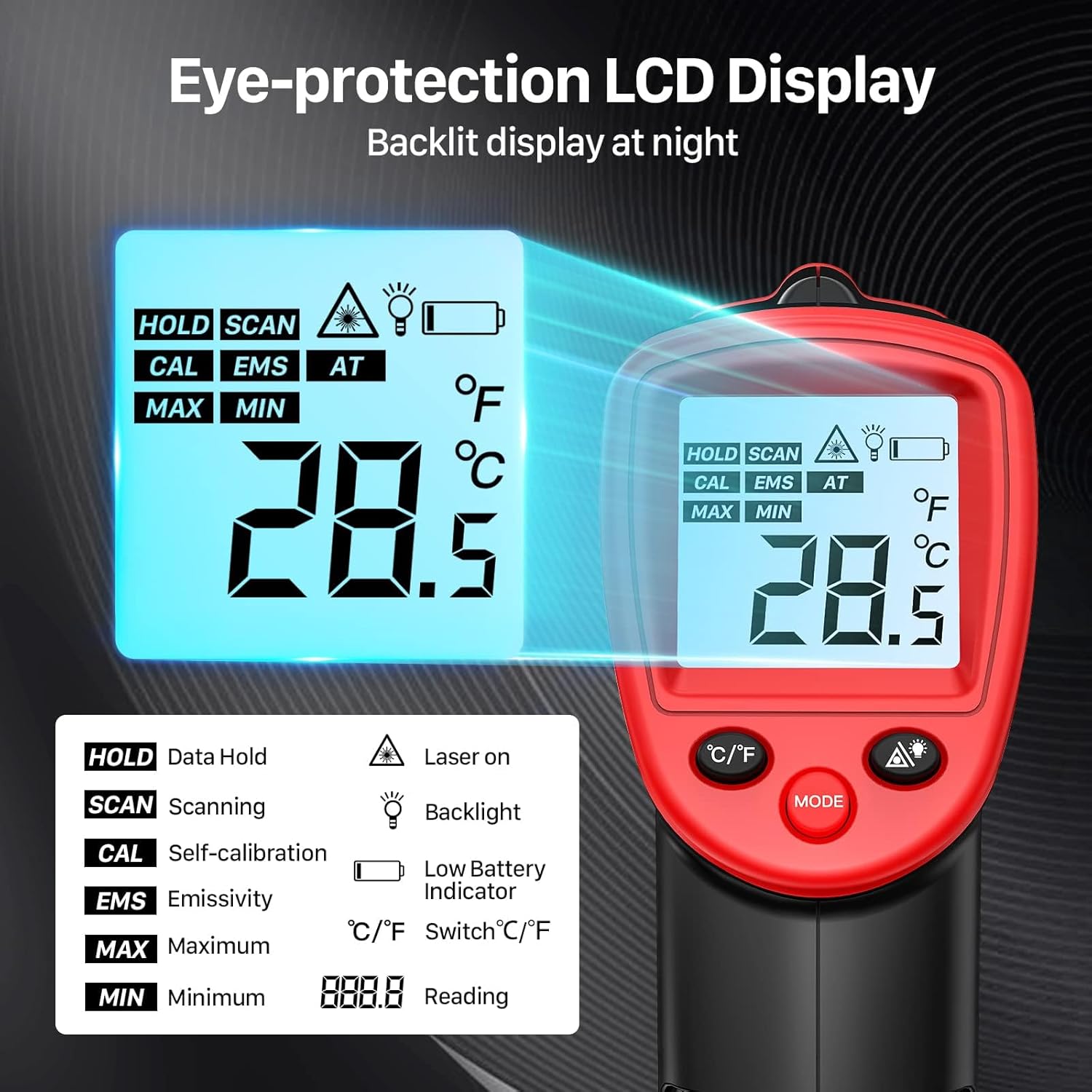
This is a non-contact digital laser pyrometer that measures infrared energy from a distance, with a stated accuracy of ±1.5°C/±1.5% for emissivity between 0.1 and 1.0. It also includes a switchable laser aiming point and an LCD display with adjustable backlight/lighting, plus a data logging feature for storing readings. There’s also a distance-to-spot concept (12:1) and a fast response time (stated as 0.5 seconds), both of which are relevant if you’re measuring small or awkward spots.
Where it fits best is in situations where contact thermometers are a hassle, such as checking the temperature of a pizza oven area, inspecting heated components during maintenance, or taking quick readings around HVAC or engine-related work. It’s not meant for taking body temperature directly.
The essentials for real-world use
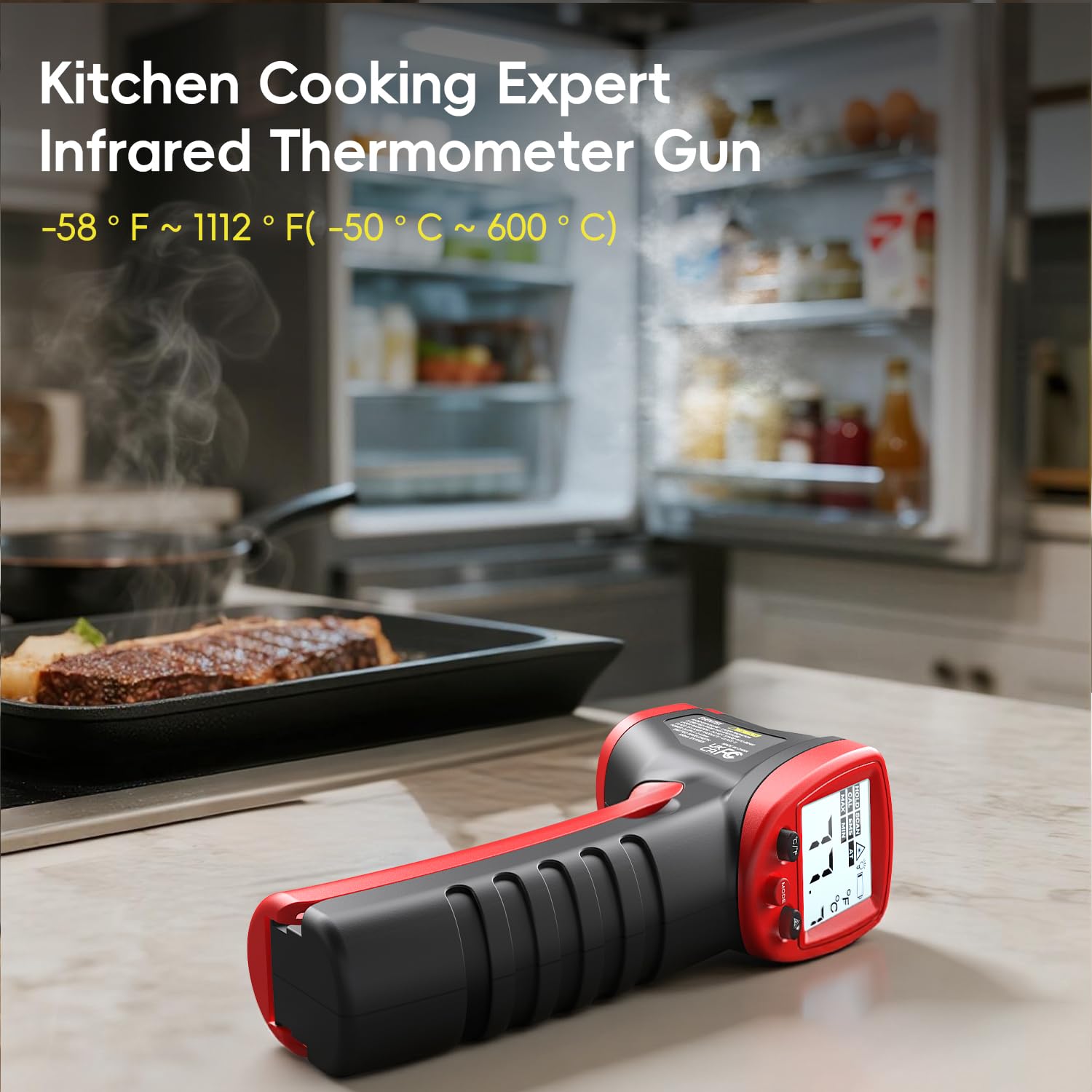
If you’re using it for cooking—say you want to gauge how hot different zones of an oven are—non-contact measurement is the main convenience. You can take a reading, adjust your process, and move on without waiting for probe contact or worrying about touching hot surfaces.
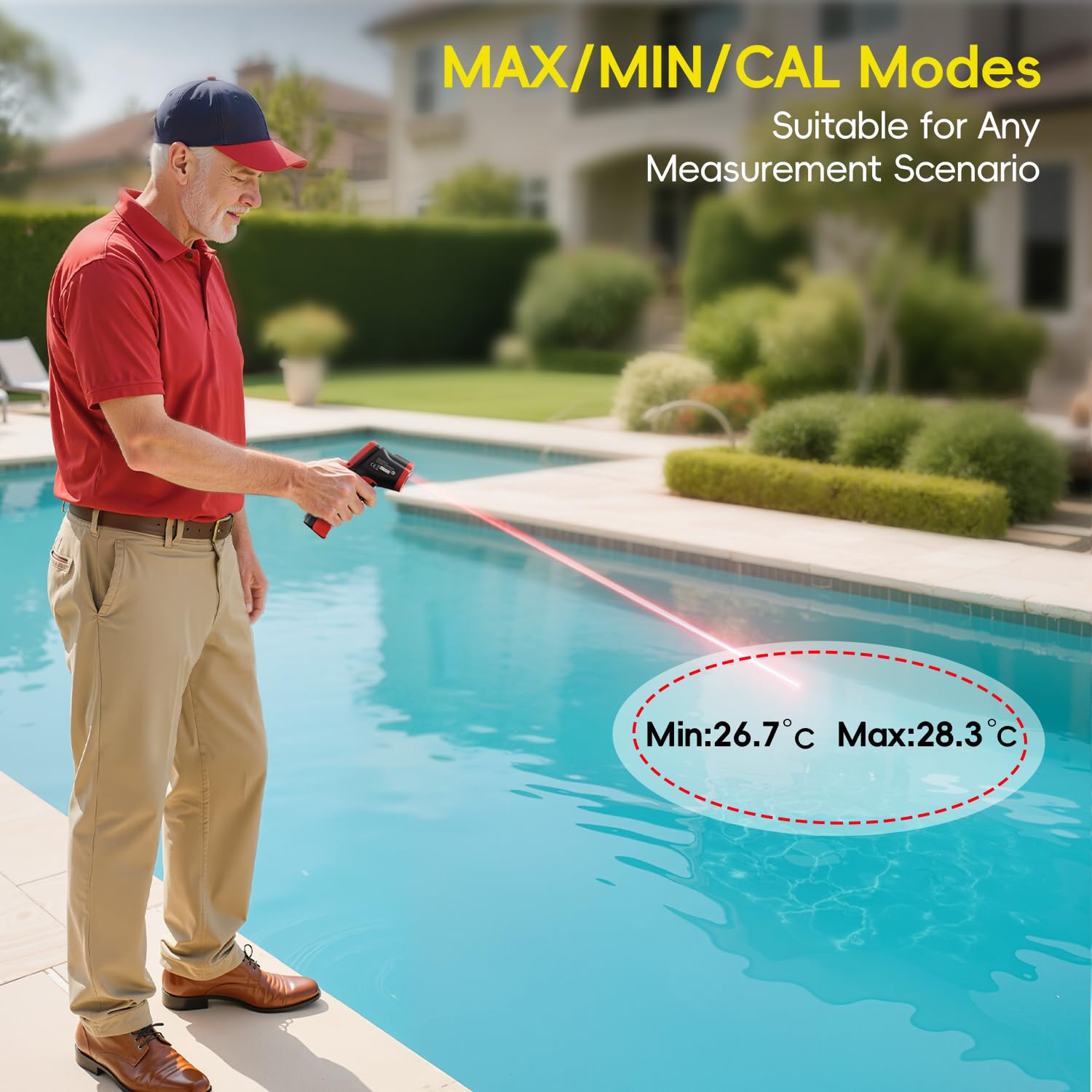
For maintenance or industrial-style tasks, the practical value is documentation and repeatability. The inclusion of data storage (for recording measurements) suggests it’s meant to help you keep a log rather than relying on memory.
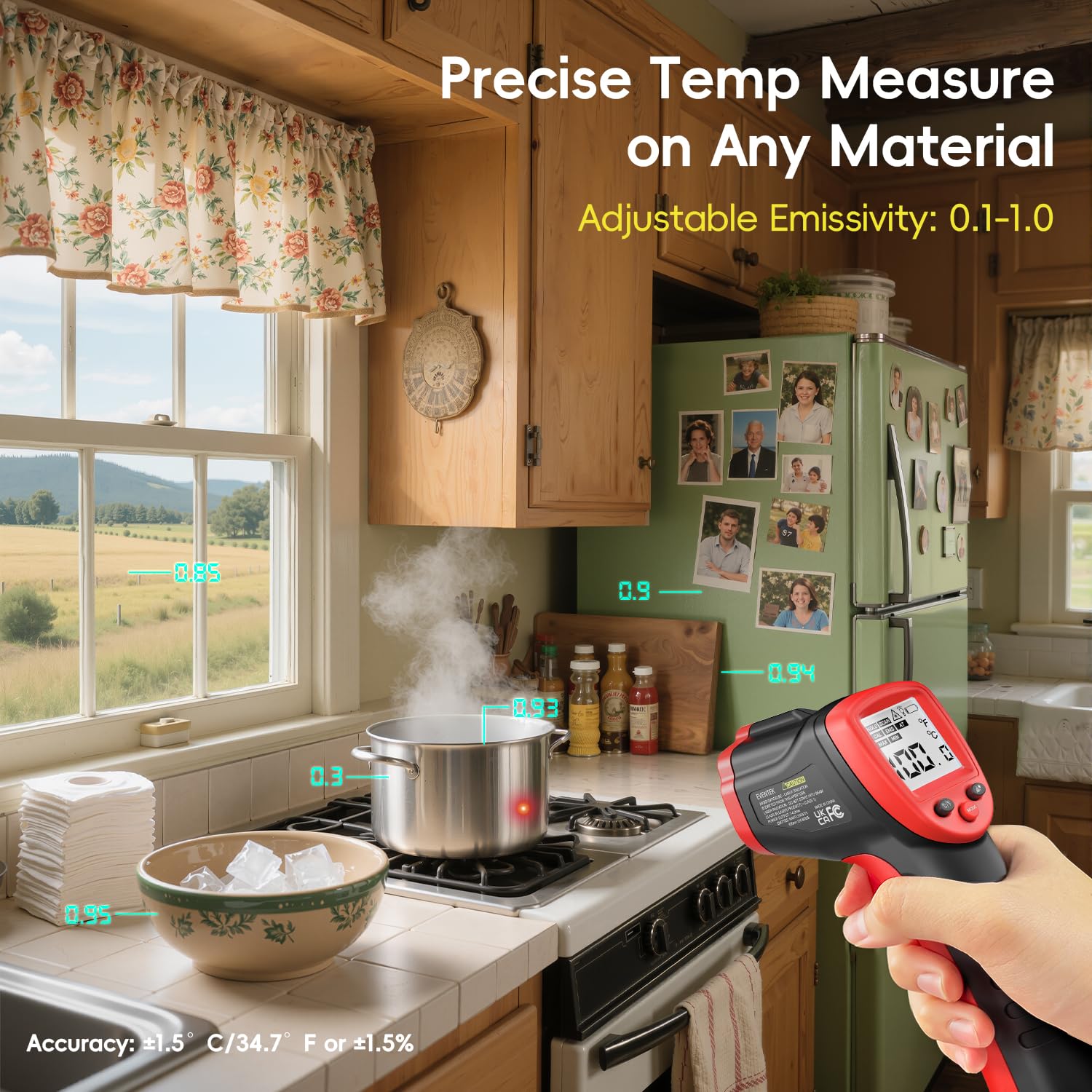
One detail to take seriously: emissivity matters. This model allows emissivity adjustment in the range 0.1 to 1.0, which helps when measuring different materials/surfaces. If you always measure the same surface type, it’s less of an issue. If you bounce between shiny metal, coated surfaces, and other materials, you’ll likely spend more time setting emissivity correctly.
What stands out
- Wide temperature range: -50°C to 600°C covers a broad span of everyday heating and industrial hot-spots.
- Laser aiming: a switchable laser helps you target where you’re measuring, which is useful when the measured area is small.
- Distance-to-spot approach (12:1): this is helpful if you can’t get close safely, though you still need to line up carefully.
- Fast response time: a stated response of 0.5 seconds supports quick checks rather than slow, fiddly measurement.
- Emissivity adjustment (0.1 to 1): accuracy is stated for emissivity within that band, so it’s a meaningful feature rather than a decorative one.
- Recording and display lighting: data logging plus an adjustable LCD light makes it more workable in real environments.
Limitations and when to look elsewhere
It’s not the right tool if your main goal is direct human body temperature—the information provided is explicit that this infrared gun is not suitable for measuring body temperature. The note also explains that using it alongside a medical thermometer could be used to determine a fixed temperature difference, but that’s a specialised workaround rather than “just measure people”.
Also, you may find it less satisfying if you need ultra-specific lab-grade metrology or calibration detail beyond what’s provided. The accuracy claim is tied to emissivity settings, so if you consistently measure surfaces outside the 0.1–1.0 emissivity range, accuracy could be limited.
Is it a good fit for you? (mini guide)
It’s a good fit if you want a non-contact thermometer gun for quick temperature checks where touching is awkward or unsafe, and you’re likely to measure hot equipment in cooking, HVAC, or engine-related contexts.
It may not suit you if you mainly want to measure body temperature, or if your readings need to be consistently correct across unknown/complex surface types without any emissivity handling. In those cases, you might prefer a different approach—often that means a contact thermometer/probe or a system designed specifically for that measurement scenario.
If you’re deciding between a simple “point-and-read” style tool and something more adjustable, this one leans toward the latter thanks to emissivity control and the stated aiming/measurement characteristics.
Tech summary
- Type: Digital laser infrared temperature gun (non-contact pyrometer)
- Temperature range: -50°C to 600°C
- Temperature units: °C and °F switchable
- Accuracy (stated): ±1.5°C or ±1.5% (within emissivity 0.1 to 1.0)
- Emissivity adjustment: 0.1 to 1.0
- Distance-to-spot: 12:1
- Response time (stated): 0.5 seconds
- Laser aiming: switchable
- Display: LCD with adjustable lighting
- Data handling: storage for recorded measurements (capacity stated as recording)
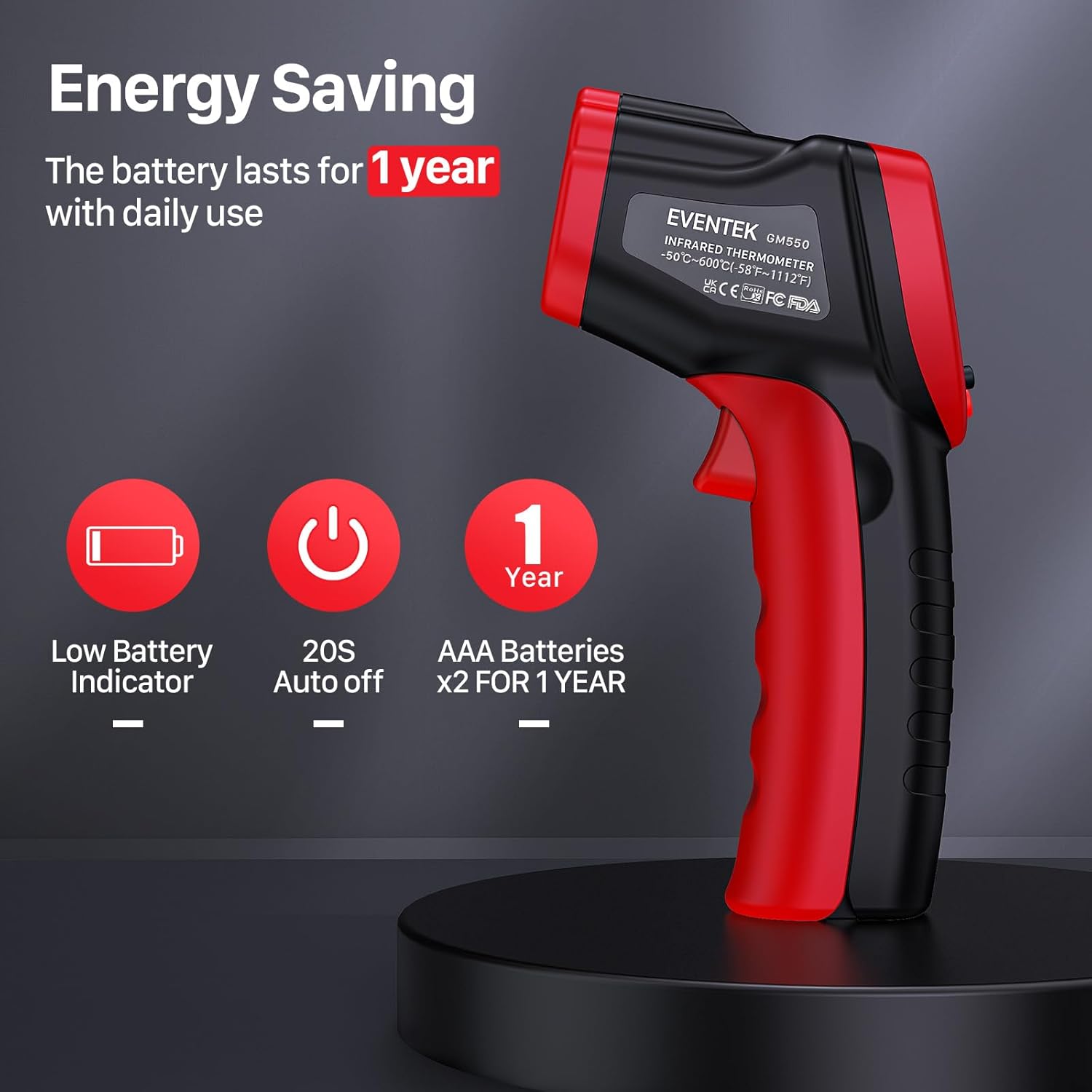
- Power saving: energy saving circuit after 10 seconds
Mini FAQ
Can I use it to measure body temperature?
No. The provided guidance says it is not suitable for measuring body temperature directly.
Does emissivity affect readings on this thermometer?
Yes. The stated accuracy is linked to emissivity levels of 0.1 to 1.0, and the gun includes emissivity adjustment in that range.
How fast is it for quick checks?
It has a stated response time of 0.5 seconds, which is aimed at quick measurement rather than slow probe-style readings.
What’s the point of the laser?
The laser is described as a switchable aiming point so you can fix your target more precisely when taking a reading.
Is it suitable for food and BBQ use?
The description specifically calls out kitchen cooking and BBQ/pizza oven temperature monitoring as suitable applications.
Should you buy it?
It’s worth buying if you need a non-contact infrared thermometer gun across a broad range (-50°C to 600°C), and you’ll benefit from emissivity adjustment, laser aiming, fast response, and the ability to store recorded measurements.
You should probably skip it if you want a body-temperature device, or if you’re not willing to think about emissivity and aiming—infrared readings depend on surface behaviour, and this model’s accuracy is stated for emissivity between 0.1 and 1.0. In other words: it’s a solid practical tool for temperatures you can’t or don’t want to touch, but it’s not the right choice for measuring people.