

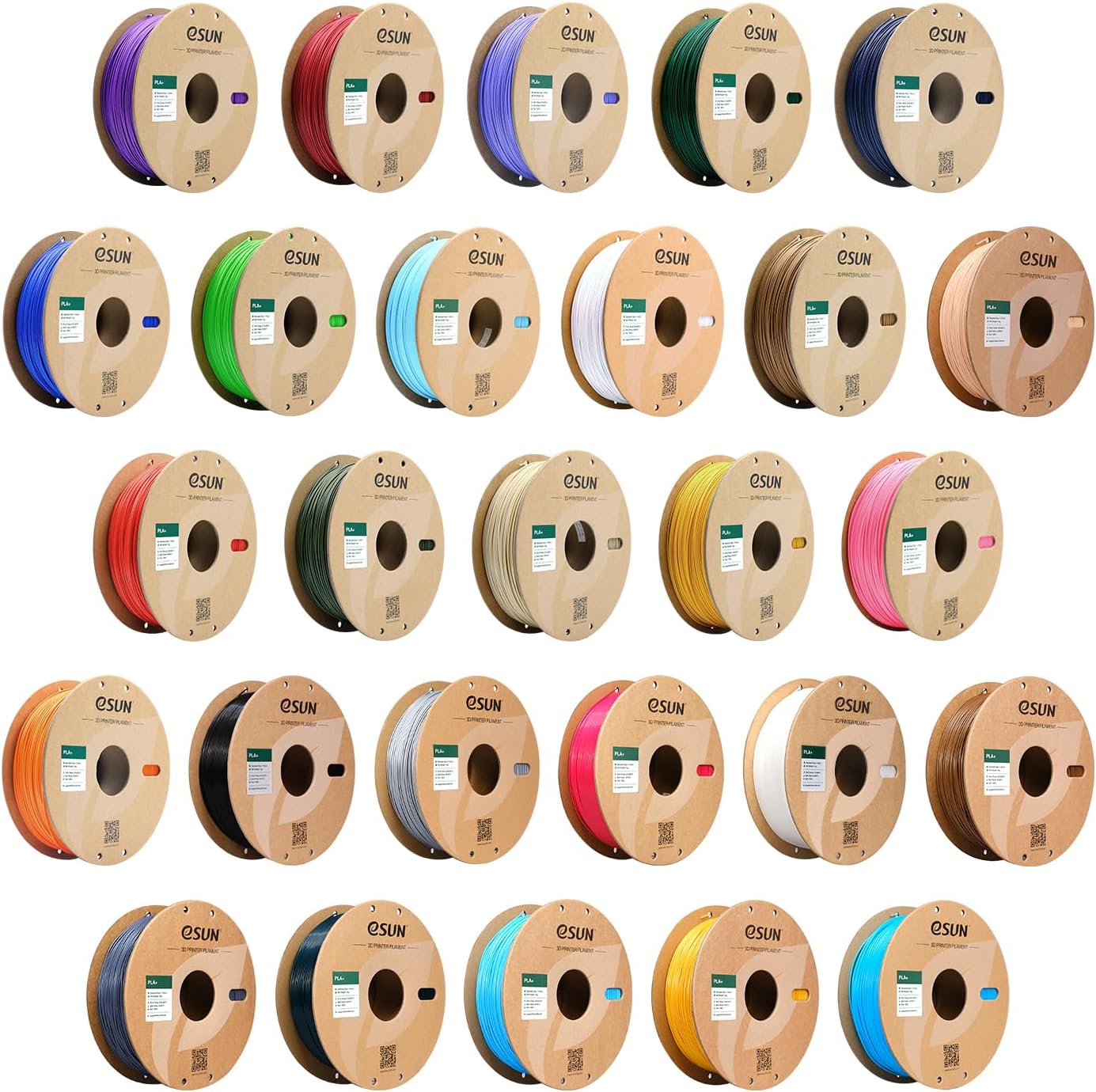
eSUN PLA+ Enhanced Toughness Filament 1.75mm, Pine Green (1kg spool)
Reviews
Product description
Overview: what this eSUN PLA+ is for
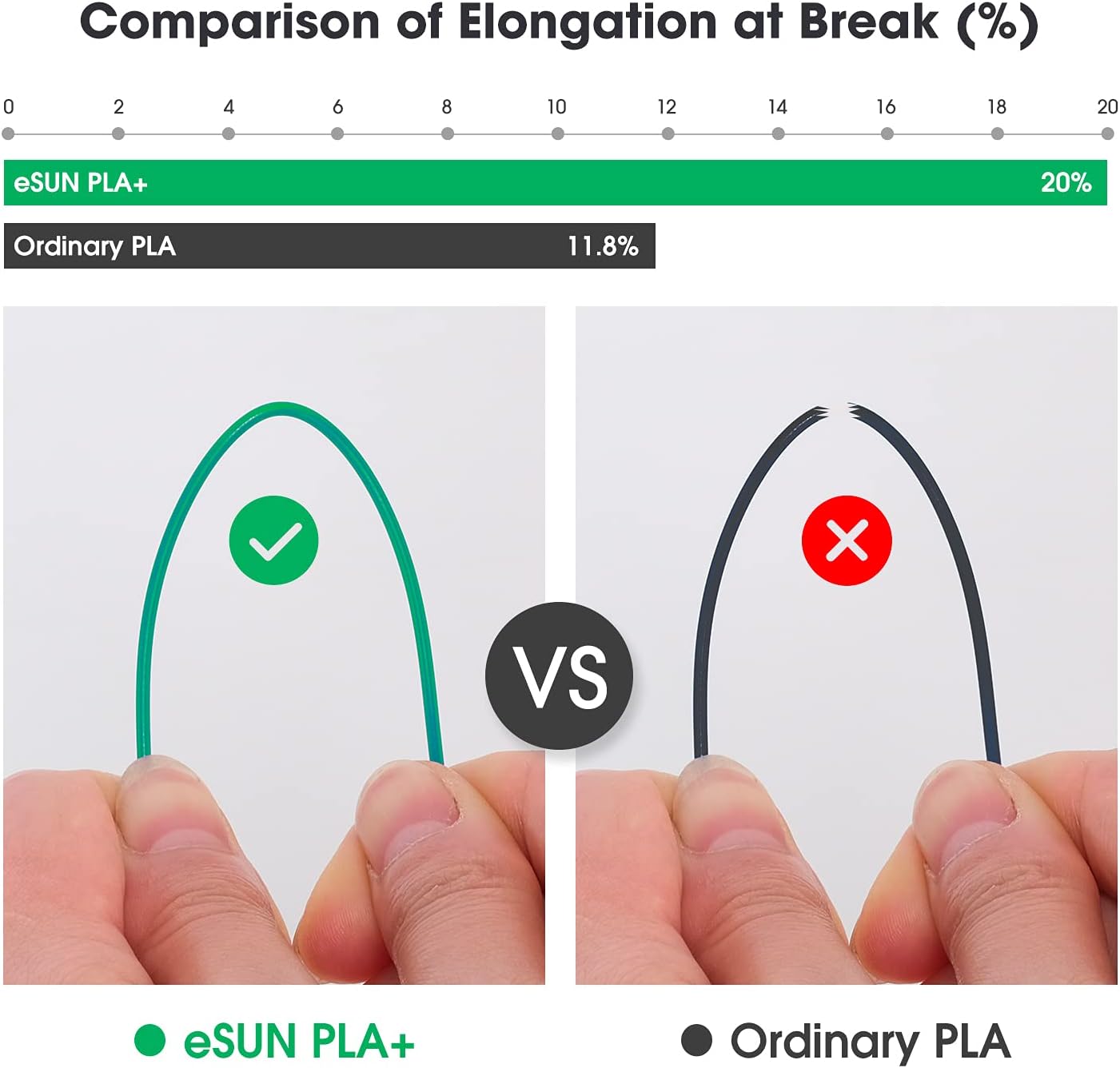
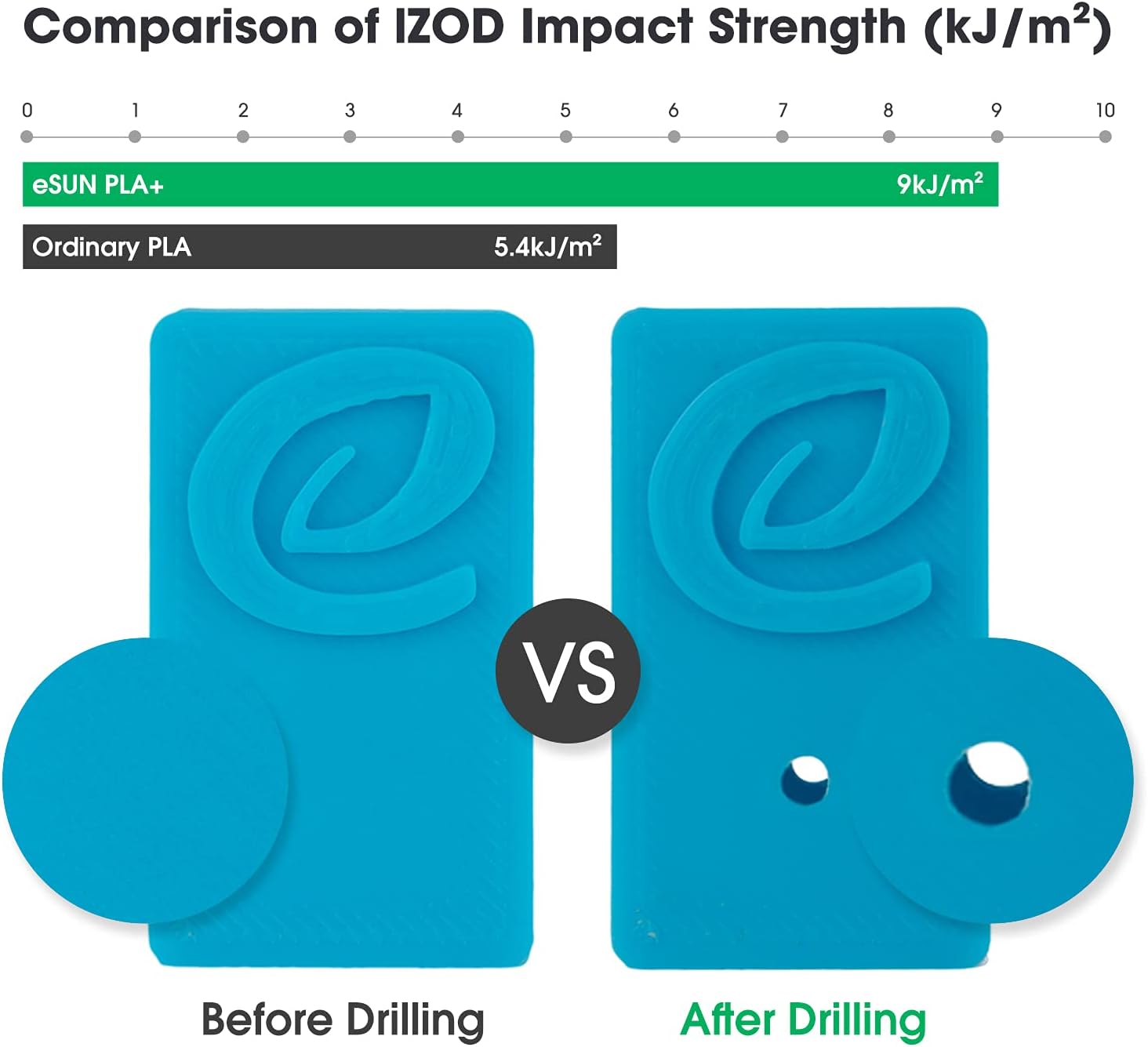
If you want PLA that’s less likely to snap the moment a model is handled a bit roughly, eSUN’s PLA+ is aimed at that exact sweet spot. PLA+ is presented as an enhanced version of standard PLA, with higher strength and improved toughness, so printed parts are less prone to breaking. It’s still PLA-based in spirit—generally meant to be easy to print—while focusing on better layer bonding and durability for functional-ish pieces.
On paper, it also leans into higher-speed printing and decent dimensional accuracy. That matters if you’re not printing everything slowly and obsessively, and you’d rather get consistent feeding and stable results without turning your setup into a full-time hobby.
Where it shines in everyday printing
This filament is positioned around a few practical goals: strength over brittle PLA behaviour, smooth extrusion, and keeping print consistency even when you push speed.
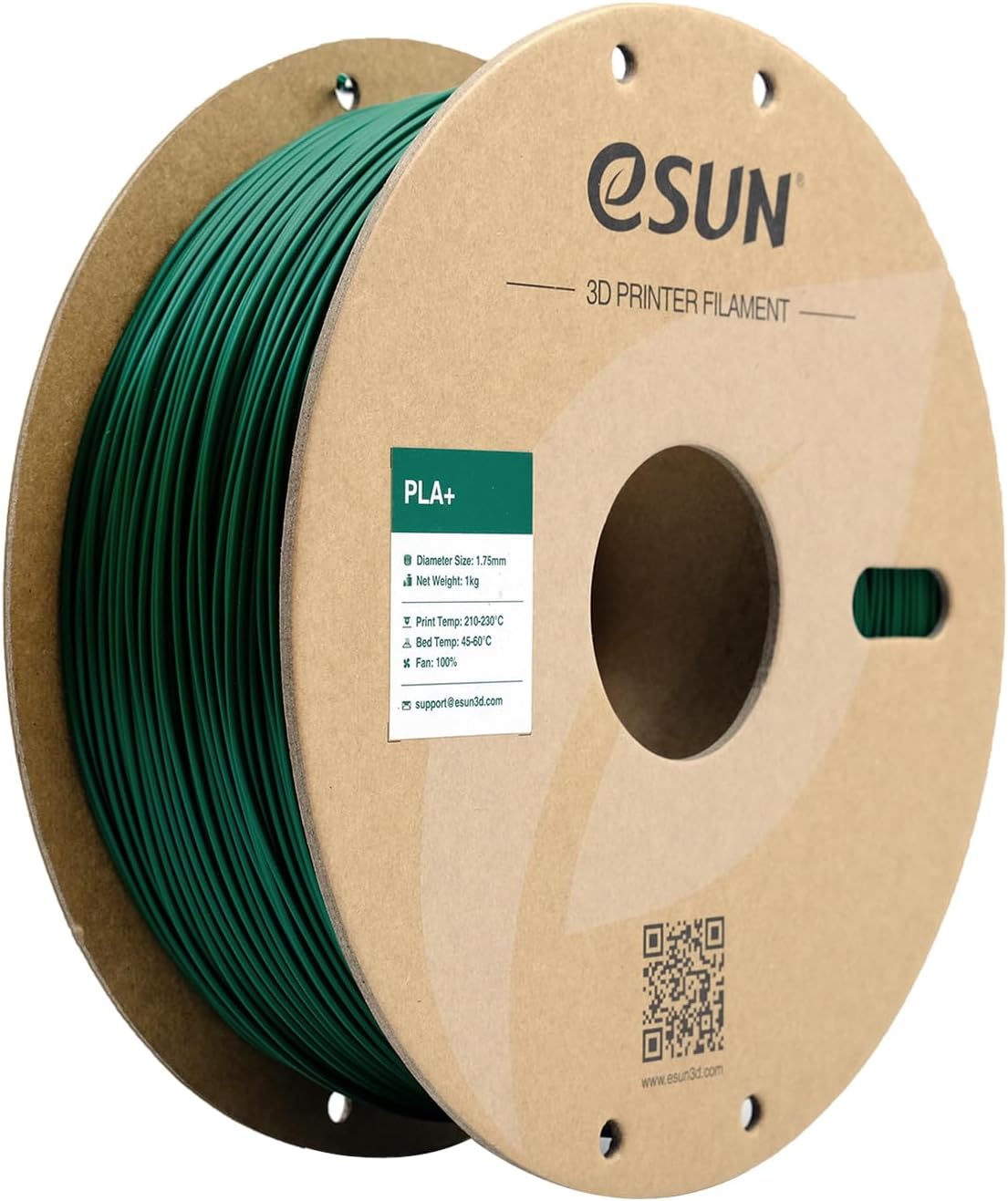
A concrete example: imagine printing a Pine Green organisational clip or a small bracket for a shelf. PLA can be a bit too rigid for repeated flexing or for parts that see knocks. With PLA+ described as “not easy to break” and with “good layer bonding performance”, it’s the kind of material you’d pick when you want your part to survive real-life handling more than it survives being admired only.
It’s also pitched for functional parts that benefit from toughness rather than pure cosmetic stiffness.
Key benefits that matter for buying
What stands out most for a purchase decision is how eSUN frames the filament for consistency:
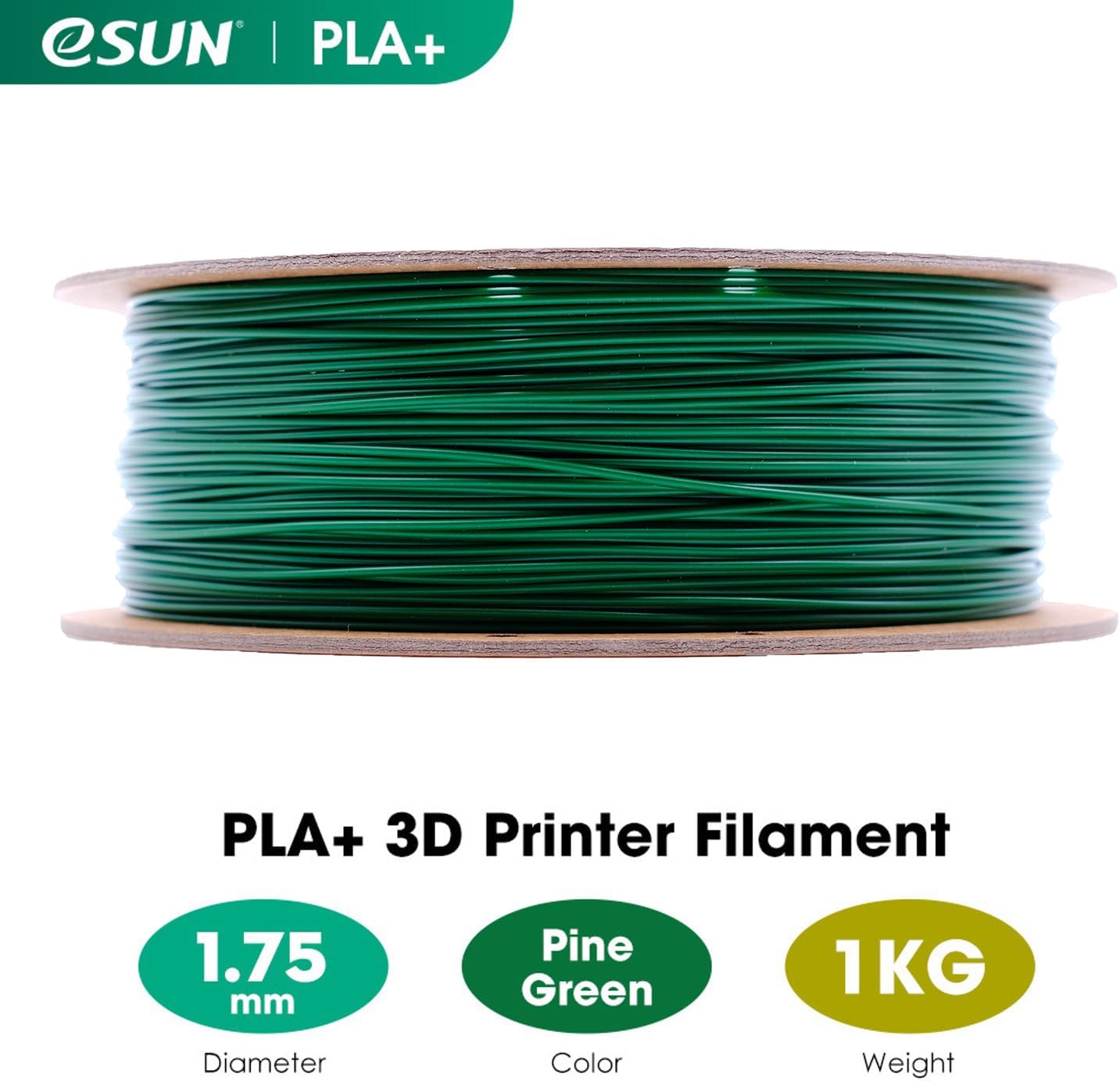
- Dimensional tolerance is stated as ±0.03mm, with the aim of more consistent feeding and stable prints.
- It’s described as less prone to warping and deformation, which is a common pain point with many filaments depending on your environment.
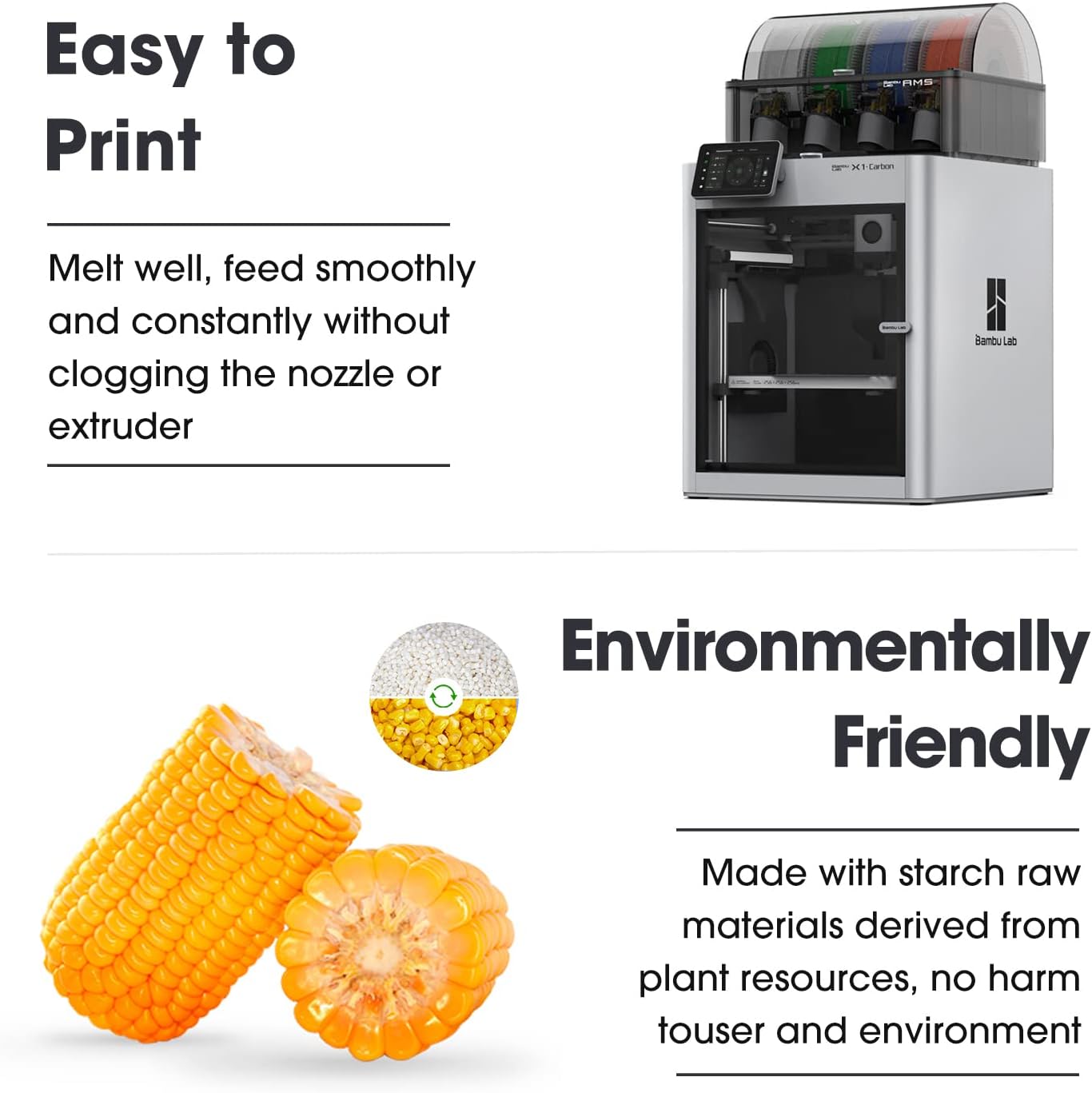
- For print feel, it’s claimed to melt well and feed smoothly, with “no clogging” and fewer issues like stringing and bubbles.
There’s also a “tangle free & no plugging” angle, including a total length of 340–350m on a full 1kg spool, and tight diameter tolerance plus good winding. Again, that’s the kind of detail you only really appreciate once you’ve had a spool that tangles or introduces inconsistent diameter mid-print.
At a glance: strengths vs. potential limitations
The straightforward case for buying this filament is when you’re after PLA+ toughness rather than going fully into speciality materials. It’s meant to combine strength, better toughness, and the “easy to print” comfort people expect from PLA.
That said, there’s a reasonable limitation to keep in mind: the claims are framed around performance and consistency, but we don’t get specifics here about how it compares under heavy impact, long-term outdoor exposure, or heat resistance. So if your use case is truly demanding—high temperatures, harsh weather, or parts that need to flex repeatedly over time—you may want to consider other material types rather than assuming PLA+ will behave like engineering plastics.
Also, the filament is described as compatible with many FDM printers, but no exact settings are provided in the information you’ve given. So if your machine is picky, you’ll still need to dial it in.
Compatibility and what to check before you buy
eSUN PLA+ 1.75mm is described as compatible with most FDM 3D printers, with examples listed across popular brands and models (including Bambu Lab X1/X1C, Creality K1/K1 MAX, AnkerMake M5, Prusa, MakerBot, UltiMaker, Ender 3, Flashforge, Raise3D, FLSUN V400, Voron 2.4). It’s also positioned as widely used for things like machinery parts, electronics housings, automotive-related projects, decorations, and cosplay.
Before purchasing, the sensible checklist is simple:
- Confirm your printer supports 1.75mm filament (this product is explicitly 1.75mm).
- Make sure you’re using an FDM setup, not resin.
- If you care about precision, remember the tolerance claim (±0.03mm) is only one part of the equation—your printer calibration and setup still affect results.
- If you’re aiming for high-speed prints, keep expectations realistic: the filament is said to meet the demands of high-speed printers, but the actual outcome depends on your hotend, cooling, and profile.
What to expect from quality control and print behaviour
The information points to consistent diameter and reduced “nozzle clogging” risk, plus fewer stringing issues and less warping. It also mentions “no bubbles” and a high printing success rate, which suggests it’s made to behave predictably through longer sessions.
If you’ve had frustration with messy extrusions—overlaps, tangles, or inconsistent flow—this spool is specifically described as perfect roundness with tight diameter tolerance, along with good winding that avoids overlap/tangling. That’s the type of improvement that often shows up as fewer interruptions rather than as a visible difference in the finished model.
Is it worth it?
Worth considering if you want PLA+ toughness for FDM printing, and you care about dimensional consistency, smoother feeding, and less hassle from stringing or warping. It suits people who print functional parts, brackets, holders, and hobby items where “not easy to break” and “good layer bonding” are genuinely useful.
It may not be the best match if your project relies on high heat tolerance, demanding outdoor conditions, or materials that need to behave more like engineering plastics. In those cases, PLA+ can be a step in the right direction, but it’s not automatically a full replacement for specialised high-performance filaments.
If you’re building for reliability over fragile prints—and you’re using a typical FDM machine with 1.75mm filament—this one makes sense on the shop-floor level, not just in theory.
Mini FAQ
Is this filament suitable for high-speed 3D printing?
It’s described as meeting the demands of high-speed printers while keeping strong performance at speed, but your final results will still depend on your printer and settings.
Does it help reduce warping and deformation?
The information states low shrinkage and no deformation, and also mentions low warping to support consistent feeding and stable prints.
Is it prone to tangling on the spool?
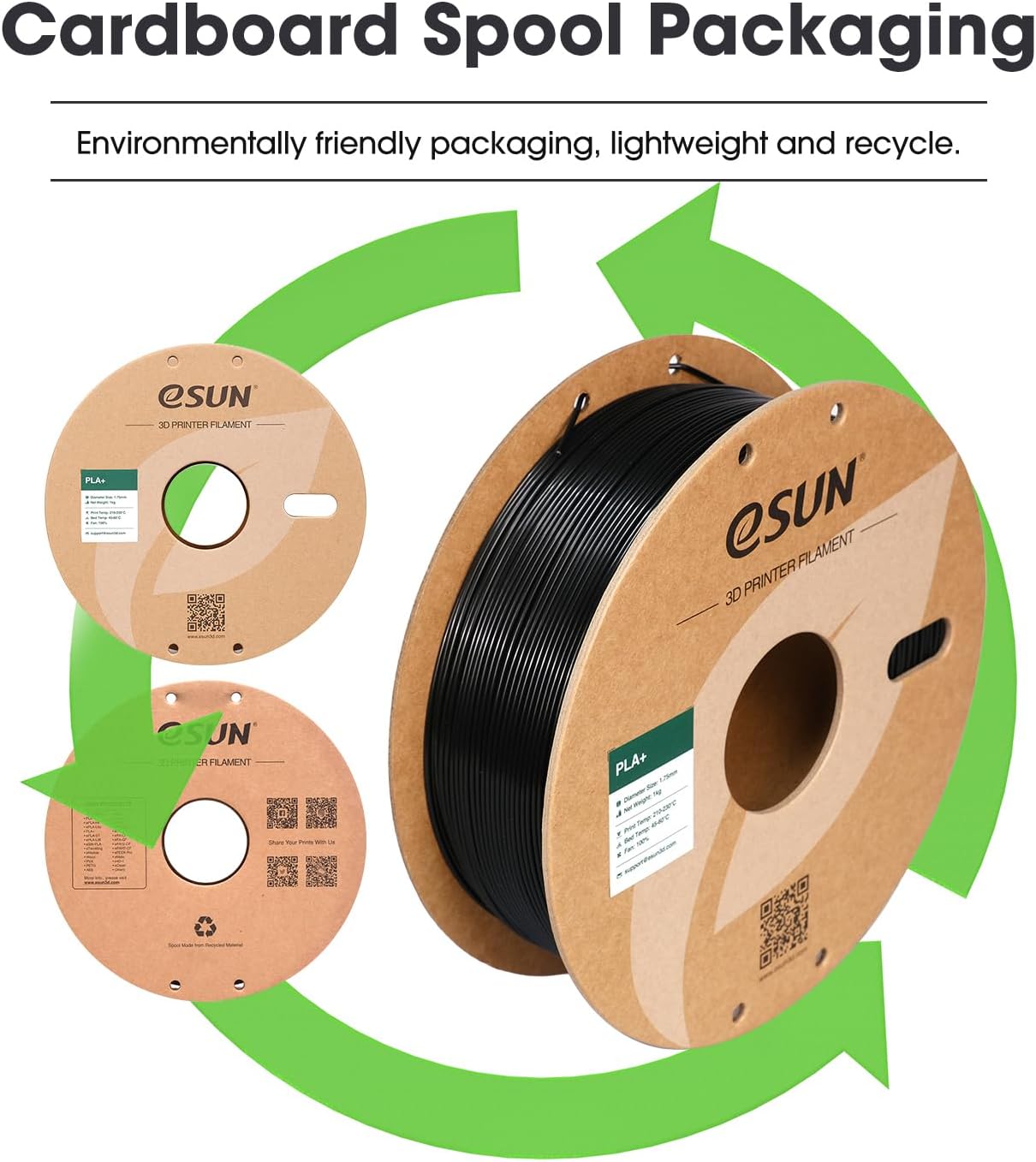
It’s marketed as “tangle free & no plugging”, with tight diameter tolerance and good winding intended to prevent overlap and tangling.
What printers is it compatible with?
It’s listed as compatible with most FDM 3D printers, and several models are named in the provided description.
What’s the filament size?
This product is for 1.75mm filament users.