

Esschert Fallen Fruits GT121 Copper Plated Dibber for planting bulbs and seeds
Product description
The essentials
If you grow bulbs or you’re the kind of gardener who likes planting plans that actually get finished, a dibber can feel like one of those “small tools, big difference” purchases. The Esschert Fallen Fruits GT121 Copper Plated Dibber is designed for making planting easier and more consistent by helping you push through soil and tidy up the process of placing bulbs, plants or seeds at the right depth.
On paper, the real selling point here is how it’s built for efficient digging: it’s intended to break through hidden obstacles under the ground, so you’re not constantly fighting clumps of compacted soil or things you didn’t see coming. The T-grip handle also aims to make turning the tool with your hand feel straightforward, which matters when you’re repeating the same action dozens of times.
Key features (and what you’ll notice)
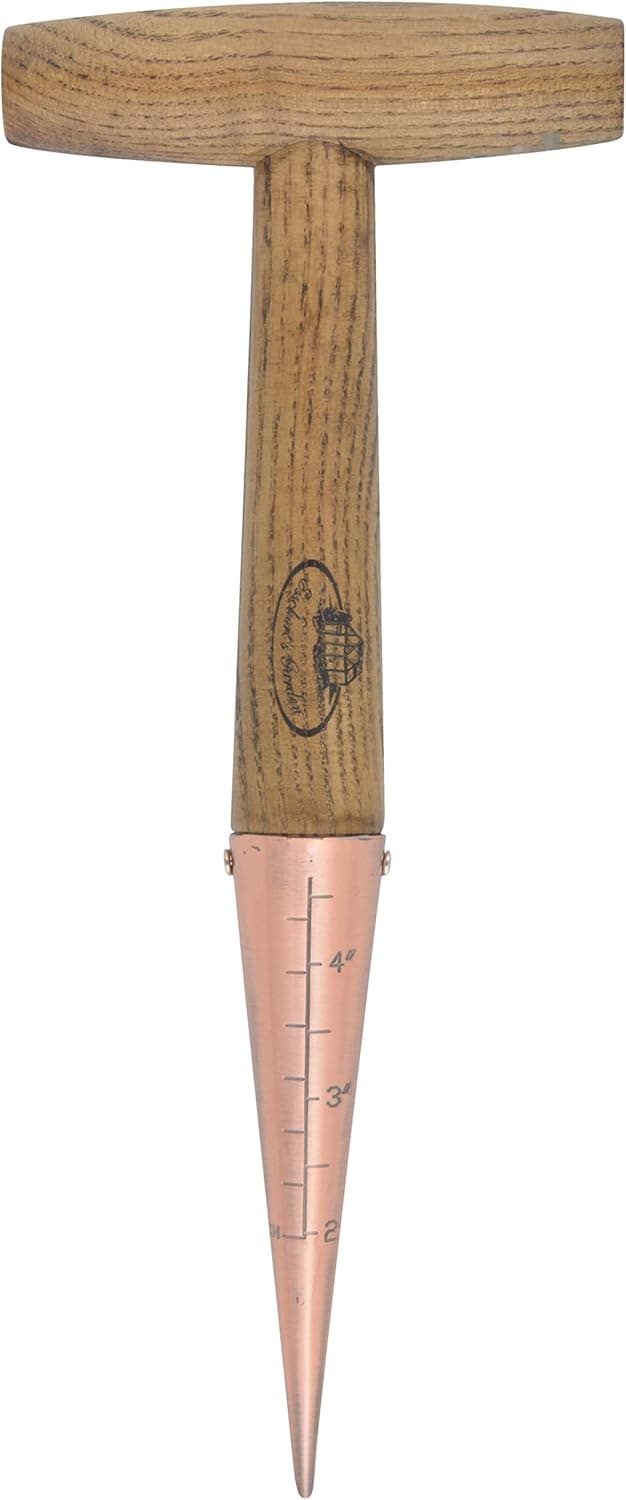
This is a planting dibber with a T-shaped grip that’s meant to fit comfortably in the hand. That shape isn’t there just for looks: it’s there to help you rotate the dibber smoothly while you work. If you’ve ever had a dibber that feels awkward to turn, you’ll know how quickly it slows you down.
The handle is wooden, and it includes a practical hanging strap. That’s a small detail, but it’s genuinely useful in a shed or garage where tools tend to get knocked about. As for the “copper plated” finish, that’s part of the tool’s identity and how it presents itself—just bear in mind that the entry description doesn’t go into corrosion guarantees, so you’ll still want to store it sensibly after use.
Also, the “obstacles under the soil” idea is worth taking seriously. Depending on your garden, planting can be more than just pushing into soft earth—roots, stones and other unseen bits can turn a simple job into a chore. A dibber like this is meant to reduce the effort and keep your planting session moving.
How it fits into everyday gardening
A dibber is for the basics: creating planting holes and positioning bulbs and seeds. In practice, that could look like this—standing along a bed line, placing the dibber at the spot, pressing down, rotating using the T-grip, then lifting to reveal a neat hole ready for a bulb or seed. Repeat along the row without your hands getting tired in weird angles.
It can also help if you prefer a cleaner, more deliberate planting rhythm rather than digging larger holes and then adjusting. For small to medium planting jobs, it’s the kind of tool that can make the task feel less like a weekend project and more like something you can fit into regular garden time.
What matters most before you buy
This product description doesn’t mention specific dimensions, soil compatibility, or how deep it can reliably go. That’s not unusual for garden hand tools, but it does mean you should check what you’re expecting from it.
A couple of practical things to consider:
- Your soil type: if you often deal with very heavy or stony ground, the “break through hidden obstacles” design is appealing, but you’ll still want to see how the tool feels in use.
- The jobs you’ll repeat: if you mostly plant bulbs and small seeds, a dibber makes sense. If you’re doing large-scale digging, you’ll likely need something more substantial.
- Storage and handling: the wooden handle and hanging strap are a plus for keeping things tidy, but wood also tends to benefit from careful storage (dry, away from constant damp).
It might not suit you if you want a tool with clearly stated depth markings or fully specified measurements—those details simply aren’t provided here.
Who it suits (and who should skip it)
It’s a solid fit if you want a dedicated planting tool that helps you create holes with less fuss, and you value an ergonomic grip for turning while you work. It also makes sense if you like the idea of dealing with “what’s under the soil” rather than getting stuck and losing time.
It may not be the best match if you’re expecting a dibber to replace all digging tasks, or if you need detailed specs like maximum working depth or exact hole size. In that case, you might prefer a more fully specified tool or a different planting approach altogether.
Final verdict
It’s not trying to be a miracle worker—it’s a practical planting dibber built around easier insertion and turning, plus a comfort-focused T-grip and a hanging strap for keeping it organised. If your garden work involves bulbs, plants or seeds and you want to speed up hole-making without dragging out bigger tools, the Esschert Fallen Fruits GT121 Copper Plated Dibber is worth considering. Just don’t buy with the assumption that it has specific depth or size guarantees that aren’t stated in the information you’ve got here.
Mini FAQ
What is a dibber used for?
A dibber is mainly for creating planting holes for bulbs, plants or seeds, using a controlled push-and-rotate action.
Does this tool help with obstacles in the soil?
The description says it’s designed to break through hidden obstacles under the soil to save time and energy.
What’s the point of the T-grip?
The T-shaped grip is intended to fit your hand easily and make turning the tool simpler while you plant.
Is the handle easy to store?
Yes—there’s a wooden handle with a strap meant for hanging.
Is copper plating just for looks?
It’s part of the product’s finish, but the provided details don’t include performance or corrosion claims, so it’s best to treat it like a garden tool that still needs normal, sensible storage after use.