

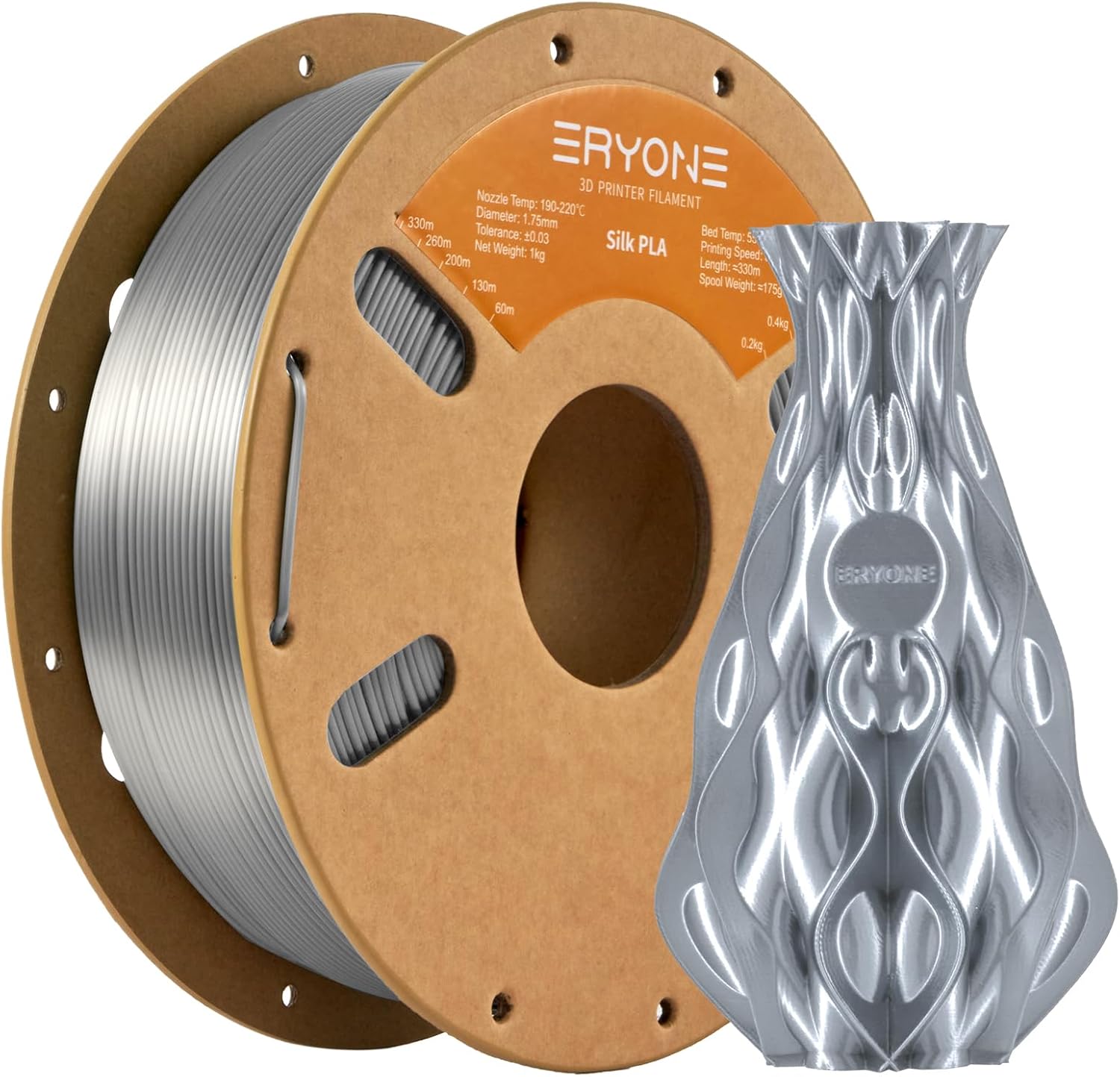
ERYONE Silk PLA 1.75mm 1kg spool — Silk Silver
Product description
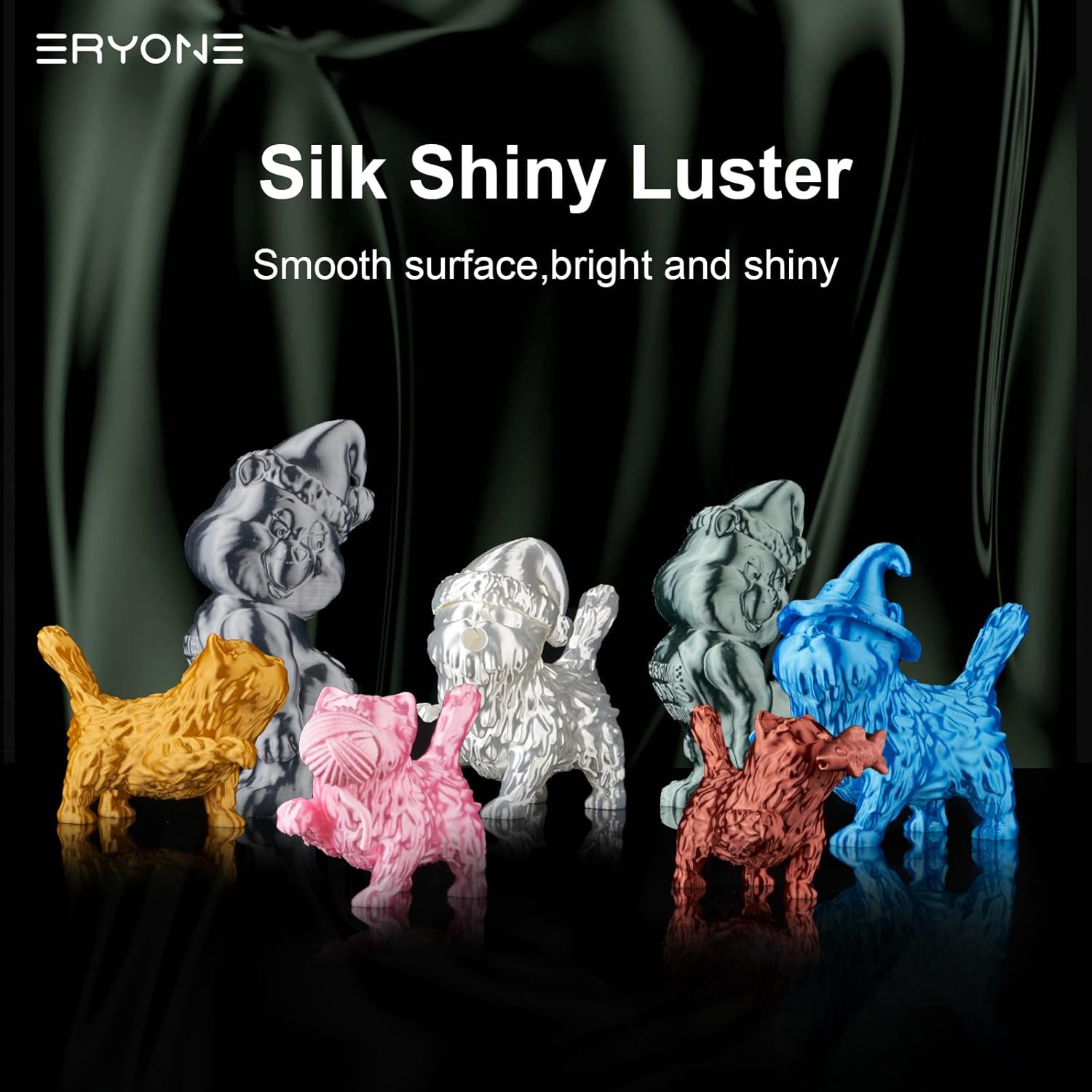
This silk PLA filament delivers a visible sheen and smoother layers for decorative prints and display pieces, making it easier to achieve eye-catching results without intensive post-processing. If you are looking for a silk PLA filament 1.75mm that balances ease of printing with a glossy appearance, this spool offers a user-friendly option for hobbyists and makers. 😊
Key Points
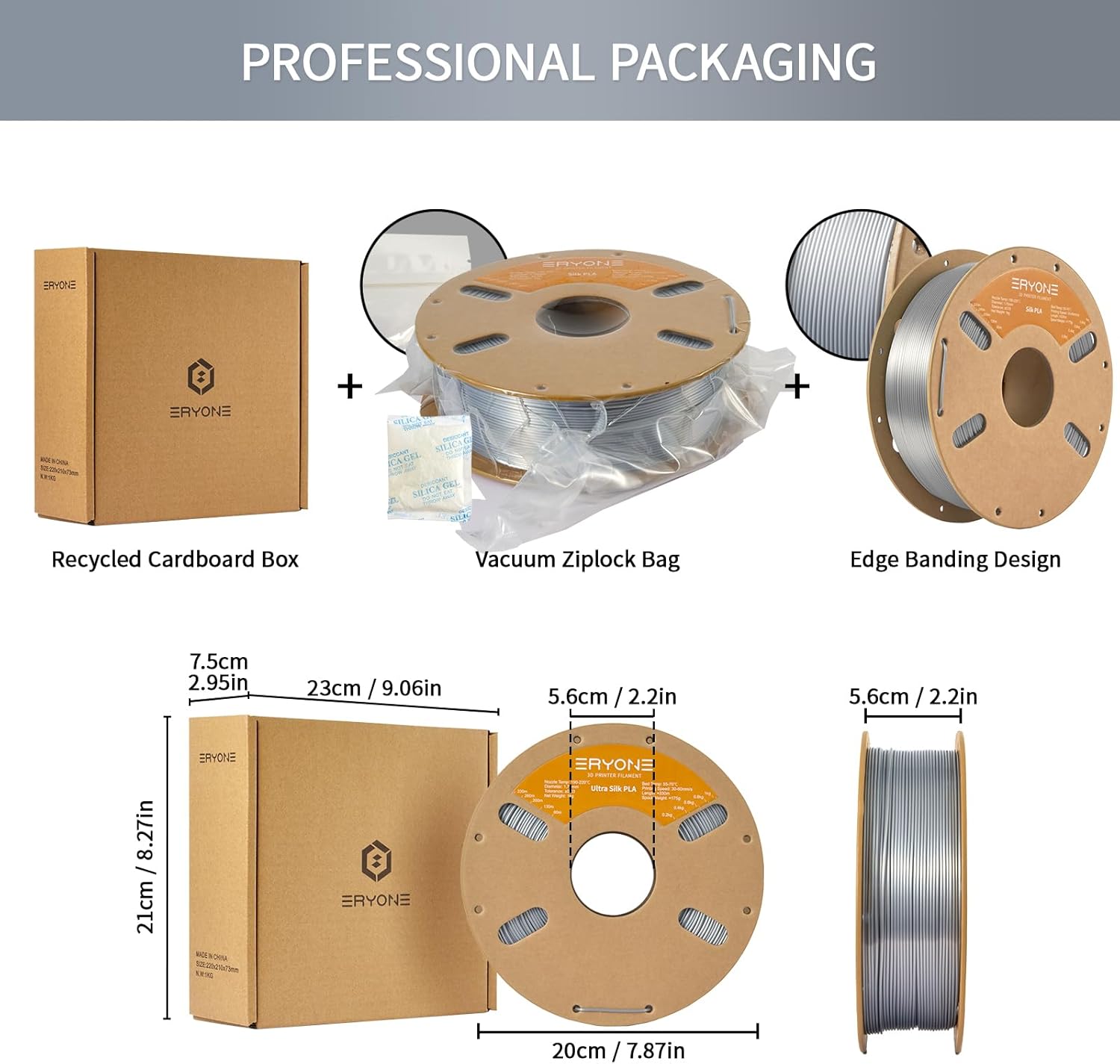
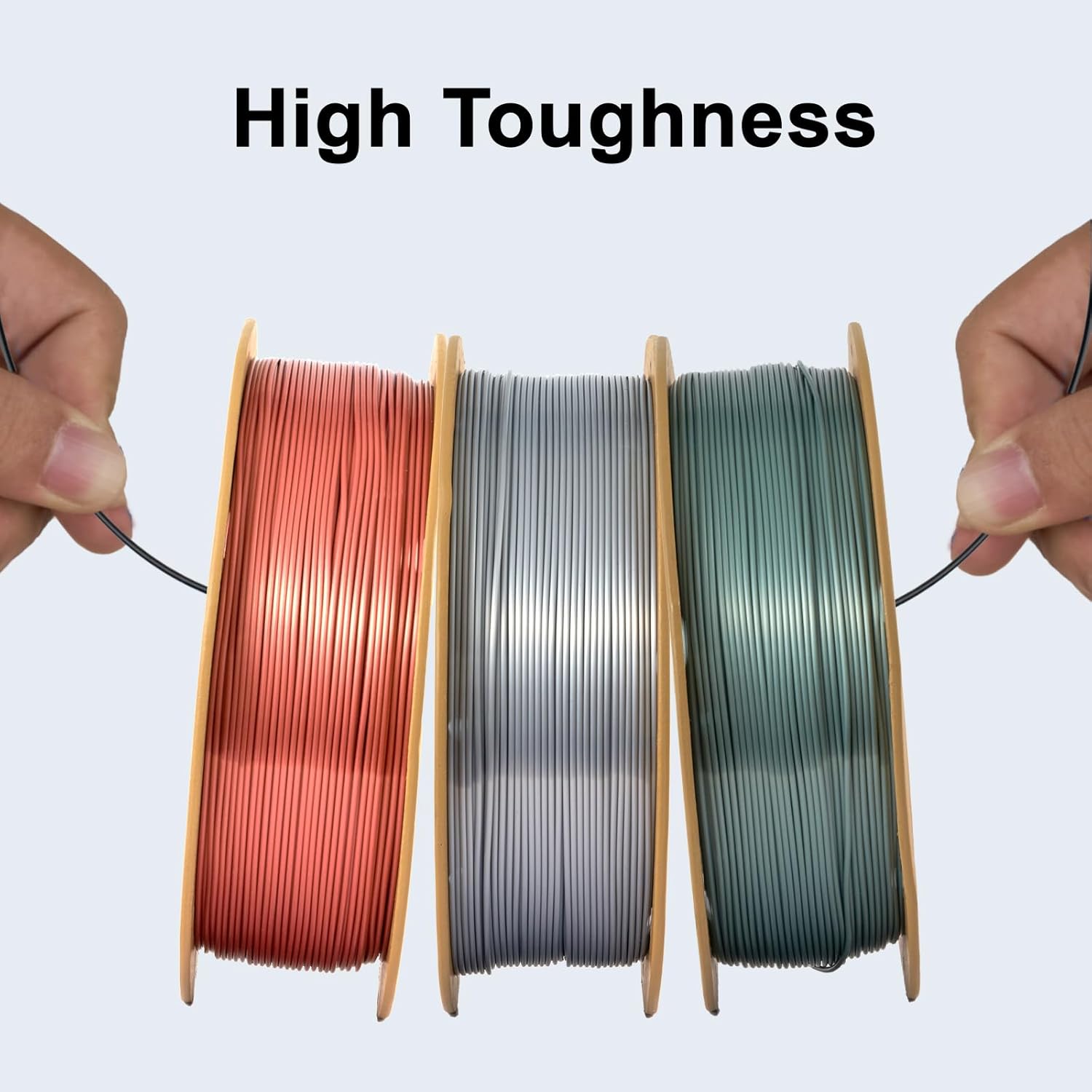
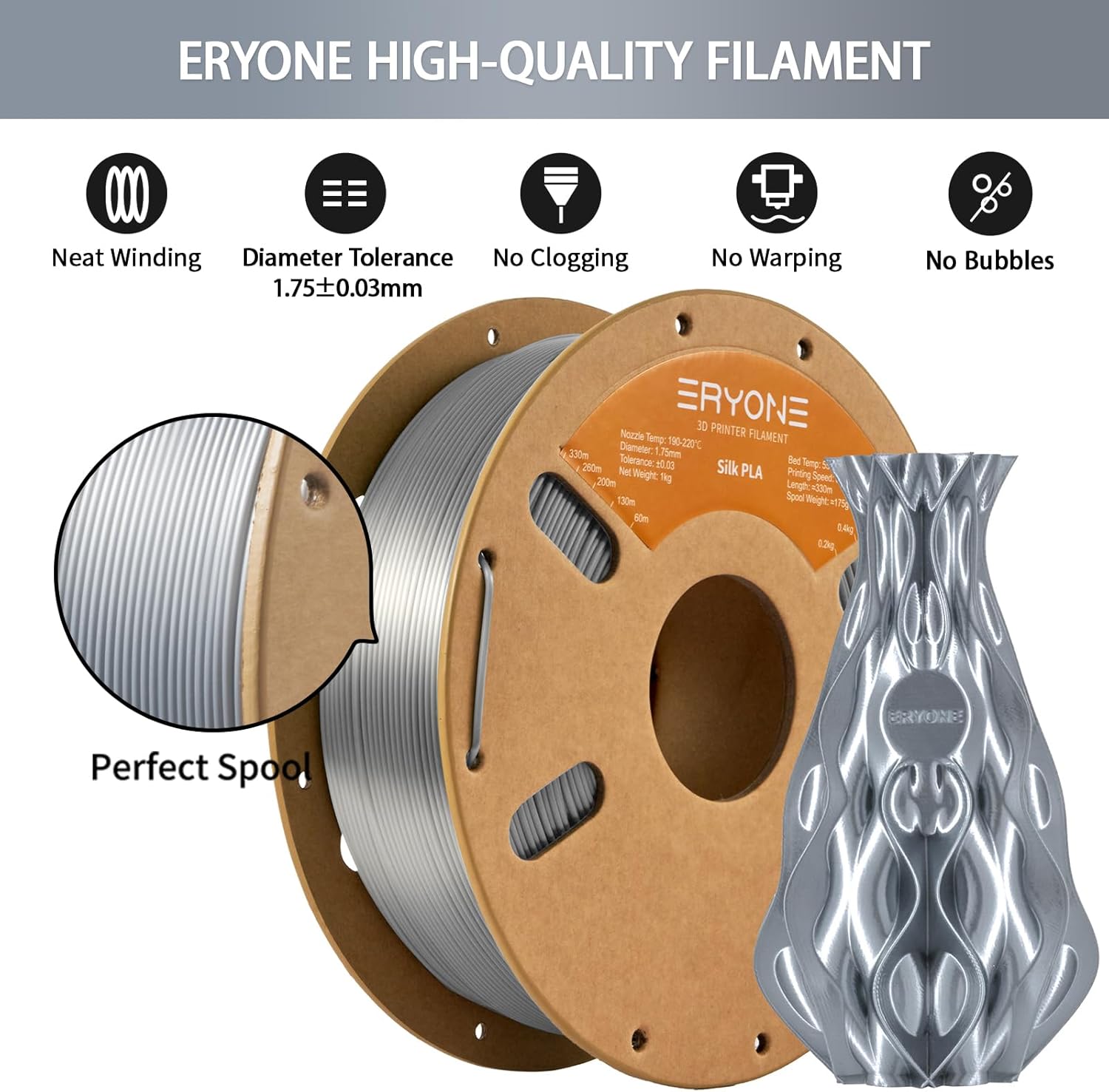
The filament produces a soft, silky surface with high gloss that reduces the appearance of layer lines and gives finished parts a polished look. It has good toughness according to the manufacturer, so printed parts are less brittle than some standard PLA options. The spool is vacuum-sealed to keep the filament dry and free from dust, and the coil is carefully wound to minimise tangles and feeding issues during long prints.
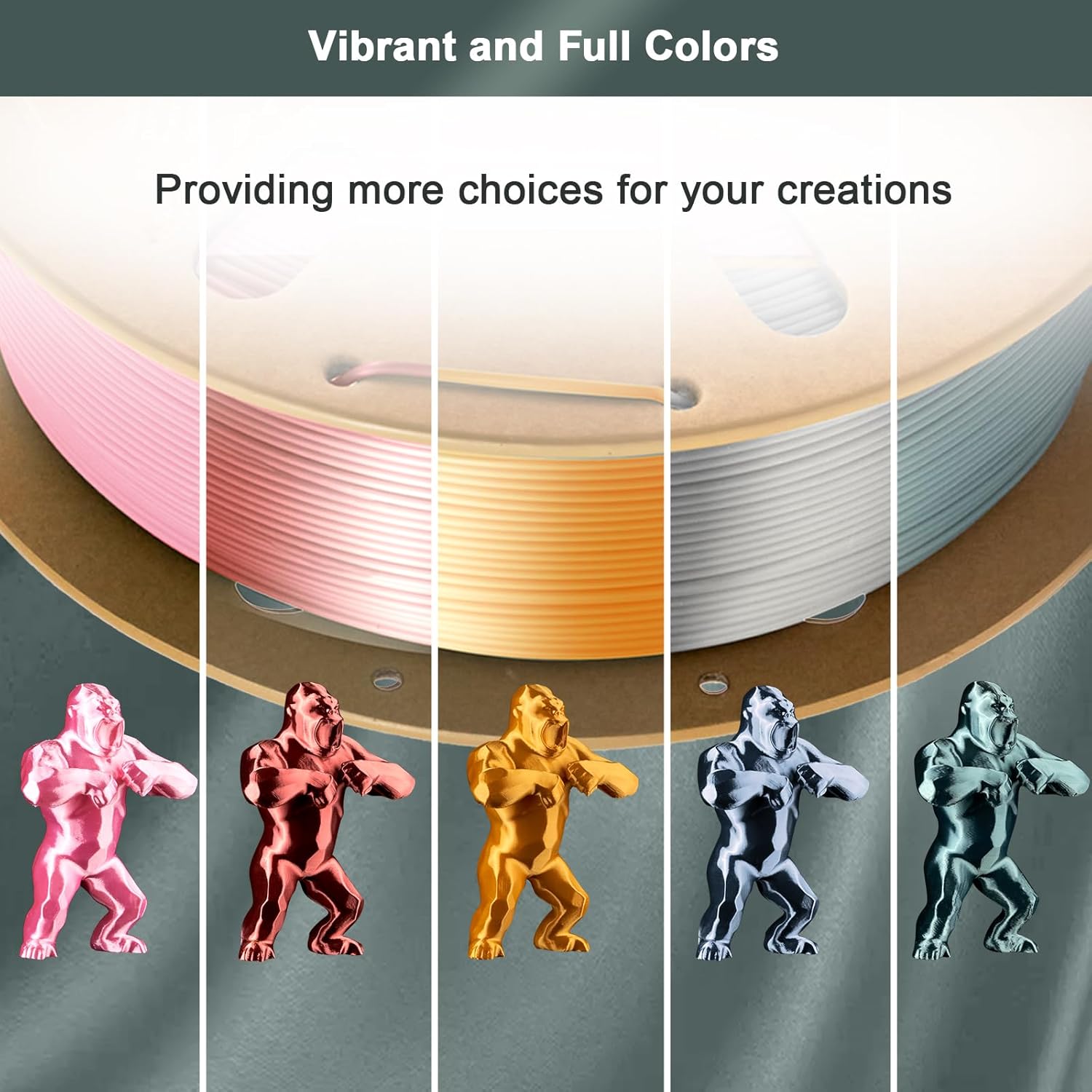
Printing is straightforward with a moderate temperature range, which helps prevent warping and simplifies set up for machines already dialled in for PLA. Colour fidelity and surface sheen make this filament particularly suitable for figurines, decorative items and prototypes where visual impact matters. 🎨
Technical Specifications
- Name: ERYONE Silk PLA Filament 1.75mm
- Diameter: 1.75 mm, tolerance ±0.03 mm
- Print temperature range: 190-220 ℃
- Net weight: 1 kg (2.2 lbs)
- Spool dimensions: inner diameter 57 mm, outer diameter 200 mm, height 64 mm
- Gross weight: 1.35 kg
Usage Recommendations
For best results use a standard PLA print profile with the lower end of the temperature range for fine details and the higher end for stronger layer adhesion. Bed adhesion can usually be achieved with a lightly prepared build plate, for example blue tape or a thin glue stick layer, and minimal or no brim is often sufficient. If you want to accentuate the silk look, experiment with slower print speeds and increased cooling to enhance surface gloss and reduce visible lines. ⚙️
Consider that highly detailed small prints may still show some layering due to geometry. Also note that, as with many specialty PLA blends, optimal settings can vary slightly between printers, so running a small calibration tower is helpful before committing to large prints. 🧰