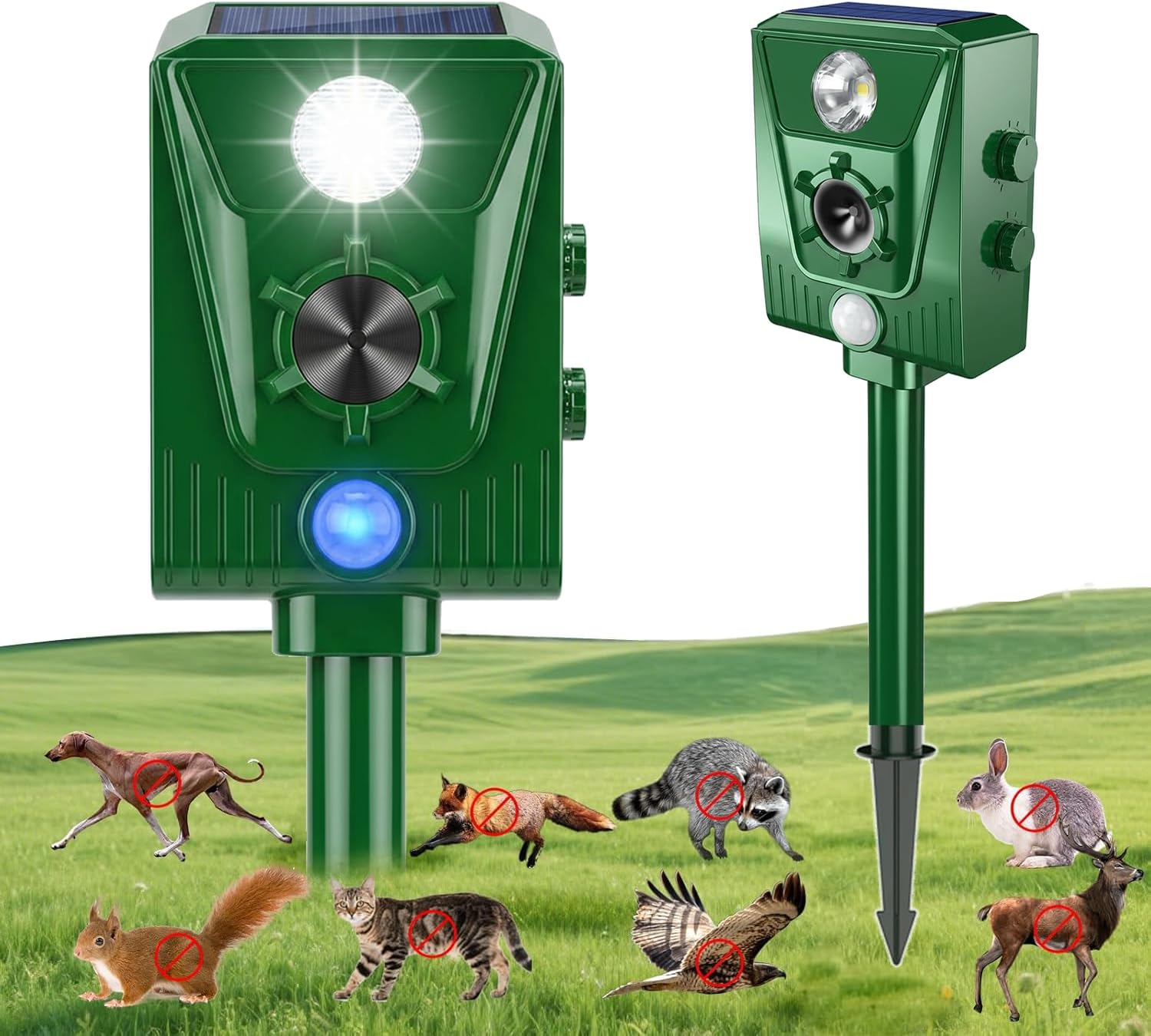
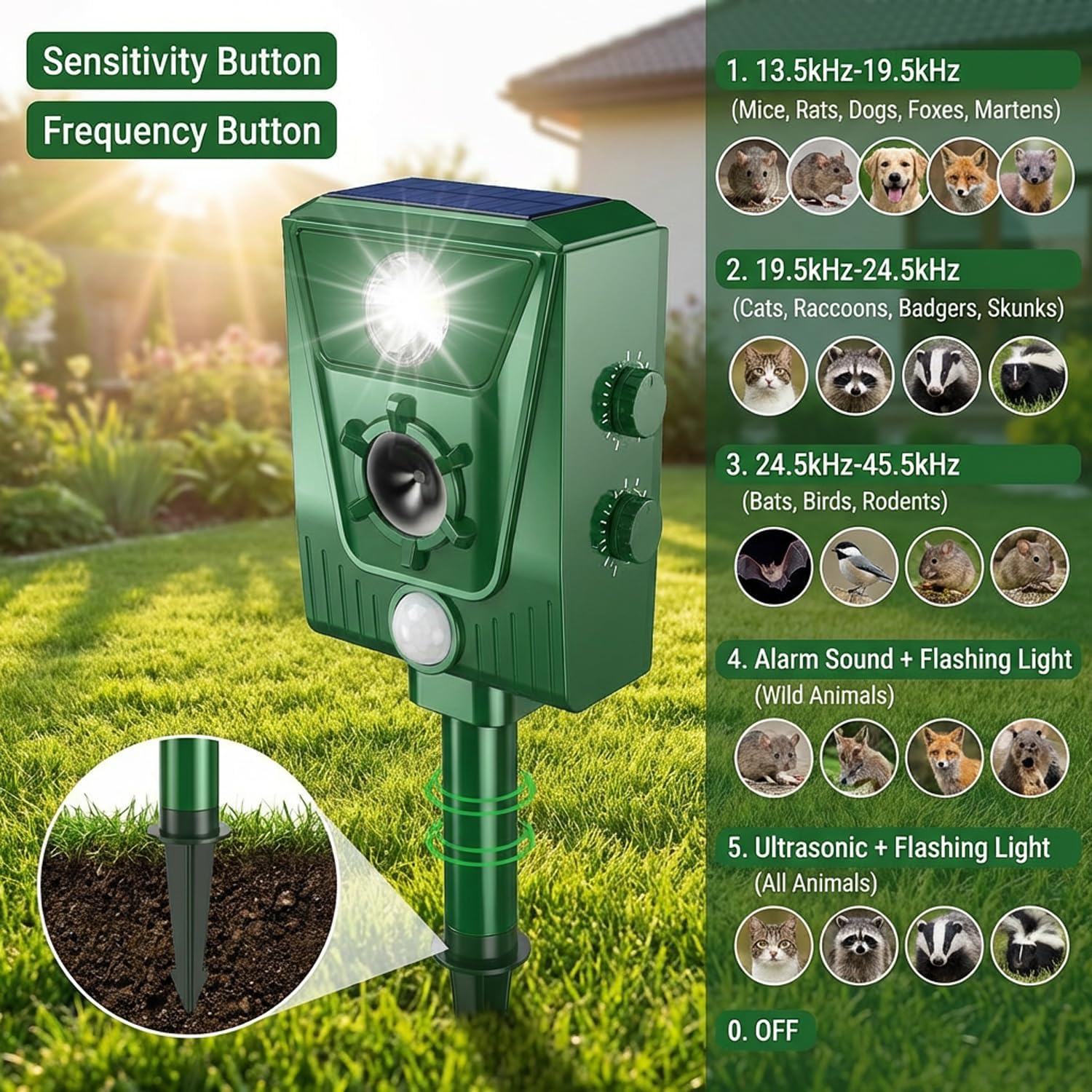
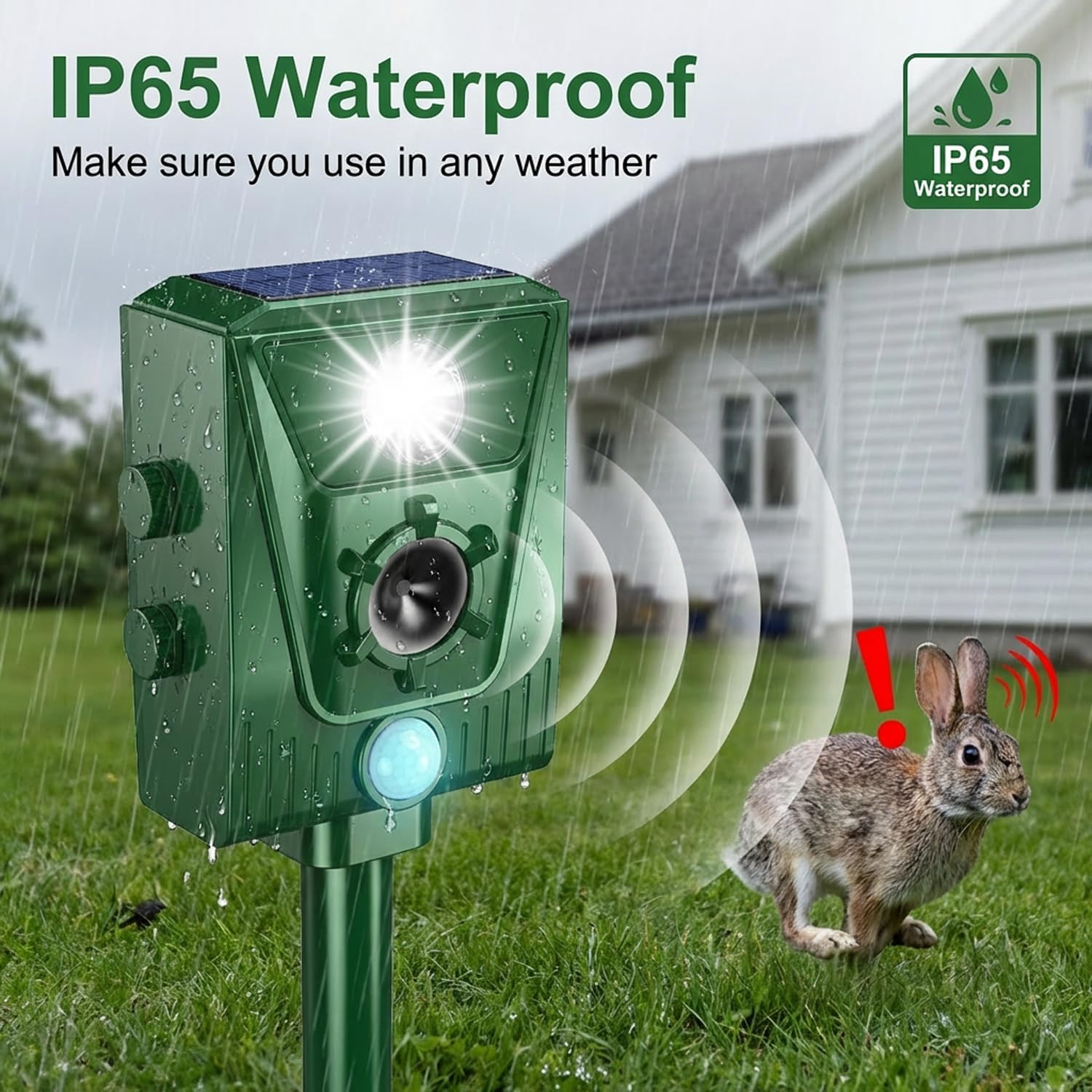
What it is and what it’s for\nThe EMS Ultrasonic Fox Repellent is a solar-powered, waterproof animal deterrent designed to protect gardens from unwanted wildlife such as cats, dogs, foxes, squirrels, rodents and some larger animals. On the face of it, the device uses ultrasonic waves paired with a flashing light to discourage animals from entering your space. If you’re tired of droppings, damaged plants and disturbed nests, this could be a practical contender to consider.\n\n## How it works in everyday use\nThe product relies on a PIR motion sensor with an effective detection angle of up to 50 degrees and a range of around 8 metres, which translates to a stated large detection area of approximately 230 square metres. In practice, you’ll want to position it where animal activity is most frequent, aiming it at a clear line of sight rather than behind obstacles. The combination of sound and visual deterrence is meant to be non-harmful and humane, serving as a nudge away from your garden rather than a fix for deeper access issues.\n\n## Strengths and potential limits\nOn the upside, the unit is solar powered, which promises lower running costs and greater independence from mains electricity. Its waterproof design should cope with typical UK weather, from rain showers to damp conditions. A key practical note is the “warm tip” from the maker: when first unboxed, the sensor may not respond until you pre-charge it in sunlight for around 2 hours. In other words, it’s not instant out of the box and might require a short initial charging period before it starts deterring effectively.\nIf you prioritise a wide-area deterrent for a modest garden, this model offers a broad coverage claim and a straightforward, low-maintenance solution. However, performance can depend on animal habituation and environmental factors such as heavy foliage, which can screen the sensor. If you’re dealing with persistent or highly clever intruders, one device might not be enough and you may need to reassess placement or add additional deterrents.\n\n## What to consider before buying\nThink about the layout of your space: hills, fences, sheds and dense shrubs can create shadowed zones where the device’s sensor is less effective. Consider a higher mounting position to extend the sensor’s line of sight and ensure a clear field of view for approaching animals. The stated detection area is impressive, but practical results rely on unobstructed access. Also, note that the product description mentions a broad range of animals but does not specify every species or particular behaviours, this means it’s better suited to light-to-moderate wildlife pressures rather than severe infestation scenarios.\n\n## Use cases and who it’s for\nIf you have a small to medium garden where animals regularly cause minor damage to plants, compost, or pet food left outdoors, this deterrent could help reduce those issues without resorting to traps or pesticides. It may be a sensible option for households wanting a humane, low-effort solution that doesn’t require ongoing batteries or mains power. It might not be ideal if your primary problem is a frequent entry by larger wildlife or if your garden layout creates many sheltered zones that shadow the device.\n\n## Practical example of use\nImagine you notice recurring fox prints near the veggie patch. Place the repellent on a raised, secure surface facing the most active approach path. After a couple of weeks, you notice fewer droppings and less disturbed ground, with occasional dusk activity—likely a good sign the deterrent is doing its job without being intrusive.\n\n## Technical snapshot (brief)\nTech details below summarise the main attributes without overloading you with data: the unit uses ultrasonic sound plus flashing light, powered by a solar panel, and is built to withstand rain and cold. It relies on a PIR sensor with up to 8 m detection, 50-degree field, and claims up to 230 m² coverage in practice. It is rechargeable via sun and should be charged for a couple of hours before first use.\n\n## Is it worth it?\nWorth considering if you want a low-maintenance, solar-powered deterrent that covers a sizeable area and may help cut down garden disturbances without chemicals. If you expect to manage a larger or more active wildlife presence, you may need to assess additional devices or non-chemical strategies as a complement.\n\n## FAQ (based on available information)\n- How soon will it work after first use? It may require charging in the sun for about 2 hours before responding.\n- Can it handle heavy rain or snow? It is described as waterproof, so it should cope with typical UK weather, though extreme conditions aren’t specified.\n- Will one unit deter all animals? The device targets a range of common garden intruders but effectiveness varies by species and environment.\n\n## Final thought\nIf you’re looking for a pragmatic, solar-powered approach to modest wildlife disturbances, this EMS model offers a broad coverage option with straightforward maintenance. It isn’t perfect for every garden situation, but it can be a sensible part of a balanced deterrent strategy.