

Edifier M60 Compact Desktop Speakers 2.0 (Bluetooth 5.3, LDAC, 66W RMS) with USB‑C and AUX inputs – Black
Product description
What you’re getting (and why it matters)
Edifier’s M60 Compact Desktop Speakers 2.0 are a pair of small desk speakers built around one clear idea: give you proper desktop sound without eating half your workspace. They’re compact by any serious speaker standard, yet they’re designed to be more than “just multimedia” by including wireless Hi-Res support and DSP-based audio processing.
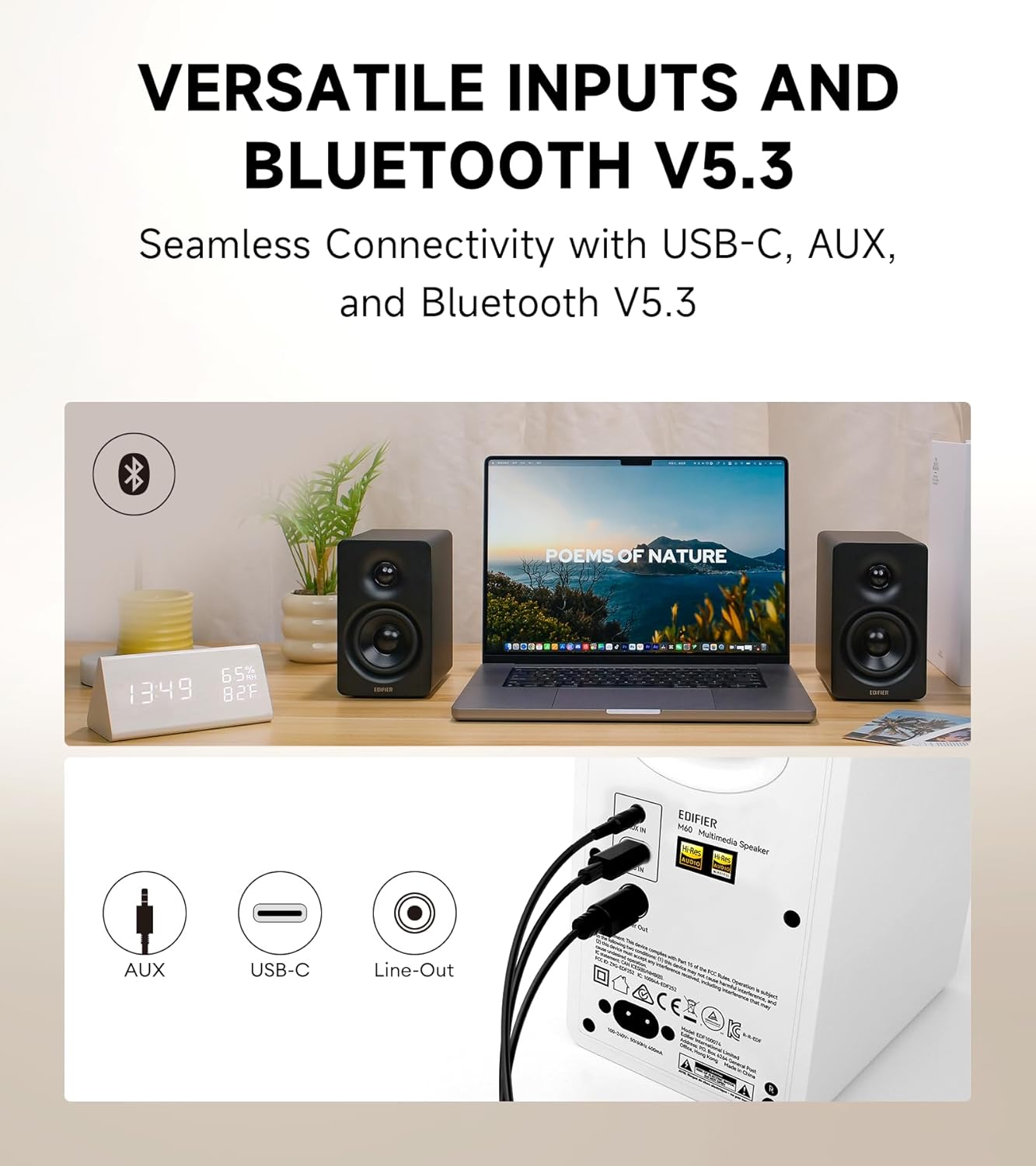
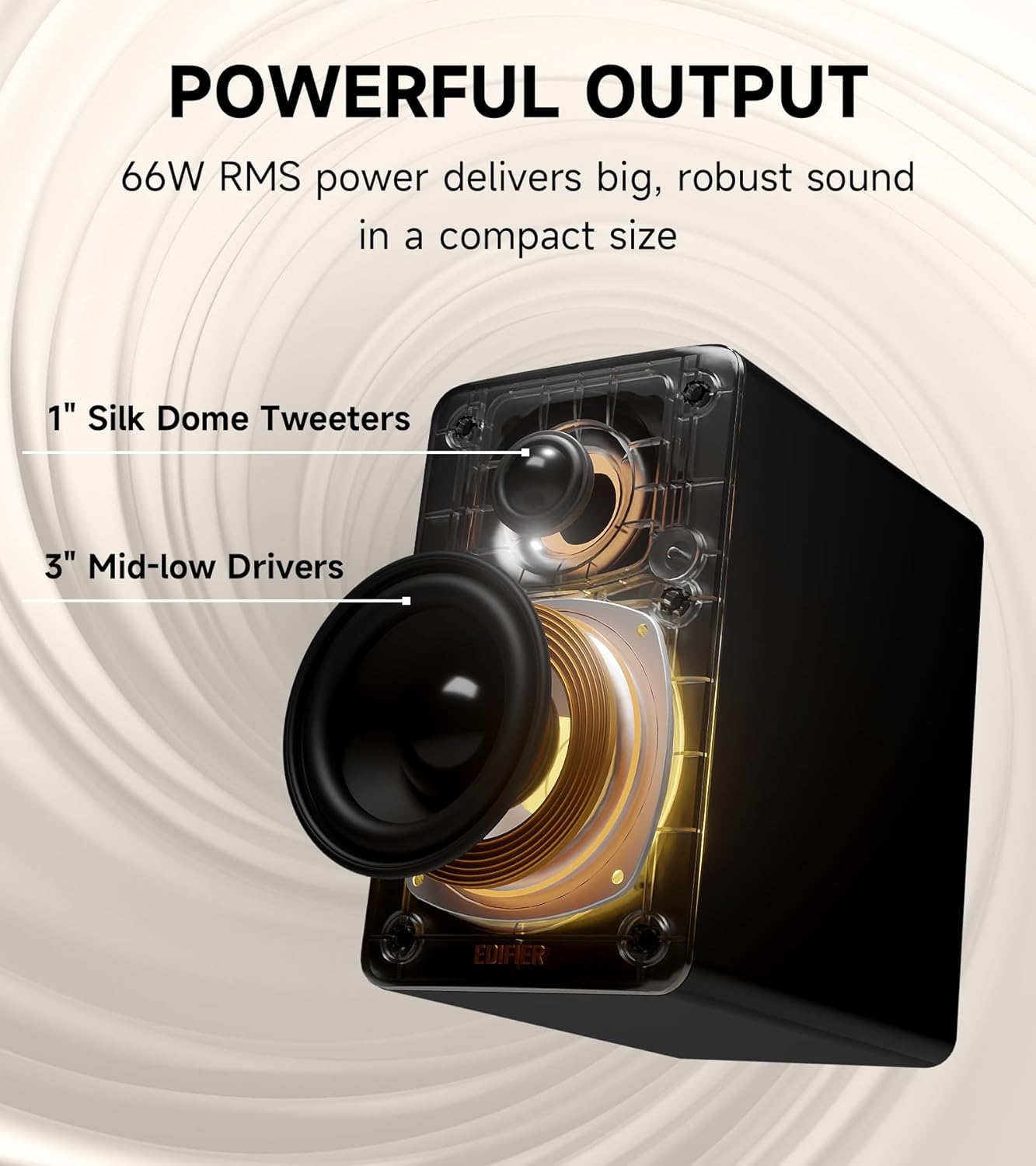
On paper, the mix is pretty sensible for day-to-day use. You get Bluetooth 5.3 with LDAC for higher-quality streaming where your phone supports it, plus wired options (USB‑C and AUX) for devices you want to keep stable and consistent. The drivers are a 3” mid-low unit paired with 1” silk dome tweeters, which should help cover both bass warmth and the detail you notice in vocals and acoustic tracks.
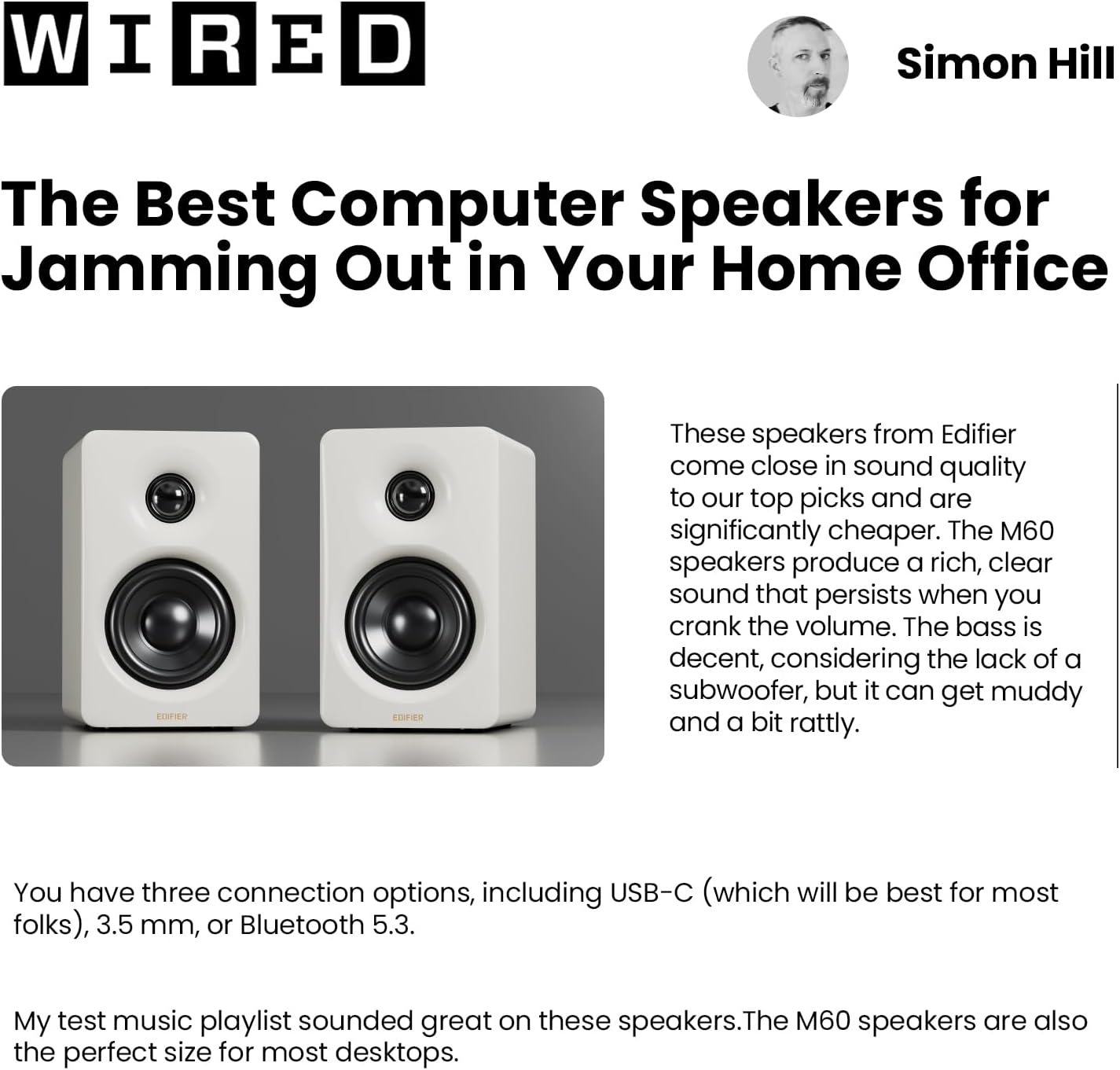
The real test is whether compact size limits what you can expect. If you’re coming from a big 2.1 system or larger bookshelf speakers, the M60 won’t pretend to be that. But for PC gaming, music listening at a desk, and occasional movie audio, this is the kind of footprint-friendly setup that’s easier to live with.
Key features that shape the sound
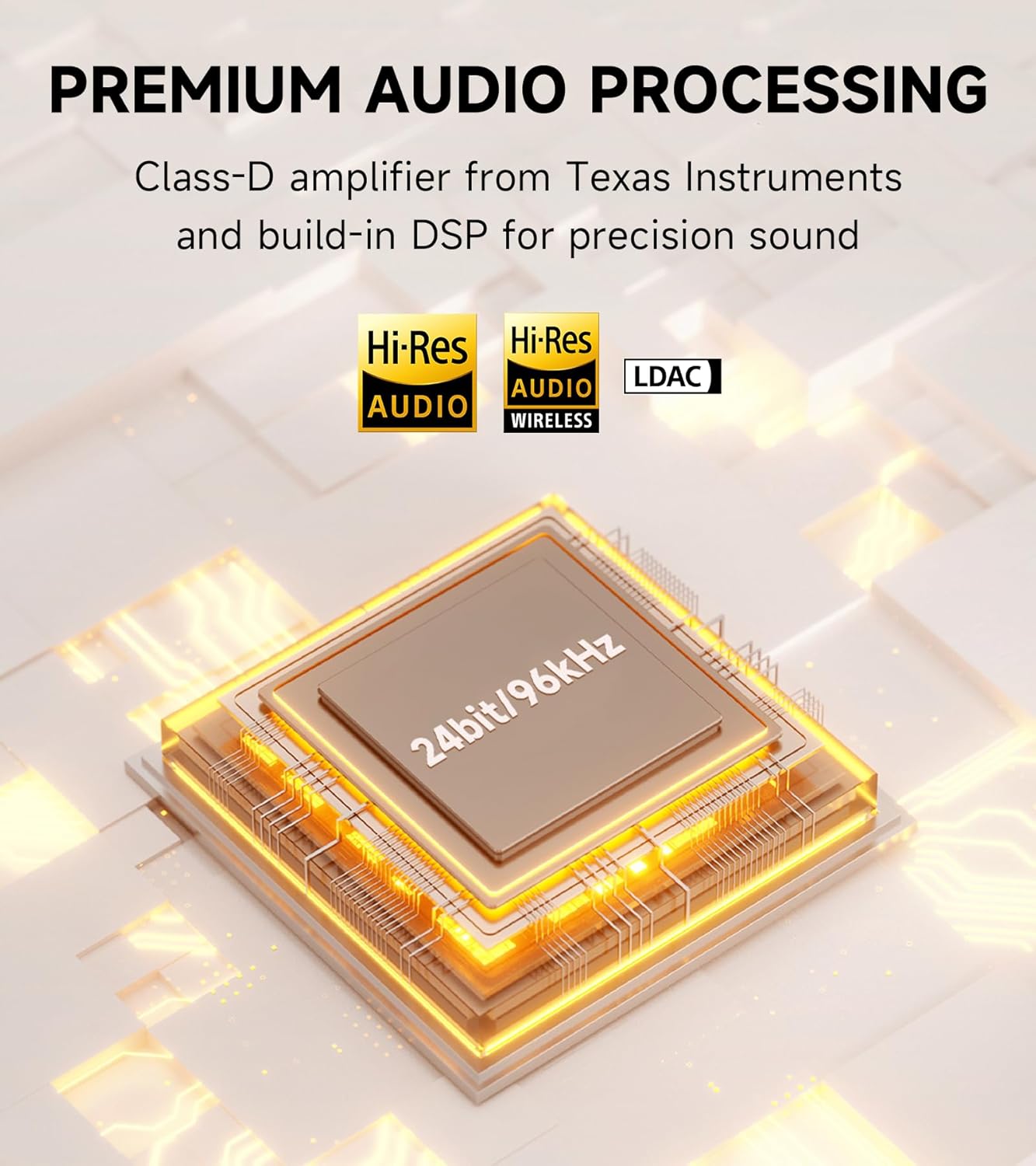
The headline spec is 66W RMS total output, split across mid-low and treble channels (18W+18W for mid-low, 15W+15W for treble). It also uses a high-efficiency closed-loop Class-D amplifier and a two-way active crossover, with dynamic range control handled by an onboard DSP.
Why that matters in practice: desk speakers tend to live in a fairly “controlled” environment—close to your ears, near your monitor. A two-way design and active crossover can help keep the sound coherent at these nearer distances, rather than relying purely on passive crossover behaviour.
Wireless audio performance: Bluetooth 5.3 with LDAC
Bluetooth 5.3 is included, and the big differentiator here is LDAC support. The receiver supports a transmission bitrate up to 990 kbps, and the claim is that it enables high-resolution streaming up to 24-bit/96kHz from Android devices running version 8.0 or later.
Still, it’s worth tempering expectations: LDAC quality depends on the phone, its settings, and real-world wireless conditions. If your device doesn’t support LDAC (or you’re not using it), you’ll still get Bluetooth audio, but you may not see the “Hi‑Res” part of the promise.
Connectivity for PC gaming and everyday listening
Edifier has kept the connectivity practical rather than fussy. You can use Bluetooth for convenience, or go wired via USB‑C and AUX for sources where you want a more direct path.
A typical scenario: you’re gaming on a PC, the speakers are on your desk, and you want low-latency, stable audio. Wired through the appropriate input can be the simplest way to avoid Bluetooth dropouts. When you switch to a phone for music, you can just tap over to Bluetooth and carry on.
If you’re the sort of person who alternates devices during the day, having both wired and wireless options is the right kind of flexibility.
Design and on-desk practicality
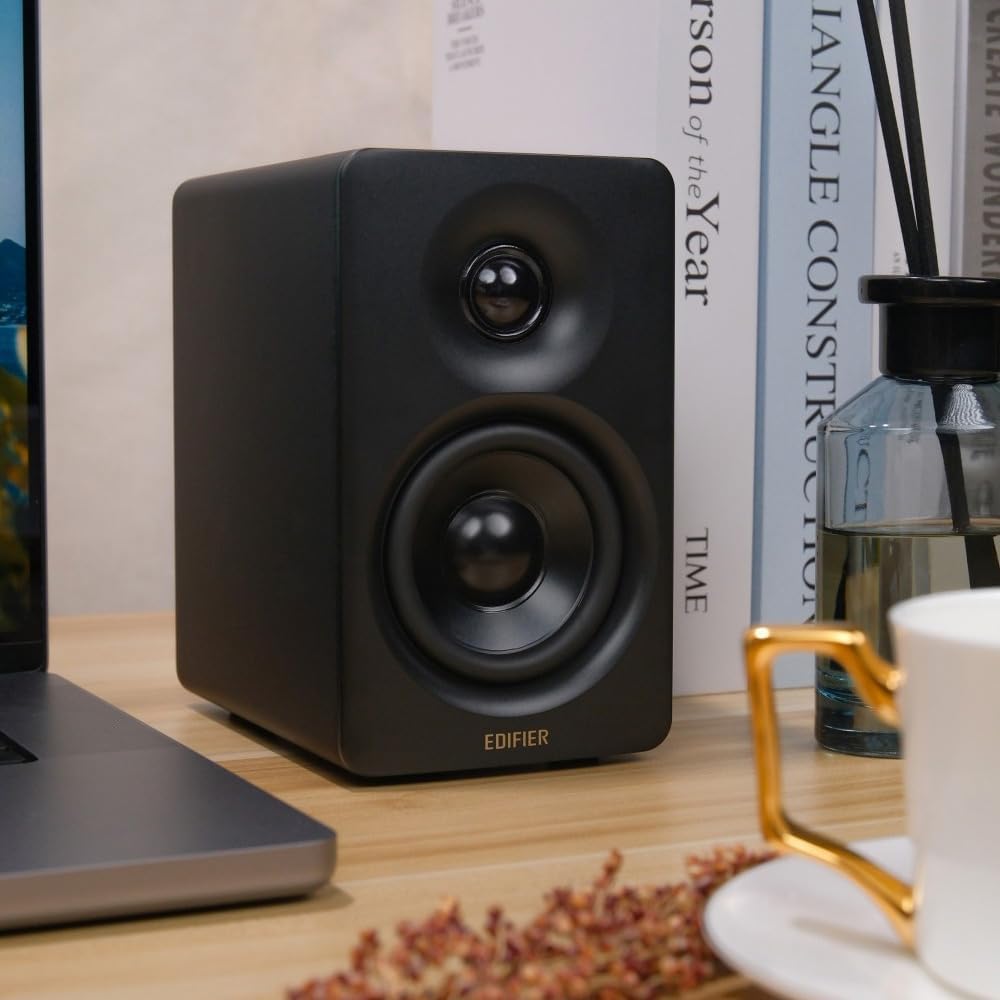
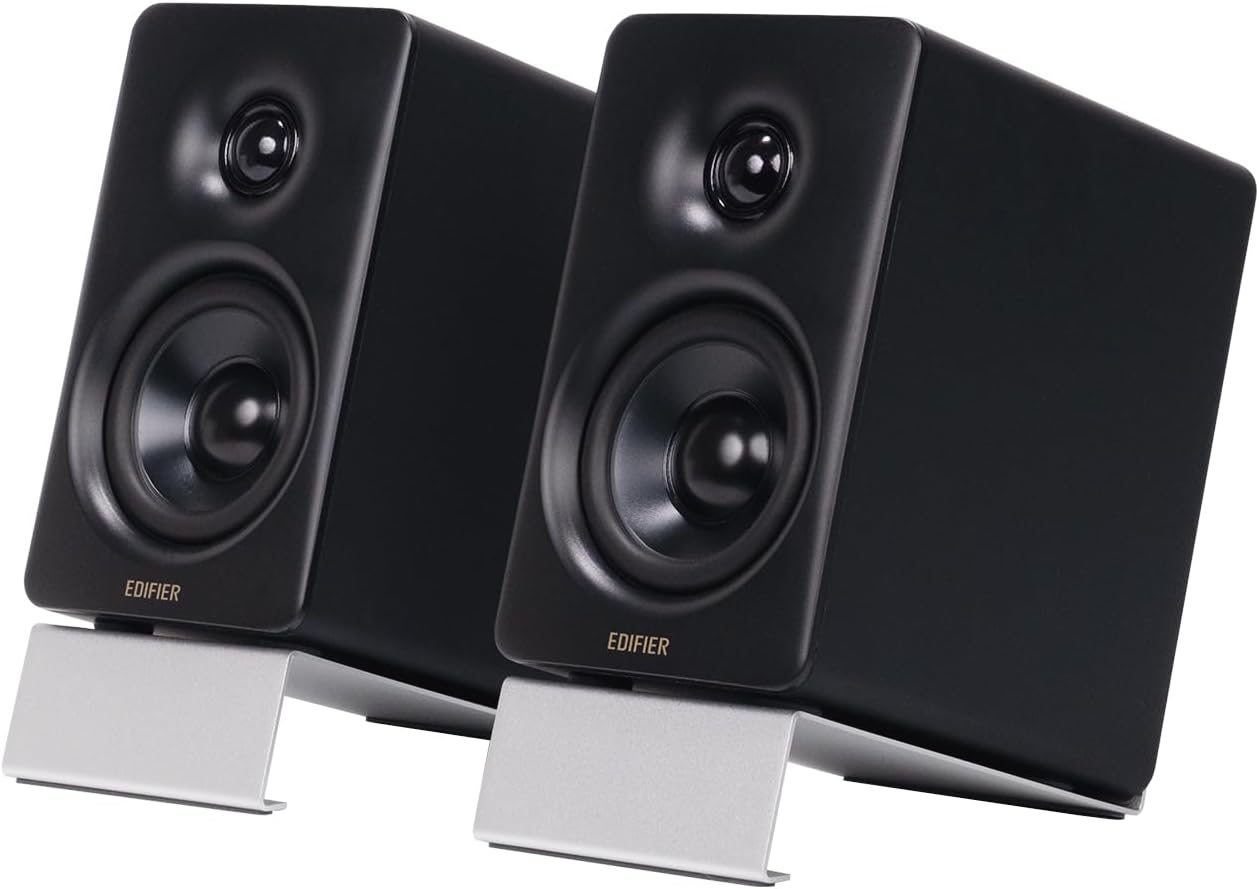
These speakers are designed to fit modern desktops: each unit measures 100mm (W) x 168mm (H) x 147mm (D). They also come with a pair of aluminium speaker stands.
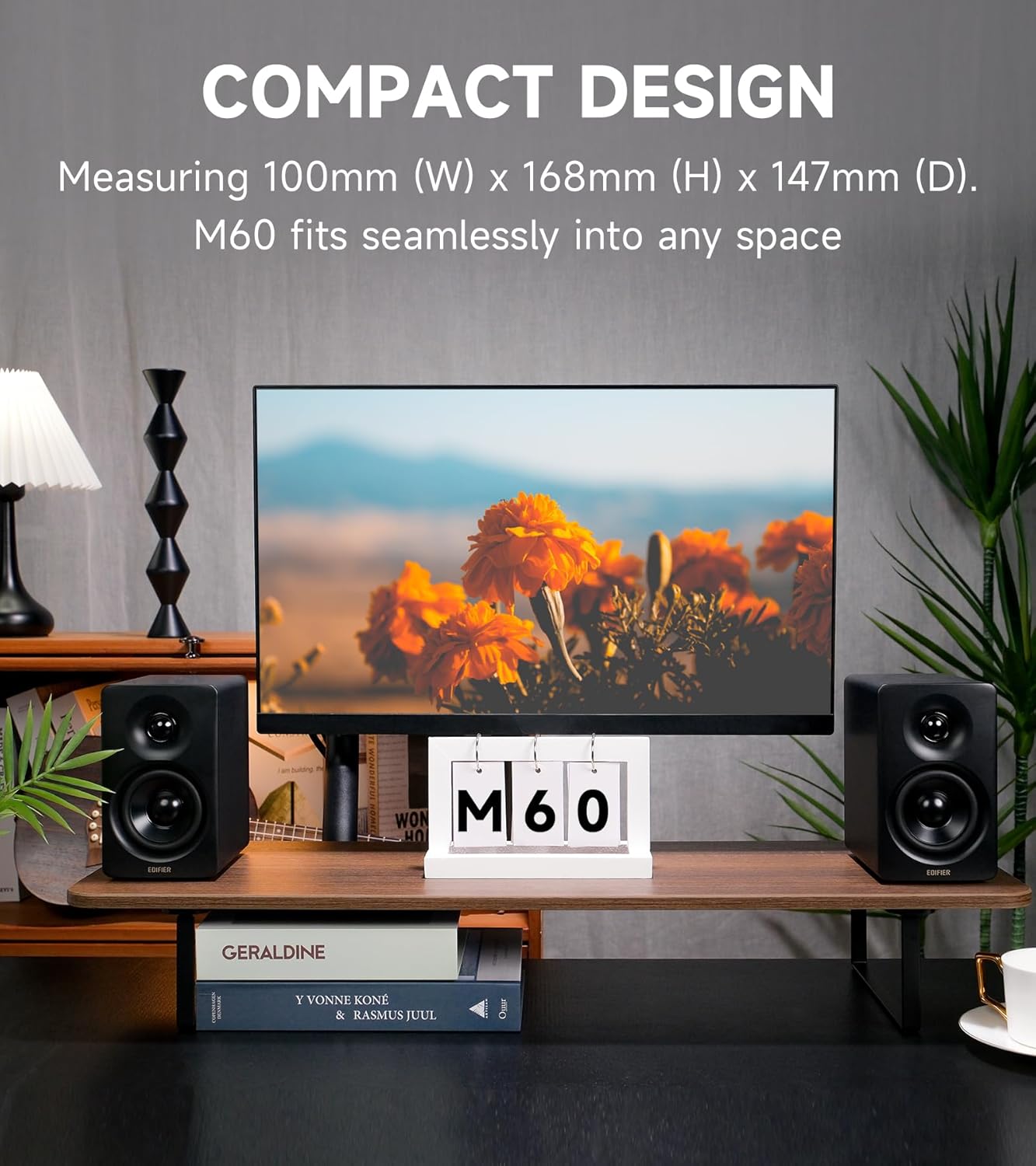
The stands are angled at 15 degrees. That detail matters more than it sounds because desktop speakers often end up firing slightly off-axis. By aiming audio closer to ear level, the intent is to reduce distortion caused by poor placement.
There’s also a cap-sensitive touch panel for control, with an automatic backlight that activates when your hand approaches and switches off when it doesn’t. It’s a small thing, but it makes the speakers easier to adjust without feeling around in the dark.
What to watch before you buy
It’s compact, and that’s both the strength and the limitation. If you’re expecting room-filling bass or wide dynamic range at high volumes like larger speaker systems, the 3” mid-low driver size means it may not satisfy you.
You’ll also want to think about your devices. LDAC high-resolution streaming is specifically positioned for Android devices running version 8.0 or later—so the “best case” wireless experience depends on that.
Finally, while the inclusion of DSP and active crossover suggests strong tuning for clarity, audio preference is personal. If you’re very sensitive to treble brightness or bass weight, it’s worth considering whether you prefer this kind of balanced, controlled desktop sound.
Is it worth it?
A solid pick if you want compact desktop speakers that still lean into Hi‑Res wireless (Bluetooth 5.3 with LDAC) and offer wired convenience via USB‑C and AUX. The included angled stands are a thoughtful touch for desk placement, and the touch controls with auto backlight add day-to-day usability.
It may not be a great match if you’re chasing deep, large-system bass or you need speakers that can easily overpower a bigger room. It’s also less compelling if none of your main listening devices support LDAC, because then you’re mainly paying for a feature you can’t fully use.
If your use is mainly PC gaming, desk music, and occasional switching between phone and computer, the M60’s approach makes sense—and it’s the kind of upgrade that feels practical, not just technical on a spec sheet.
Mini FAQ
Does the Edifier M60 support wired connections?
Yes. It includes both USB‑C and AUX inputs alongside Bluetooth.
What is LDAC used for on these speakers?
LDAC is the Bluetooth codec that supports higher-quality wireless streaming on compatible Android devices, with claims of up to 24-bit/96kHz from Android 8.0 or later.
Are the speakers suitable for a small desk?
They’re designed to be compact, and they include angled aluminium stands intended to improve on-desk listening alignment.
What’s the main limitation to consider?
Because the drivers are relatively compact (3” mid-low and 1” tweeter), it’s better suited to desk-level listening than to expecting big-room bass output.