

Dual Log Burner Fan Silent 2-speed log burner fan
Reviews
Price
Product description
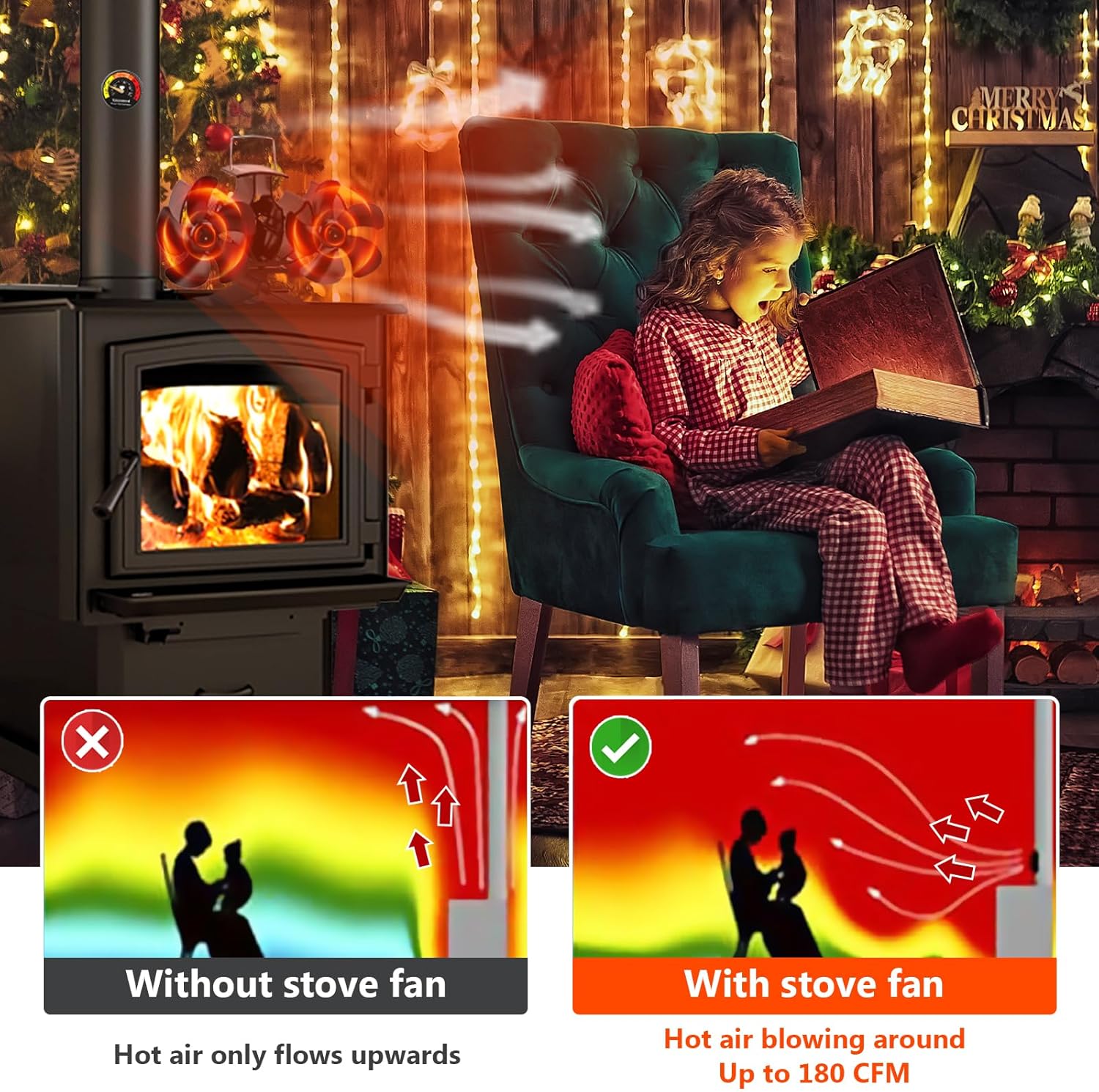
This heat-powered stove fan moves warm air from a woodburner into the room without any external electricity, improving comfort and making the most of the fire. It is quiet in operation and intended to help distribute heat more evenly in larger rooms, reducing cold spots near the hearth.
Key Points
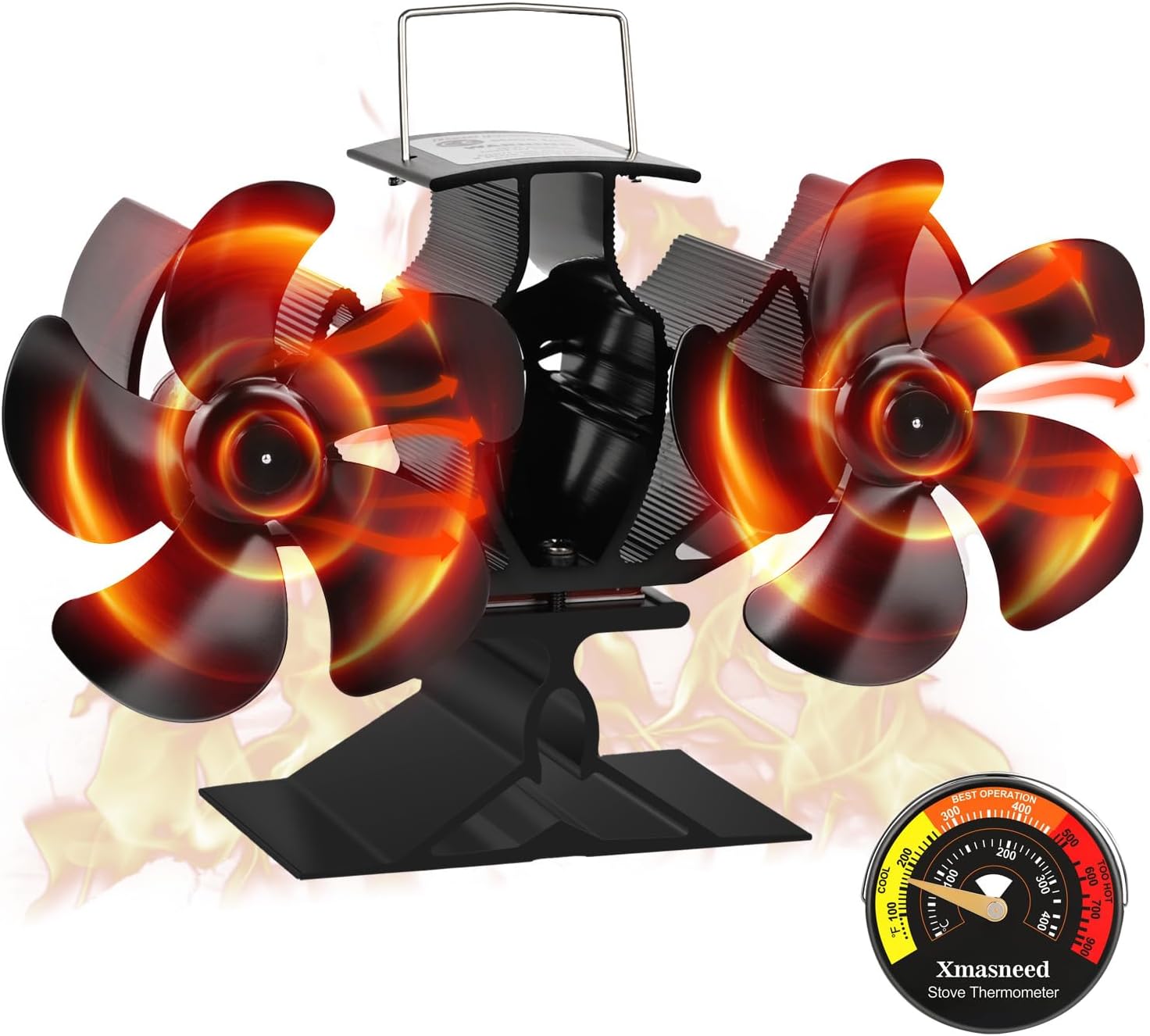
The fan runs on thermoelectric technology, so it sits directly on a flat area of the stove and uses the stove’s heat to generate airflow. This means there are no cords to plug in and no additional running costs while the stove is hot. The twin-fan layout with multiple blades aims to spread warmth more uniformly, helping living spaces feel warmer faster.

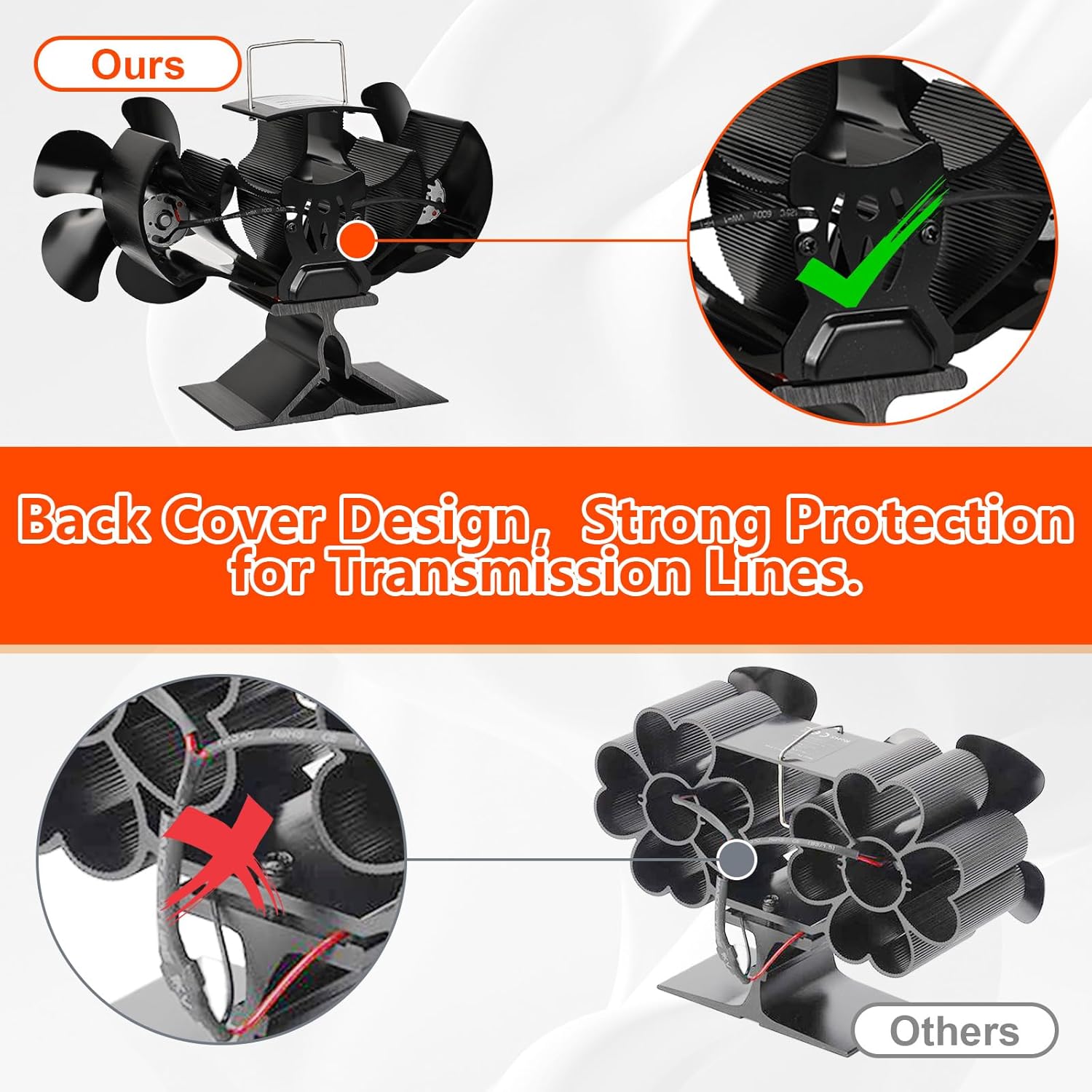
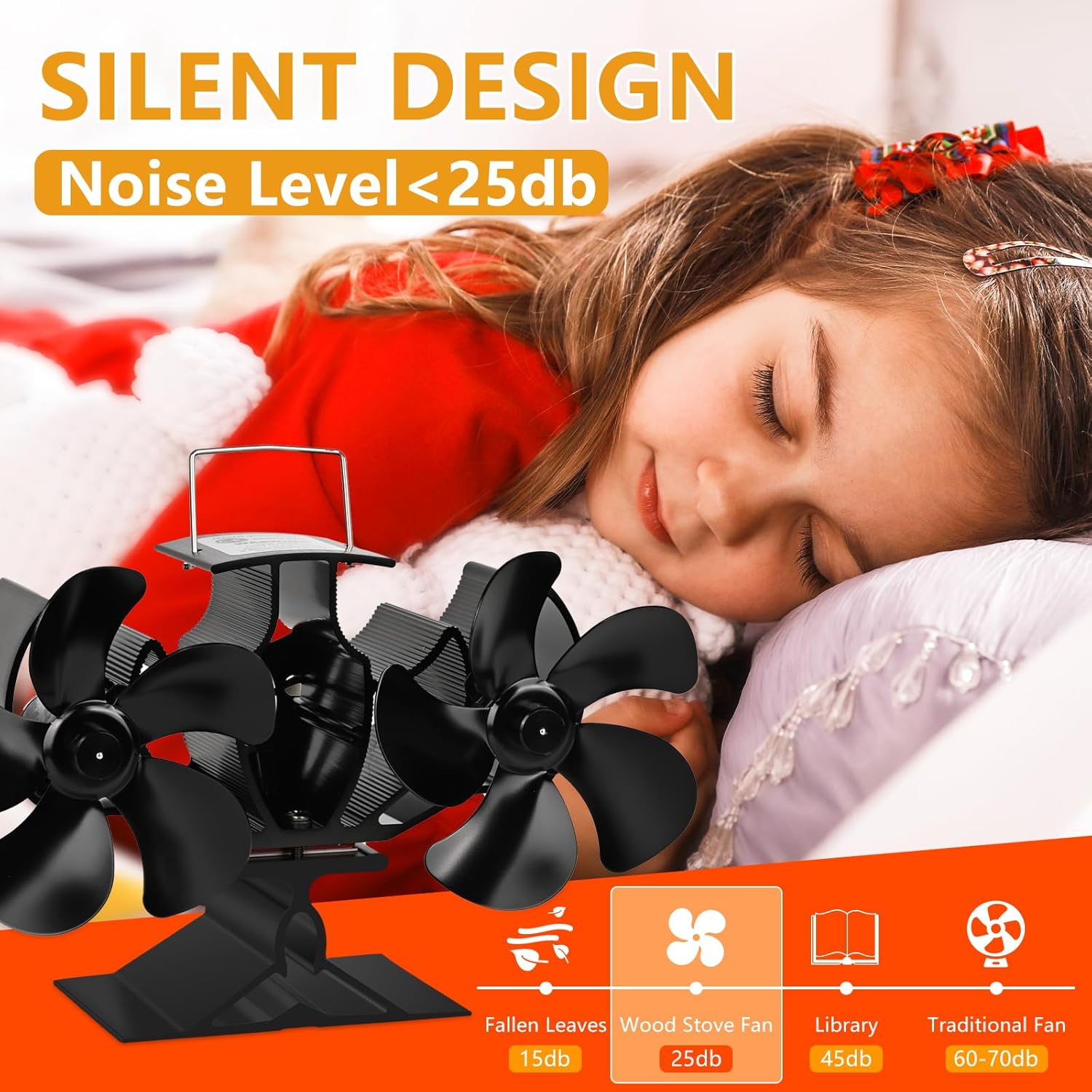
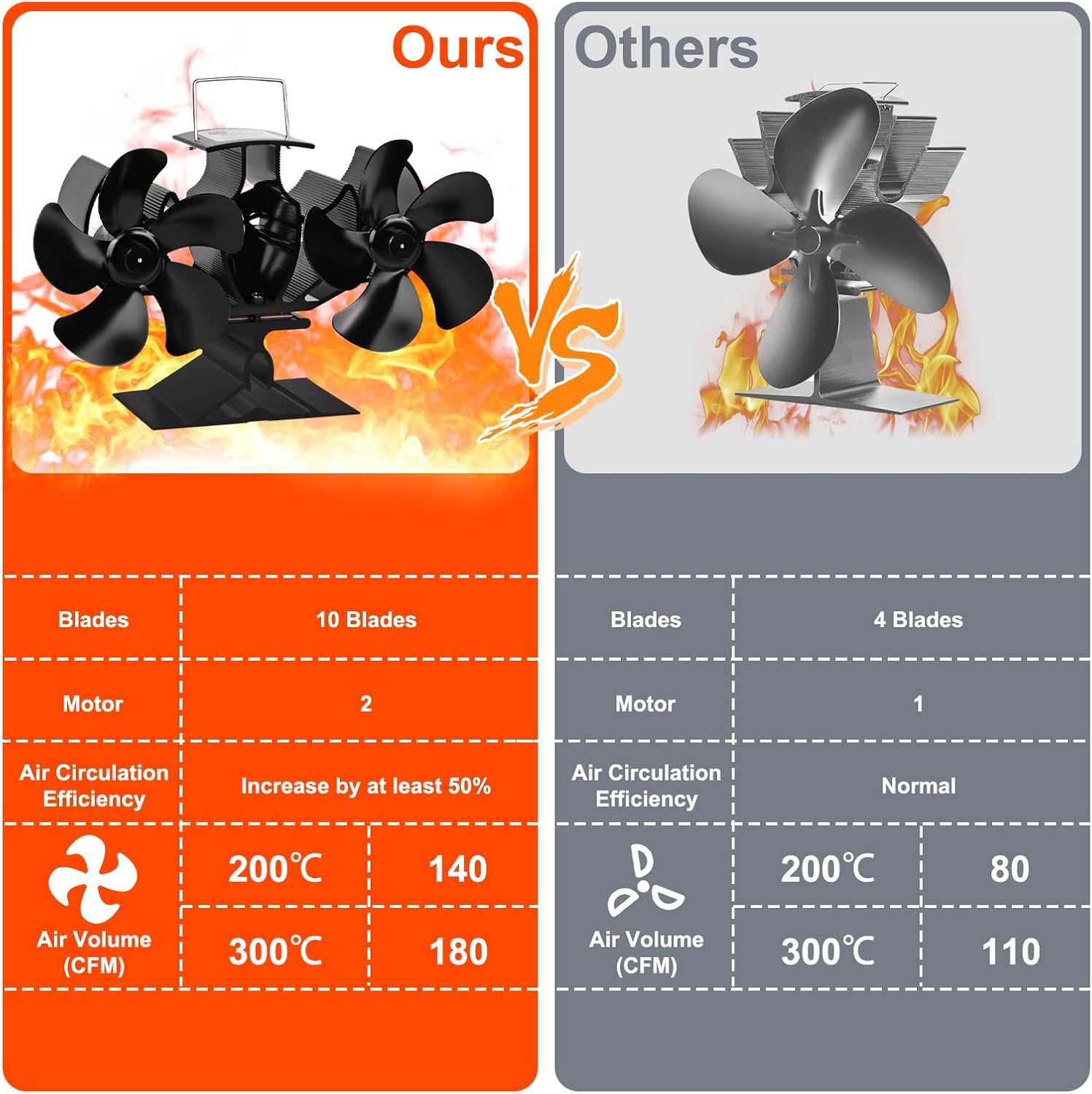
Operation is notably silent, which makes it suitable for living rooms and bedrooms where low noise is important. According to the manufacturer, the dual arrangement and blade design can reduce wood consumption by around 20% and increase heating efficiency by up to 50% compared with not using a fan. For safety, a built-in bimetallic overheat protector tilts the front of the unit when temperatures exceed 340.0 °C, adding a level of protection for the motor and generator components. 🔥
Technical Specifications
- Name: Xmasneed Dual Log Burner Fan
- Blades: 10-blade dual-fan assembly
- Airflow: CFM up to 180
- Overheat protection: Bimetallic device activates at 340.0 °C
- Includes: Stove fan and magnetic thermometer
Usage Recommendations
Place the fan on a stable, flat surface on top of the stove, leaving approximately 15 cm of space behind the unit for adequate airflow. Positioning towards the front edge of the stove helps push warm air out into the room rather than allowing heat to rise directly to the ceiling. For best performance, allow the stove to reach a steady operating temperature so the thermoelectric generator produces a stable current and the fan reaches its working speed.
This fan may not be the best option for very small or low-heat stoves where the surface temperature rarely rises to the levels needed to drive the unit efficiently. Also consider that airflow effectiveness depends on room layout and stove placement, so results can vary from one installation to another. 🪵💨.