

Draper 250mm Hardpoint Dovetail Saw 10TPI (29266) – heavy-duty hand saw
Product description
What it’s for
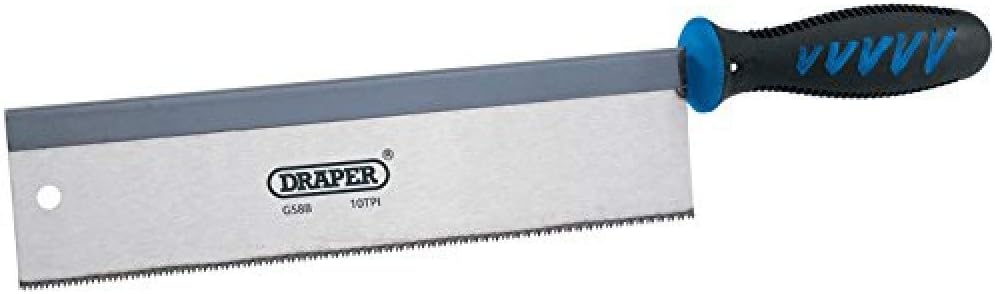
A dovetail saw like this Draper 250mm Hardpoint version is designed for accurate, close-detail woodworking—think dovetails, fine joinery, and any time you want the cut to behave rather than wander. The headline here is the ultra-thin polished blade paired with 10 teeth per inch (TPI). On paper, that combination leans toward clean, controlled cutting where you’re working to lines and want the kerf to stay fairly neat.
If you’re the sort of person who does joinery at home, or you occasionally tackle restoration work, this type of saw can feel more “surgical” than a bulkier hand saw. It’s also positioned as a heavy-duty hand saw with extra rigidity, so it’s not only about sharpness—it’s about how stable the blade feels while you’re pushing through timber.
Key features worth noticing
The package is built around three practical ideas: precision, rigidity, and comfort.
First, the blade is described as ultra-thin and polished, with a 10TPI blade. In real buying terms, that usually matters because thinner, polished blades tend to cut more smoothly and help you stay accurate when you’re cutting to layout lines.
Second, there’s a reinforced back that’s meant to add rigidity. That is a big deal for dovetail-style work, because a flimsy back can let the cut angle drift—especially as you start the kerf and then commit to the full stroke.
Third, the handle uses a soft grip. That won’t change the woodworking physics, but it can make a noticeable difference on longer sessions, when your hand position and fatigue start to affect control.
You’ll likely see it marketed for “precise and efficient cuts”, and while you shouldn’t expect a magic saw to replace good technique, the construction details do support that aim.
What you’ll notice day to day
Cutting feel and control
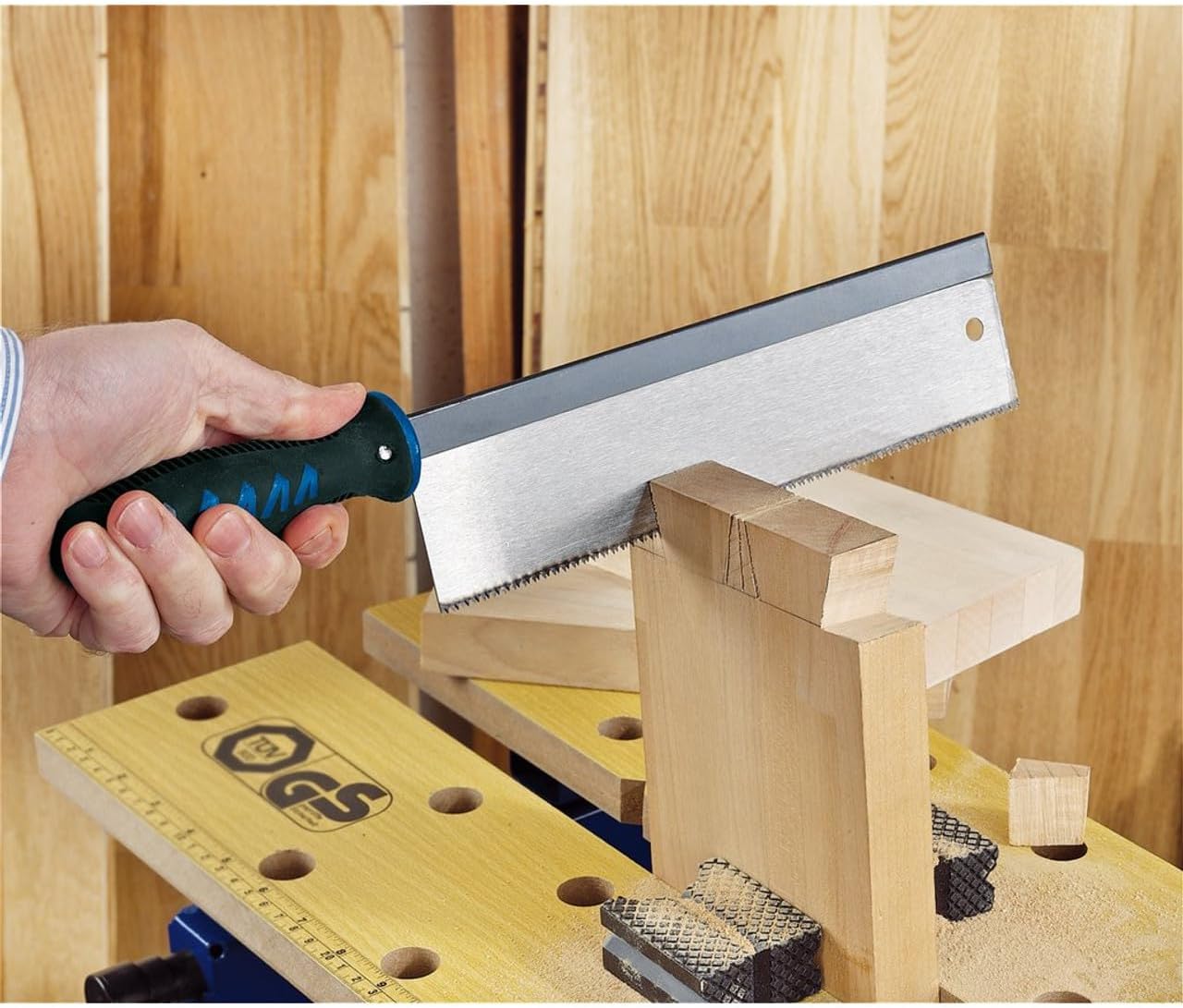
The ultra-thin polished blade is the part that usually stands out first. You’re essentially looking for a saw that tracks consistently and doesn’t fight you. With dovetail saws, the goal is a cut that stays straight enough that you spend less time fettling.
The reinforced back and extra rigidity are the stabiliser. If you’ve used lighter dovetail saws before, you’ll know how quickly small vibrations and flex can turn into a messy line. This one is clearly built to resist that.
Comfort during longer sessions
The soft grip handle is also there for a reason. Even for relatively short cuts, you’ll appreciate comfort if you’re doing multiple joints back-to-back.
It’s not perfect for every scenario, though: if you’re trying to rip through thick stock quickly (where you’d typically want a different tooth pattern and a faster cut), this is more of a careful joinery tool than a “speed” saw.
Tech specs
- Name: Draper 250mm Hardpoint Dovetail Saw | Heavy Duty Wood Hand Saw | Extra Rigidity | 10TPI Blade Polished Blade | Soft Grip Tools | 29266
- Type: Hardpoint dovetail hand saw
- Size: 250mm
- Teeth per inch (TPI): 10TPI
Who it suits (and who should be cautious)
It’s a solid pick if you regularly work with joinery where accuracy matters more than fast throughput. You’ll likely like it if you prefer a thinner, polished blade for cleaner cuts to the line, and if you value stiffness from a reinforced back when you’re pushing through firmer sections.
It might not be the best choice if your main goal is rapid cutting across larger timber, or if you need a very aggressive tooth pattern for heavy stock removal. Also, because the input only specifies “10TPI” and not more detailed geometry (like kerf width or exact sharpening angle), you’ll want to rely on your own expectations for dovetail saw behaviour and confirm it matches the kind of finish you want.
Worth considering if you’re upgrading from a basic hand saw for fine work, or if you want one dependable saw dedicated to detailed joinery.
Buying checklist before you commit
Before you buy, it helps to align expectations with how dovetail saws are used:
- Are you primarily cutting joinery to layout lines (dovetails, similar precision cuts) rather than rough trimming?
- Do you want a thinner polished blade feel, with a more controlled cutting action rather than a faster, coarser approach?
- Are you comfortable that 10TPI is the tooth density you want for your typical timber and joint style?
If your project involves a lot of thick material removal, you may find yourself wishing for a different balance of speed and tooth pattern.
Is it worth it?
A Draper 250mm Hardpoint Dovetail Saw is worth buying if you want a dedicated dovetail-style hand saw built for steadier, more accurate cutting, with an ultra-thin polished blade and extra rigidity from the reinforced back. The soft grip handle is a sensible touch for comfort when you’re doing multiple cuts in one session.
You may want to skip it if your work is mostly rough sawing where you’d prefer speed over finesse, or if you already know you need a different TPI feel for your joinery and timber types. In short: this one makes sense when precision is the brief, not when you’re looking to burn through stock.
Mini FAQ
Is a dovetail saw like this good for dovetails specifically?
The name and the dovetail saw design point to that use. With a thinner, polished blade and 10TPI, it’s aimed at controlled, accurate joinery cuts.
Does the reinforced back matter?
For dovetail-style work, rigidity helps keep the cut steadier. If you’ve struggled with blade flex on less rigid saws, this is one of the reasons you’d consider it.
Will the soft grip help during longer use?
It’s intended for comfort during extended use, which can make a difference when you’re repeating cuts or working on several joints.
Is 10TPI suitable for all timber?
It’ll suit many fine-cutting scenarios, but tooth density isn’t one-size-fits-all. If you’re cutting very thick stock or want aggressive removal, 10TPI may feel more like “precision” than “speed”.
What’s a practical first test?
Try making a few careful test cuts on offcuts: mark a line, start the kerf gently, and watch how straight the cut stays as you guide the saw through the stroke. That’s where the rigidity and blade feel become obvious fast.