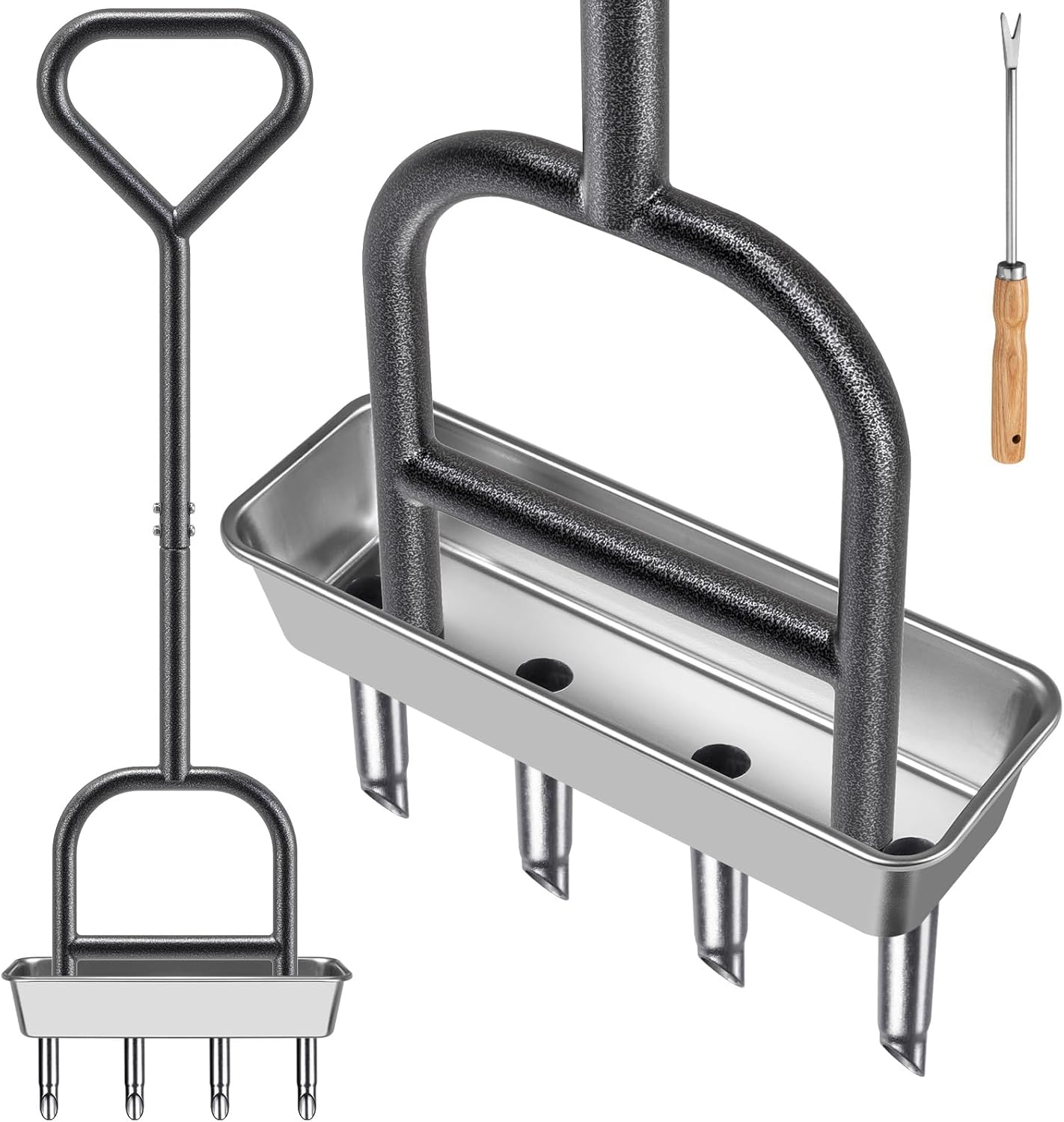
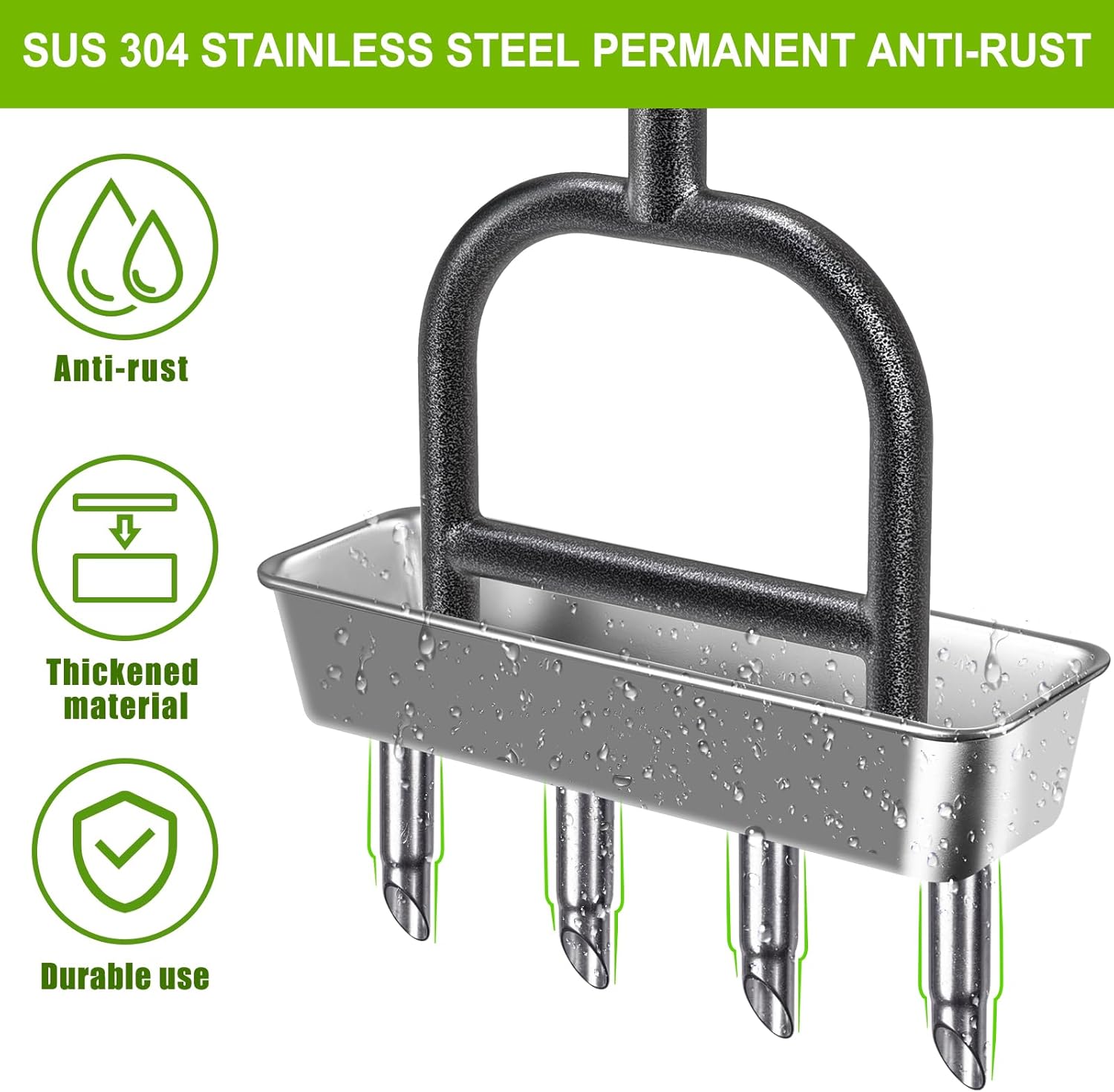
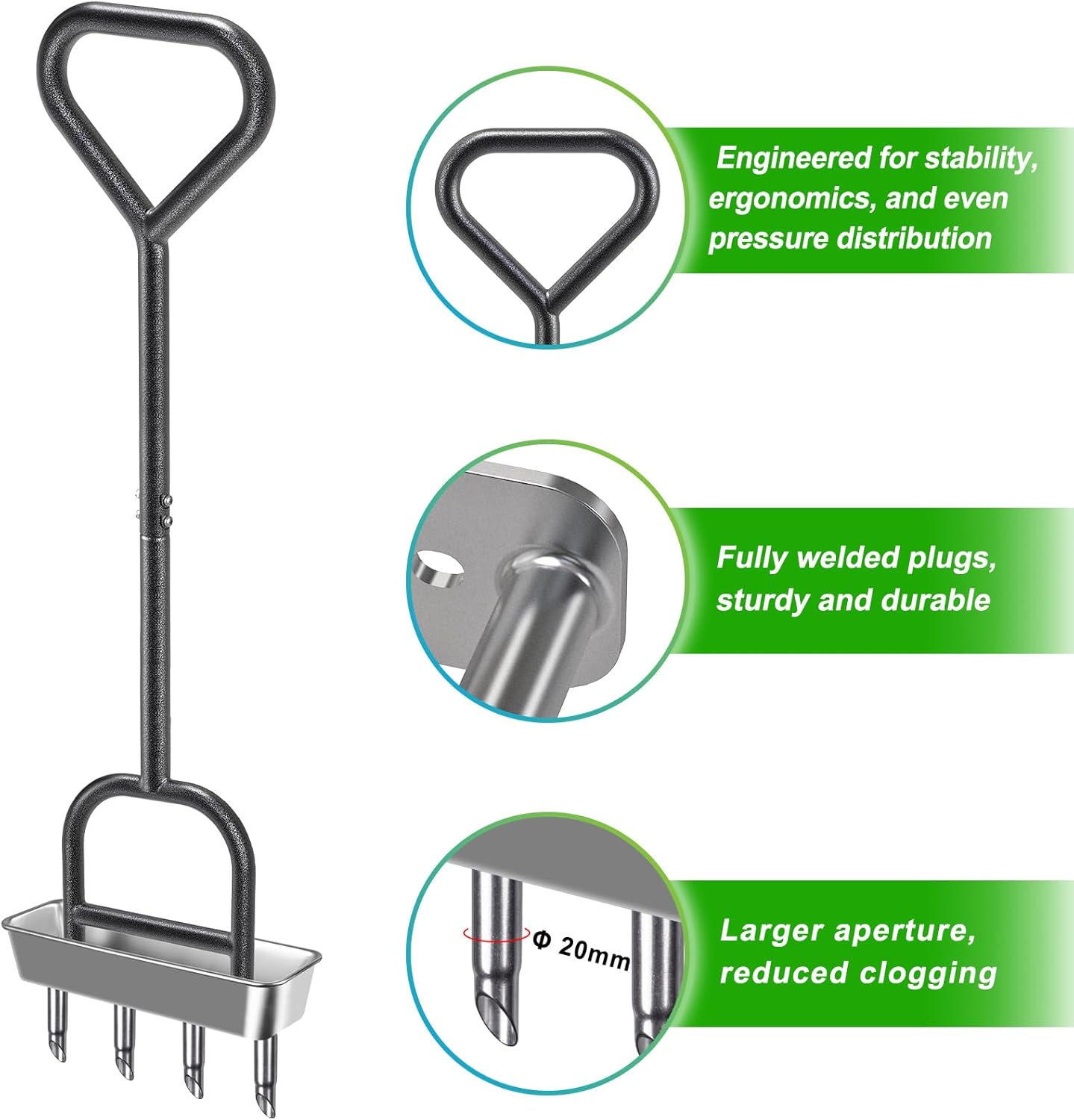
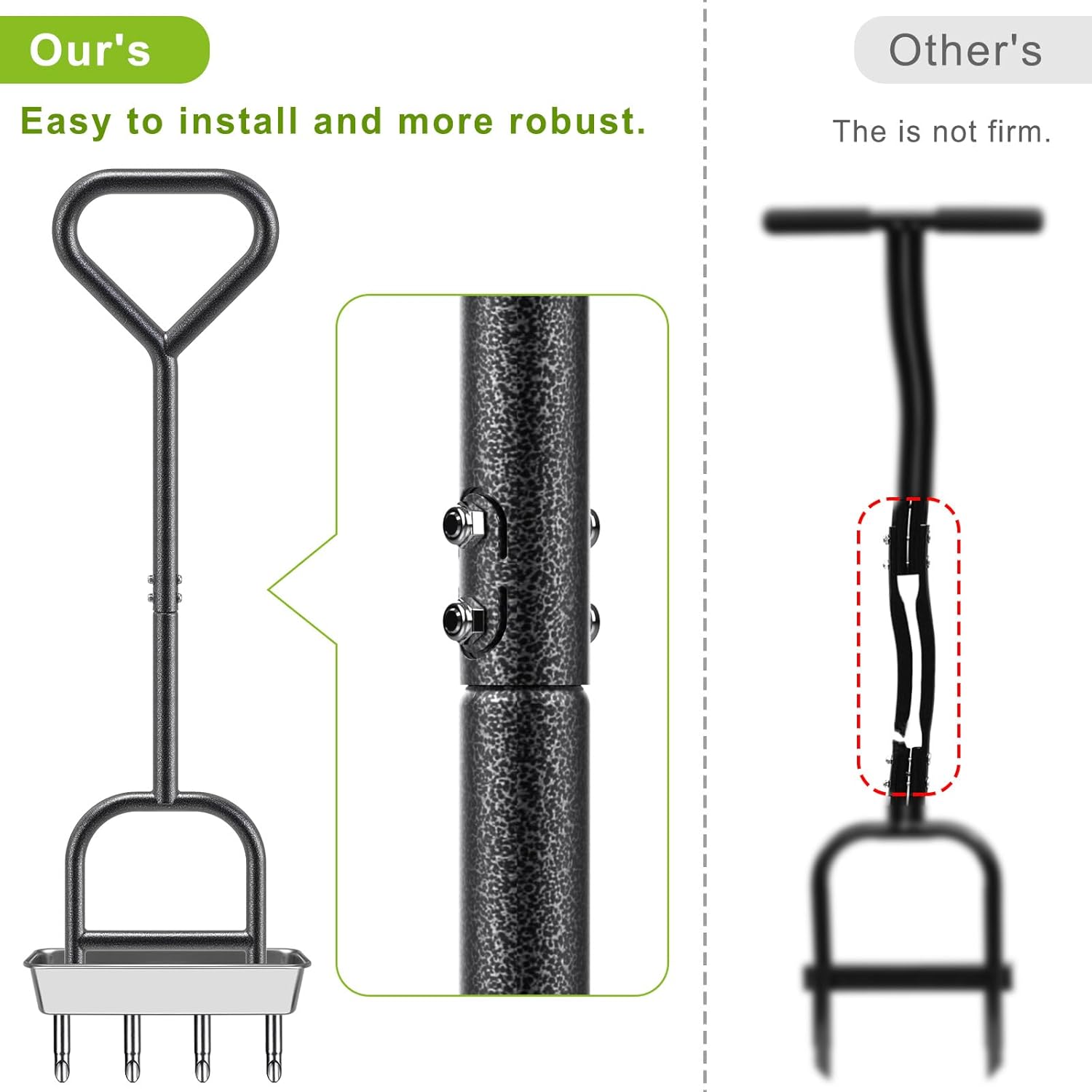
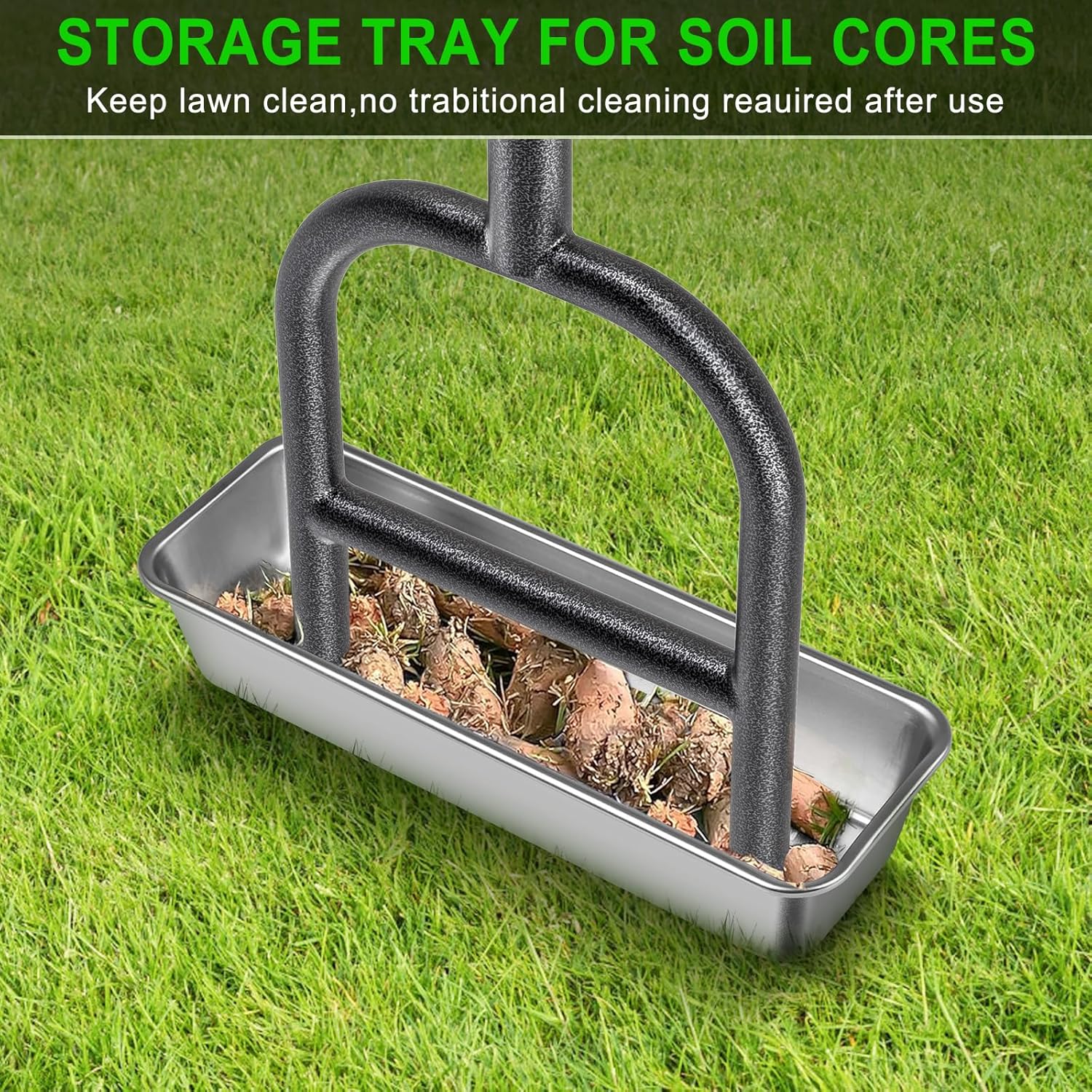
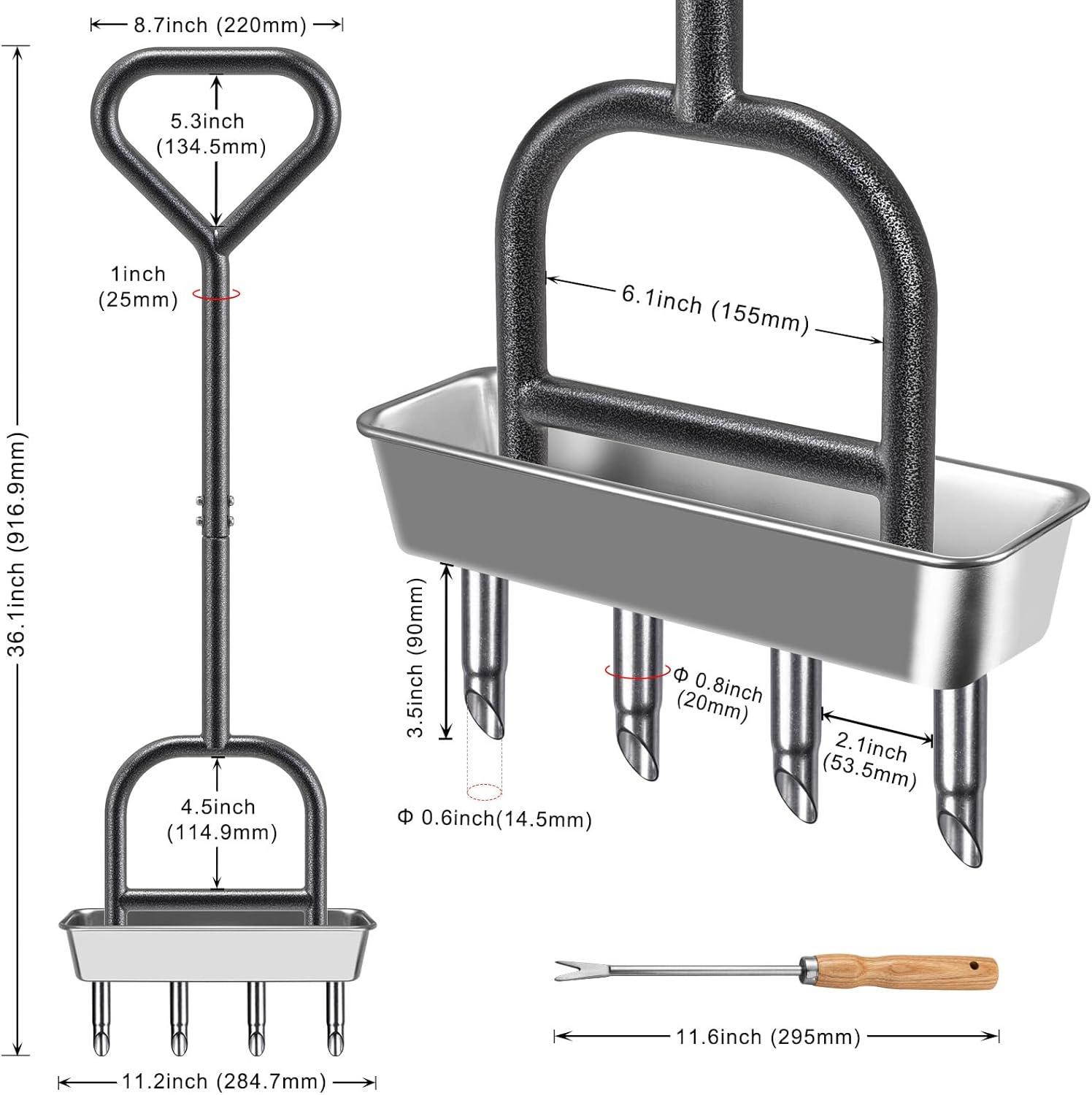
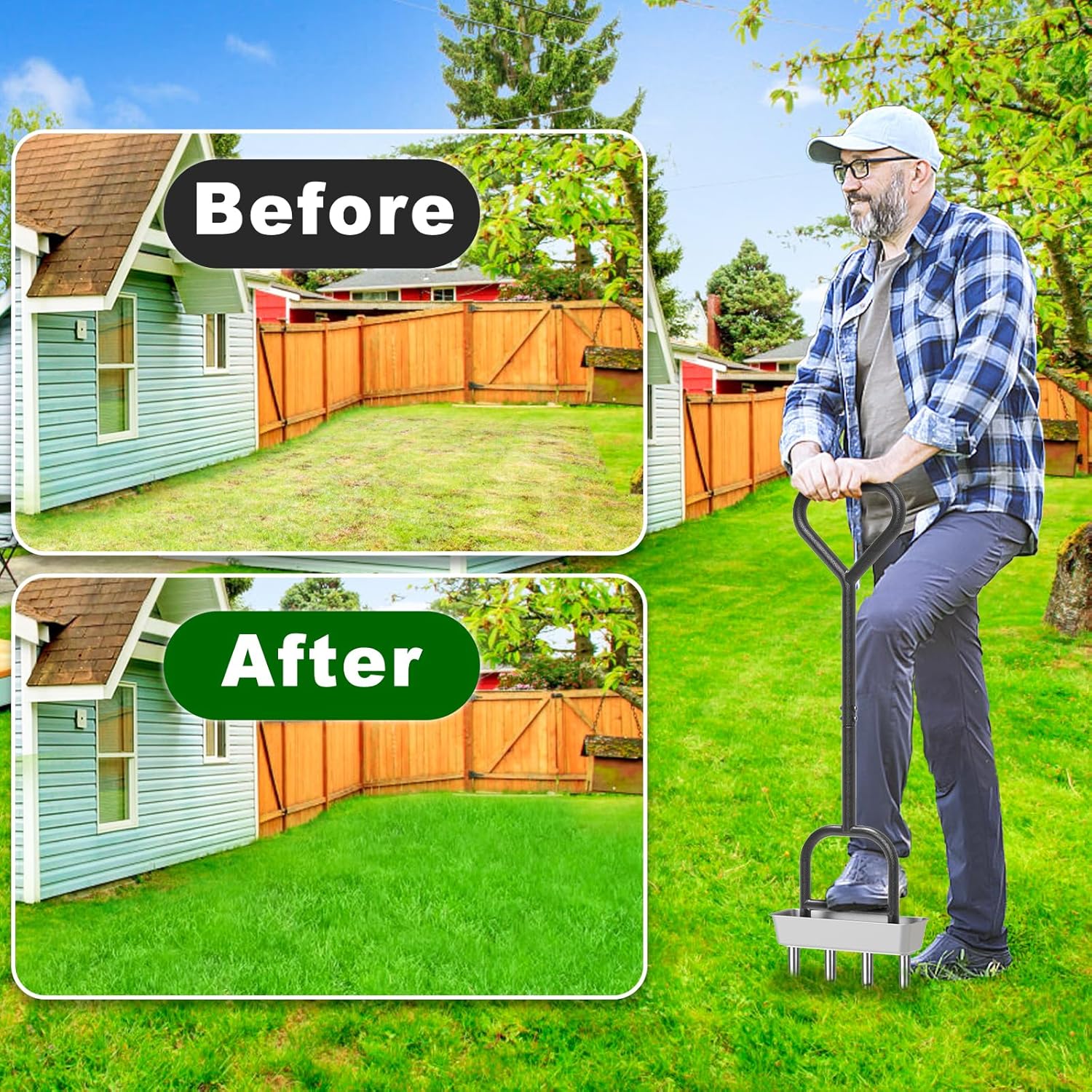
What it is and what it helps with\nDolibest Lawn Core Aerator is a manual garden tool designed to punch hollow tines into soil, creating cores to improve air, water, and nutrient penetration to grass roots. The upgraded 93 cm triangle handle is designed for comfort and durability, with a bend-free bar to reduce fatigue during use. The aerator’s core hole reaches about 9 cm deep and 1.5 cm in diameter, which helps loosen compacted soil and promote deeper root growth.\n\n## Build quality and materials\nThe core aerator is constructed from metal with a black powder-coated finish, chosen to resist rust and bending over time. A notable feature is the SUS 304 stainless steel soil core storage tray, which catches and holds the ejected plugs automatically as you work, reducing post‑aeration clean‑up. The soft grip reduces hand fatigue during longer sessions, making it more comfortable to use on mid-sized lawns. The tool also ships with a 31 cm weeding/ground tool, which adds versatility for other garden tasks such as transplanting or occasional weeding.\n\n## How it works in practice\nYou push the hollow 4-prong tines into the turf and soil. As you pull out, soil cores are created and collected in the tray. The design aims to produce deep, narrow cores that degrade naturally, leaving spaces for air and moisture. For those with a compacted or clay-heavy soil, this approach can help reduce thatch build-up and improve turf resilience if used periodically. The choice of a hollow tine is intended to balance core size and soil disruption, so you’re not tearing the surface apart.\n\n## What to know before buying\n- It is a manual tool, requiring a bit of physical effort, especially on larger lawns or very compacted soil.\n- The 9 cm depth and 1.5 cm diameter cores are predefined by the tool’s design, if your lawn requires deeper or larger cores, you may need a different aerator.\n- While the stainless steel collection tray helps with cleanup, you still need to empty and empty cores periodically and maintain the bars to avoid rust on less protected areas.\n- Suitable for various soil types, including compacted soil, clay, hard soil and sandy soil, but effectiveness will depend on soil condition and aeration frequency.\n\n## Benefits and limits in everyday use\nOn the plus side, the stainless tray and soft grip improve practicality and comfort, especially for hobby gardeners who aerate the lawn a few times a year. The tool’s durability and rust resistance are practical for UK climates where damp conditions are common. On the downside, as a manual aerator, it won’t match powered models for very large lawns or aggressive core removal. If you prioritise quick, heavy-duty aeration or precise control over core depth, you might find this approach a bit slow.\n\n## Who it’s for\nIt suits homeowners with mid-sized lawns who want a straightforward, low-maintenance aerator that delivers repeatable results without electricity or petrol. It’s also useful for gardeners who appreciate a tool that integrates with basic weeding or transplanting tasks, thanks to the included 31 cm tool.\n\n## Who it’s not ideal for\nIf you have a very large lawn, very dense clay soil, or you expect to aerate frequently, a powered aerator or model with adjustable depth options could be a better fit. Those seeking ultra-deep cores or rapid work rates may feel constrained by the manual design.\n\n## Practical use case\nImagine a dry, mild morning: you push the hollow tines into your lawn along a grid pattern, watching the soil cores fall into the tray as you move. The process leaves behind a pattern of small cores across the lawn, creating pockets for water and air to reach roots before the next rainfall or fertiliser application.\n\n## What to check before purchasing\n- Confirm the core depth and diameter align with your lawn’s needs.\n- Ensure the tray remains free of obstruction after use, so cores aren’t left to compost on the surface.\n- Consider soil type and weather window for aeration to maximise results.\n\n## How it compares to other approaches\nCompared with core-less or plug-free tools, this model provides visible cores that can indicate improved soil penetration. It sits between basic surface aerators and more advanced, higher-cost options, offering a balance of cost, durability and practicality for casual lawn care. It’s worth considering if you want a straightforward, non-electric method that still delivers tangible core cultivation and soil loosening.\n\n## FAQ (practical, minimal assumptions)\n- Q: Do the cores need immediate removal? A: The tray collects most cores automatically, reducing the need for post-work cleanup.\n- Q: Can I use it on wet soil? A: Light use on mildly damp soil is typical, very wet soil may be heavier to work with.\n- Q: Is assembly required? A: The tool ships as a ready-to-use aerator with the included weeding tool.\n\n## Final decision\nIs it worth it? It’s a solid pick if you want a durable, manually operated lawn aerator that combines core collection with a comfortable grip and a useful auxiliary tool for garden tasks. Not ideal for very large or very dense lawns where powered options would save time. If you prioritise a sensible balance of durability, ease of use and practicality for standard-sized UK gardens, this model offers good value for money.\n\n## Quick usage tip\nUse when soil is workable and dry enough to avoid excessive resistance, and follow with light raking to help cores integrate back into the soil.