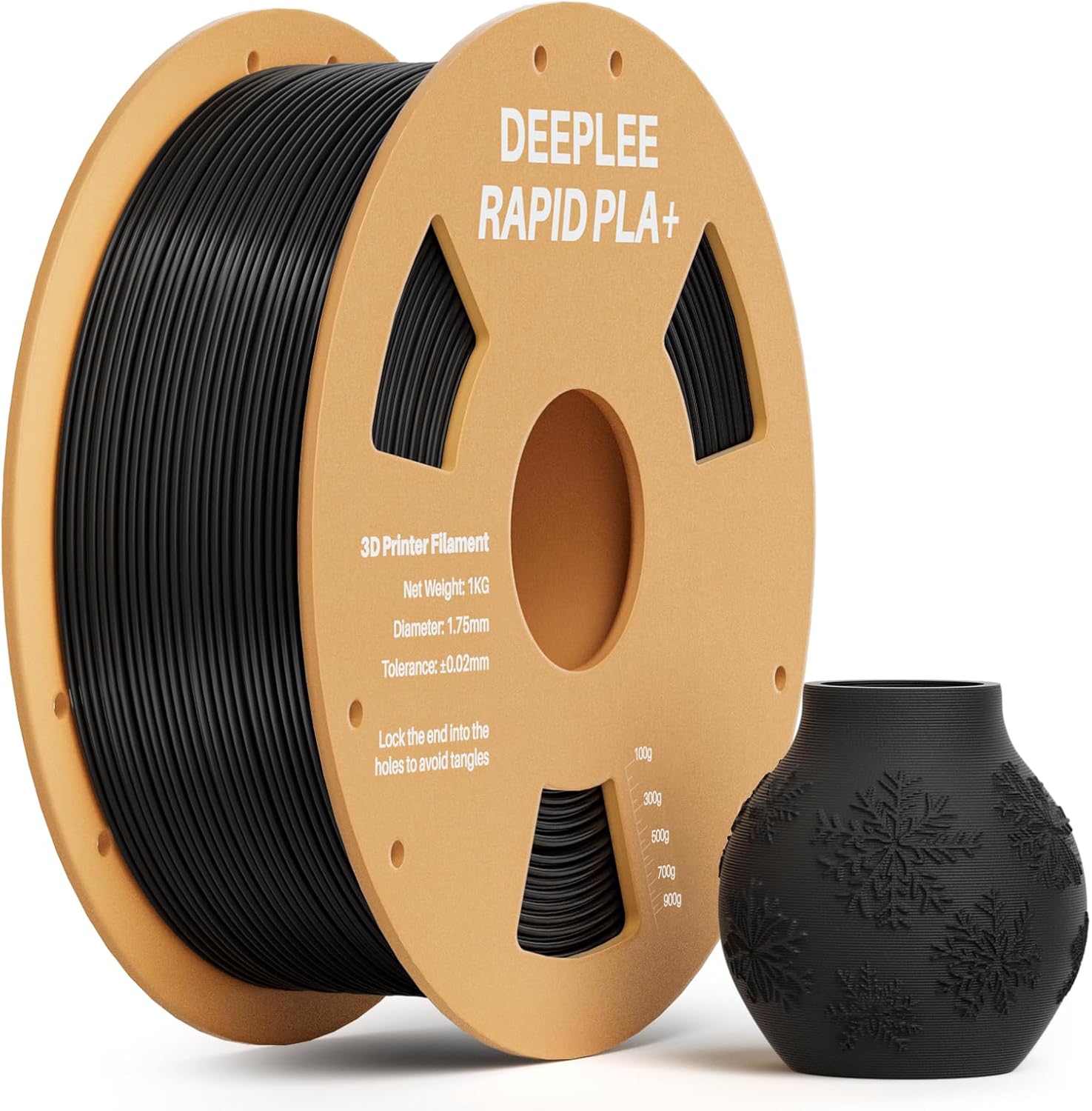
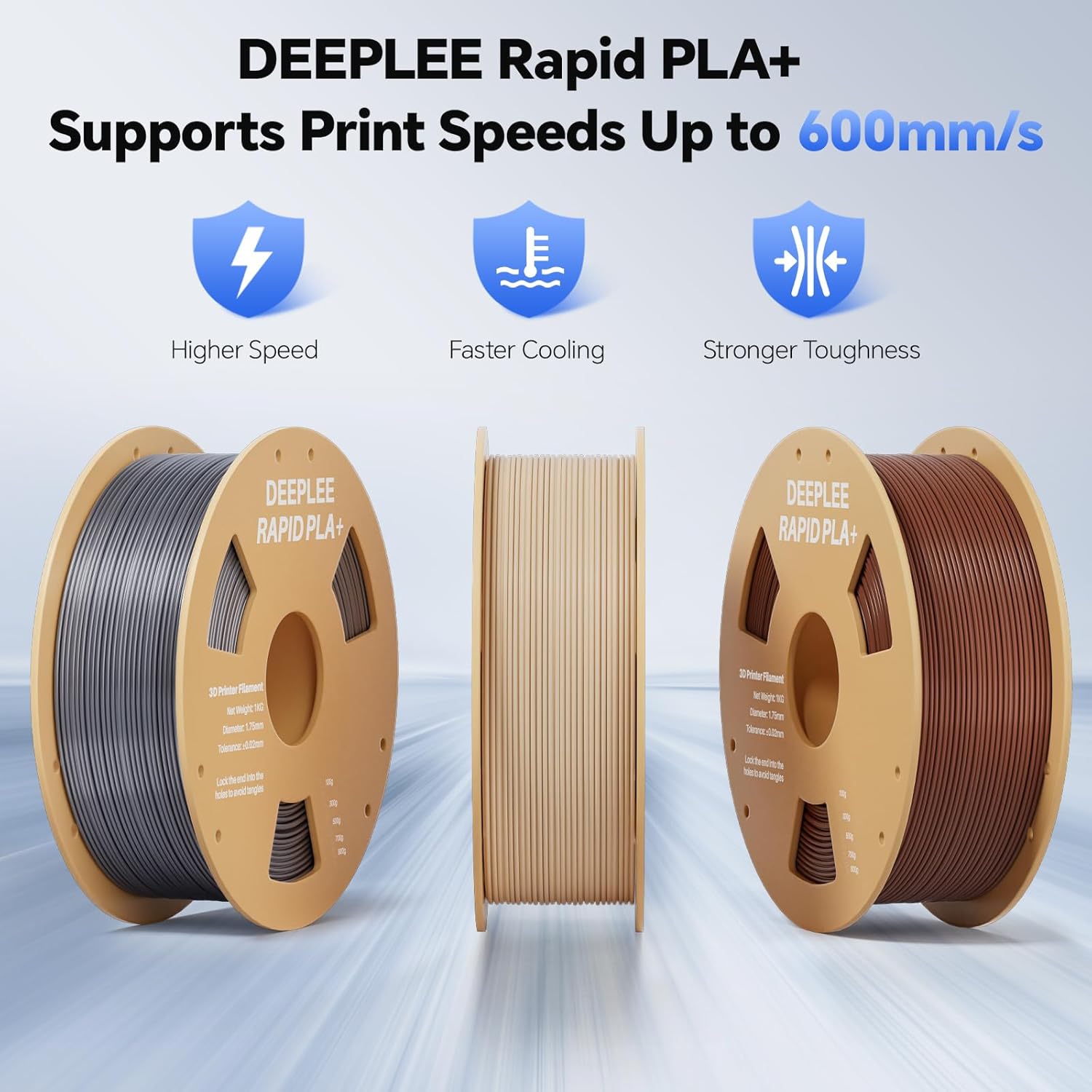
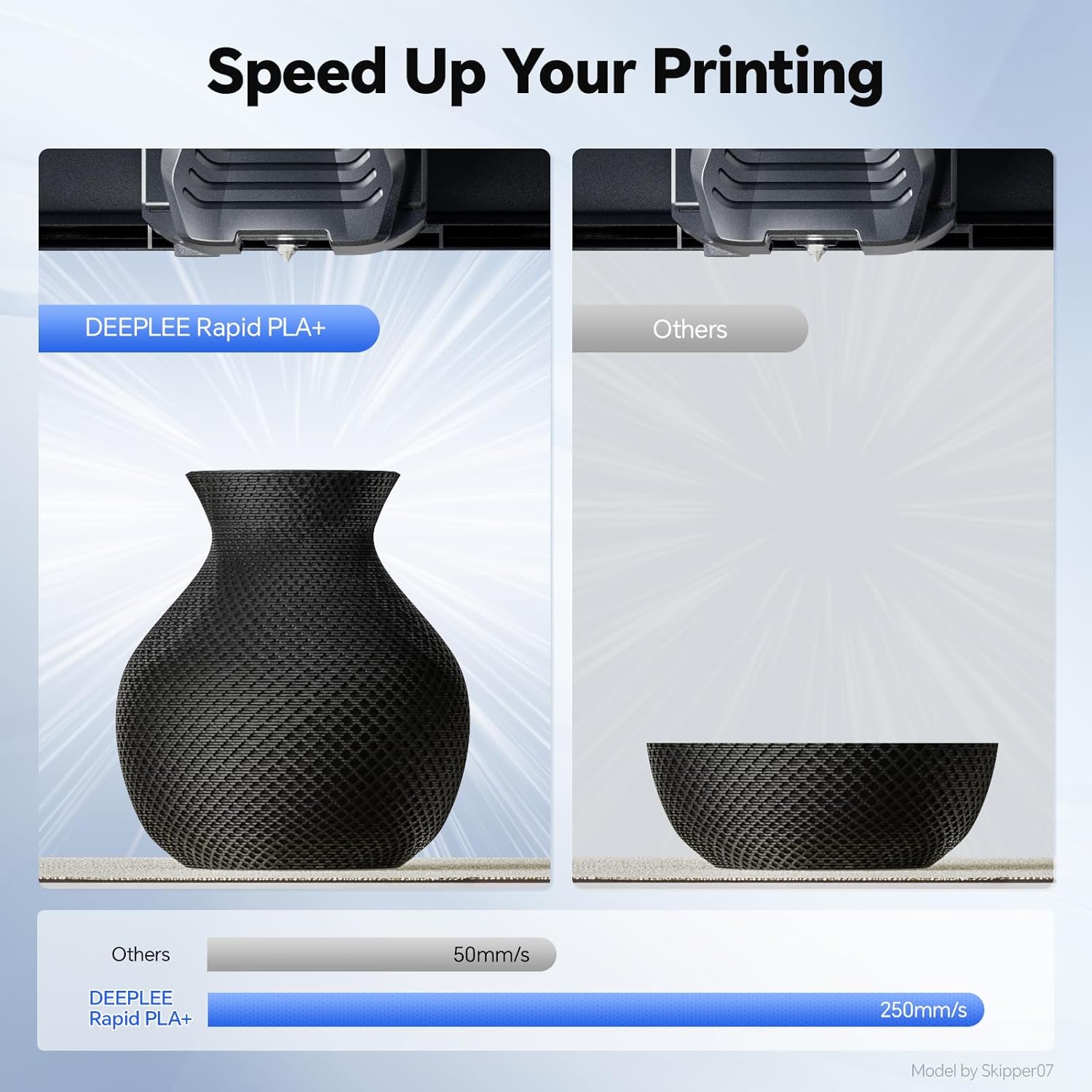
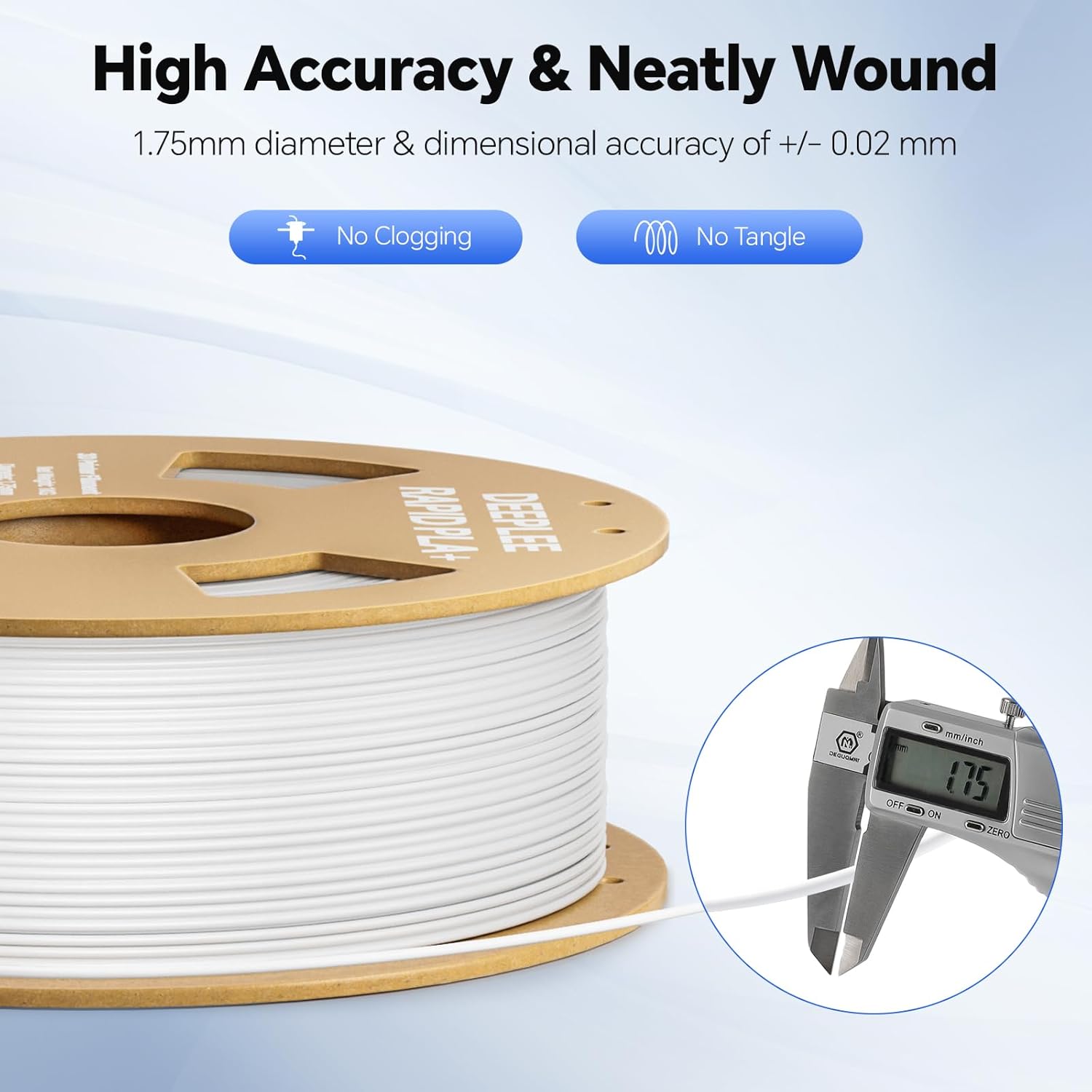
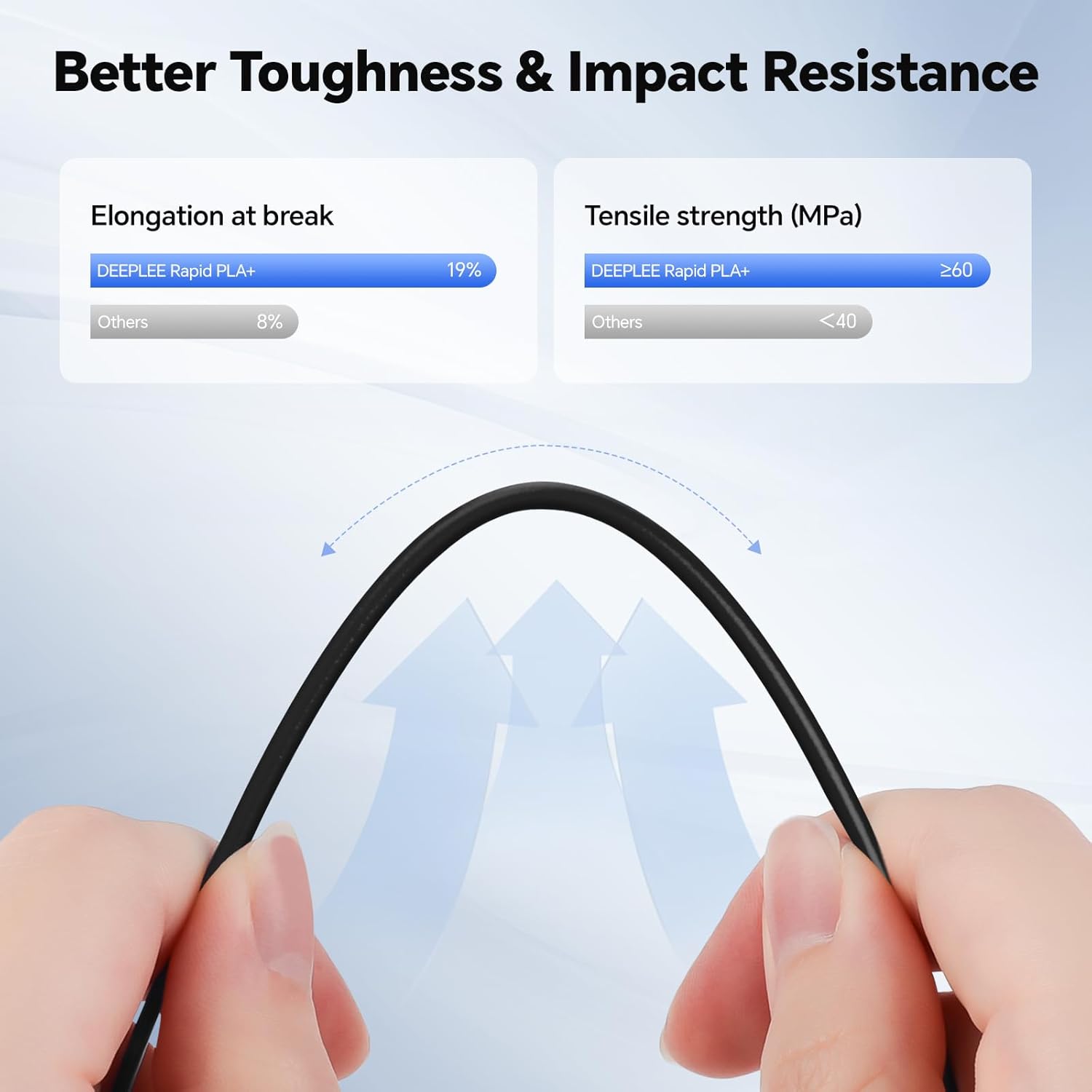
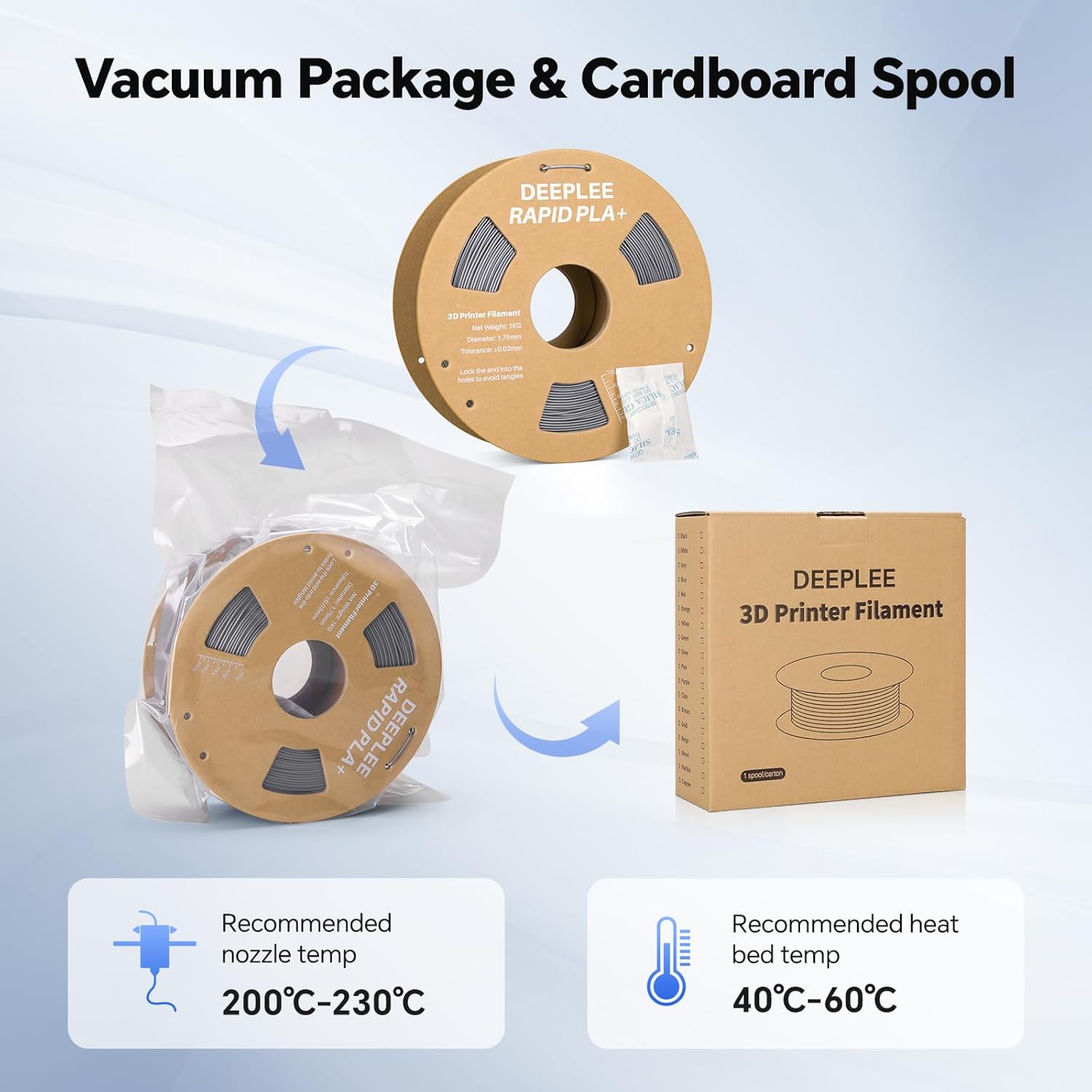
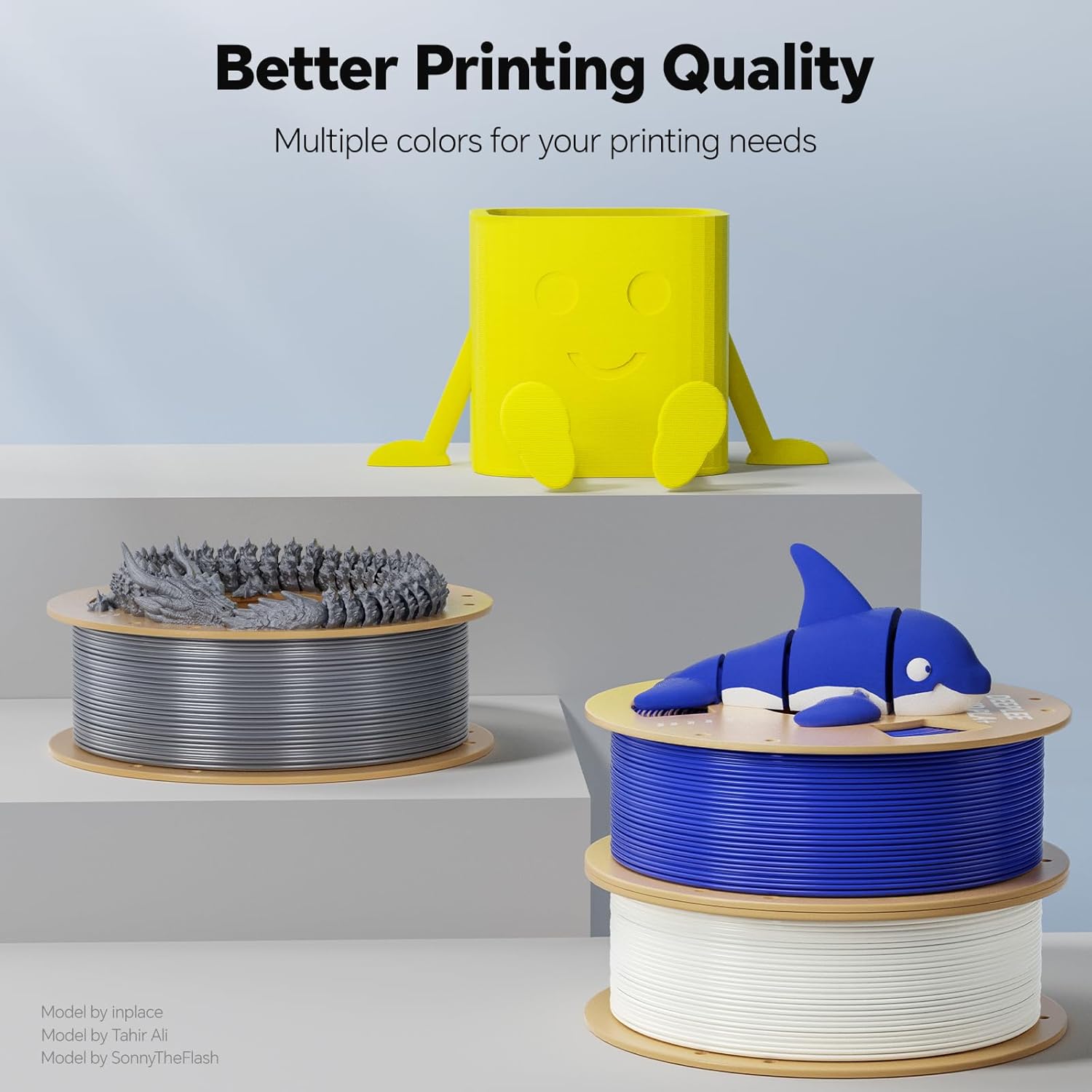
What it is and what it’s for\nDEEPLEE Rapid PLA Plus filament is a 1.75mm, 1kg spool designed for FDM 3D printers. It aims to combine smoother extrusion with higher speed printing, making it a practical choice for projects that benefit from faster turnaround times without sacrificing model integrity. The material is marketed as PLA+ with higher toughness, which can help prints resist cracking or deformation under light mechanical stress. It’s positioned as suitable for both beginners and more experienced makers looking to push print speeds without stepping up to more complex materials.\n\n## How it performs on paper\nCompared with standard PLA, this Rapid PLA Plus claims advantages in print flow and cooling. The result is described as capable of supporting higher print speeds (up to 600mm/s) when used with a compatible high-speed FDM printer. For people who value faster prototyping or iterative design, that promise is appealing. The filament is also noted for higher toughness and better mechanical strength, which can be important for functional parts and decorative pieces that need a bit more resilience than basic PLA.\n\n## Build quality and consistency\nThe manufacturer highlights careful winding on the spool to prevent tangling and to promote smooth flow. A consistent 1.75mm diameter with a tolerance of ±0.02 mm is claimed, which should help with reliable feeding and stable extrusion across prints. In practice, exact dimensional accuracy depends on the printer and nozzle calibration, but the stated tolerance is within what many users expect for a quality PLA+ filament.\n\n## Compatibility and who it’s for\nThis filament is described as broadly compatible with most FDM 3D printers. That makes it a sensible option for newcomers who want a single material that covers a wide range of projects, as well as for hobbyists who already own a variety of printers. If you prioritise printing speed and ease of use, Rapid PLA Plus can be appealing. If your projects demand very fine detail at slow speeds, you might still prefer standard PLA or another material.\n\n## What to watch for in use\n- Speed is situational: while up to 600mm/s is advertised, real-world results depend on your printer’s hotend, cooling, and overall rigidity. Pushing speeds too high can increase stringing or layer artefacts if cooling isn’t optimal.\n- Good bed adhesion and proper retraction settings remain essential, as with any PLA+.\n- Storage matters: keep the filament dry and away from moisture to minimise issues during long prints.\n\n## Practical usage scenarios\nThink about quick prototypes, fixtures, or models where you want results fast and the tolerances aren’t extremely tight. The tougher PLA+ surface can also be handy for lightweight functional parts that don’t require engineering-grade materials. A short, tangible example could be a mid‑fidelity hinge or a small bracket that benefits from speed and reasonable strength without needing ABS‑like heat resistance.\n\n## Care and maintenance\nStore away from humidity and direct sunlight. When finishing prints, a light sanding or painting can improve appearance, as with many PLA-based materials. If you encounter occasional stringing or oozing, revisit retraction settings and temperature within safe PLA+ ranges.\n\n## Final considerations and comparison here\nIf you’re weighing options, the choice of Rapid PLA Plus often sits between standard PLA and more advanced materials. It can be a sensible middle ground for those who want speed without stepping into PETG or ABS territory. It may not be the best option if you need very high thermal resistance, chemical resistance, or the absolute finest surface finish at the highest resolutions.\n\n## Is it worth it? Buying verdict\nWorth considering if you mainly print at higher speeds and want a robust PLA+ that's widely compatible. It is less ideal if your prints demand extreme detail at very slow speeds, or if you’re after the strongest possible part from a filament of this class. You’ll likely notice the benefit when you iterate quickly and prefer a smoother workflow rather than chasing marginal improvements in fidelity.\n\n## Quick FAQ\n- Can I print with Rapid PLA Plus on a standard desktop printer? Yes, provided your printer supports 1.75mm filament and stable extrusion.\n- Will it fix all stringing issues? Not automatically, tuning retraction, temperature, and cooling remains important.\n- Is it suitable for functional parts? The higher toughness helps, but it’s still a PLA+ as opposed to more demanding materials like PETG or nylon.\n