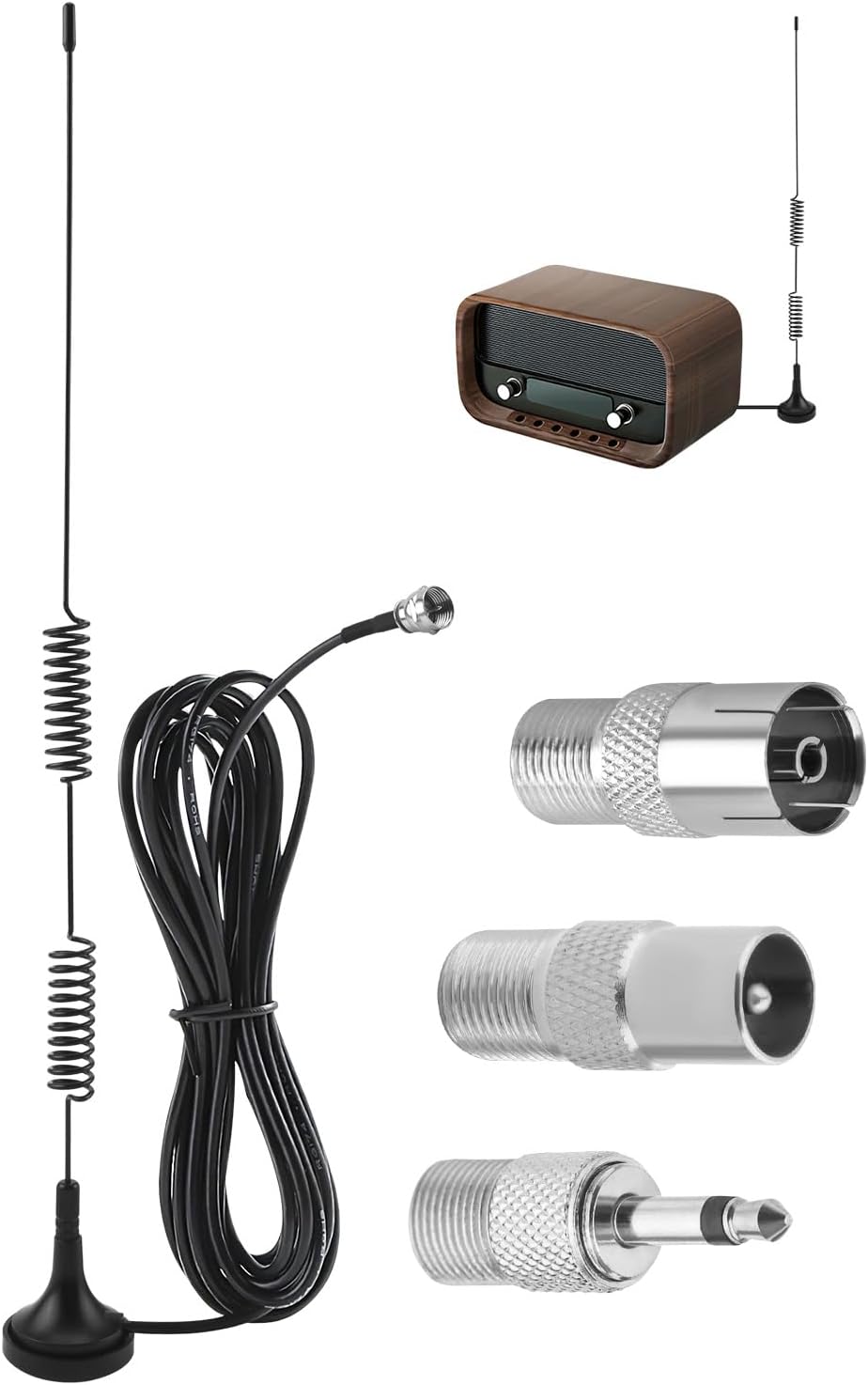
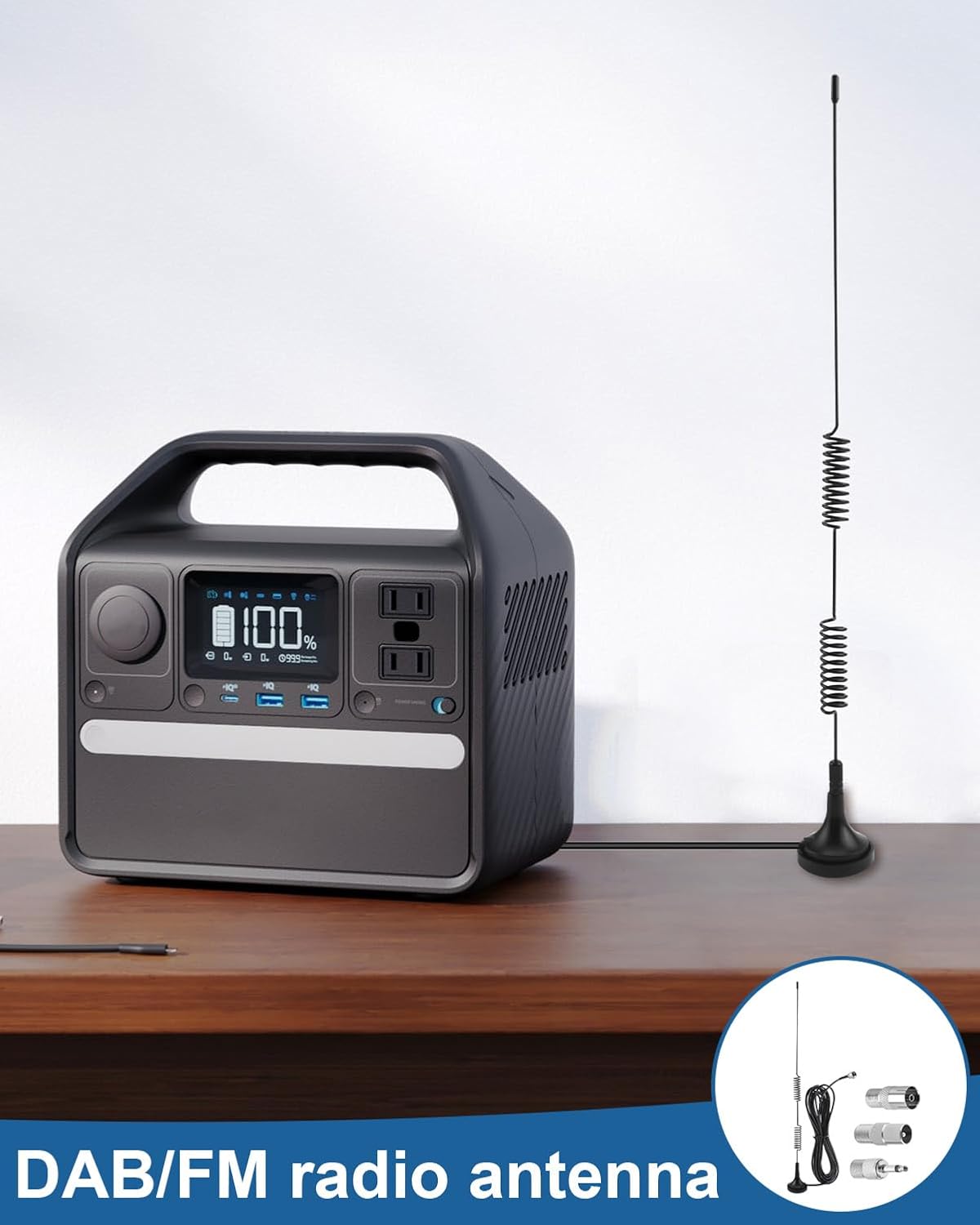
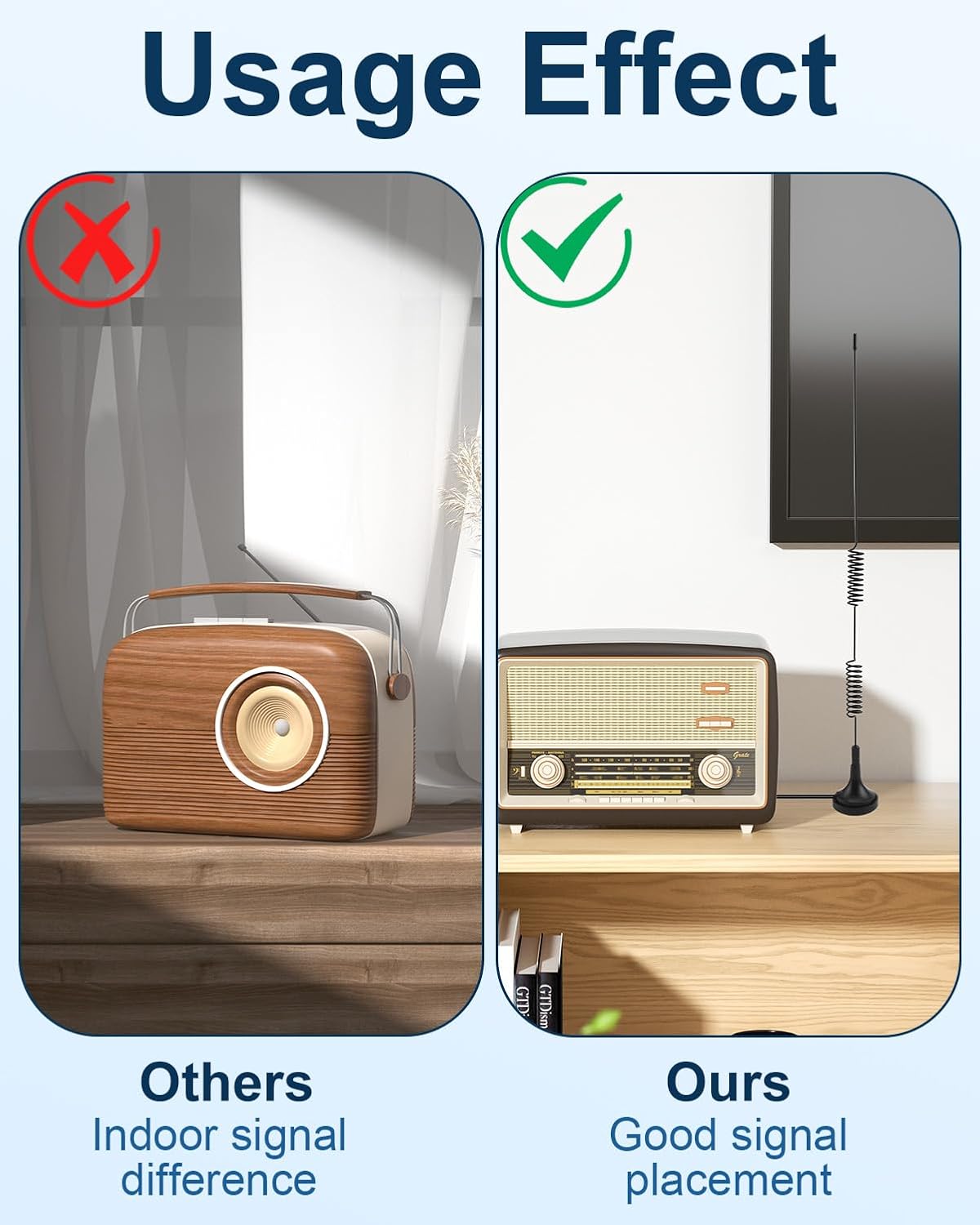
What it is and what it tries to solve\nThis DAB radio aerial is designed to sit indoors and boost FM and DAB reception for a home audio or cinema setup. It’s aimed at improving signal quality for radio playback on 75 Ohm tuner systems, AV receivers, and stereo amplifiers. On paper, it offers a straightforward way to reduce static and dropouts without replacing existing hardware. If your listening is hampered by weak or inconsistent signals, this aerial could be a practical add-on to help stabilise sound and clarity, especially in spaces where outdoor or loft antennas aren’t feasible.\n\n## How it helps in everyday use\nThe strongest selling point is enhanced reception across the FM and DAB bands, which translates to more reliable sound for news, music or talk shows. The long 3m (10ft) coaxial lead means you can position the aerial away from the back of a device, reducing interference. The magnetic base makes it easy to attach to metal surfaces such as a speaker, a chassis, or a metal shelf, allowing you to experiment with placement for better signal without mounting.\n\n## Design and setup notes\nThe base relies on a magnetic connection for quick repositioning, so you can test a few spots in a room. It’s described as plug-and-play, which generally implies minimal setup—connect, place, and listen. The package also includes three different connectors, increasing compatibility with various 75-ohm jacks commonly found on tuners and AV gear.\n\n## What stands out in use\nIn practical terms, you can expect less static and more consistent sound when the aerial is positioned optimally. The 75 Ohm design aligns with many consumer receivers, simplifying integration. For shorter cable runs or deskside setups, the magnetic base adds convenience and makes shelf placement straightforward.\n\n## Limitations and questions to consider\nIt’s not a universal guarantee of better reception in every room. If your space has particularly weak signals, or if the tuner itself struggles with the broadcast, improvements may be limited. Also, the exact gain compared with other antennas isn’t specified, so the perceived benefit will depend on your equipment and environment.\n\n## Who it’s for\nThis is suitable for those with an indoor listening area who want a simple upgrade to FM/DAB reception without reconfiguring their whole system. It’s a practical option if you have a 75-ohm tuner or AV receiver and you want to avoid intrusive installation.\n\n## What to check before buying\n- Confirm your receiver uses a 75-ohm input and supports the included connectors.\n- Consider where you’ll place the aerial to balance distance from interference and signal strength.\n- If your room has metal surfaces, the magnetic base can help but ensure it won’t scratch surfaces.\n\n## Practical comparison: how this fits with other approaches\nCompared with a fixed external antenna, this indoor option prioritises convenience and flexibility. If you prioritise a clean look and easy repositioning over maximum theoretical gain, this design makes sense. For those needing the strongest possible signal in challenging locations, a higher-gain or outdoor antenna could be more appropriate, albeit with more involved installation.\n\n## What you’ll notice day to day\nA clearer, more stable radio signal for FM and DAB listening, with fewer interruptions in typical home environments. It’s better suited to radios or receivers that struggle with indoor reception and have a compatible 75-ohm input.\n\n## Is it worth it? Final thoughts\nWorth considering if your current setup has occasional dropouts or hiss, and you want a simple, reversible upgrade. It won’t turn a poor receiver into a miracle machine, but it can smooth out listening in a typical living room. It may not deliver dramatic gains in all spaces, so assess your room’s layout and your existing equipment before buying.\n\n## FAQ (3–5 quick answers)\n- Will this boost reception for all stations equally?: It helps many users with FM and DAB reception, but results vary by room and signal strength.\n- Do I need to modify my existing setup?: No, it’s designed to be plug-and-play and compatible with standard 75-ohm inputs.\n- Can I use it with non-75-ohm systems?\n- How should I position it for best results?: Start with a central shelf or on a metal surface, then experiment with height and distance from other electronics to reduce interference.