

Creality PETG Filament Refill for Bambu Lab Spool — 2 kg, 1.75 mm, Black
Reviews
Product description
What this is
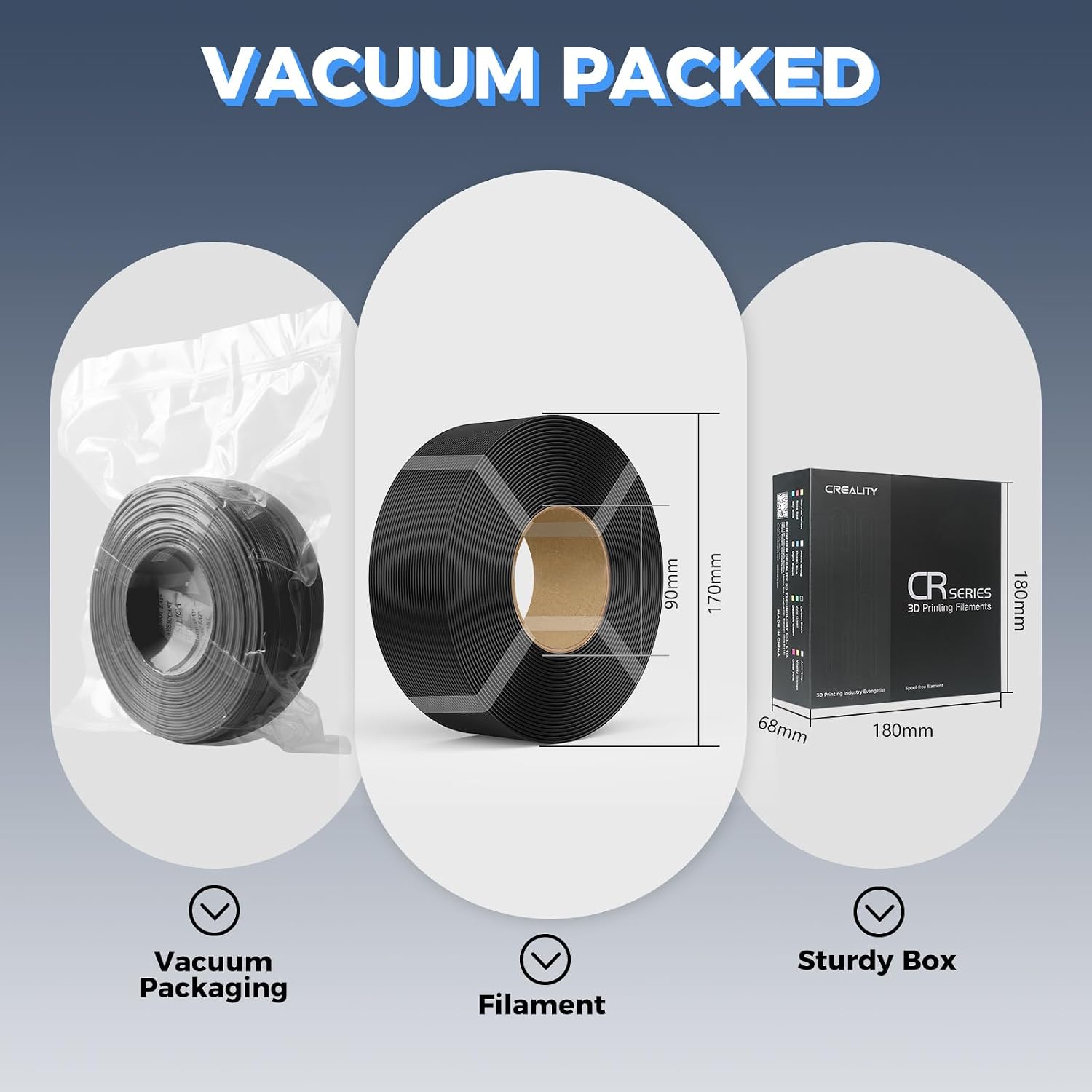
Creality PETG Filament Refill is a hubless 1.75 mm PETG filament pack offered for use with Bambu Lab reusable spools and Creality’s own detachable spool systems. Supplied in a 2 kg (4.4 lb) bundle, it aims to provide a practical, long-run material option for hobbyists and makers who want to reduce plastic waste while maintaining decent print quality.
Who it’s for
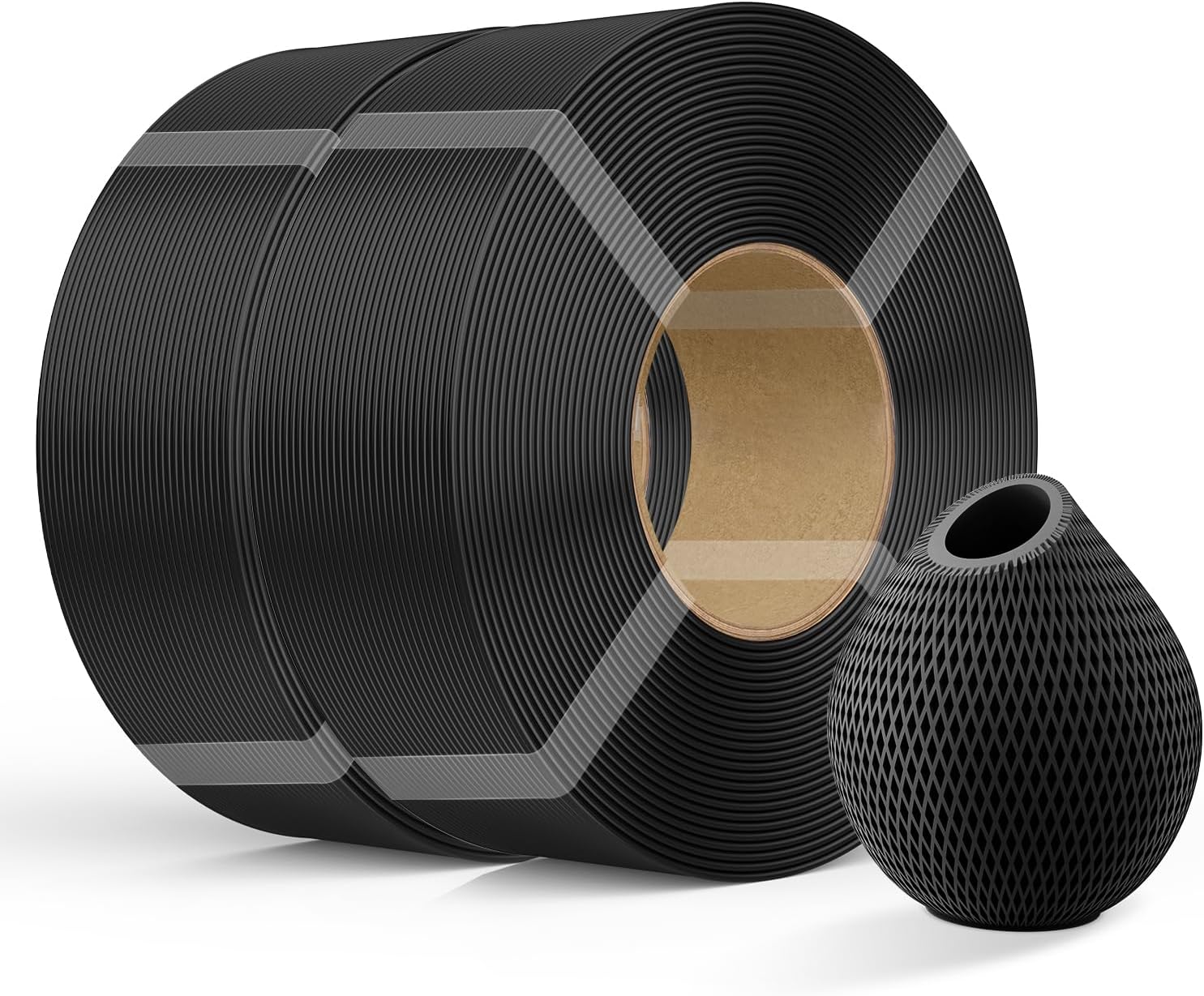
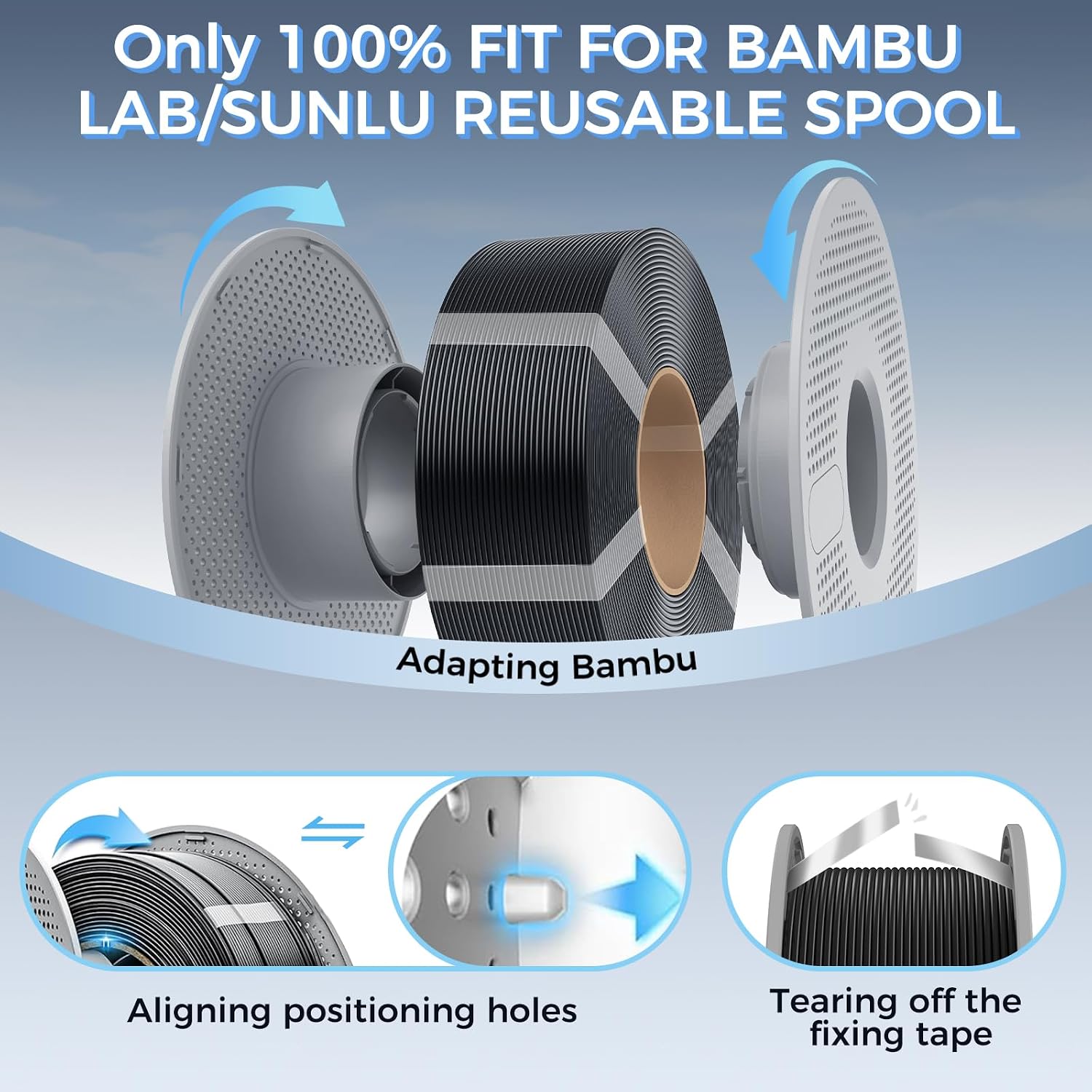
If you print with PETG already or are exploring a material with stronger layer adhesion and better toughness than standard PLA, this refill could be worth considering. It’s positioned for users of Bambu Lab A1/A1 Mini/X1/X1C/X1E/P1/P1P/P1S printers and other hubless/spool systems that accommodate 1.75 mm filament. The appeal is to people seeking easier spool handling and less waste from conventional single-use spools.
How it performs in practice
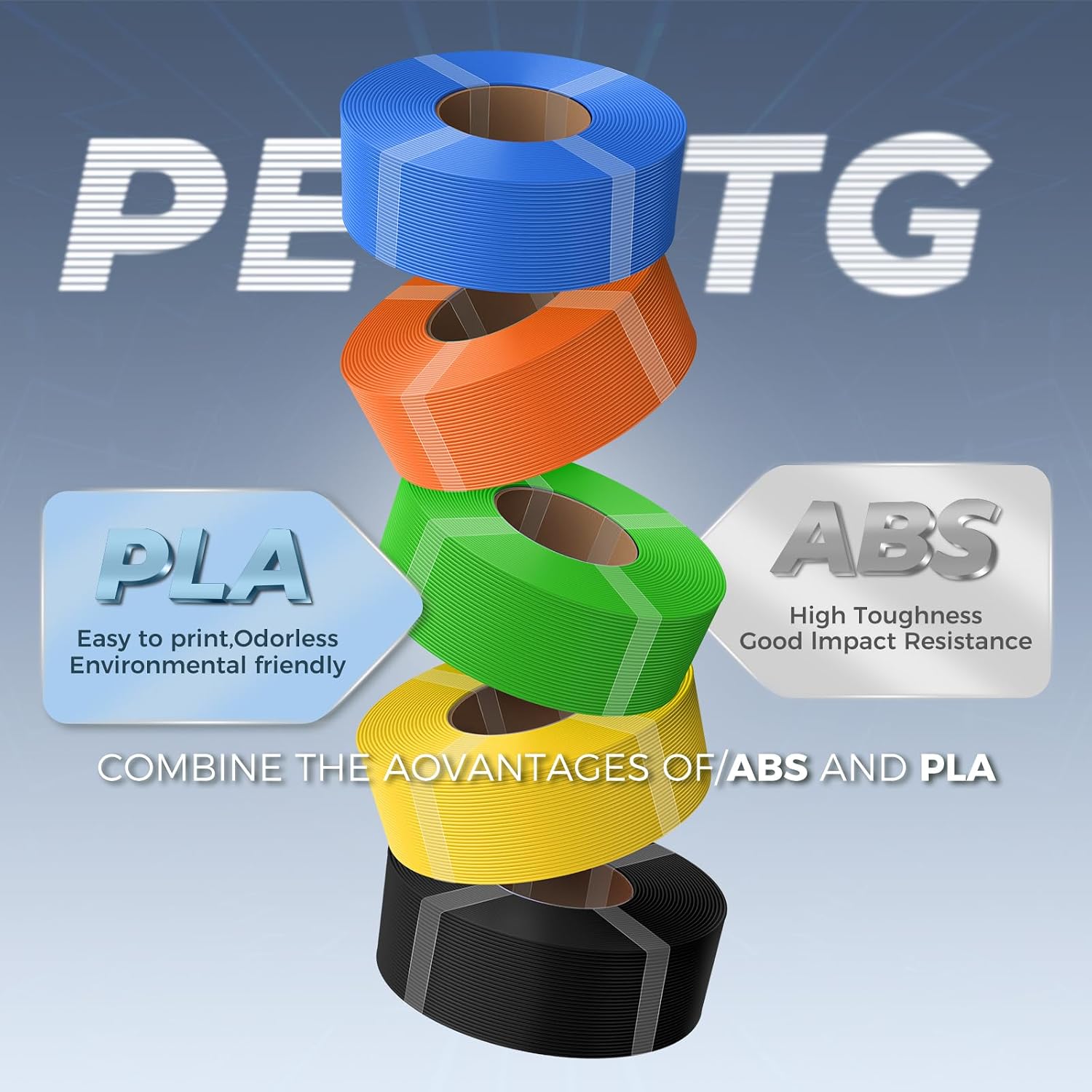
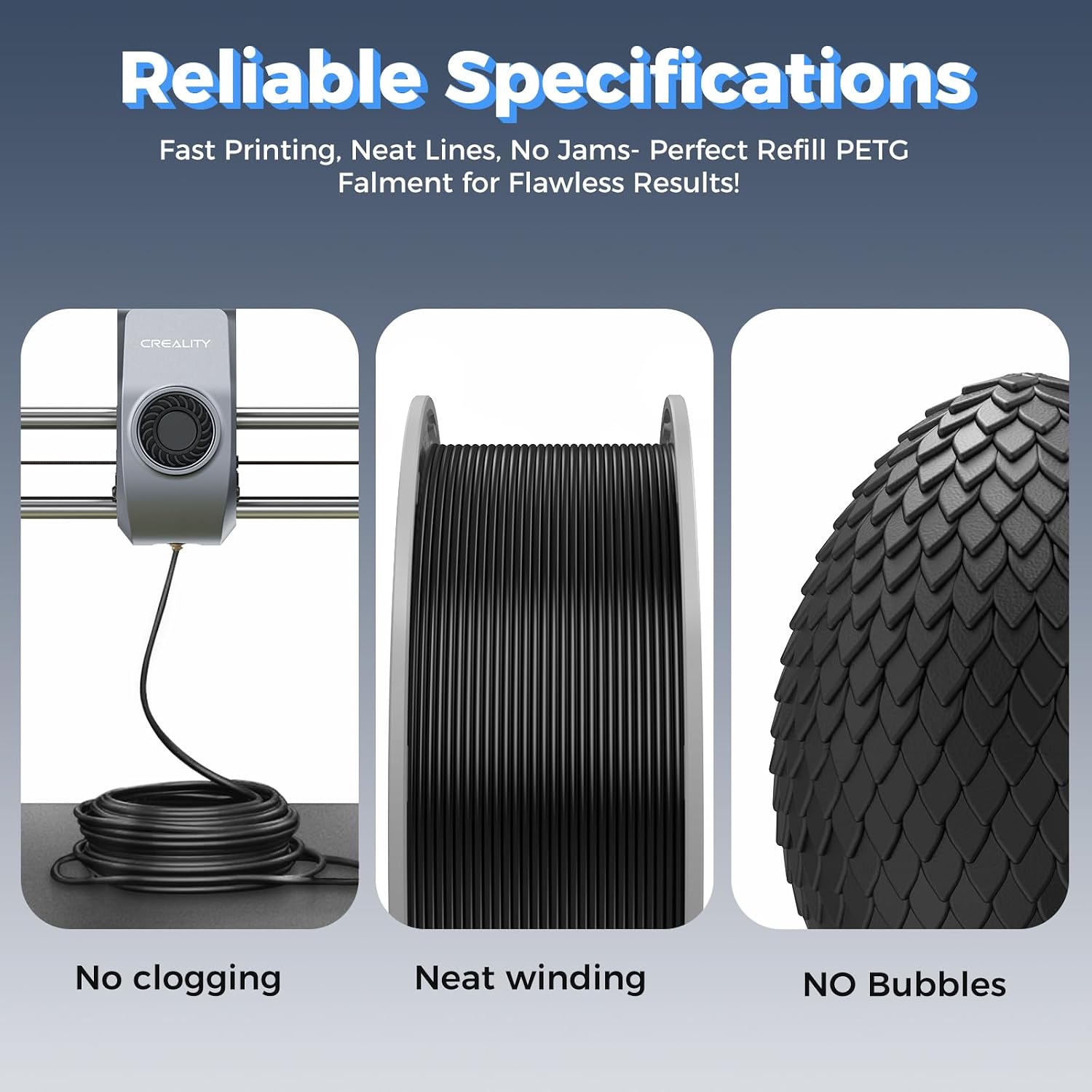
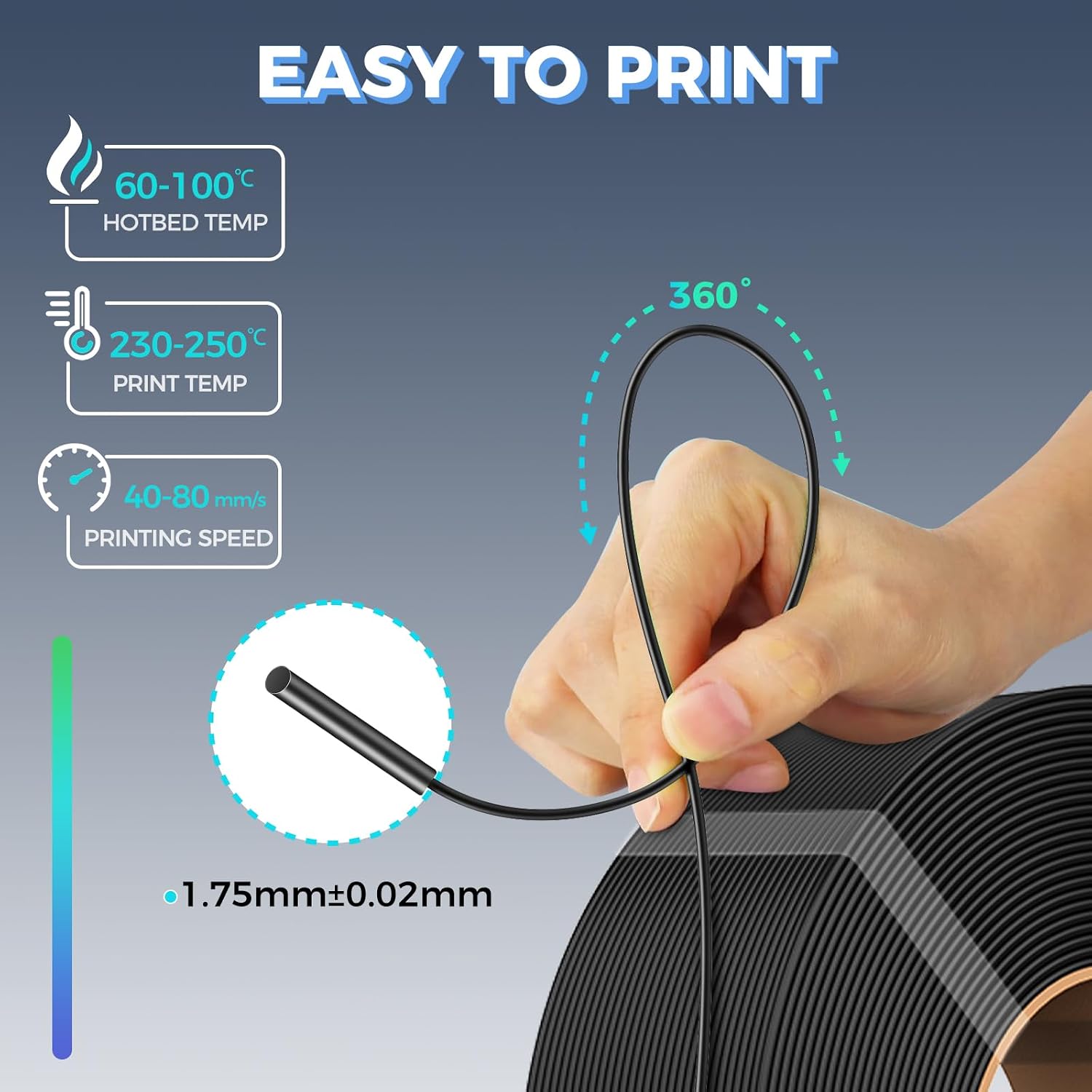
On paper, PETG combines the ease of PLA with more resilience and temperature tolerance. Creality’s PETG emphasises good layer adhesion to reduce warping and improve mechanical integrity. The material is designed to be dry‑packed and vacuum sealed to protect against moisture, which can otherwise affect print quality. The recommended print window is 220–250°C with a bed temperature of 70–80°C, which aligns with typical PETG practice and helps avoid under-extrusion or poor adhesion.
What’s strong about it
- Layer adhesion and reduced warping improve the chance of solid, dimensionally reliable prints.
- The hubless format supports easier recycling and less waste compared with traditional spools.
- Drying and moisture protection aim to keep dimensional accuracy stable during use.
What may give you pause
- Printing PETG still requires temperature management and good bed adhesion, if you’re new to PETG, the learning curve can be a little steeper than PLA.
- The claimed dimensional accuracy is ±0.03 mm, which is fine for many parts but may not suit extremely tight tolerances without careful calibration.
- The description focuses on compatibility and preparation rather than concrete performance data like tensile strength or print speed, so expect results to depend heavily on your printer setup.
Is it worth it for your setup?
It makes sense if you prioritise reduced waste and you already use a hubless or reusable spool system compatible with 1.75 mm filament. If your printer is best suited to PLA or needs very high temperature resistance for functional parts, you might want to compare PETG against other materials before committing.
What to check before buying
- Confirm your printer supports hubless or detachable spool formats and 1.75 mm filament.
- Ensure your hotend is compatible with 220–250°C and your bed can reach 70–80°C.
- Consider storage once opened, PETG can absorb moisture, so keep the filament dry if you don’t print promptly.
How it compares to alternatives
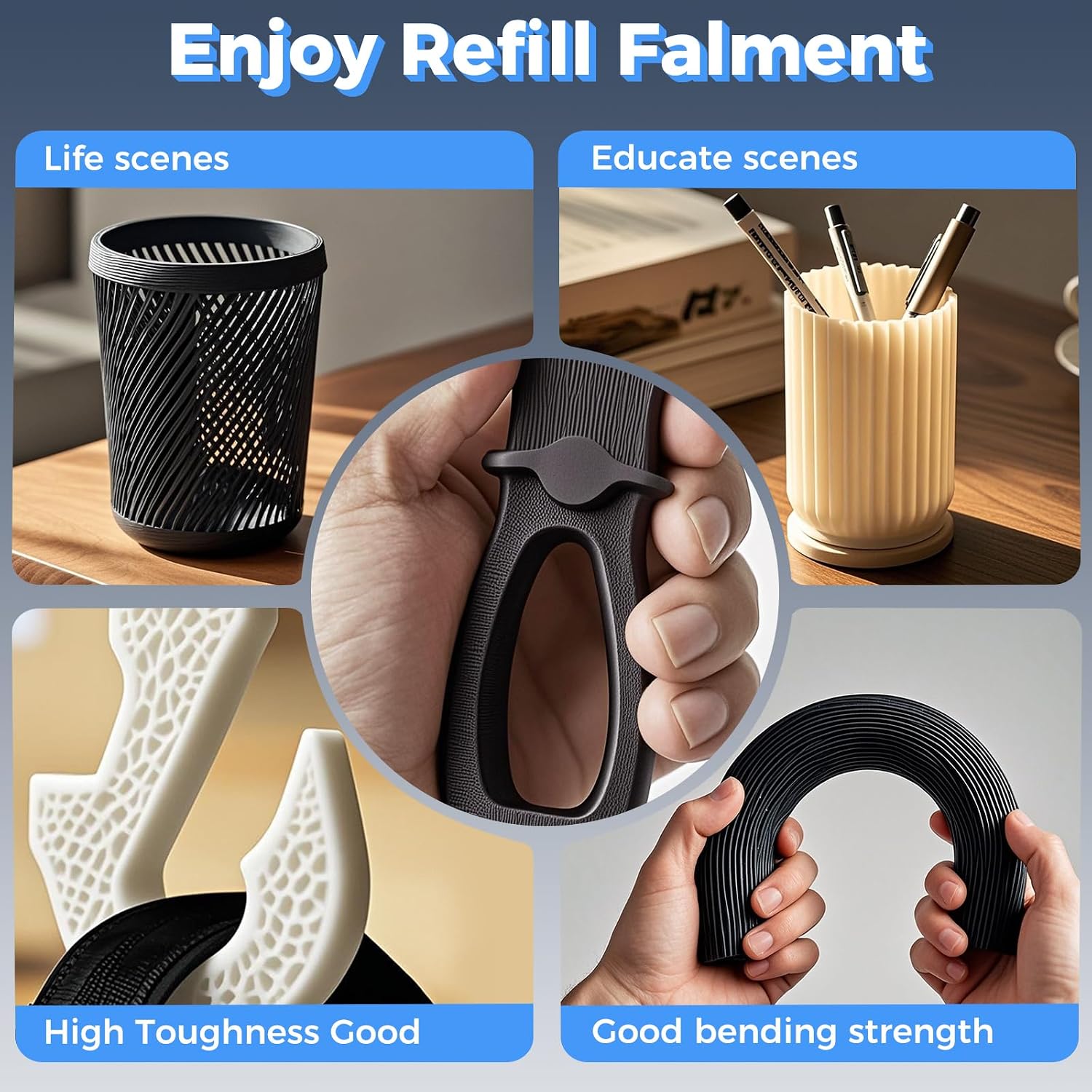
For users weighing material choices, PETG sits between PLA and ABS in terms of print difficulty and mechanical properties. If you value ease of printing and lower warping, PLA might feel simpler, if you need higher impact resistance and temperature tolerance for functional parts, ABS or other engineering plastics could be a better pick. This Creality refill fits a niche where spool sustainability and hubless workflows matter, rather than a drastic change in performance.
Final verdict
Is it worth it?
Worth considering if you’re equipped for hubless spooling and want a straightforward PETG option with moisture protection and decent layer adhesion. Not the best match if you require extreme dimensional tightness or if your printer’s setup isn’t optimised for PETG. For daily PETG projects and waste-reducing setups, it provides a pragmatic path forward.
Quick FAQ
- What printers will it fit? Compatible with Bambu Lab and Creality hubless or detachable spool systems and 1.75 mm filament setups, exact compatibility depends on your specific printer model.
- Do I need special storage after opening? PETG benefit from being kept dry, store in a sealed container or desiccant to minimise moisture uptake.
- What temperatures should I start with? 220–250°C nozzle, 70–80°C bed is the typical starting point, adjust for layer adhesion and first-layer bonding as needed.