

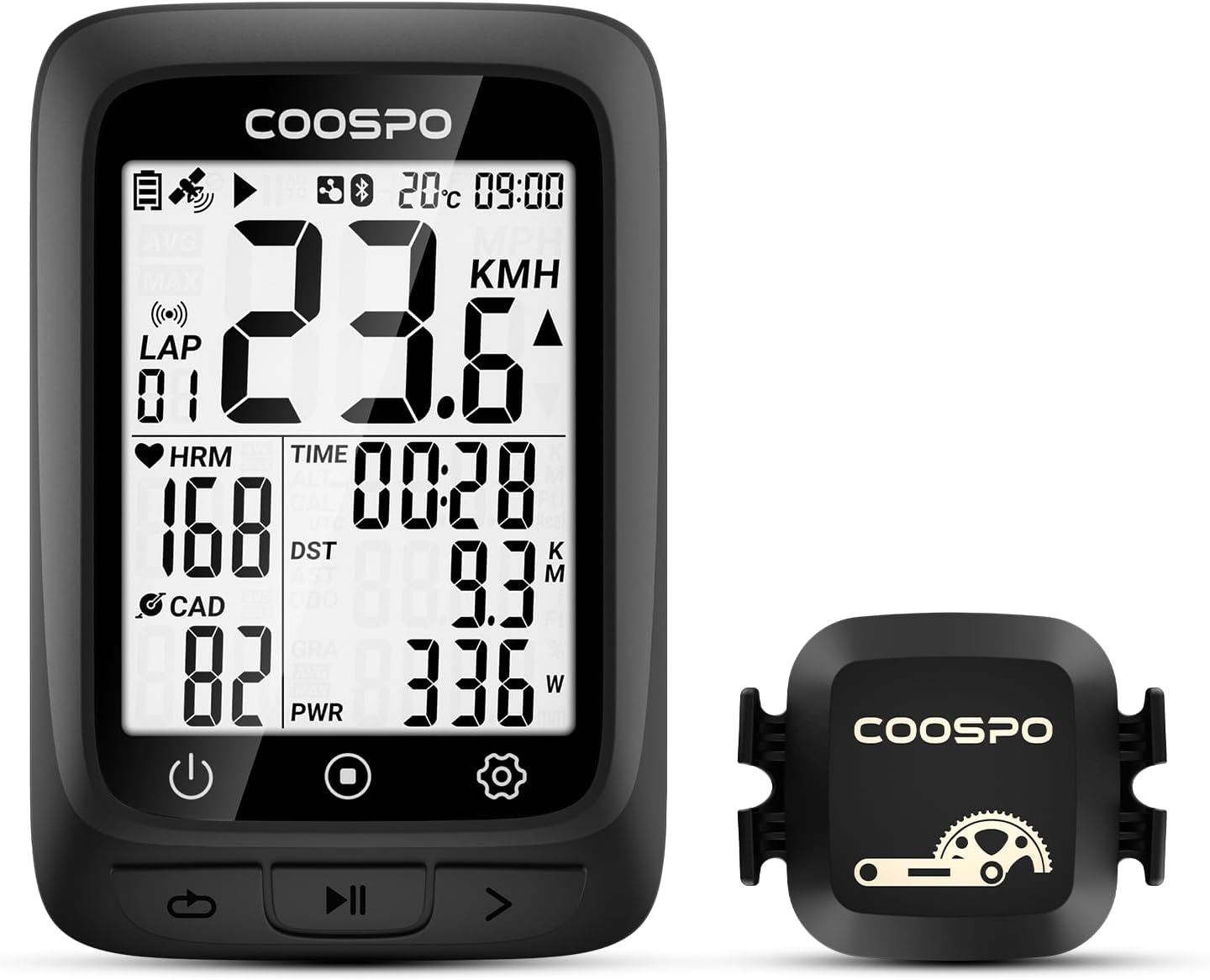
COOSPO Bike Computer GPS Wireless (BC107) with ANT+ sensors, Bluetooth and 2.4in auto backlight LCD
Product description
What it is and who it’s for
The COOSPO Bike Computer GPS Wireless (BC107) is a multifunctional cycling head unit built around two big ideas: ANT+ sensor support and GPS for location-based ride data. It’s the kind of bike computer you’d look at if you want more than a basic speed readout, but you’re not trying to build a full pro-level race cockpit.
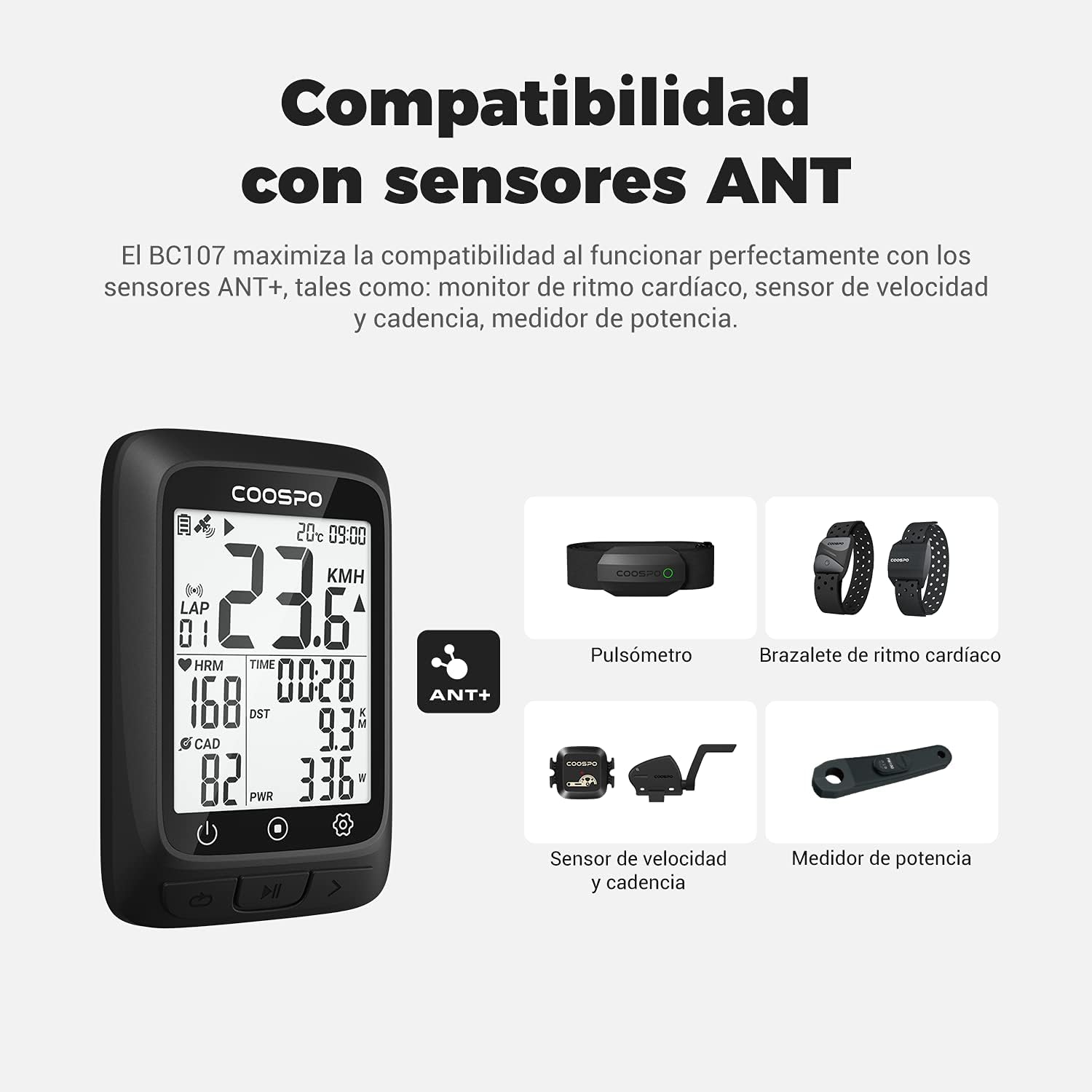
On paper, it aims at riders who already use (or plan to use) ANT+ accessories such as a heart rate monitor, speed/cadence sensors, and even a power meter. Add GPS with double satellite positioning for location fixes, plus a 2.4-inch segment screen that’s meant to stay readable outdoors (with auto backlight), and you’re getting a fairly practical all-rounder for typical UK riding.
One small limitation worth noting: the Strava workflow isn’t “plug in via USB and upload to Strava”. The description specifies you can sync your activity (.fit file) to Strava through the CoospoRide app, so you’ll want to be happy using a phone for that part.
Key features that matter in real use
The standout elements here are the things you’ll notice during rides, not in a spec sheet.
- ANT+ sensor compatibility: the computer is designed to work with ANT+ sensors including a heart rate monitor, speed and cadence sensor, and power meter. If you’re investing in sensors over time, that flexibility is a meaningful plus.
- GPS positioning: it claims double satellite positioning and will automatically capture GPS signals after power on, then calibrates the time.
- Included cadence sensor: you don’t have to source a cadence sensor separately if your main goal is to track cadence in real time.
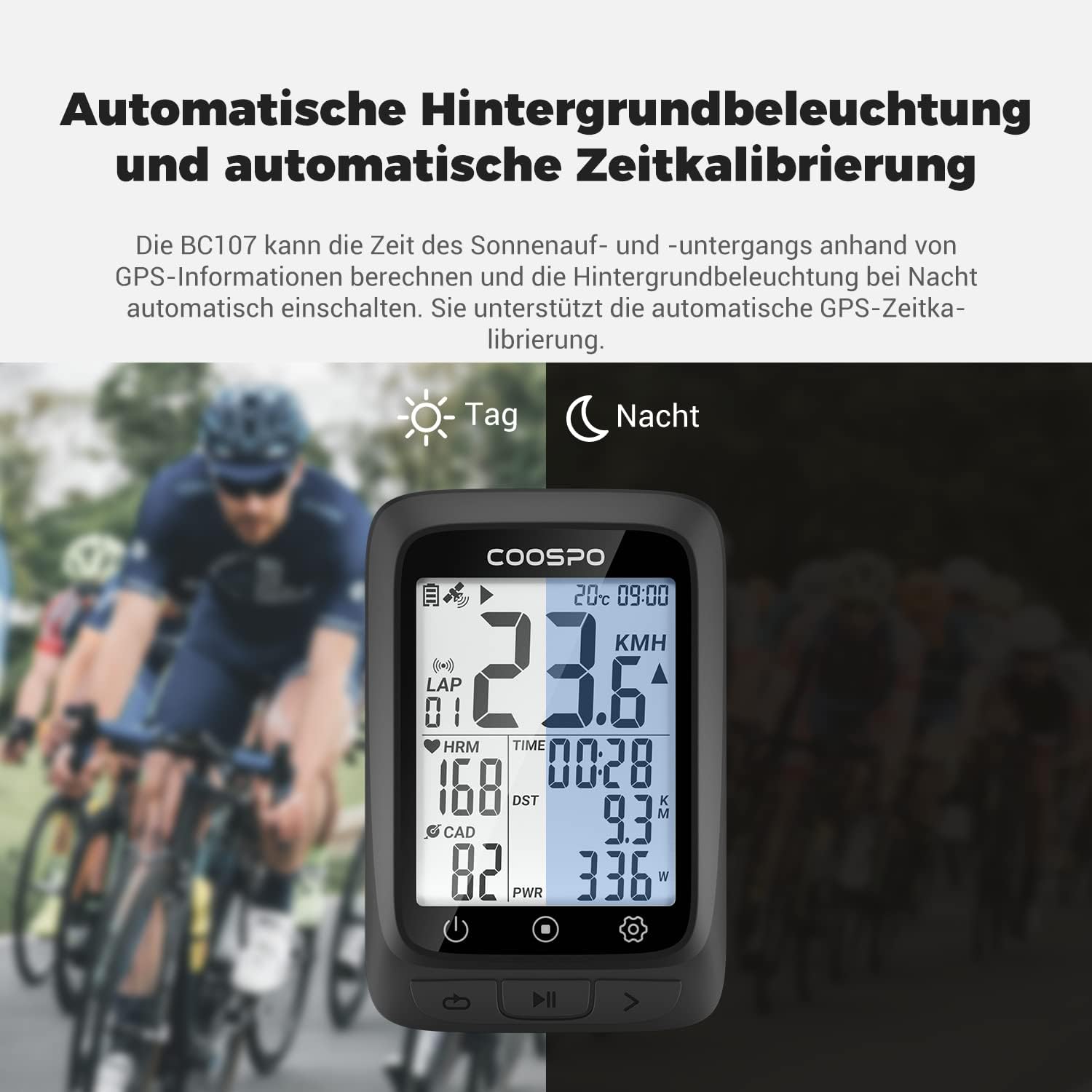
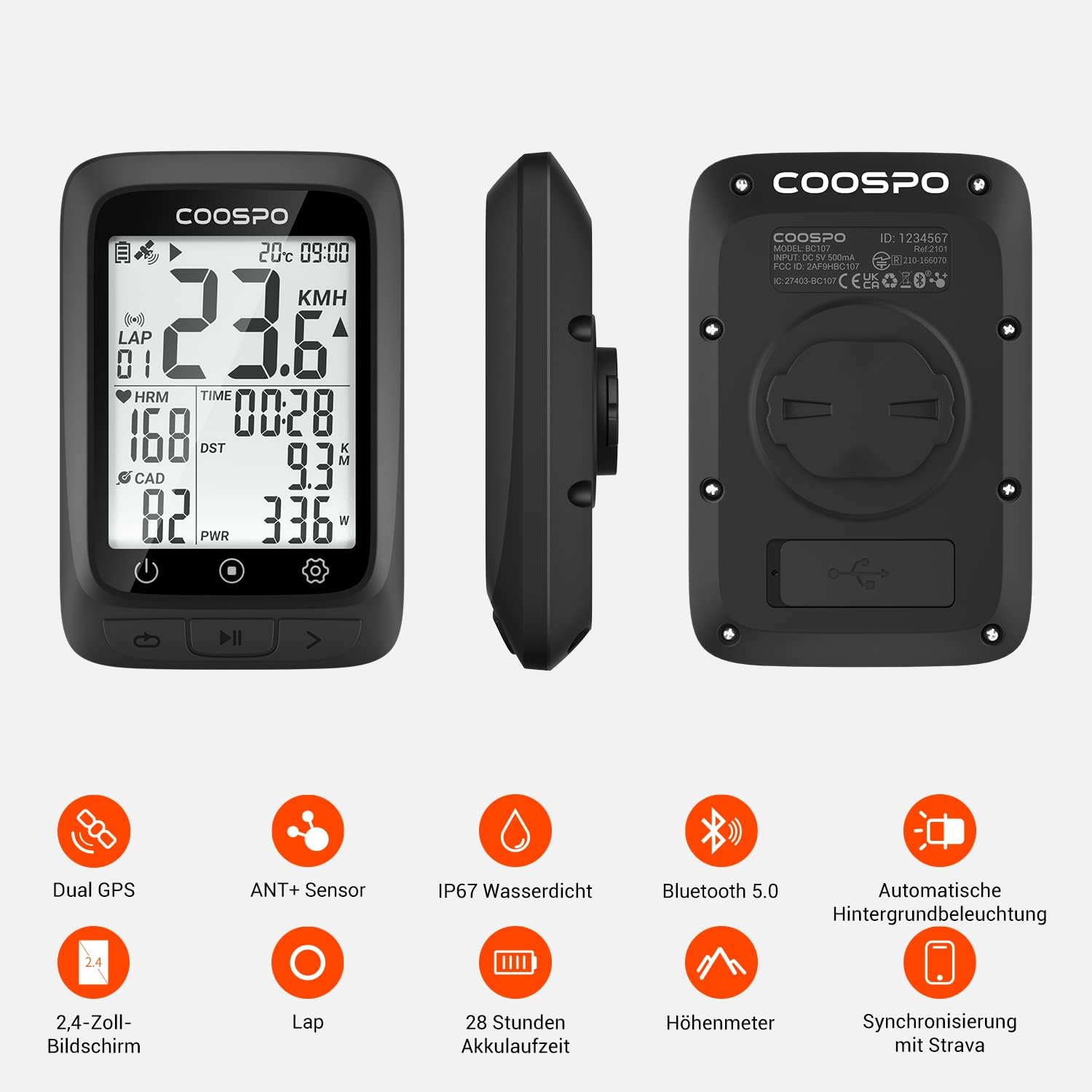
- 2.4-inch display with auto backlight: the screen is described as visible even in direct sunlight, and it senses the environment to turn the backlight on. That’s useful for rides that cross from bright afternoon to darker evenings.
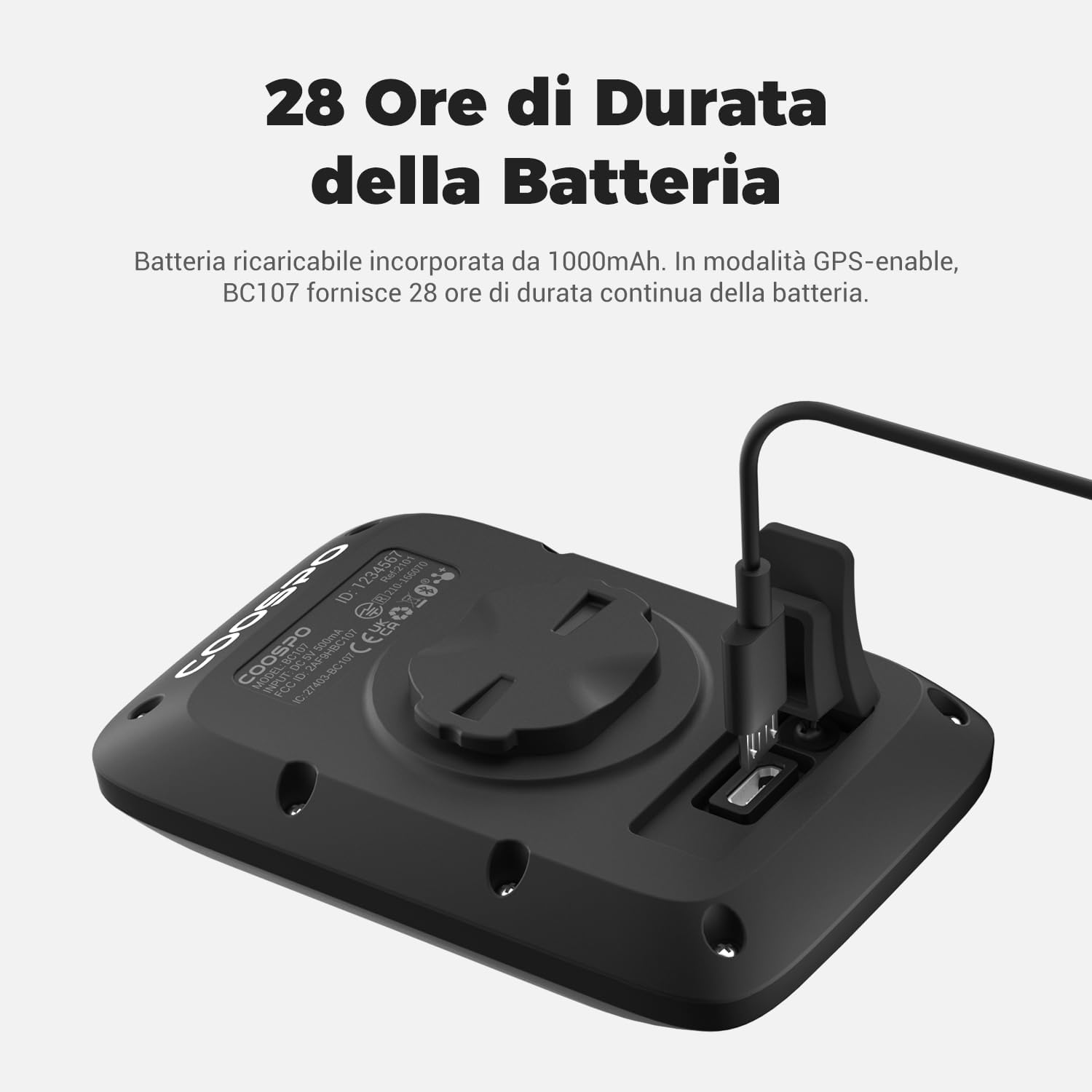
- Battery life for longer days: the stated battery life is up to 28 hours of continuous use with GPS enabled mode. For many weekend riders, that covers a long outing without constantly worrying about charging.
For a quick “micro” example: imagine you set off on a Saturday loop with GPS on, the cadence sensor already paired for pedal rhythm, and ANT+ heart rate running. You start the ride, glance at your speed and cadence as you roll along, and when the light drops the backlight kicks in automatically—no fiddling.
What you’ll get from ANT+ and GPS (and what to double-check)
This unit is clearly positioned for riders who care about getting accurate cycling data rather than just a rough time-and-distance summary.
If you already own ANT+ sensors, this is where it can fit nicely—its aim is to “maximise compatibility” with that sensor ecosystem. That said, compatibility is one of those areas where it’s still worth being careful: since the information provided lists common ANT+ sensor types, you’ll want to confirm your exact devices are covered and that you’re comfortable pairing them.
On the GPS side, it’s built to capture signals automatically after powering on. That helps reduce the “wait around before you move” hassle. Still, GPS performance can depend on conditions and how/when you start tracking, so it’s wise to assume you’ll occasionally need a moment for a clean lock, especially outdoors.
Screen, visibility and riding comfort
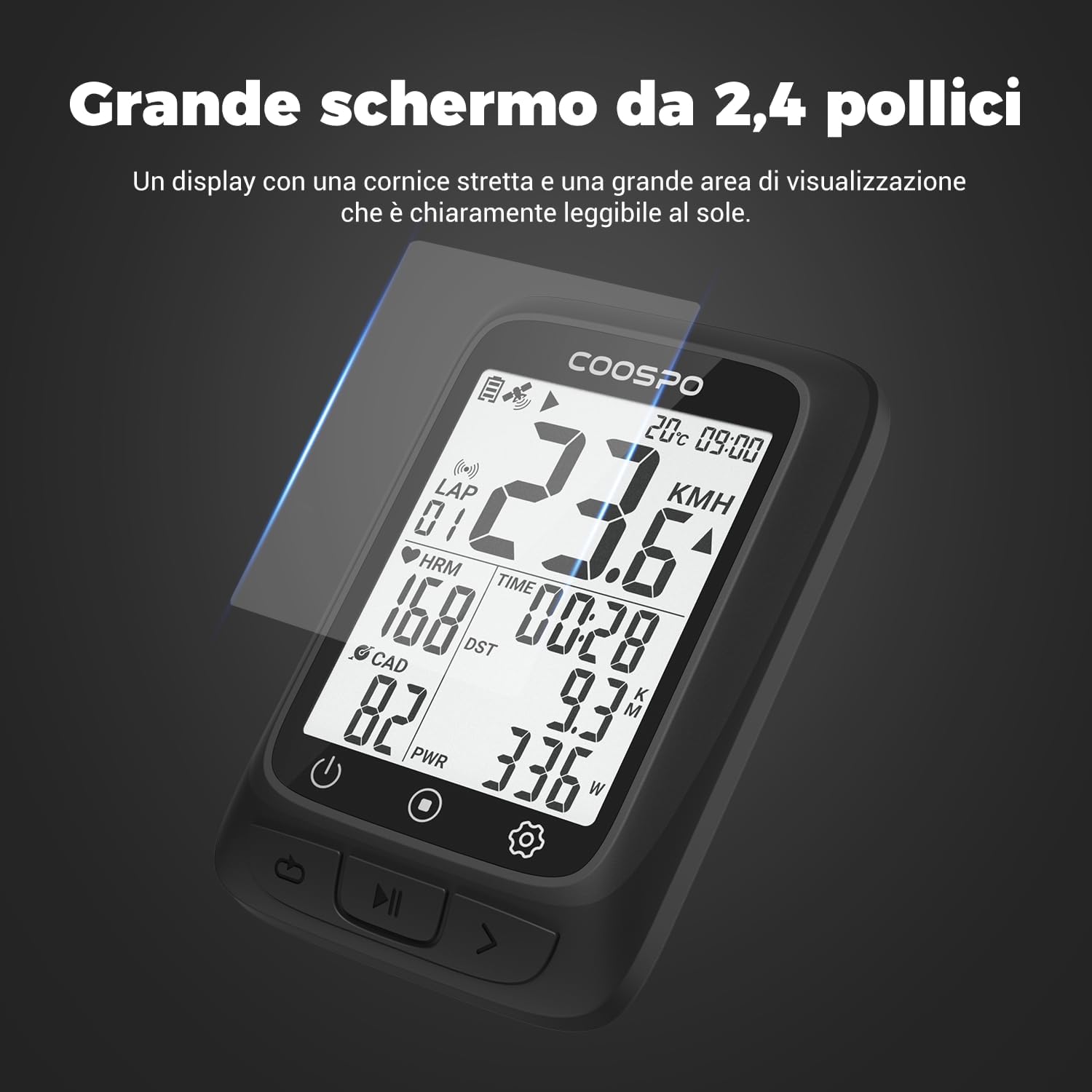
The 2.4-inch segment code FSTN glass screen is described as readable in direct sunlight, with an auto backlight that senses the environment. In practice, that’s a good combo if you ride at mixed times—morning brightness, then later in the day when you want the screen to stay easy to read without manual adjustment.
However, segment-style screens aren’t for everyone if you’re used to larger full-colour mapping displays. The provided details focus on visibility and backlight control, but they don’t describe mapping complexity beyond the mention of a route map on the app.
CoospoRide app, Strava sync and file handling
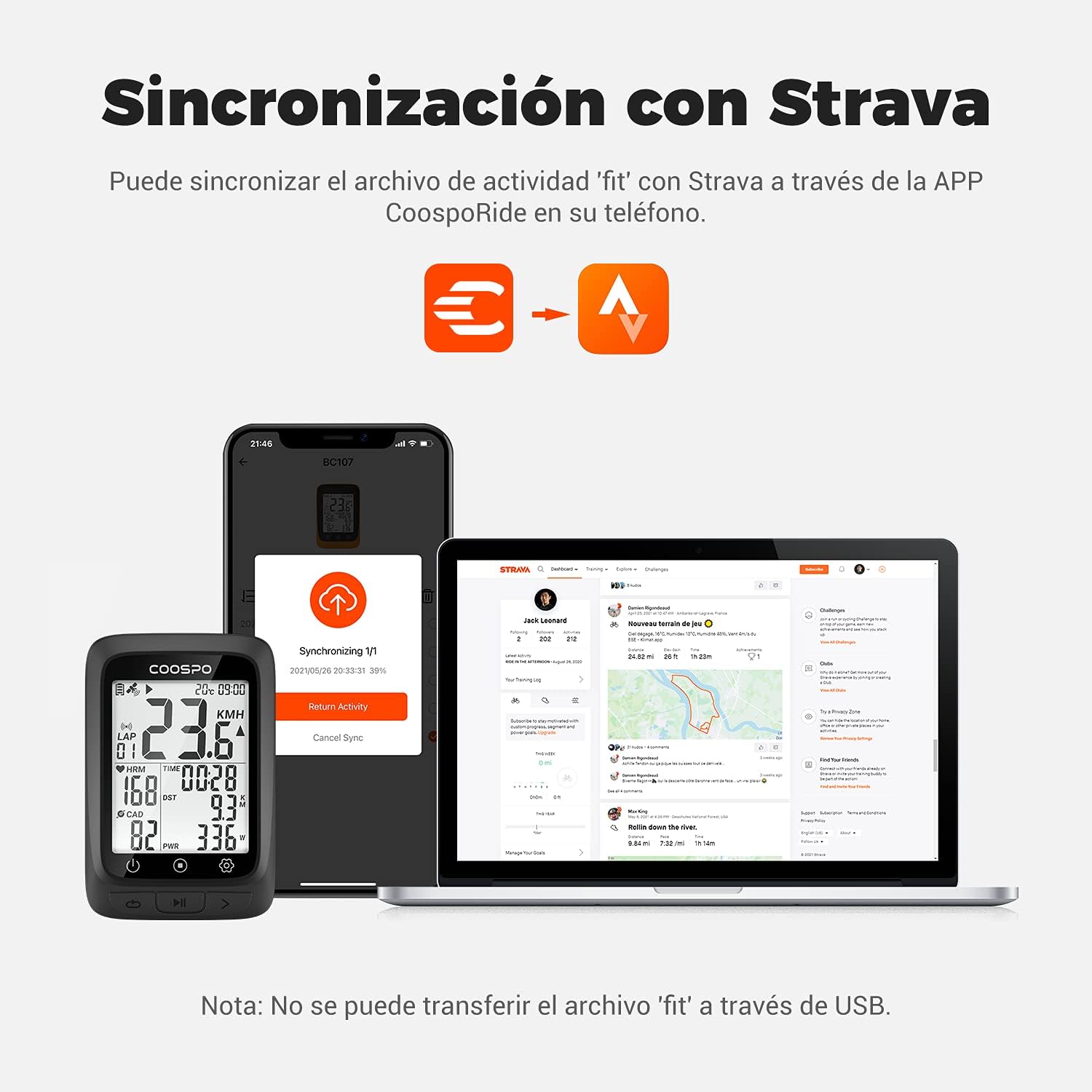
The computer supports syncing activity (.fit file) to Strava using the CoospoRide app on your phone.
The important nuance: it specifically states you can’t upload a .fit file directly to Strava via USB transmission on a PC. So if your current routine is “ride, then plug in to a computer and upload”, this might feel slightly inconvenient. If you’re comfortable with phone-based syncing, it’ll likely be a non-issue.
Tech specs
- Type: Bike computer / GPS cycling computer
- Name: COOSPO Bike Computer GPS Wireless (BC107)
- Display: 2.4-inch segment code FSTN glass screen
- Wireless / sensor support: ANT+ sensors and Bluetooth
- GPS positioning: double satellite positioning
- Backlight: auto backlight (environment sensing)
- Water resistance: IP67
- Battery life: up to 28 hours continuous in GPS enabled mode
- Included sensor: bike cadence sensor
Is it worth it?
It makes sense if you want a GPS bike computer that leans into ANT+ cycling data, includes a cadence sensor, and gives you a bright-enough screen for outdoor rides with auto backlight. The 28-hour claim with GPS enabled is also reassuring for longer outings, and the Strava sync path via the CoospoRide app is workable if you’re already used to mobile workflows.
You may want to skip it if you strongly prefer uploading to Strava straight from a PC via USB, because the .fit file route is described as app-based rather than USB upload. It might also not suit you if you’re after a super-involved display experience, the information here points more toward practical ride metrics than elaborate on-screen navigation.
Mini FAQ
Does it work with ANT+ sensors?
Yes, it’s designed for ANT+ sensor compatibility, with the description specifically mentioning heart rate monitors, speed and cadence sensors, and power meters.
Is the cadence sensor included?
Yes. The product listing states that a bike cadence sensor is included.
Can I upload rides to Strava via USB on a PC?
No, the description notes that you can’t upload the .fit file directly to Strava via USB transmission on a PC. Sync is described as happening through the CoospoRide app.
Will the screen be readable in bright conditions?
It’s described as visible in direct sunlight, with an auto backlight that senses the environment.
How long does the battery last with GPS on?
The stated figure is up to 28 hours of continuous battery life in GPS enabled mode.