

K&F CONCEPT Nano-X 82mm UV Ultra Low Reflection Lens Filter (28-layer, slim frame)
Reviews
Price
Product description
What this filter is for
A UV filter sounds old-school, but in practice it’s still a handy, daily-use accessory. The K&F CONCEPT Nano-X 82mm UV Ultra Low Reflection lens filter is designed to sit in front of your DSLR lens to help protect the front element from everyday scuffs, dust and handling marks, while also aiming to keep image quality looking clean.
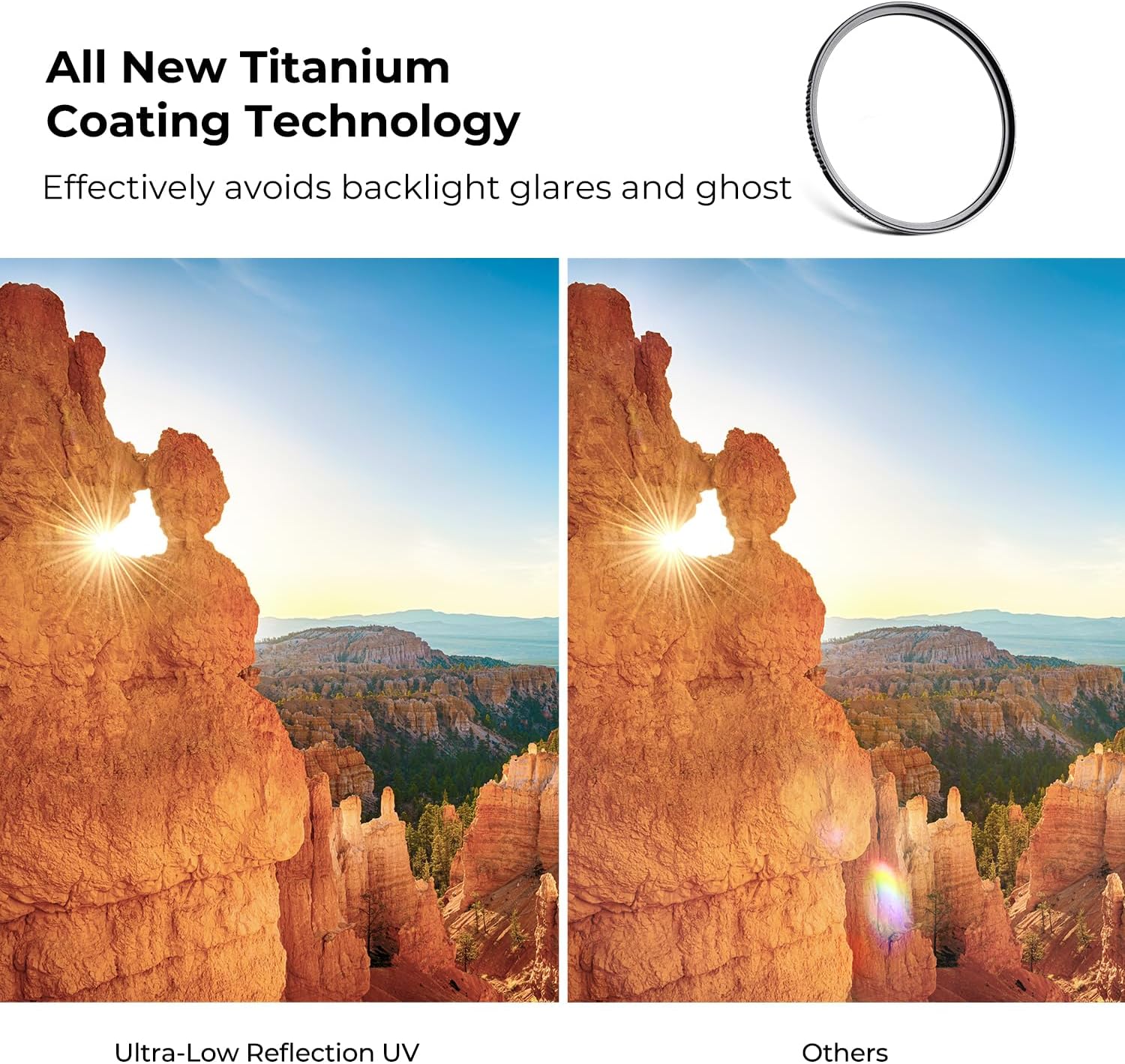
What makes this one stand out on paper is the focus on reducing unwanted flare, ghosting and reflections, which can be a problem when you shoot into bright light or with strong backlight. It also uses “HD optical glass” and a multi-resistant coating package to improve transmission and reduce reflections.
If you’re shooting 4K/8K video or stills where you care about contrast and sharpness, it’s the kind of filter you choose for protection without turning your lens into a weak link.
The essentials (what you’ll notice)
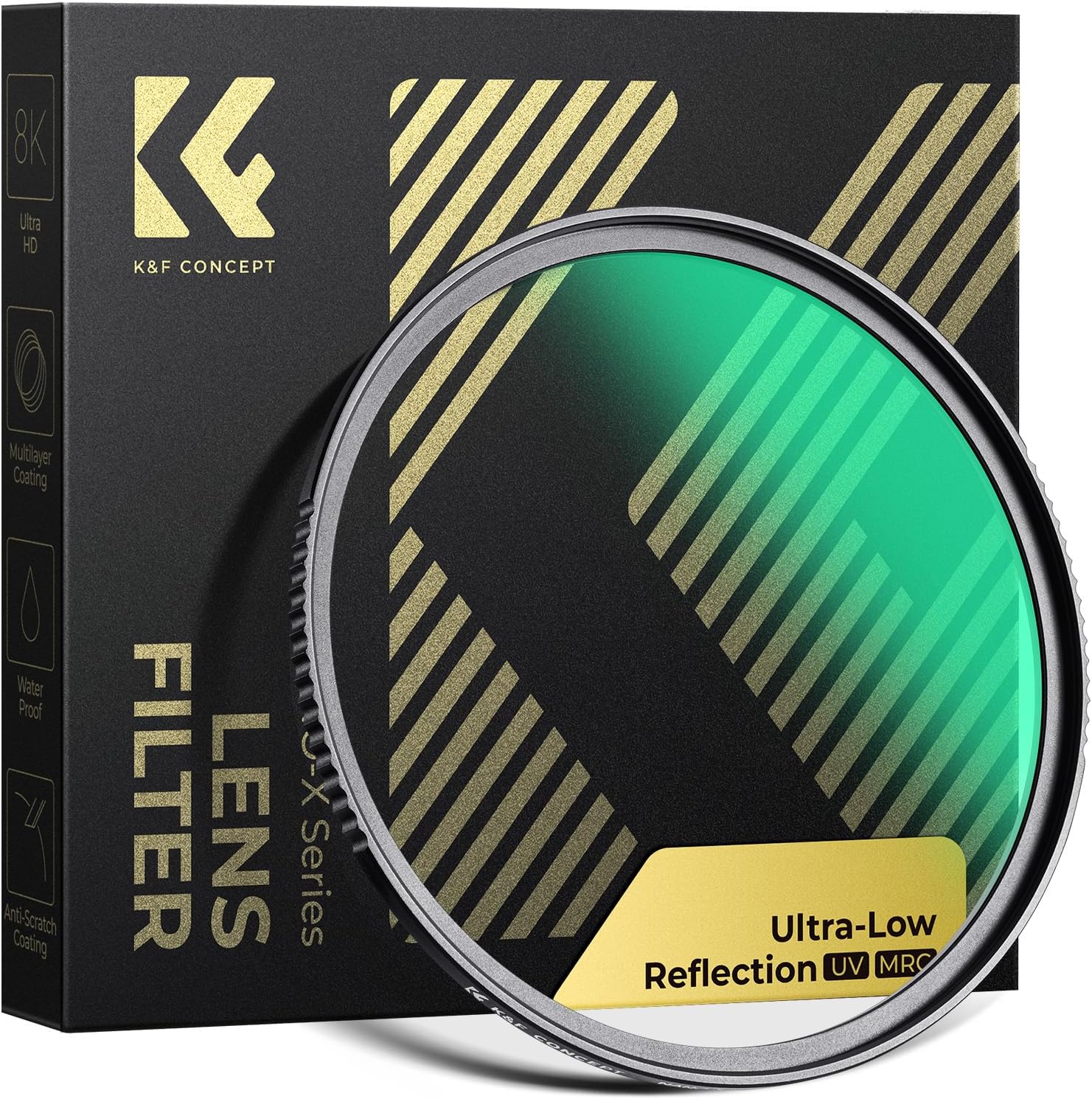
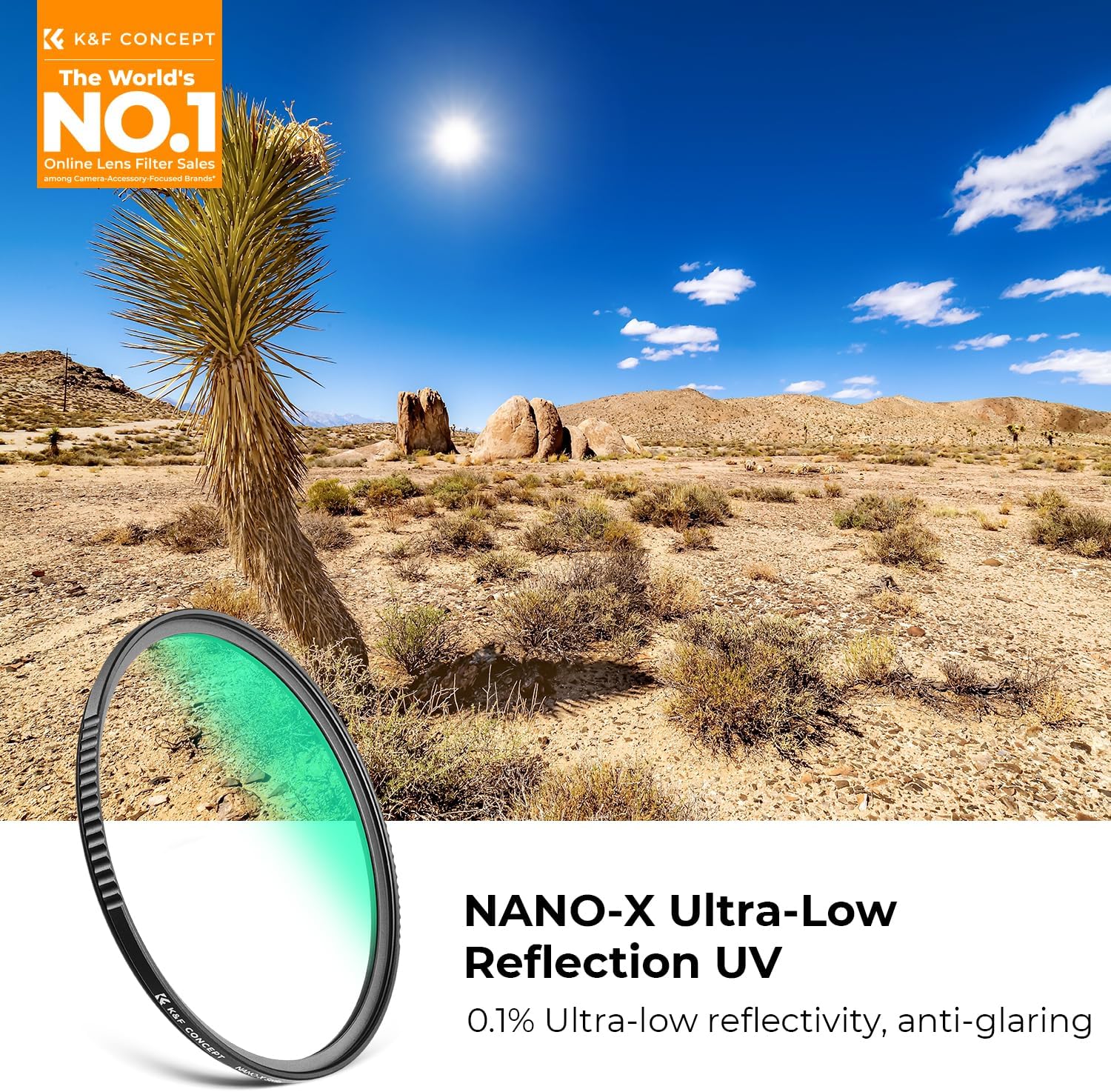
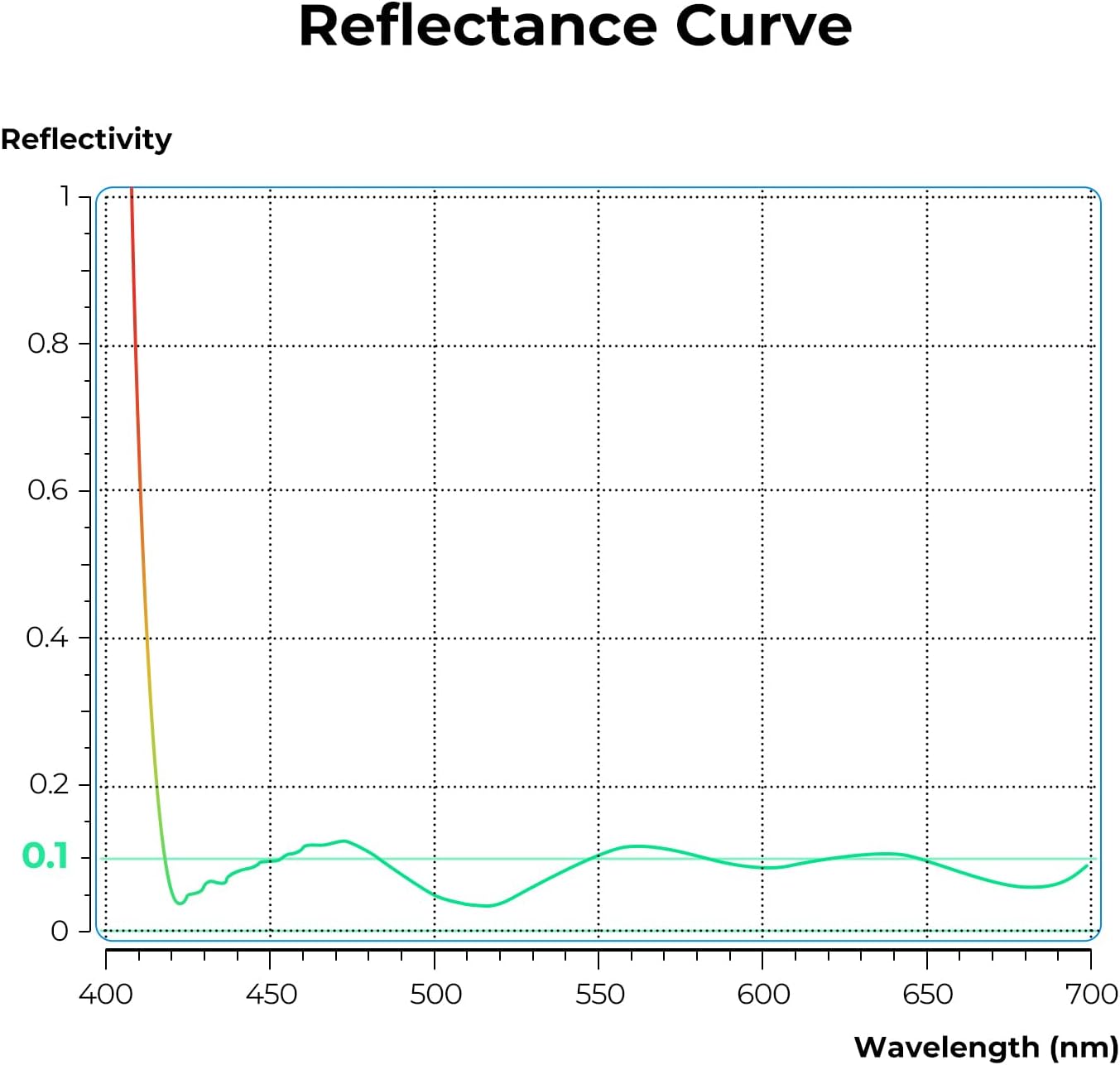
The headline claim here is “Ultra Low Reflection”. The coating treatment is said to reduce filter surface reflection to 0.1% and improve light transmission. In plain terms, that’s meant to help avoid that hazy look and stray light artefacts that you sometimes see with cheaper or poorly coated filters.
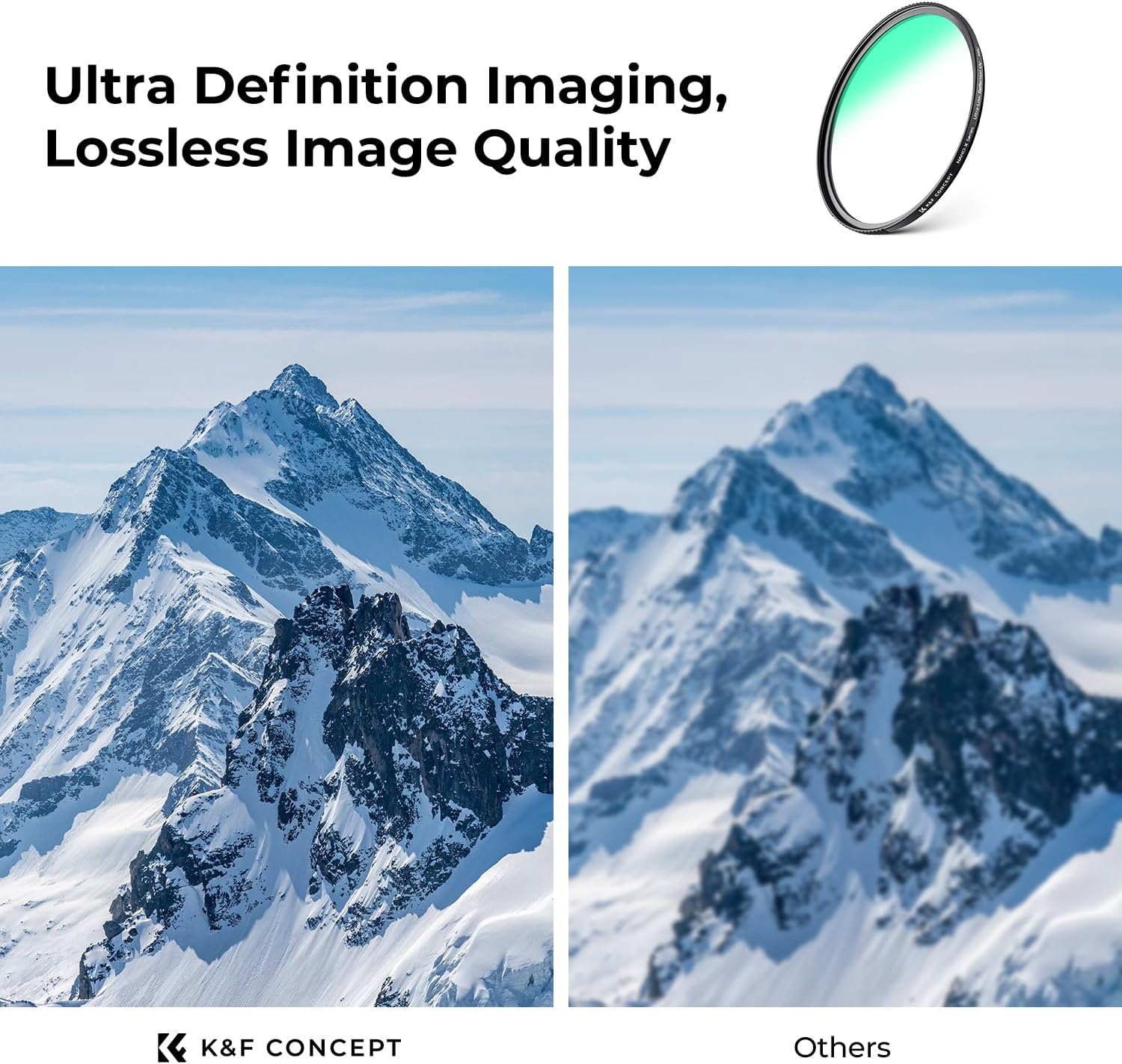
The glass is described as HD optical glass for razor-sharp images and true colour. There’s also a stated light transmission of ≥ 99.8% and reflection of ≤ 0.1%, alongside an emphasis on avoiding backlight glares and ghosting.
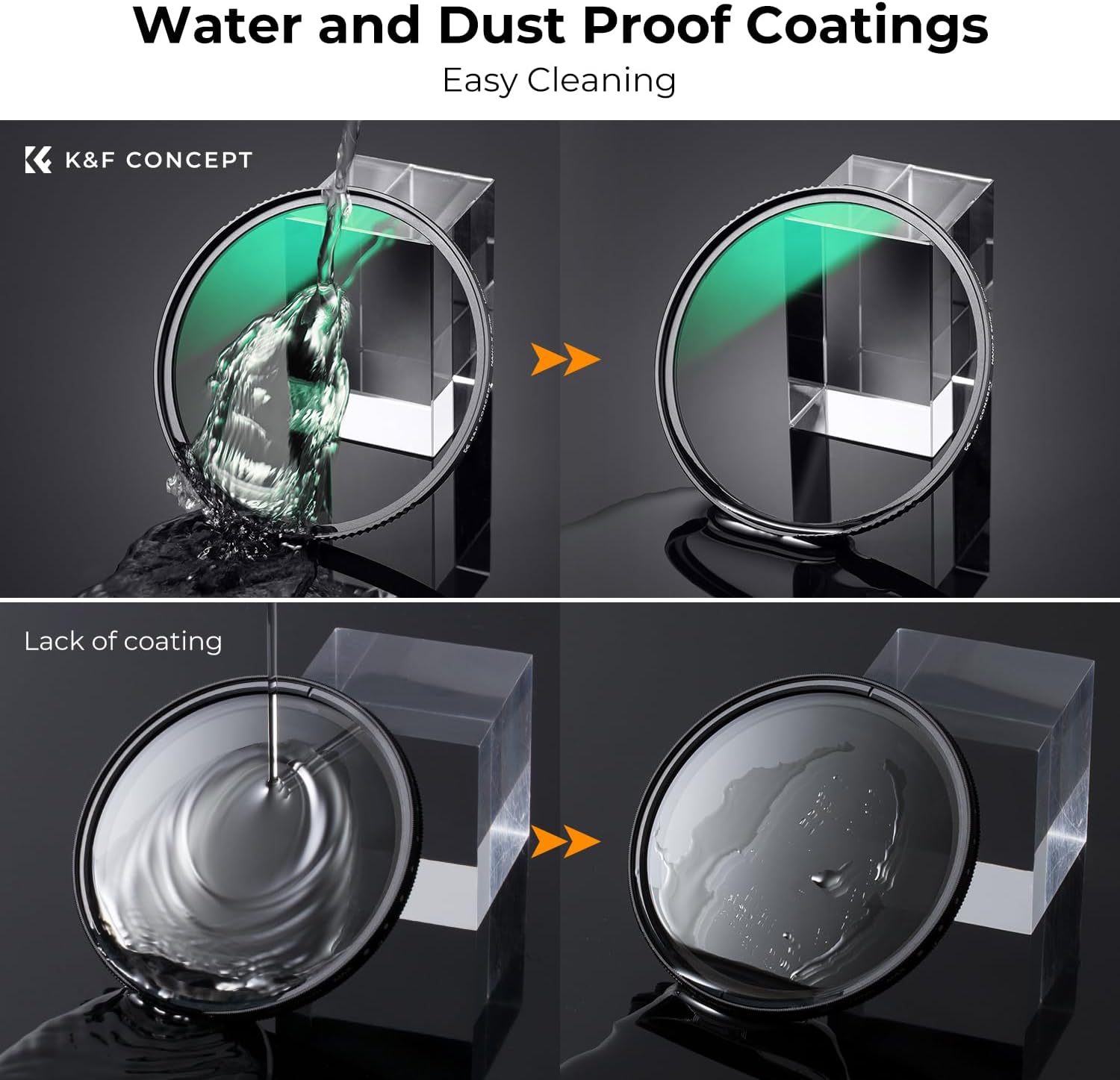
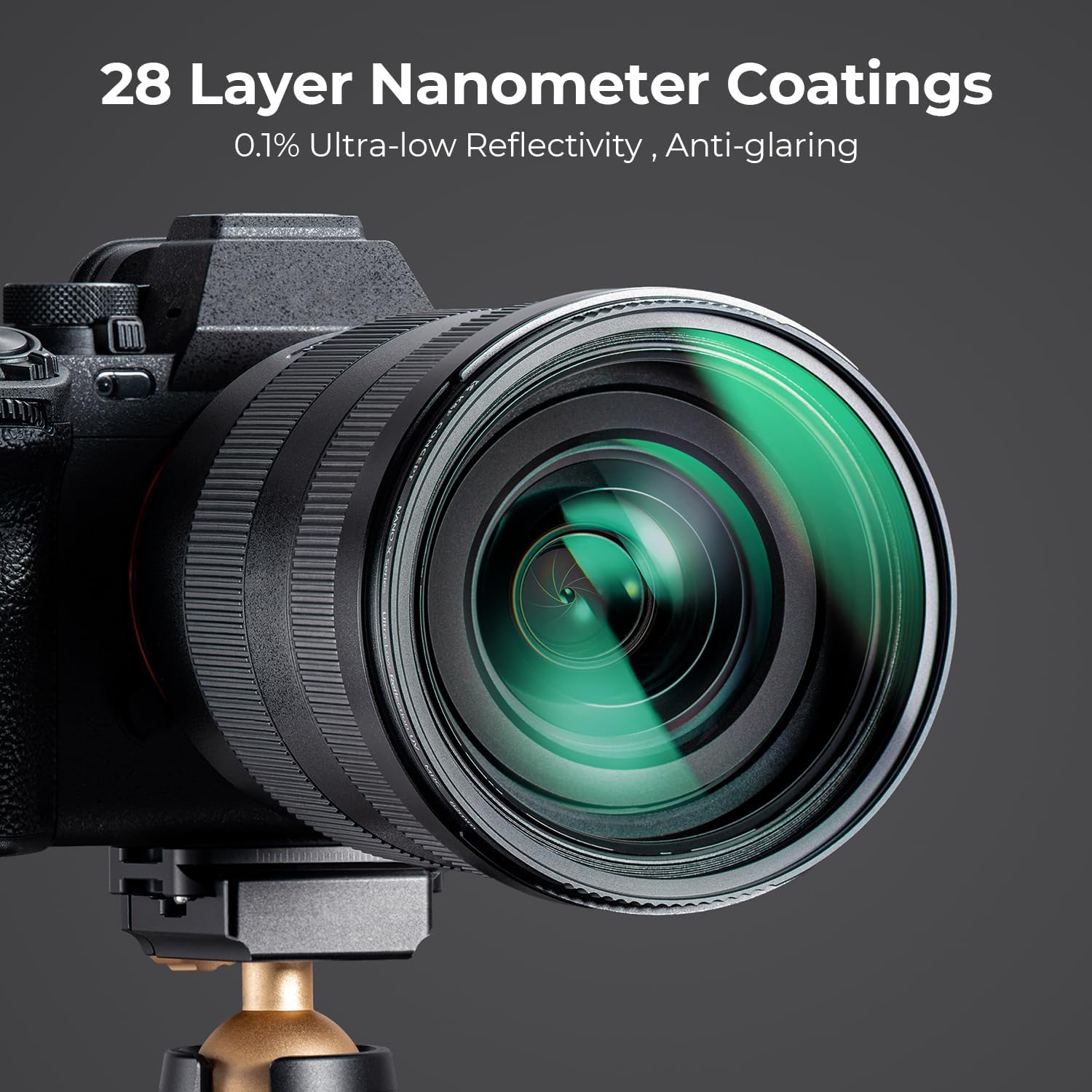
On top of that, the filter uses a 28-layer multi-resistant coating. The description also mentions a green coating that helps reduce reflection/ghosting, plus properties like scratch resistance and water-repellent, oil and dust resistance. Whether you’ll “feel” all of that immediately depends on how you shoot and how often the filter gets exposed to fingerprints, spray or roadside dust—but if you carry a camera kit around, those protections are the point.
And yes, it’s a slim design. The aluminium frame is listed as 3.3mm and is intended to help avoid dark corners when using wide-angle compositions.
Where it shines in real shooting
This is most compelling if you regularly shoot in situations that punish reflections: backlit scenes, bright skies, or mixed lighting where flare can steal contrast. For example, imagine photographing a cyclist at dusk with headlights pointed slightly off-axis: this is exactly the sort of setup where a filter that’s designed to minimise ghosting can help keep highlights from blooming into a messy haze.
It also makes sense if you’re taking the “one filter that stays on the lens” approach. A UV filter can be a low-fuss layer of protection for the front of the lens, especially when you’re out in public spaces, on holidays, or doing casual day-to-day photography.
Things to consider before you buy
No filter is magic, and there are a couple of practical limits to keep in mind. First, you still need the right filter size for your lens—this is an 82mm model, so it only helps if it matches your lens’ filter thread.
Second, the “ultra low reflection” performance is claimed through coating tech and numbers, but real-world results can vary with your specific lens, lighting angle and how you compose. If your style is mostly controlled indoor lighting with minimal flare risk, you might not need to spend for the ultra-low reflection approach.
Finally, while the description highlights scratch resistance and water/oil/dust resistance, “protective” doesn’t mean “invincible”. You’ll still want to use a proper lens cloth and avoid wiping grit around.
Tech overview (useful specs from the description)
- Type: UV protector lens filter (Ultra Low Reflection / Nano-X Series)
- Size: 82mm
- Coating approach: 28-layer multi-resistant coating
- Slim frame: aluminium frame listed at 3.3mm
- Light transmission: ≥ 99.8%
- Reflection: ≤ 0.1% (for the filter surface, as stated)
- Glass: HD optical glass
Who it suits (and who should skip it)
It’s a solid fit if you want a UV filter mainly for protection, but you also care about flare control and cleaner-looking contrast in bright, difficult lighting. It also suits people who shoot wide-angle and want to avoid vignetting, thanks to the slim frame design.
You may want to skip it if your priorities are purely cost and you’re happy with a more basic protector filter, or if you don’t do much outdoor/backlit shooting where reflections and ghosting are usually more noticeable.
If you’re experimenting a lot with creative lighting effects (where you might actually want some flare character), the “ultra low reflection” design may not feel necessary.
Mini FAQ
Does a UV filter still matter for modern cameras?
For many photographers, the biggest day-to-day reason is physical protection of the front element. This model also targets reflection and ghosting, so it’s not only about UV filtering.
Will it cause vignetting on wide-angle lenses?
The slim aluminium frame (listed as 3.3mm) is intended to reduce the risk of dark corners with wide-angle shooting, but whether you see it depends on your lens and focal length.
Is this filter good for video as well as photos?
The description specifically mentions coping with 4K/8K HD video shooting as part of its stated transmission/reflection aims, alongside photographic imaging.
Is it scratch-resistant?
It’s described as scratch-resistant and includes anti-scratch style claims as part of the multi-resistant coating. Still, you should handle it like any other optical surface.
Final verdict
When it makes sense
Buy the K&F CONCEPT 82mm UV Ultra Low Reflection Nano-X filter if you’re after a protective UV filter that’s designed to keep flare, ghosting and reflections under control, including for bright conditions and wide-angle work. The slim frame and the stated low reflection/transmission figures make it more “serious” than a basic protector filter on paper.
When not to buy
It might not be the best match if you only need a simple front-element shield for everyday indoor shooting, or if you’re not actually buying an 82mm filter for your specific lens thread. In those cases, you could be paying for features you won’t really use.