

Comfytemp Dual Channel TENS Machine for Muscle Stimulation
Product description
What it is and what it aims to solve
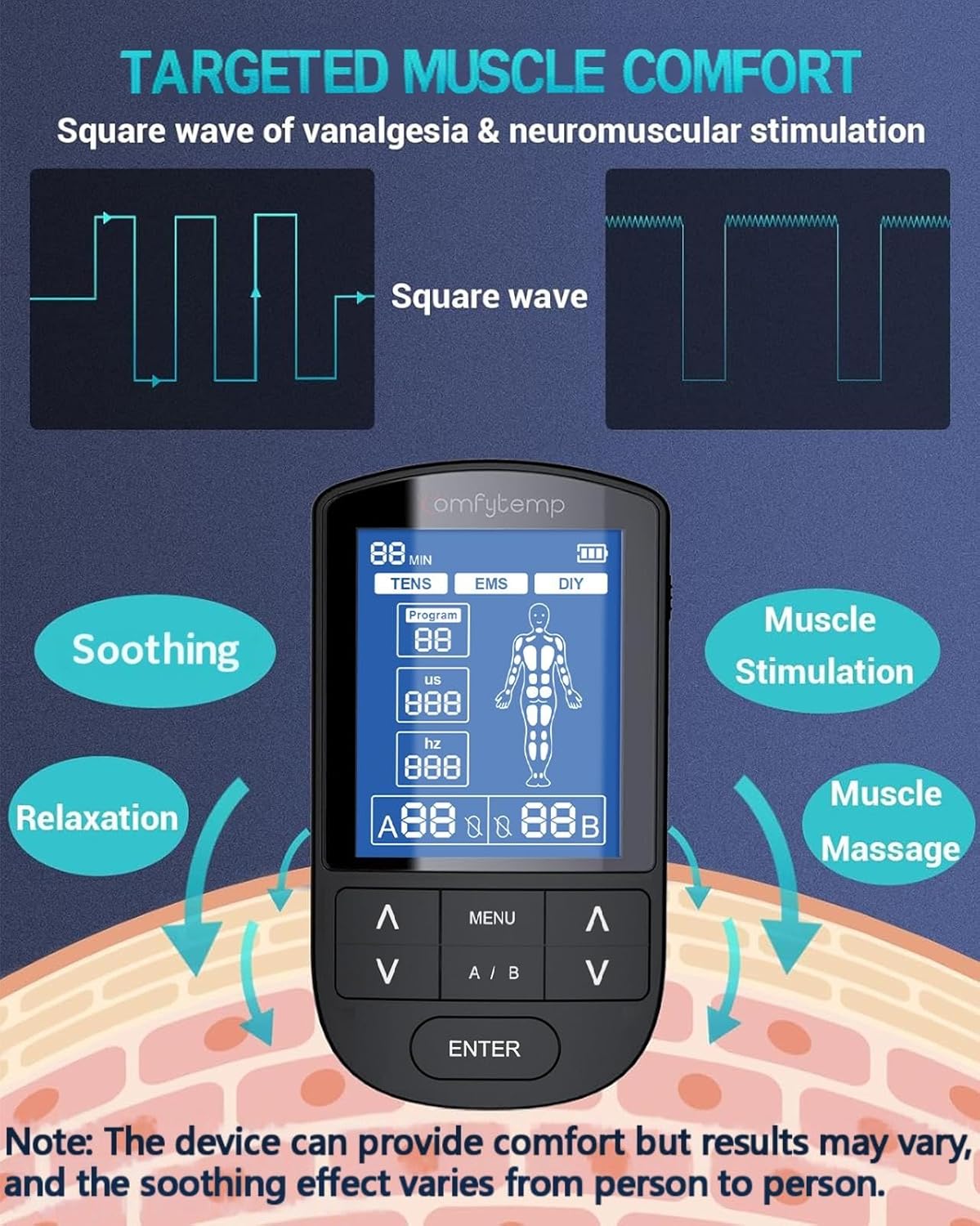
The Comfytemp Dual Channel TENS Machine is a compact, rechargeable device designed to deliver both EMS (Electrical Muscle Stimulation) and TENS (Transcutaneous Electrical Nerve Stimulation) therapies. It targets tired or tight muscles, offering a portable way to unwind after work or a workout. On the surface, it resembles a familiar electronic massager, but the dual-channel capability and customisation options aim to give you more control over the massage sensation and where it’s applied.
How it works in everyday use
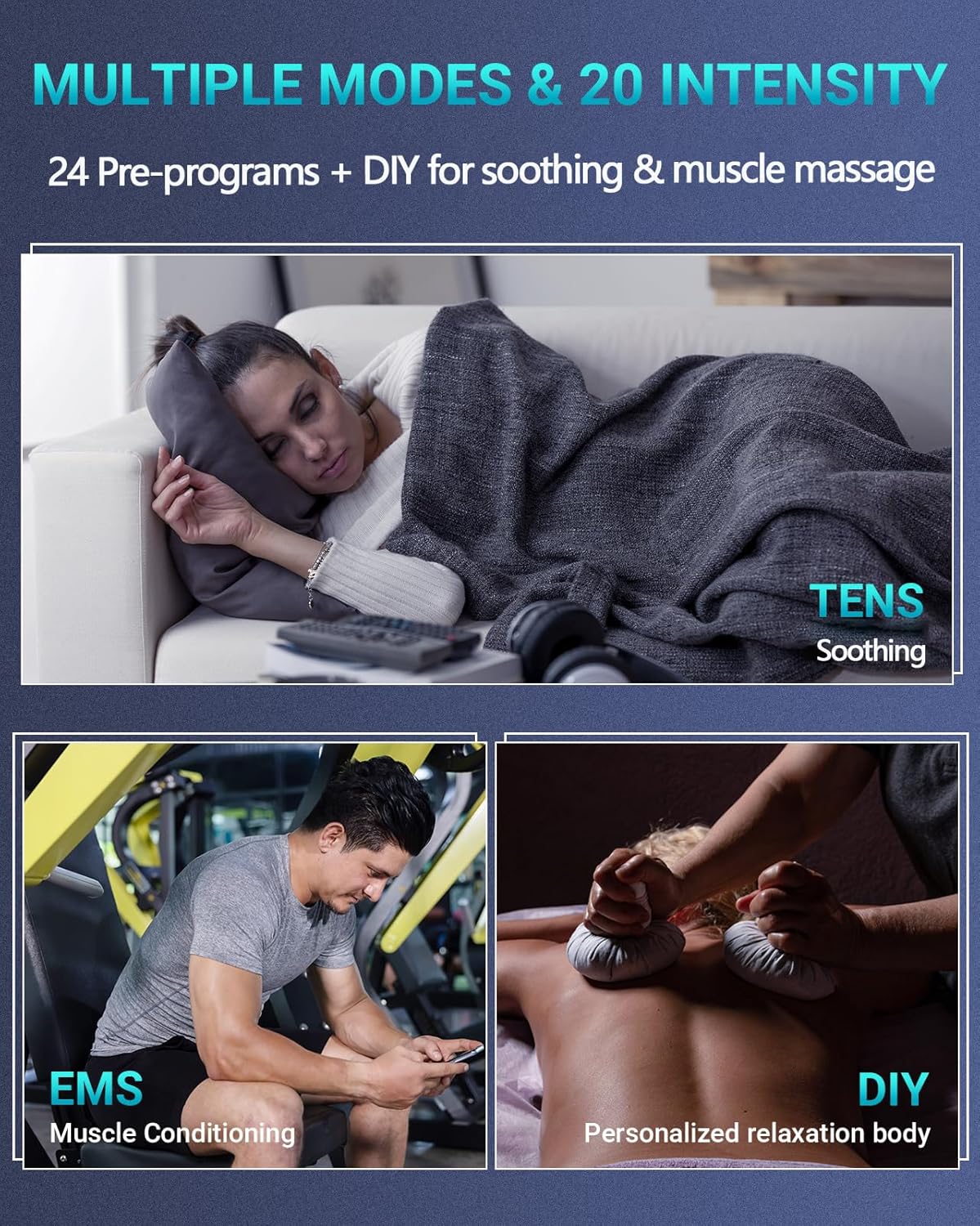
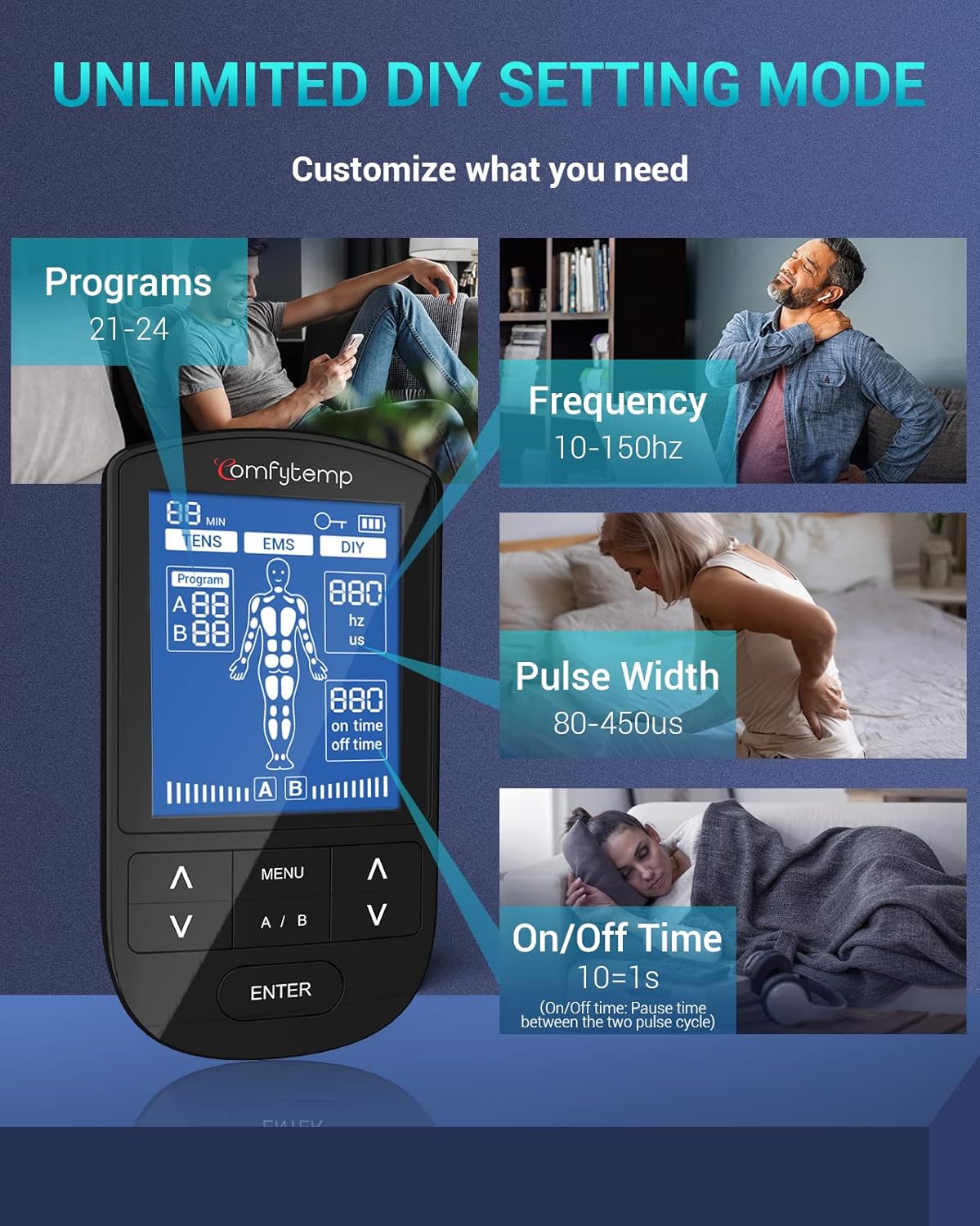
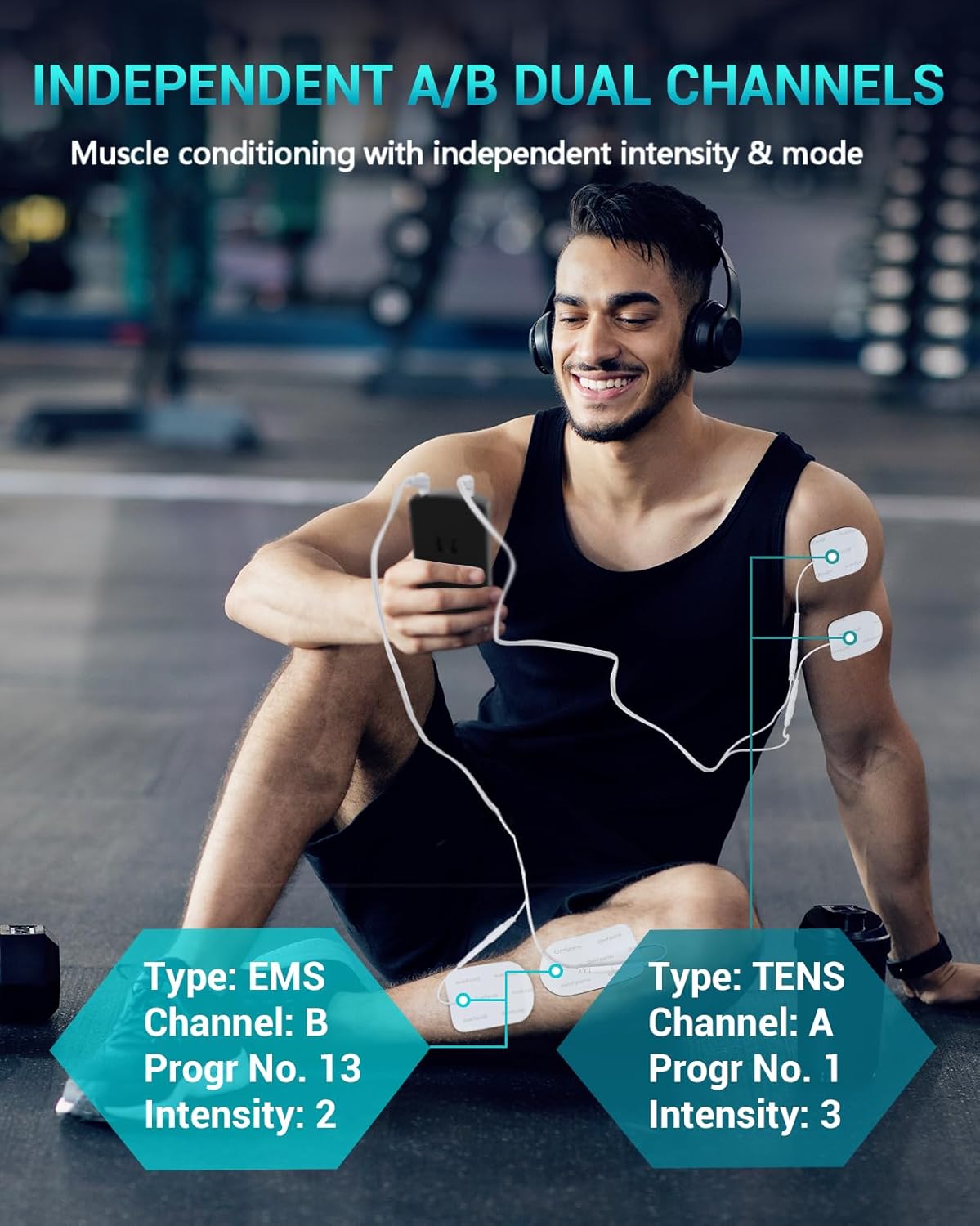
With independent A/B channels, you can run two different programmes simultaneously on separate areas—think back and shoulders, or a calf and an arm in one session. The 24 modes (20 standard plus 4 DIY) let you pick from routine kneads to more focused deep-tissue pulses. The DIY mode invites you to fine-tune frequency, pulse width and on/off duration, so you can tailor the session to your comfort level rather than adapting to a fixed programme.
What stands out on paper
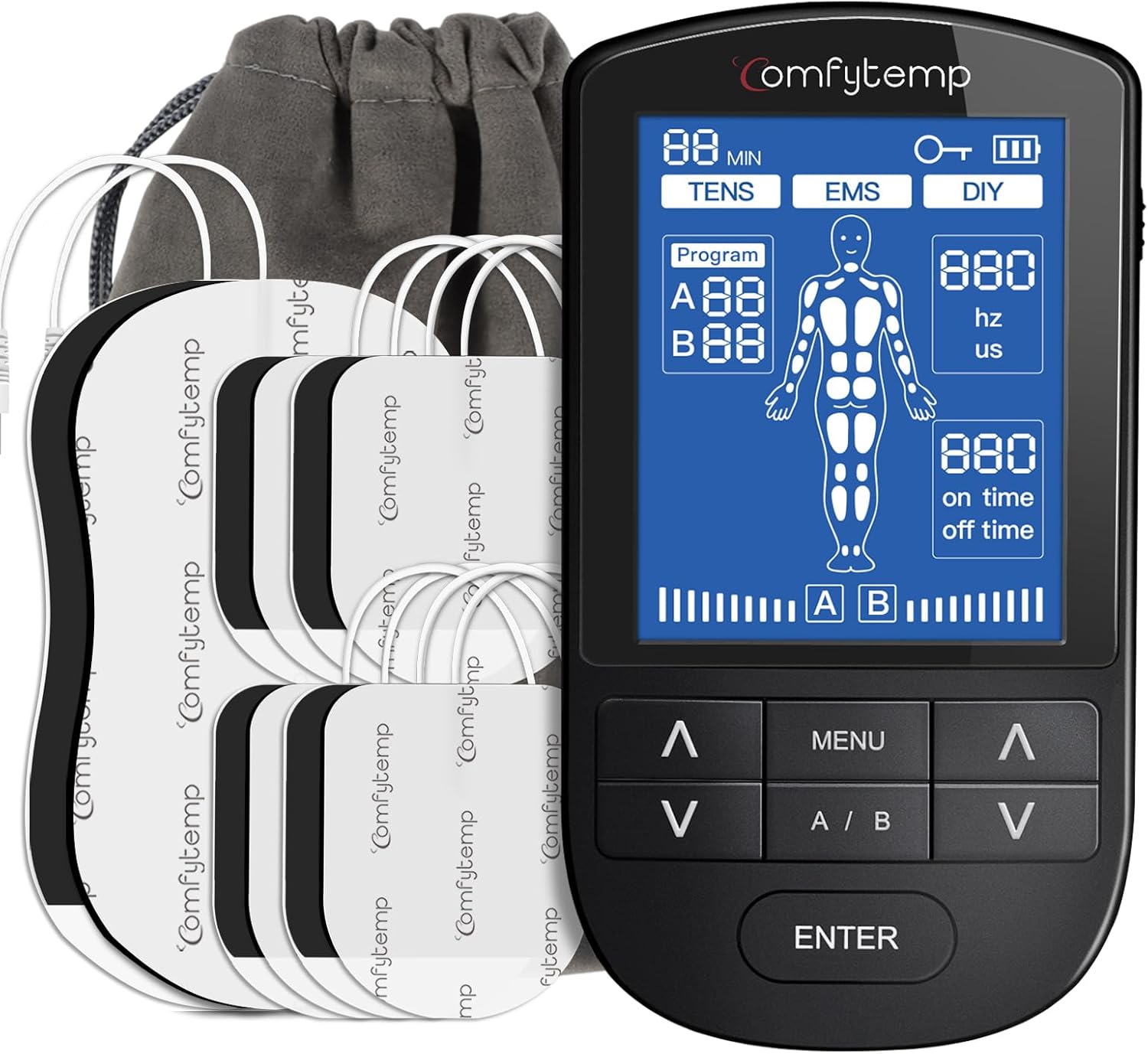
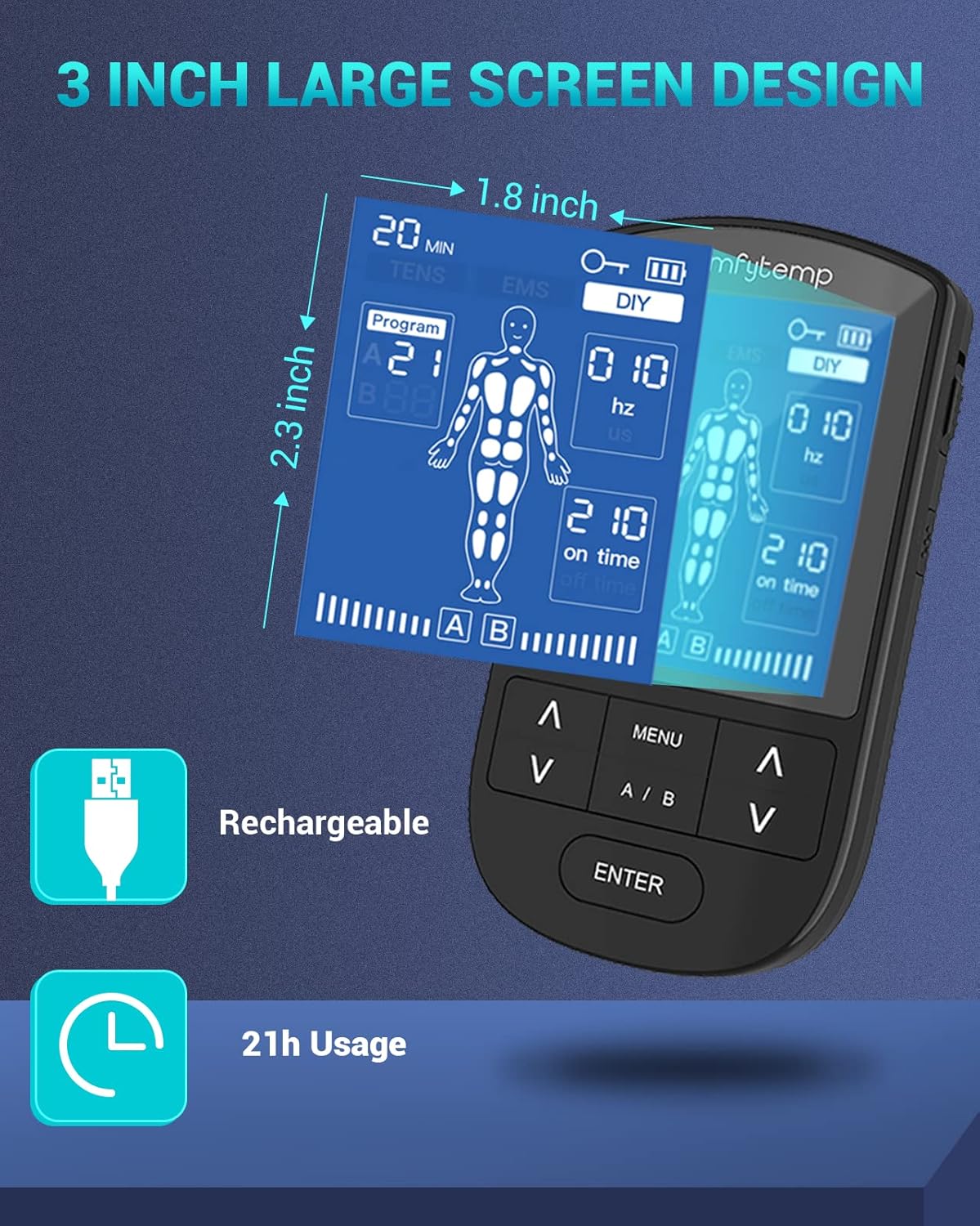
A 3-inch high-definition screen makes navigation straightforward, and the memory function saves your last-used settings for convenience. The device includes a lock feature to prevent stray taps during use, which is helpful if you’re moving about. The package also includes 10 premium electrode pads (two large and eight small) with a gel that promises reliable adhesion during activity, plus guidance on renewing adhesion after heavy use.
Practical advantages and limits
On the upside, the rechargeable battery promises up to 21 hours of continuous use, which is handy for long sessions or travel days. The bundled pads offer a way to cover different muscle groups without swapping pads frequently. On the downside, the grip and feel of any massager depend on your skin and movement, even with DIY modes, undertones of a medical device may feel more clinical than purely relaxing for some users. If you prioritise very intensive deep-tissue work, you might find limits in a portable unit compared with dedicated professional equipment.
Who this is for
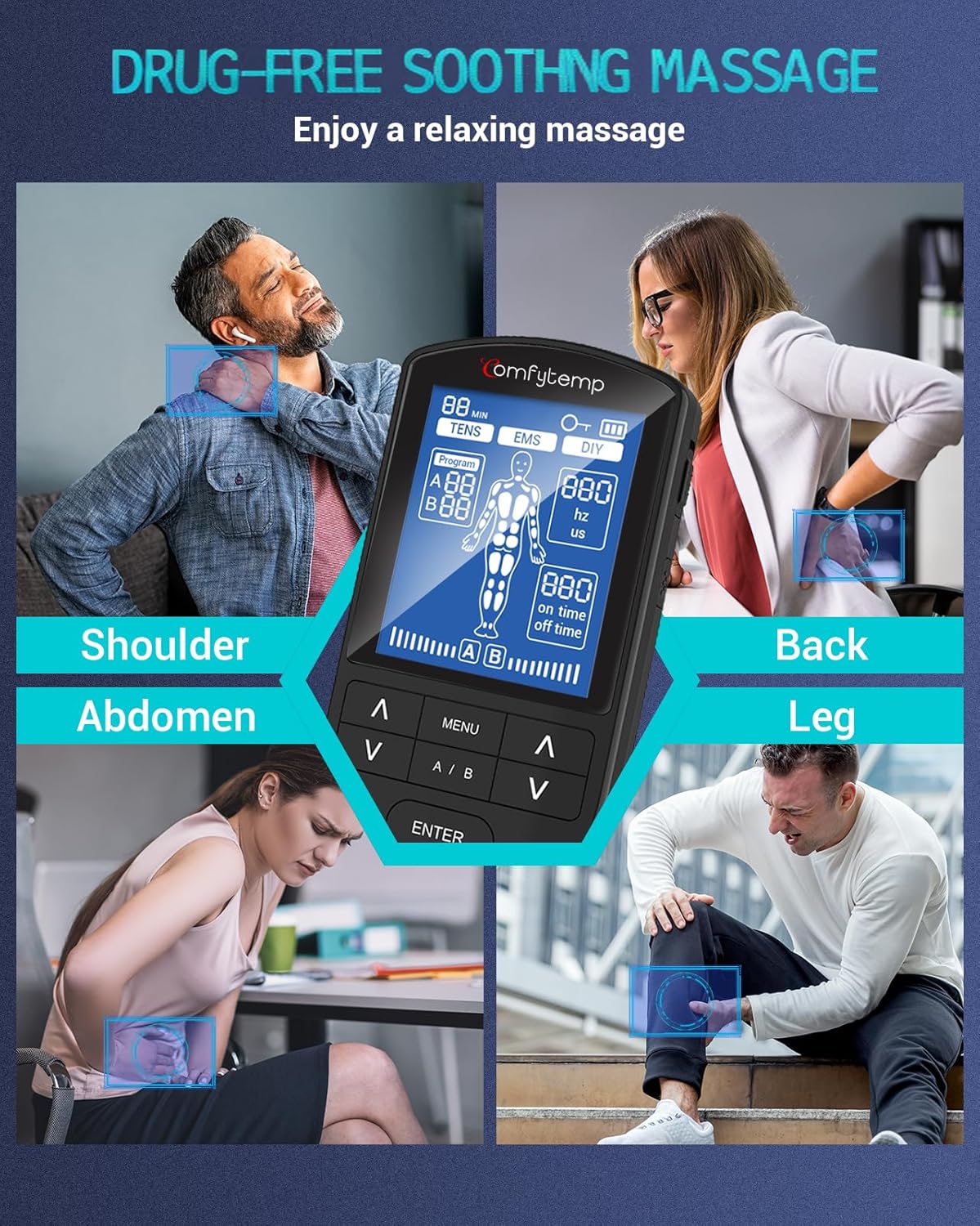
If you want a flexible, at-home solution that can address general muscle fatigue across multiple areas—back, shoulders, arms or hips—the dual-channel approach is a plus. It may suit people seeking non-pharmacological relief after workouts or long days seated at a desk. If you prefer a simple one-setting massage or require high-impact therapy for chronic pain, weigh the DIY options and intensity levels to ensure it aligns with your expectations.
What you should check before buying
- Confirm you’re comfortable with a device that blends EMS and TENS signals.
- Consider how often you’ll use it and whether two simultaneous muscle targets are valuable for you.
- Check that you’re happy with a rechargeable battery life around the 21-hour mark and a 3-inch screen for ease of use.
- Ensure you’re comfortable with reusing electrode pads multiple times, the maker suggests 100+ reuse cycles with proper care.
How it compares to other approaches
If you’re deciding between a portable muscle stimulator and more basic massage apps or devices, this unit trades sheer simplicity for customisation. The main trade-offs are the learning curve and the need to manage pads and gel, versus the potential for more varied sensations and two-zone treatment in one session. For someone who likes to experiment with settings and needs two zones treated at once, it could be a sensible middle ground between cheaper single-channel units and high-end clinical devices.
Usage tips and a quick example
A practical scenario: you finish a gym session and want to target your back and a shoulder, applying two channels with different frequencies to suit each area. Start mild, then gradually increase intensity to a comfortable level. If a pad starts to lose grip, rinse, refresh the surface and air-dry to restore adhesion—this can extend pad life without immediate replacement.
FAQ
- How long does a typical session last? Sessions are user-defined with a 10–60 minute timer.
- Can I wear it during daily activities? The device has a clip for hands-free use, but ensure you’re in a safe environment to move and adjust settings.
- Are DIY modes suitable for beginners? DIY offers customisation, but start with the preset modes to learn what feels best before adjusting frequency and pulse width.
Final verdict
Is it worth it? Worth considering if you want flexible, two-area muscle relief with customisable options and a long battery life. It’s a sensible choice for daily recovery and non-urgent muscle care, especially if you value the ability to tailor sessions rather than rely on fixed programmes. It might not be the best fit if you need straightforward, plug-and-play relief or require industrial-strength deep tissue therapy.