

Ceestyle Stainless Steel Micro Spike Crampons for Hiking
Product description
This pair of micro spike crampons gives extra grip on ice and packed snow while keeping footwear flexible for everyday outdoor use. Lightweight and easy to fit in moments, they help reduce the chance of slipping when walking, hiking or fishing in slippery conditions, offering reassurance for cold weather activities.
Key Points
These crampons include 11 stainless steel micro spikes per foot to improve traction on hard-packed snow and icy surfaces. They are made to stretch over a wide range of shoes and boots, remaining compact when folded for storage or transport. The thermoplastic elastomer material provides a snug fit and resistance to abrasion, which helps maintain grip over repeated use. For practical use, they can be put on in under a minute and stowed in a pocket or pack when not needed. 🥾
Technical Specifications
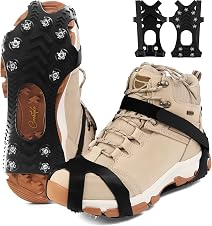
- Name: Ceestyle Stainless Steel Micro Spike Crampons
- Spikes per foot: 11
- Material: TPE rubber with stainless steel spikes
- Suitable for: shoes, boots and other outdoor footwear
- Weight: lightweight and foldable design
Usage Recommendations
Fit them by stretching the elastomer over the toe then the heel and check that the spikes sit flat beneath the sole, ensuring even contact on ice. Use them on frozen paths, slushy pavements and grassy slopes where frost has formed, and remove them before stepping onto smooth indoor surfaces to avoid damage and slipping. When walking on mixed terrain expect some noise from the spikes on hard stone; this is normal and does not indicate a defect. 🌨️
Benefits
The construction aims to combine durability with convenience, allowing quick deployment in sudden winter conditions and straightforward cleaning after use. The stainless steel spikes provide multi-directional bite for braking and forward traction according to the manufacturer, which is particularly useful on short steeps and compacted snow. Consider that they are designed for added traction rather than for technical ice climbing; they are best for walking, light hiking and general outdoor chores rather than vertical ice routes.