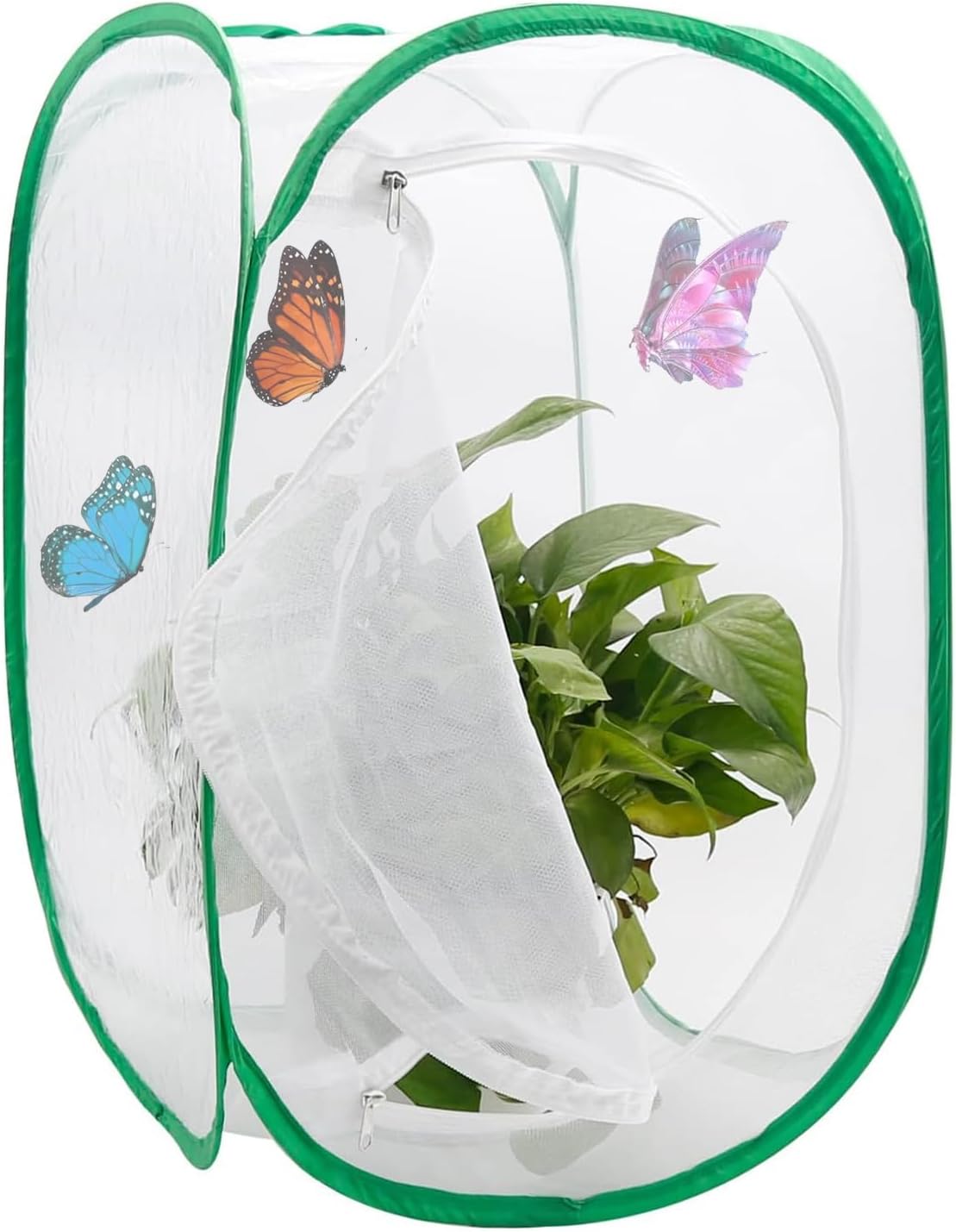
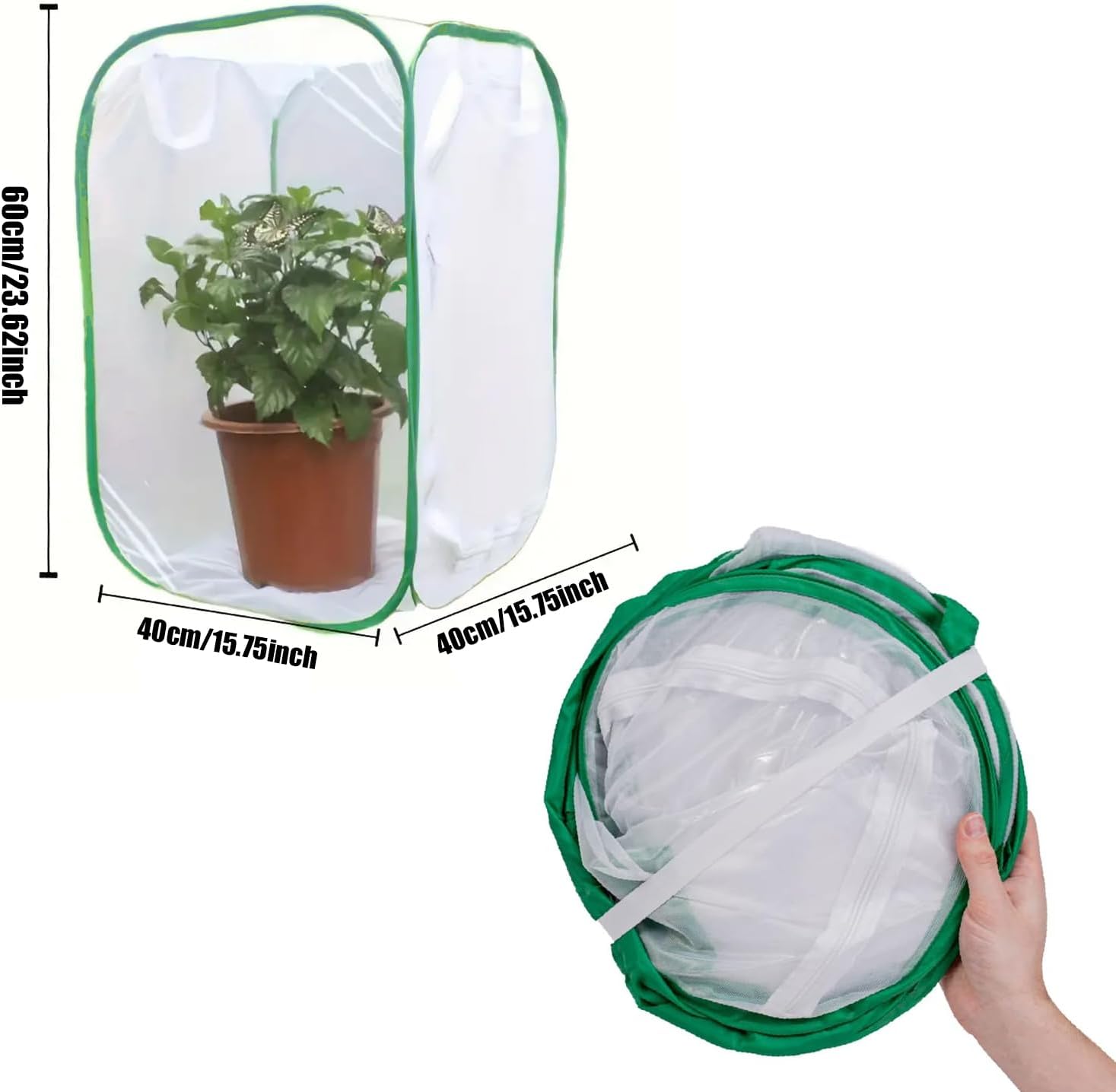
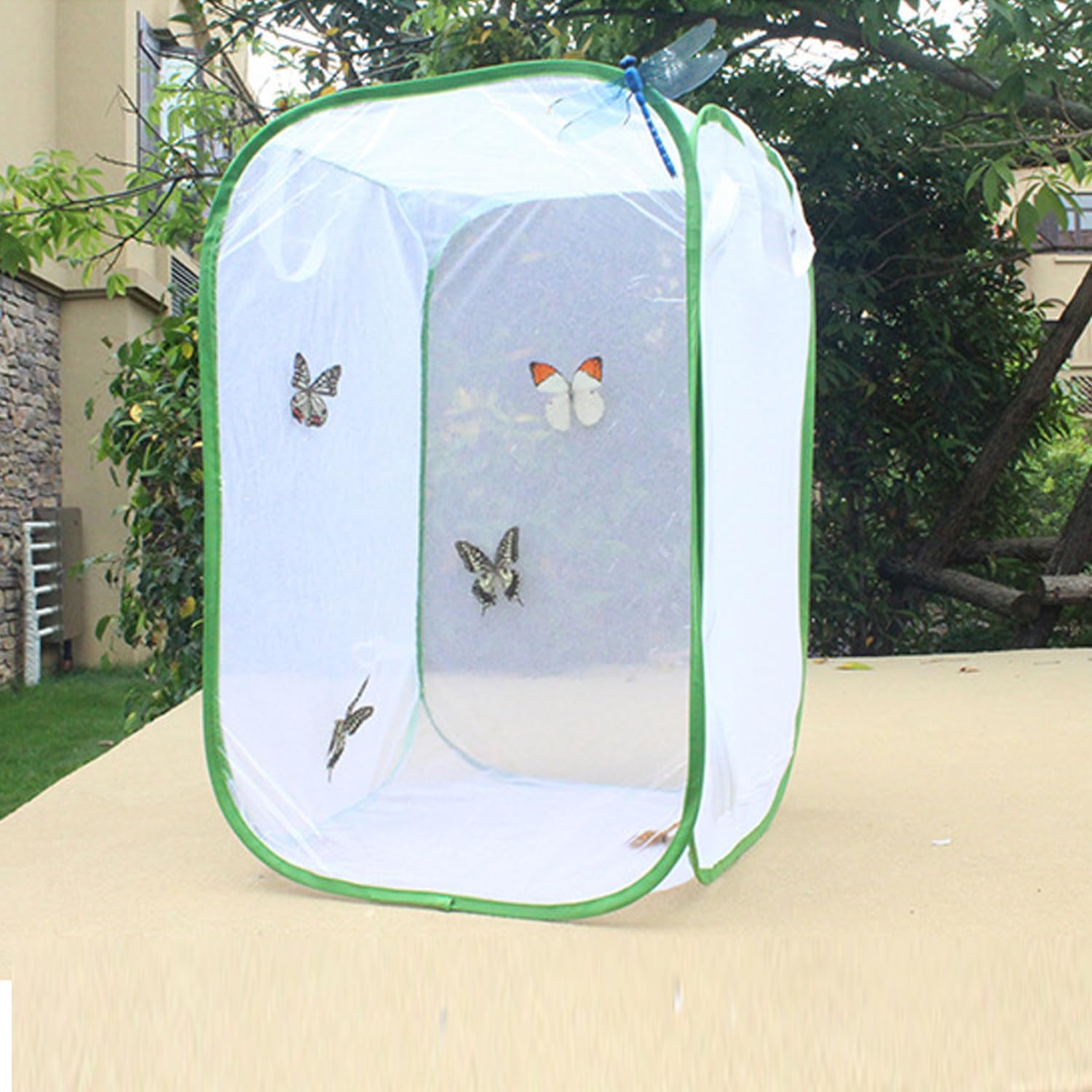
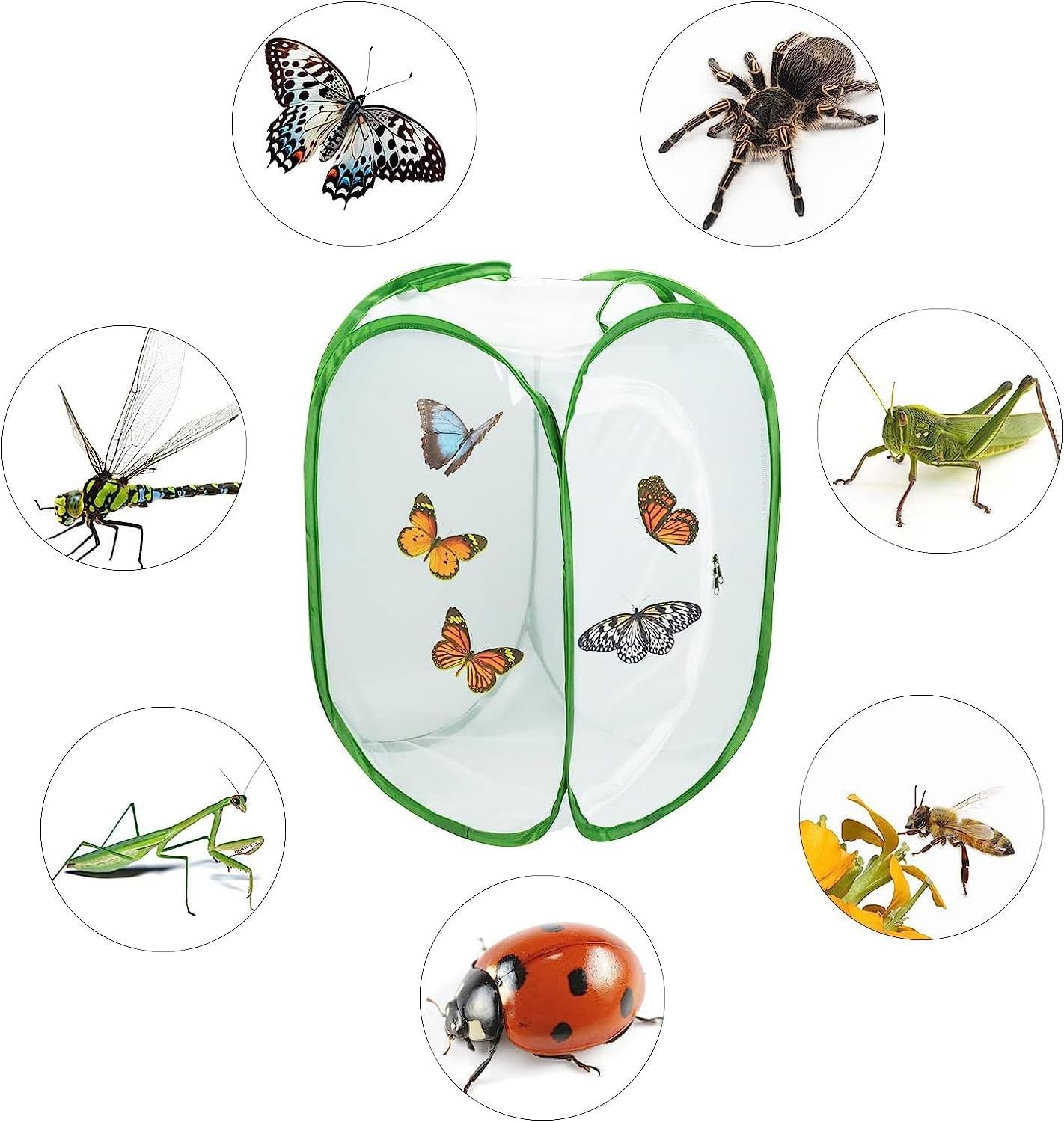
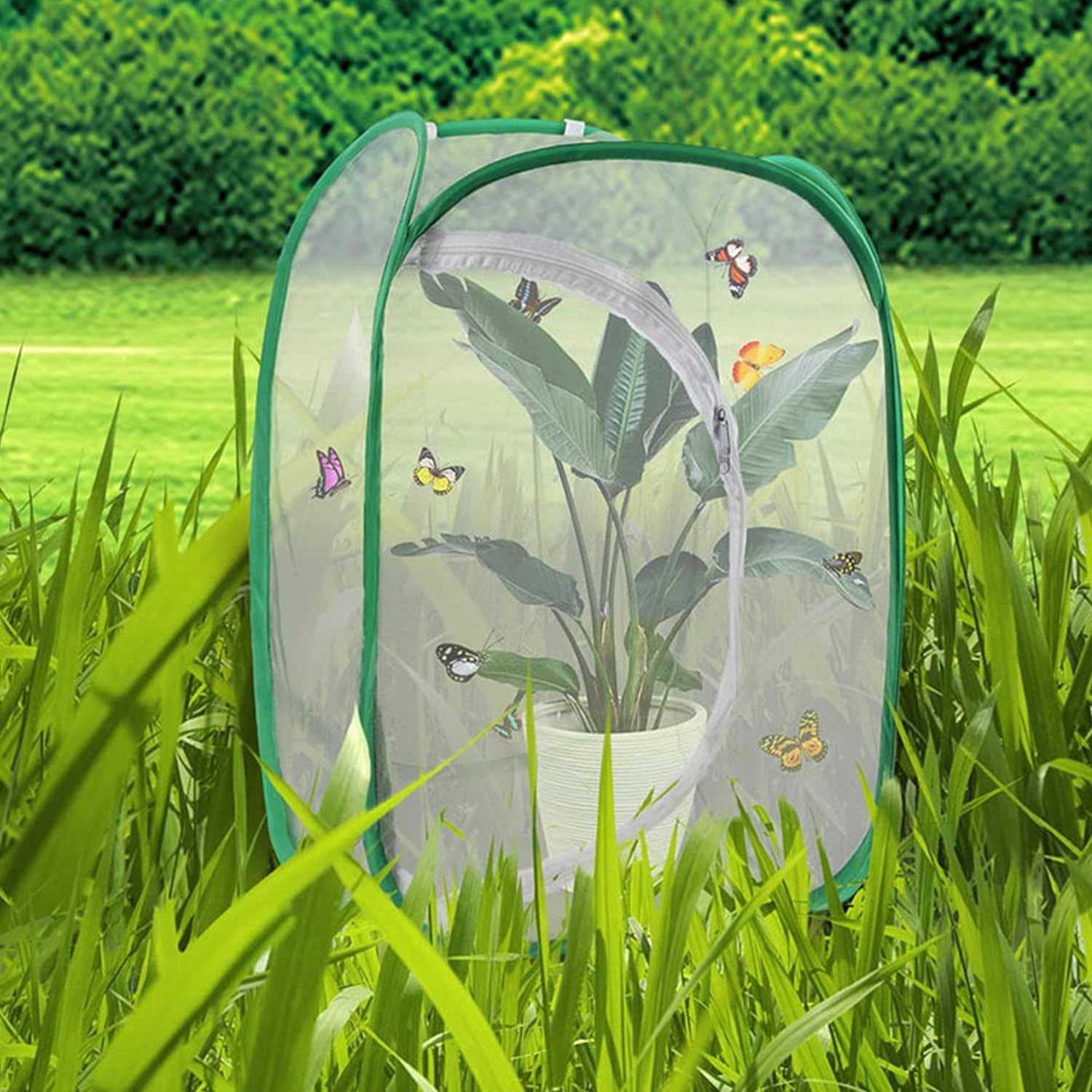
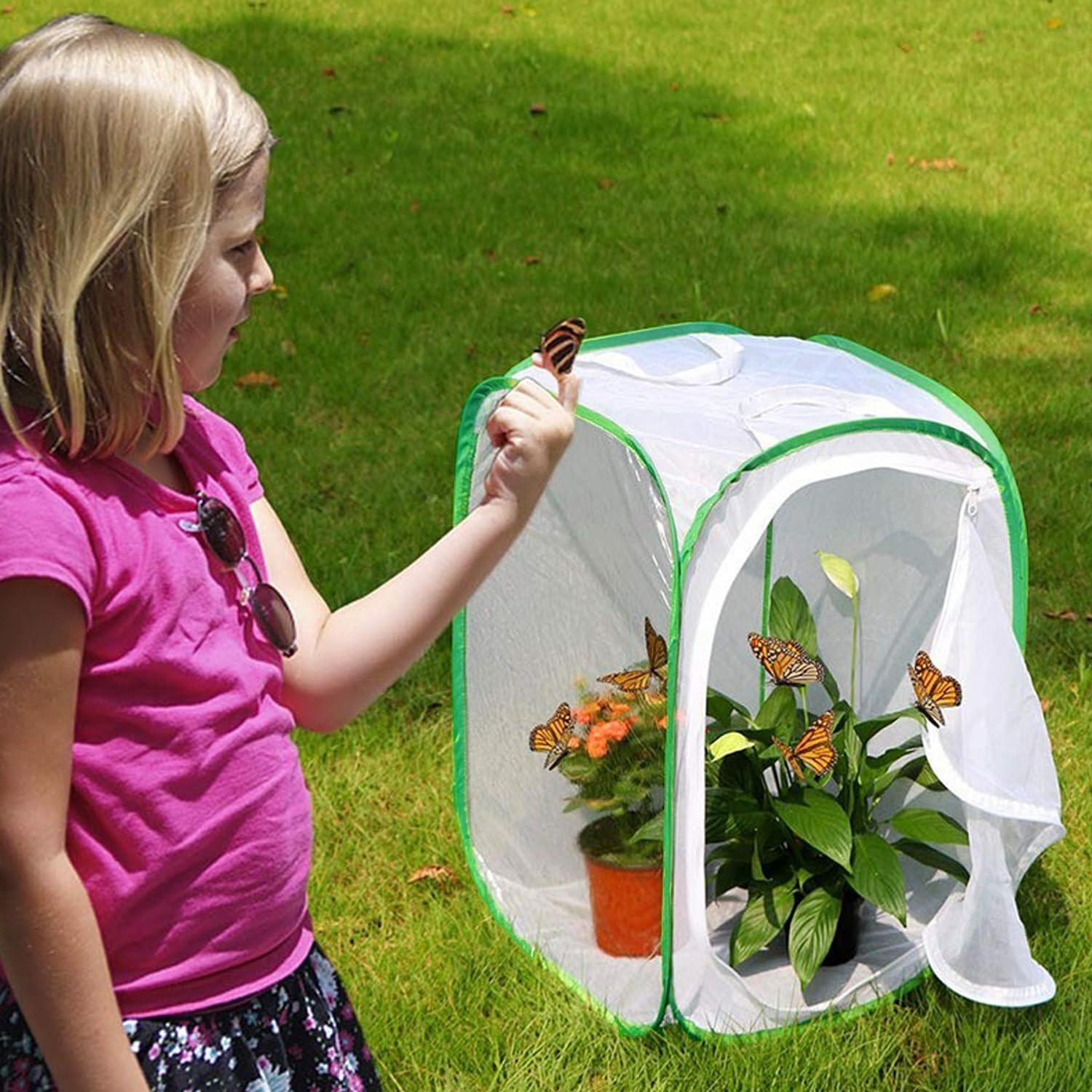
What it is and what it’s for\nThis is a collapsible, transparent insect habitat designed to house caterpillars, pupae and a range of small flying insects. With a footprint of 14 x 14 inches and a height of 25 inches, it offers a compact yet airy space that makes it possible to observe life cycles up close. The mesh construction keeps eggs, larvae and pupae protected from most predators while still allowing air to circulate. If you’re nursing larvae or simply enjoy watching caterpillars transform into butterflies, this enclosure provides a practical solution for safe observation and gentle containment. On paper, the design prioritises visibility and accessibility, but real-world use hinges on how easy it is to manage feeding, cleaning and eventual release.\n\n## Build and materials: what you should know\nThe frame uses stainless steel wire (about 3 mm thick) for a sturdy feel without being heavy. The mesh panels are designed to be durable and to resist deformation, while still offering clear sightlines into the interior. The enclosure folds for storage, which is handy for homes with limited space or seasonal use. It’s worth noting that while the cage is robust, the longevity will depend on how the unit is folded and transported over time.\n\n## Airflow, access and care in use\nFive mesh panels enable good air exchange, a factor that helps keep humidity and odours manageable during longer observation periods. A large double-zipper opening on one side makes feeding and releasing occupants straightforward, the protective reinforcement around the zipper helps prevent damage if caterpillars pupate near the zip or rail. Practically, you’ll want to plan routine checks for debris and residues and to clean the interior before switching occupants, as neglect can quickly reduce visibility or readability of the life cycle stages.\n\n## What stands out day to day\nOn the plus side, you get a clear view of pupation and chrysalis development, which is ideal for education or hobbyist observation. The design allows for space to place seedlings or small plants inside, widening the scope beyond butterfly rearing to include other small insects or even plant cuttings.\n\n## Potential limitations and who it suits\nIt isn’t perfect for every scenario. For instance, the 14 x 14 inch base is compact, which means it might feel cramped if you’re housing multiple large larvae or attempting to manage frequent larval transfers. Stronger containment could be required if you’re worried about escape or predation in very small habitats in a busy home. This enclosure fits best for casual observation, small-scale rearing, or as a temporary holding area for a few caterpillars rather than for long-term, large-scale rearing. It is well suited to hobbyists, teachers and families keen to witness metamorphosis up close, as well as gardeners who want to cradle plant cuttings or small seedlings temporarily.\n\n## Before you buy: what to check\n- Confirm it provides adequate ventilation for your climate and the species you plan to observe.\n- Check that the zipper area is reinforced if you anticipate frequent pupation close to the opening.\n- Consider how you’ll manage feeding and waste, a larger enclosure or alternative containment might be needed for higher numbers.\n- Think about portability and storage: the foldable design is convenient, but plastic or fabric wear can vary with use.\n\n## Practical use: a quick scenario\nImagine gently feeding a batch of caterpillars inside the cage, watching as they form chrysalises, and then guiding newly emerged butterflies back to garden plants. The clear panels help you notice even small changes and growth stages without opening the enclosure too often, reducing disturbance to the occupants. This is especially useful for classroom demonstrations or a family’s weekend observation project.\n\n## How this compares to other approaches\nIf you want a lightweight, visible setup for small numbers, this collapsible cage provides ease of access and portability versus a fixed, bulky enclosure. For higher durability or larger populations, more rigid, larger containment solutions could be preferable. In other words, it’s a pragmatic choice for entry to mid-level observation needs rather than a long-term, high-demand breeding system.\n\n## Final decision: when it makes sense to choose this cage\nIs it worth it? If your aim is to observe metamorphosis in a compact, portable enclosure with clear visibility and straightforward feeding/releasing, this model strikes a practical balance between space, accessibility and cost. It’s most suitable for hobbyists, educators and families beginning to explore insect rearing or butterfly observation. You may want to skip it if you require very large populations, intense containment, or maximum durability for frequent handling. Consider basing your choice on how often you anticipate use, how many larvae you’ll house at once, and whether you prioritise easy storage and visibility over bulkier, long-term solutions.\n\n## FAQ (quick considerations)\n- Can I use it for species other than butterflies? Yes, it’s described as suitable for a range of small insects, though suitability depends on size and behaviour.\n- Will the enclosure keep caterpillars from escaping? The mesh and structure are designed to minimise escape for typical larvae and pupae, but no enclosure is completely escape-proof under every condition.\n- Is it easy to clean between uses? The foldable design helps with handling, but plan for a thorough wipe-down and air-drying before reusing.\n- How does it adapt to different plant arrangements inside? The panels accommodate plants and seedlings, which can help with humidity control and natural feeding options.\n