

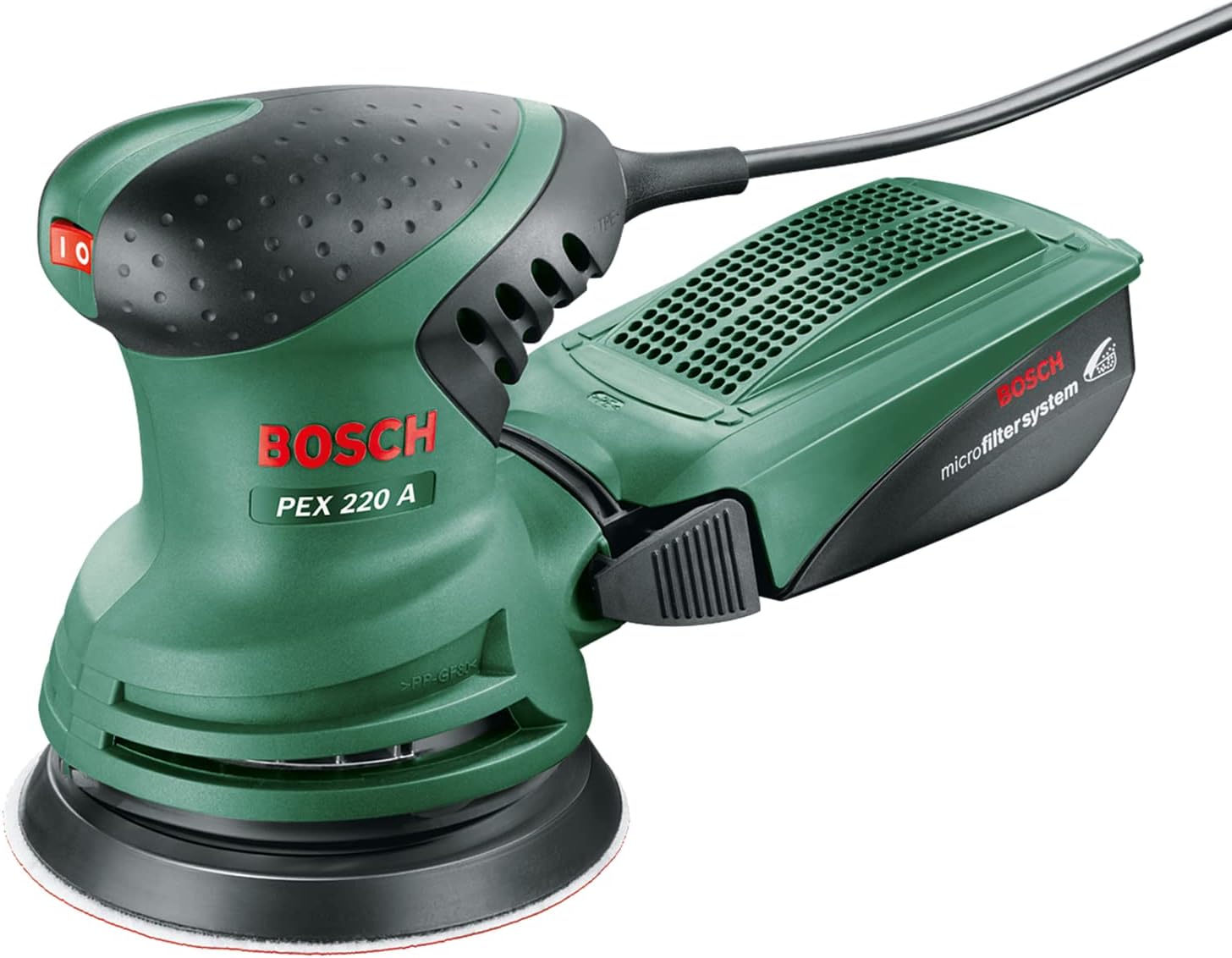
Bosch PEX 220 A random orbit sander (220 W) in carton packaging
Reviews
Price
Product description
What it is and why you might want it
Bosch’s PEX 220 A is a random orbit sander built for regular DIY sanding where you’re dealing with smaller areas rather than whole rooms. On paper, the combination of a 220 W motor and a lightweight, compact body is aimed at keeping the job manageable for flat or gently curved surfaces. If you’ve ever tried to sand by hand and then spent ages clearing dust from your workspace, the design here is clearly leaning towards cleaner working.
Key features that matter in daily use
The standout, from a practical point of view, is the microfilter dust box. It’s there to reduce dust around your working area, which can make the difference between a session you’re happy to repeat and one you’d rather avoid. It won’t turn sanding into something dust-free, but it should help keep the mess down compared with setups that don’t capture fine particles.
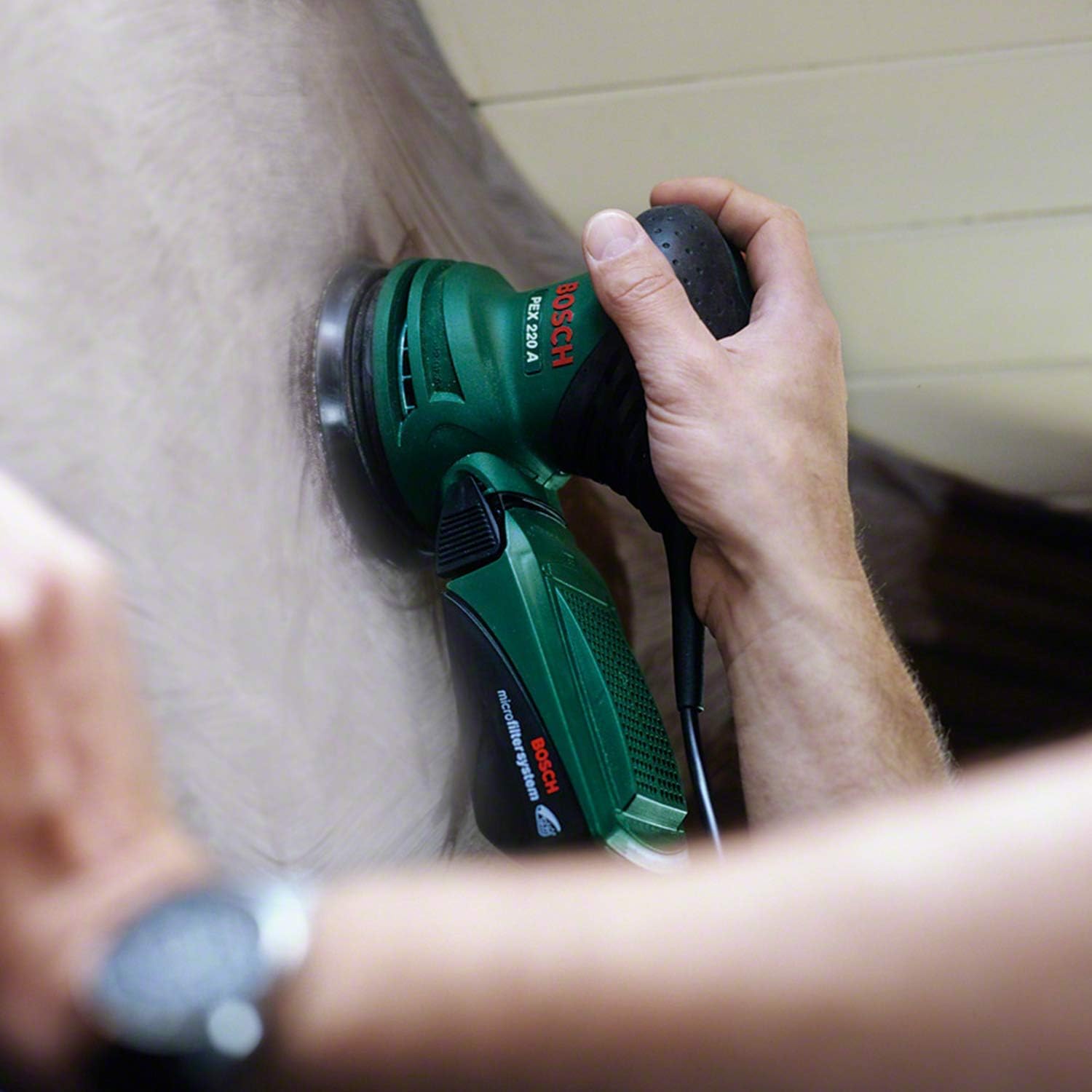
You also get a palm grip handle and a compact form. That matters more than people expect when you’re sanding for a while: a tool that’s comfortable to steer can help you keep contact consistent, especially when you’re working around edges or following the shape of a curved piece. It’s a sensible choice if you like controlling the tool rather than fighting it.
At a glance: what it’s good for, and where it may fall short
This sander is positioned around “fine sanding on smaller-sized surfaces”. So it’s likely to suit tasks like: - smoothing furniture components before finishing - light wood preparation on panels and boards - getting flat sections even, and dressing curved areas where you don’t want to overwork one spot
That said, you may find it a bit less appealing if you need to blitz large surfaces or strip back heavy damage. The tool’s whole vibe is controlled, manageable sanding rather than high-aggression removal. If your job involves extensive sanding across big areas, you’ll probably want to look at more purpose-built, higher-output approaches.
The essentials of using it (and getting the best results)
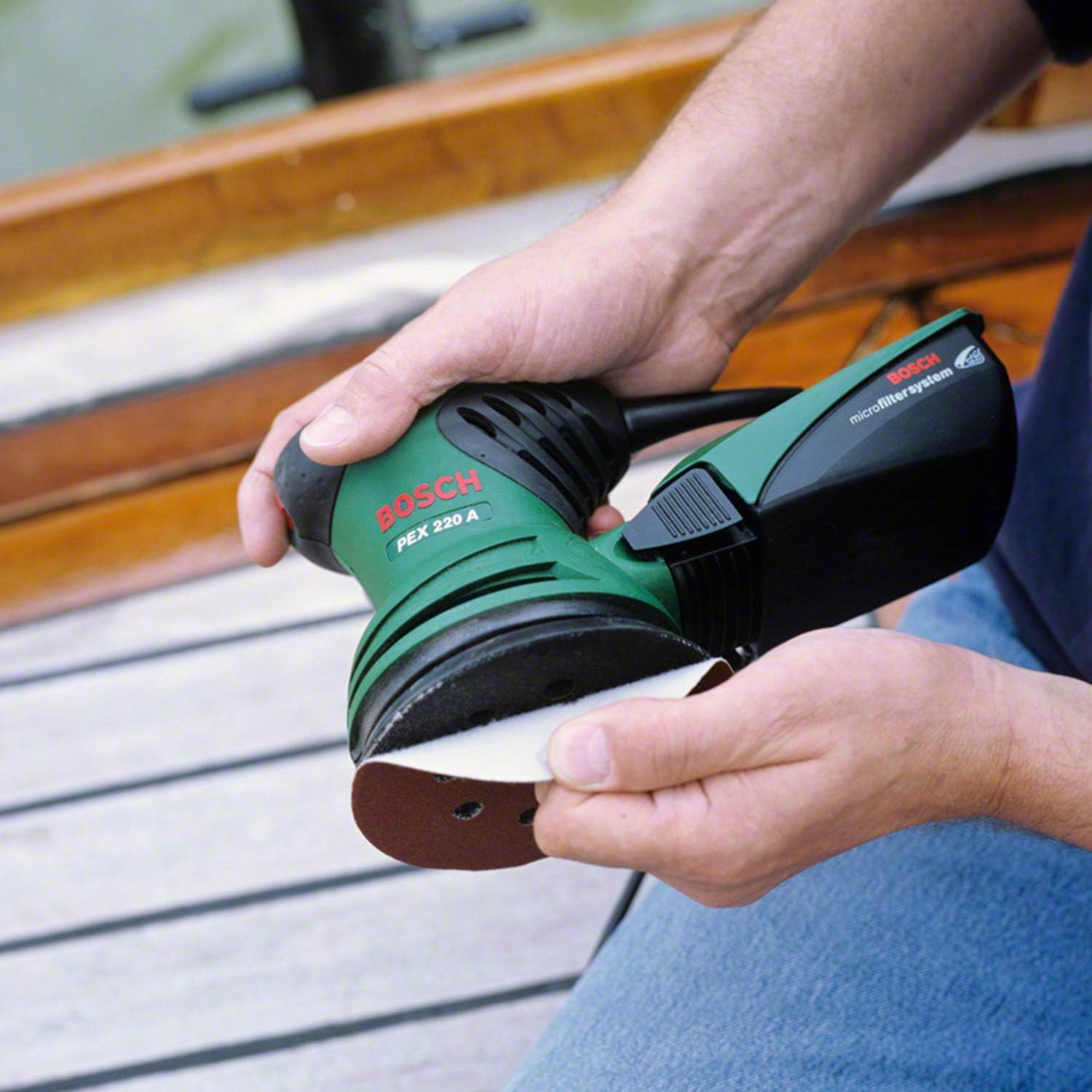
For random orbit sanding, technique is often the difference between “feels smooth” and “actually ready”. Use steady pressure and let the sanding sheets do the work, with a palm-grip tool, it’s easier to keep your angle consistent. A microfilter dust box also tends to make sessions more comfortable because you’re not constantly dealing with the visibility and cleanup that comes with airborne dust.
A simple example: if you’re sanding a small tabletop section before applying a finish, work in overlapping passes, then check by touch. If you still feel rough patches, repeat with finer sheets. The box should help keep your bench area calmer while you do it.
What’s included in the box
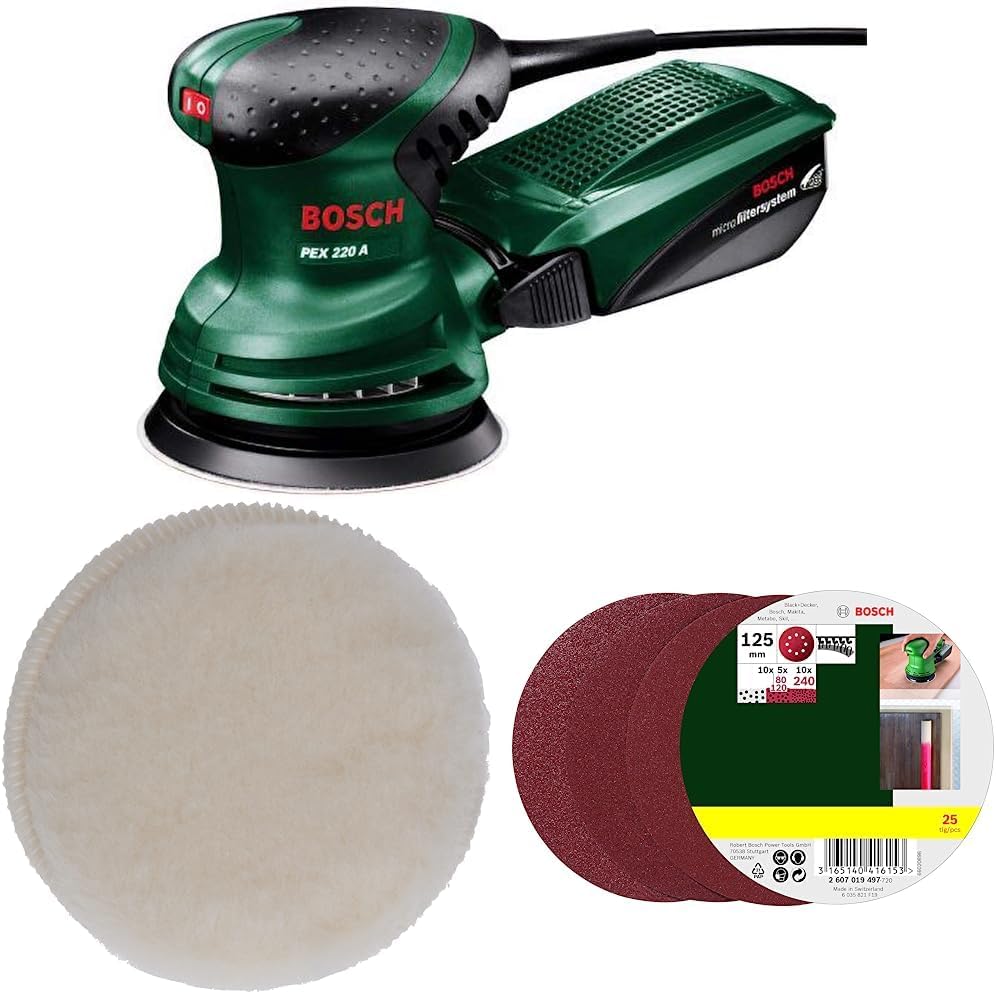
In the scope of supply, you get key consumables and accessories alongside the sander: - Bosch Microfilter (2 605 411 198) - Rubber sanding pad (2 608 601 175) - 3 sanding sheets (Red Wood) - Carton packaging
This is useful if you want to start right away without immediately sourcing every extra part.
What to check before you buy
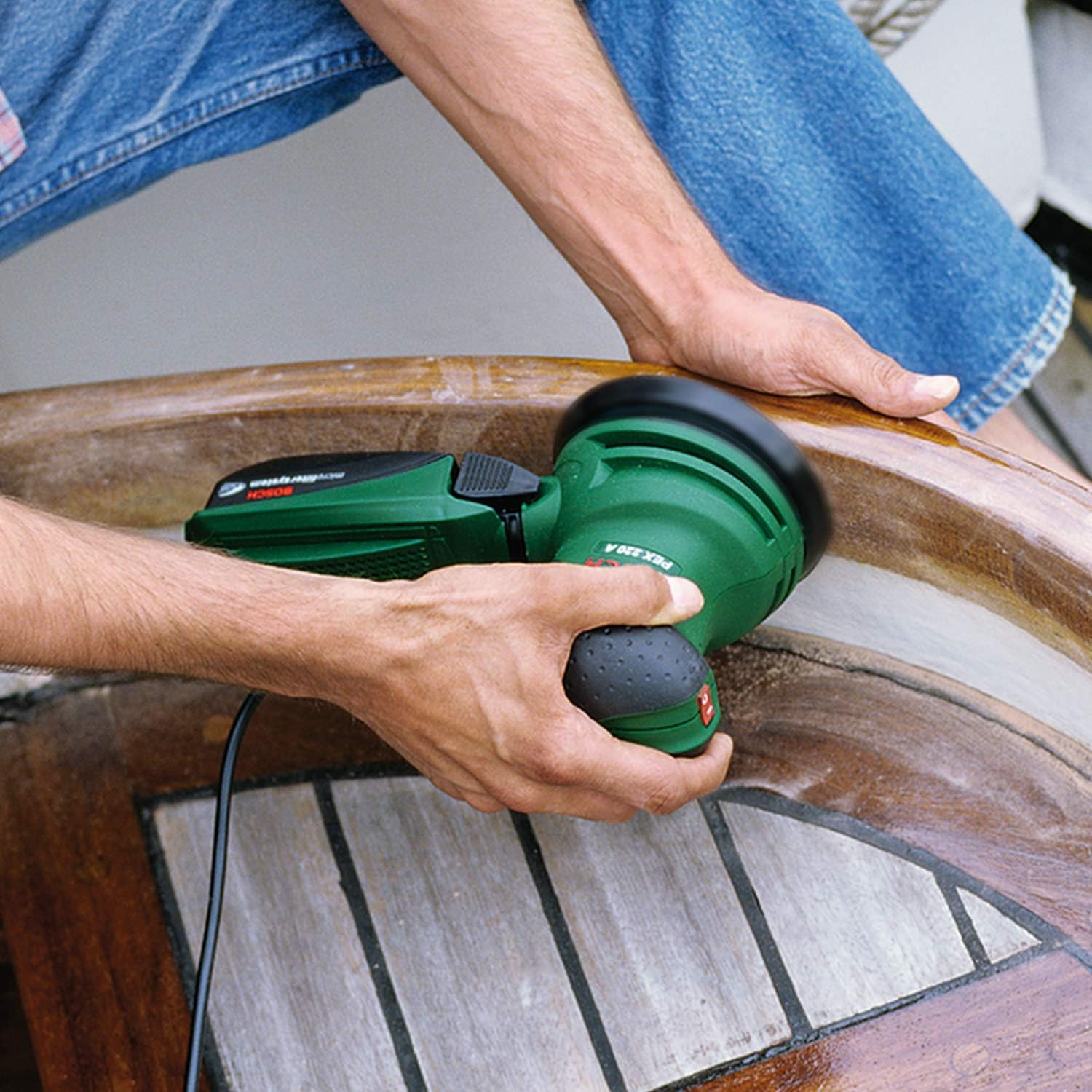
Before committing, it’s worth thinking about your expected workload. If your projects are mostly smaller surfaces and light-to-moderate sanding, the PEX 220 A’s 220 W class and compact design fit that brief. If you expect heavy material removal, constant long sessions, or large-area sanding, this may feel more like a good helper than a workhorse.
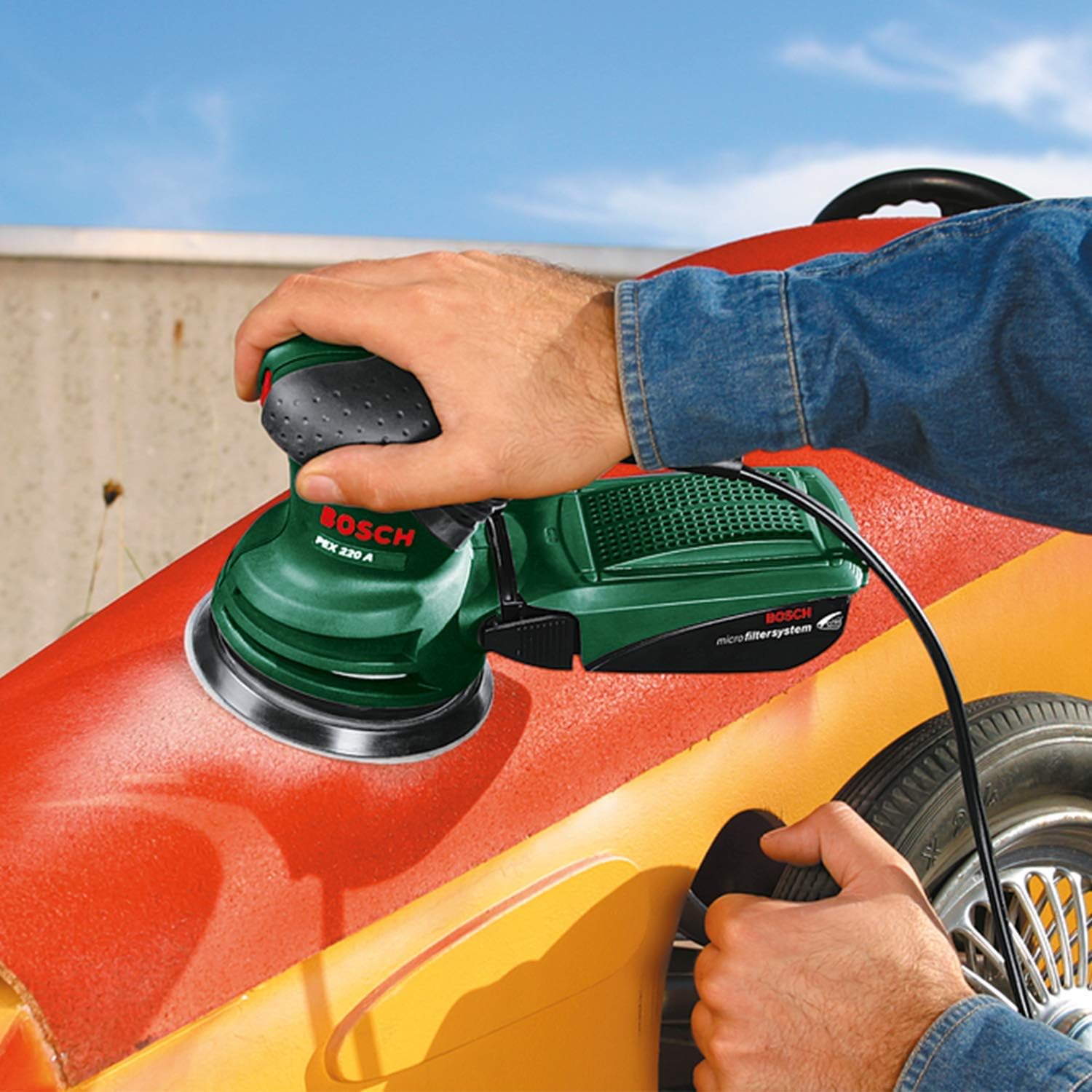
Also consider whether you’ll benefit from dust collection for your workspace. The microfilter dust box suggests it’s designed for cleaner working, but you’ll still want to use sensible dust control habits for the material you’re sanding.
Pros
Strengths
- Compact, lightweight build with a palm grip handle for comfortable control
- Random orbit approach suited to fine sanding on smaller surfaces
- Microfilter dust box is there to reduce dust and keep the area cleaner
Is it worth it?
Worth buying if you’re mainly tackling smaller flat or curved wooden surfaces, and you want a manageable random orbit sander that keeps dust down with its microfilter dust box. It suits typical DIY prep work—think smoothing before finishing—where comfort and control matter.
You may want to skip it if your projects involve large-scale sanding, heavy stock removal, or long uninterrupted sessions where you’d expect a more aggressive, high-throughput tool. In that scenario, it can feel more “precision and comfort” than “power for big jobs”.
Finally, make sure you’re happy with what’s included in the box for your first session, and plan how you’ll handle sanding sheets going forward.
Mini FAQ
Is the Bosch PEX 220 A aimed at heavy sanding?
It’s described as delivering fine sanding on smaller-sized surfaces. For heavy removal or large-area work, it may not be the best match.
Will the dust box make sanding completely clean?
It’s designed to reduce dust for a cleaner working area via a microfilter dust box, but sanding dust is rarely eliminated entirely.
What surfaces is it suited to?
It’s positioned for sanding flat or curved surfaces, which suits many common wood-prep tasks.
What’s included to start straight away?
The supply includes the Bosch microfilter, rubber sanding pad, and three sanding sheets (Red Wood), plus carton packaging.
Is the compact design a real benefit?
On a palm-grip random orbit sander, comfort and control do tend to matter during longer sessions—especially when working around edges or curves.