

Biodegradable Food Waste Bags (120 Pack) for 6 Litre Bins – 100% Recycled, Compostable Bin Liners
Product description
The essentials
If you’re trying to handle food waste more responsibly, these biodegradable food waste bags are built for everyday bin-liner use in smaller bins. They’re designed to be translucent green, and they’re described as tough for their size, with a puncture-resistant approach and a sealing design aimed at helping contain leaks and smells once tied.
On paper, the appeal is the combination of compostable materials and practical household use. They’re positioned as a more planet-focussed alternative to conventional plastic liners, while still being the sort of thing you can keep in the kitchen, bathroom, or office without making the whole routine more complicated.
It’s also worth knowing there’s a real-world limitation with compostable/biodegradable bags: the natural degradation process is said to need sunlight, air, and water, so you should expect them to behave like liners first, and like compostable materials only once they’re disposed of appropriately.

What matters in day-to-day use
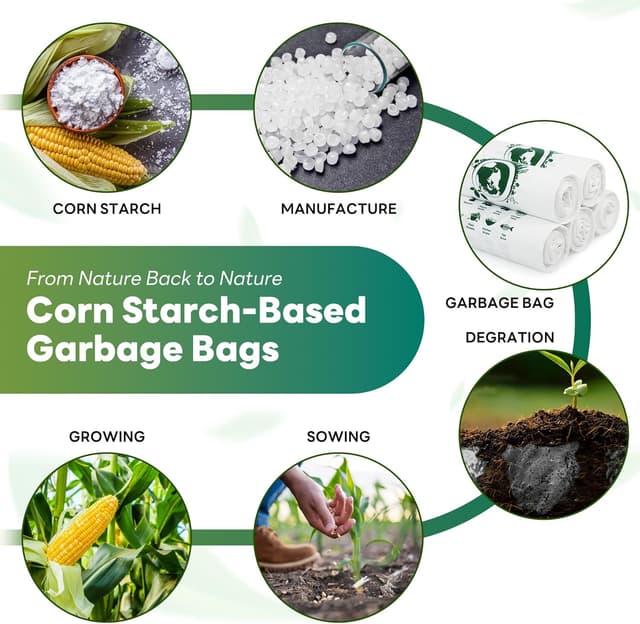
The bag material is described as biodegradable, using starch extracted from corn, with an emphasis on a natural, non-toxic, and tasteless approach. The manufacturer’s messaging is that these are “compostable” and environmentally friendly, and that they can degrade naturally when the right conditions are present.
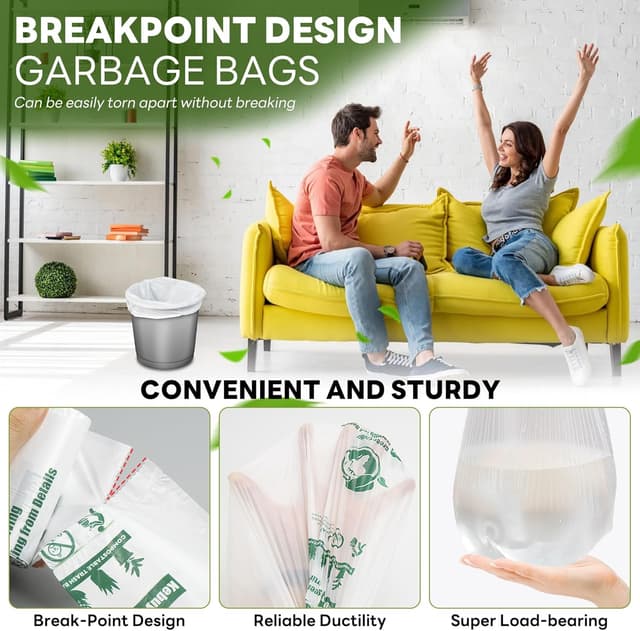
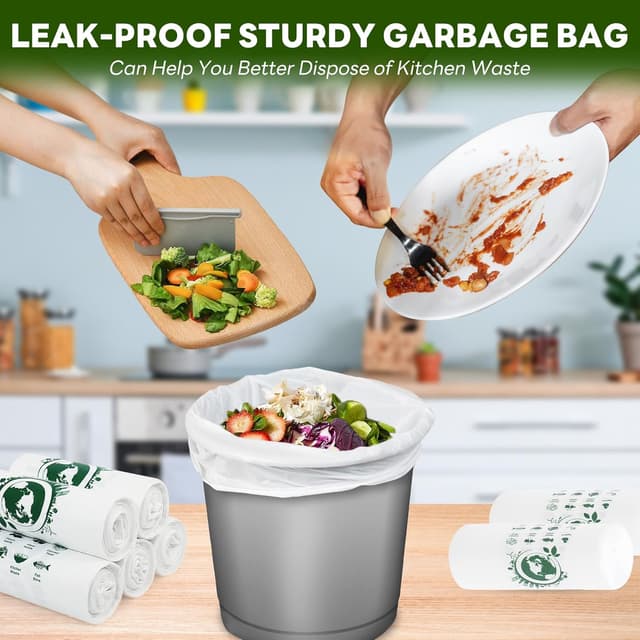
In practical terms, you’re mainly buying these for bin-liner reliability: keeping food waste contained until collection and helping reduce mess. The bag includes features intended to support that, such as a puncture-prevention technology (including the claim that it won’t pierce sharp items like pineapple and durian) and a design aimed at load-bearing performance and reducing liquid leakage.
There’s also a “breakpoint” design mentioned for easier access, which can be surprisingly handy when you’re swapping liners quickly under pressure—say, after cooking and trying to keep the bin tidy.
Key points on value and materials
This pack is sold as 120 bags (in 5 rolls), with an emphasis on affordability and large-quantity buying compared with traditional plastic bags. It’s also described as made from 100% recycled material, and the “biodegradable & recyclable” angle is part of the pitch.
The green translucent look is designed to help you identify what’s in the bin. If you do sorting rather than binning everything together, that transparency can reduce guesswork.
That said, it’s not a direct substitute for every waste-management set-up. If your local collection doesn’t support composting (or if you don’t have a disposal route that matches compostable requirements), the environmental benefit may be more theoretical than practical.

Tech specs
- Type: Biodegradable/compostable rubbish bin liners for food waste
- Material: Starch extracted from corn (biodegradable material described as PSM)
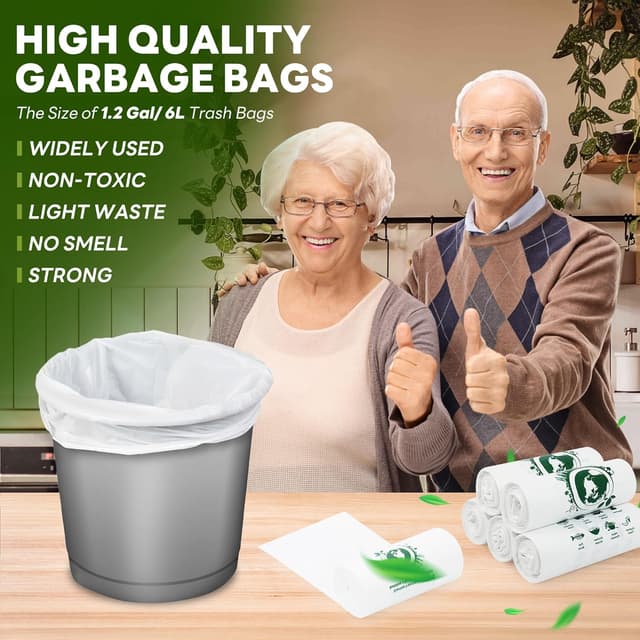
- Capacity: Small bin bags for approximately 5–6 litre bin use (6 Litre bin liner use referenced)
- Quantity: 120PCS (5 rolls)
- Size (listed for 5L): 40*45cm
- Colour/appearance: Translucent green
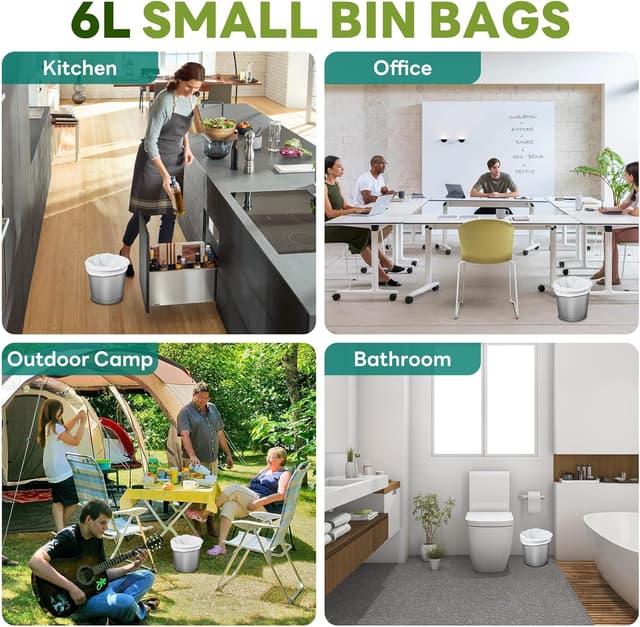
- Sizing guidance: “Very suitable” for small bins in kitchen, bathroom, office and other small household locations
- Disintegration requirements (as described): Needs sunlight, air and water to degrade naturally in the natural environment
Who it suits (and who should think twice)
It’s a good fit if you want compostable food waste bags for smaller household bins, and you’re already paying attention to sorting food waste by type. It’s also a solid pick if you like keeping a dedicated liner in high-use spots like the kitchen counter bin, a bathroom bin for daily waste, or an office bin—where leakage and puncture resistance matter more than anything fancy.
It might not be a great match if you’re expecting fully “plug-and-play” compostability regardless of disposal conditions. Because the degradation process is said to require sunlight, air and water, you should consider whether you have the right disposal route.
You may want to skip it if your primary priority is ultra-heavy-duty bag performance for large, sharp, or very wet loads all the time—while the bag is described as tough and intended to prevent punctures, it’s still a small-bin liner rather than a contractor-style rubbish bag.
Mini FAQ
Is this bag really compostable?
The product description states it is compostable and biodegradable, and that it can degrade naturally when the environment conditions (sunlight, air and water) are present.
Will it hold liquids?
It’s described as having a design aimed at preventing liquid leakage, including a constant temperature back cover. If you often deal with wet food waste, that’s the key benefit to look for.
Does it help with smell?
The description says no odour will flow out when the tie is sealed, and that it helps control smell to assist with identifying content.
What size bin is it for?
The listing refers to 5/6 litre use and includes a listed size of 40*45cm for the 5L variant. If your bin is smaller or larger than typical small kitchen/bathroom bins, it’s worth double-checking measurements.
What’s the easiest way to use it?
Use it as a normal bin liner, tie it when full (the sealed tie is mentioned as part of odour control), and access the next liner via the breakpoint design.
Should you buy it?
Worth considering if you’re specifically shopping for biodegradable food waste bags for smaller bins and you want a compostable approach with features aimed at puncture resistance, leakage containment, and smell control. It suits households that sort food waste and people who want an easier, cleaner liner routine across kitchen, bathroom, and office.
Better avoided if you don’t have a disposal method that matches compostable requirements, or if you need heavy-duty performance for consistently sharp, heavy, or very wet waste. In that case, conventional liners (or different bag types built for tougher loads) may fit your use more reliably—this one is more about daily food-waste handling with a greener goal.