

Bikevee GPS Bike Computer Speedometer (2.4 inch) with IPX7 wireless auto start/stop
Product description
If you want route stats without messing about with wheel sensors and cabling, a GPS bike computer like this Bikevee model makes a lot of sense. It’s built around GPS to track speed and distance, alongside riding metrics such as ascent/altitude and gradients. The pitch is simple: get accurate-enough data for training and everyday rides, then rely on a clear display and straightforward operation.
That said, GPS units can be a bit dependent on conditions (think tree cover, tunnels, and the first few seconds after powering on). So it’s worth going in with realistic expectations: it’s a handy performance tracker, but it’s not the same thing as a dedicated sensor setup for every scenario.
The essentials: what it is and what it’s for
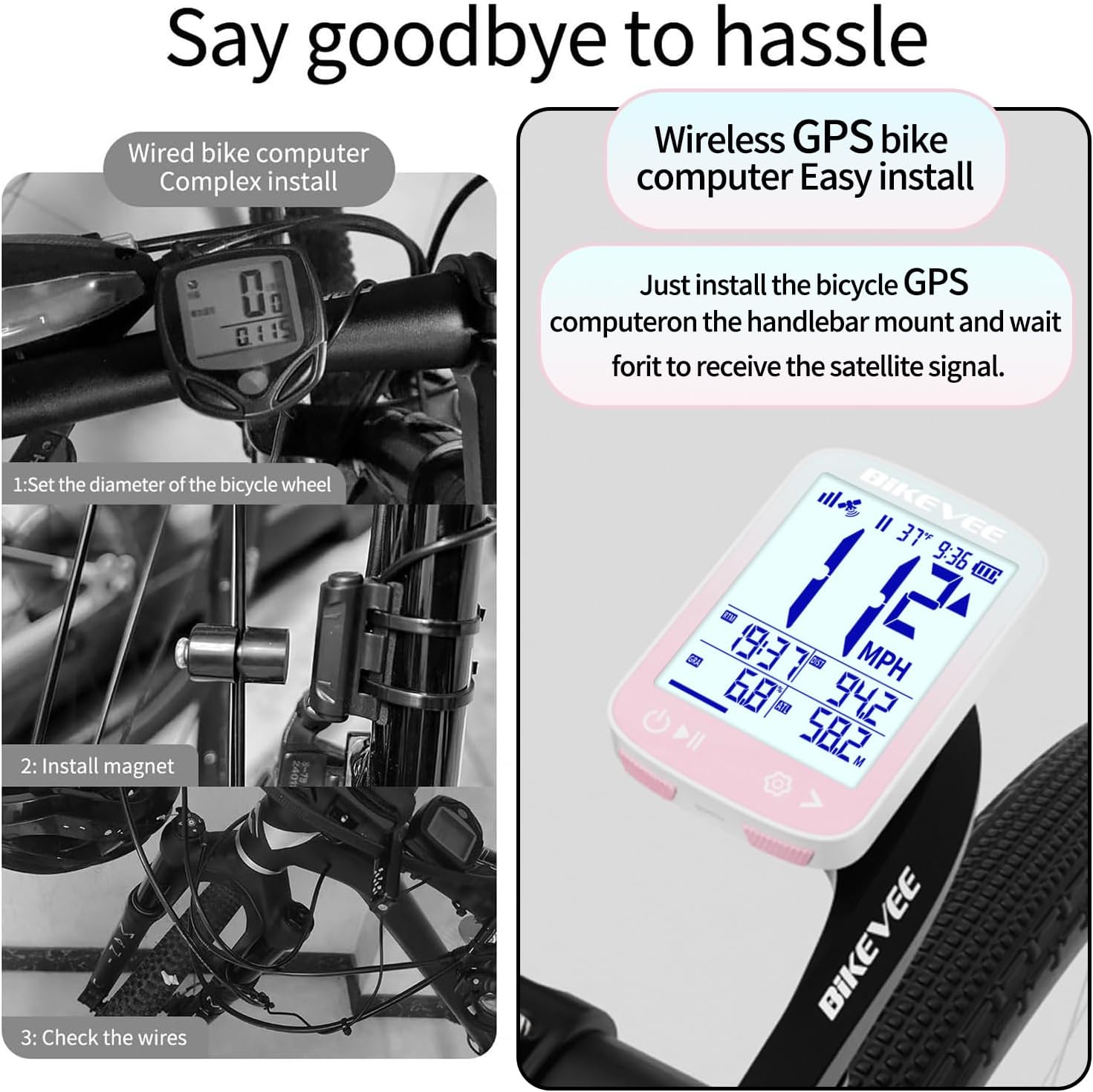
This Bikevee Bike Speedometer GPS Bike Computer is designed to show live riding data using GPS rather than magnetic wheel sensors or traditional wired speed sensors. On paper, that matters if you’ve ever found cable routing fiddly, or if you swap bikes and don’t want to transfer hardware.
The device also uses a 2.4-inch FSTN screen with backlight, aiming to stay readable in both daylight and lower-light conditions. For practical riding, that means you can glance down for speed and distance without squinting, and it should remain usable after dusk thanks to the illumination.
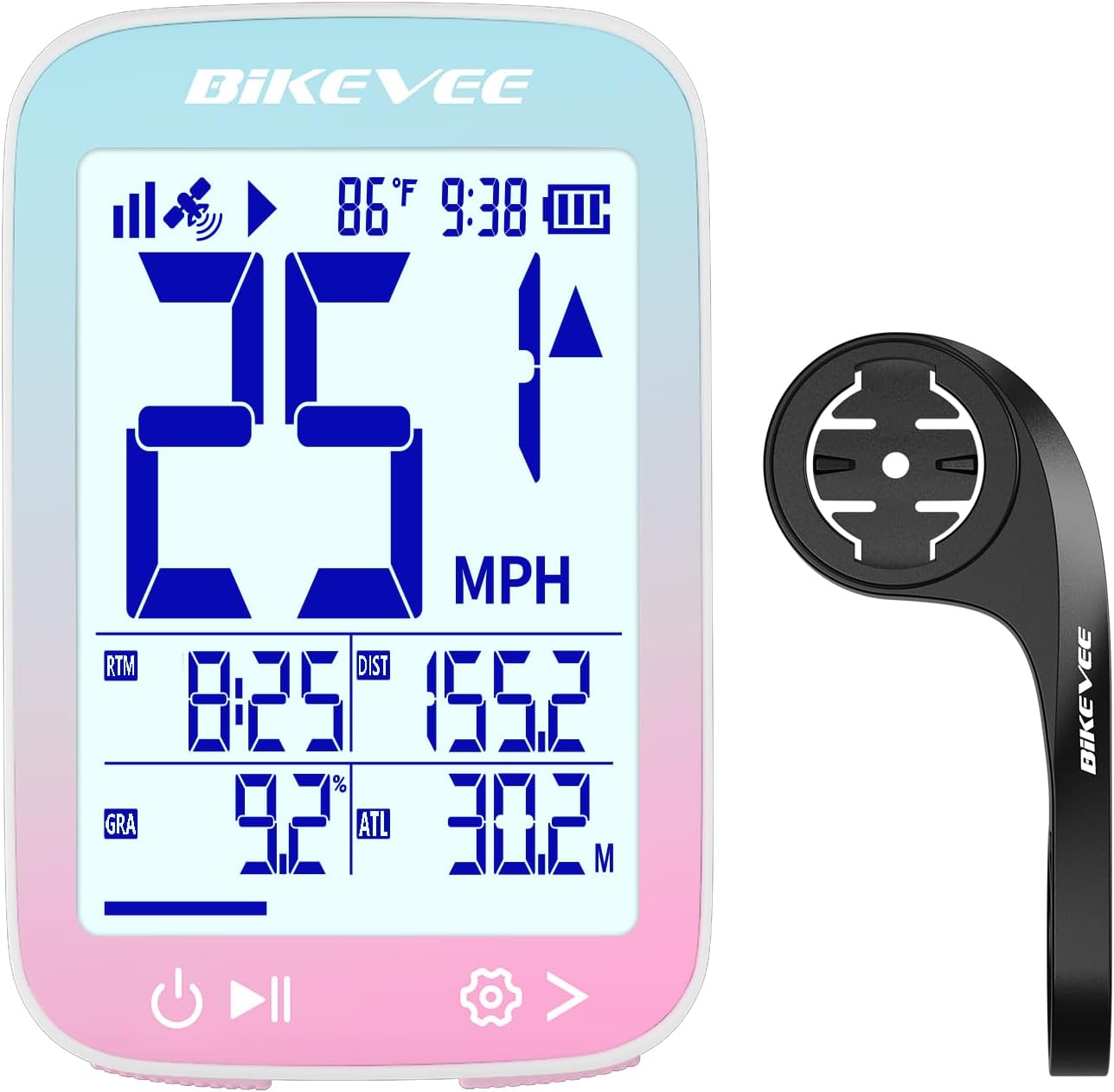
There’s also auto start/stop, which can help reduce button-press faff when you’re setting off from lights or taking short stops.
What you’ll notice day to day
Most bike computers are only as good as the way they present information mid-ride. Here, the focus is on clarity and “performance metrics” rather than gimmicks.
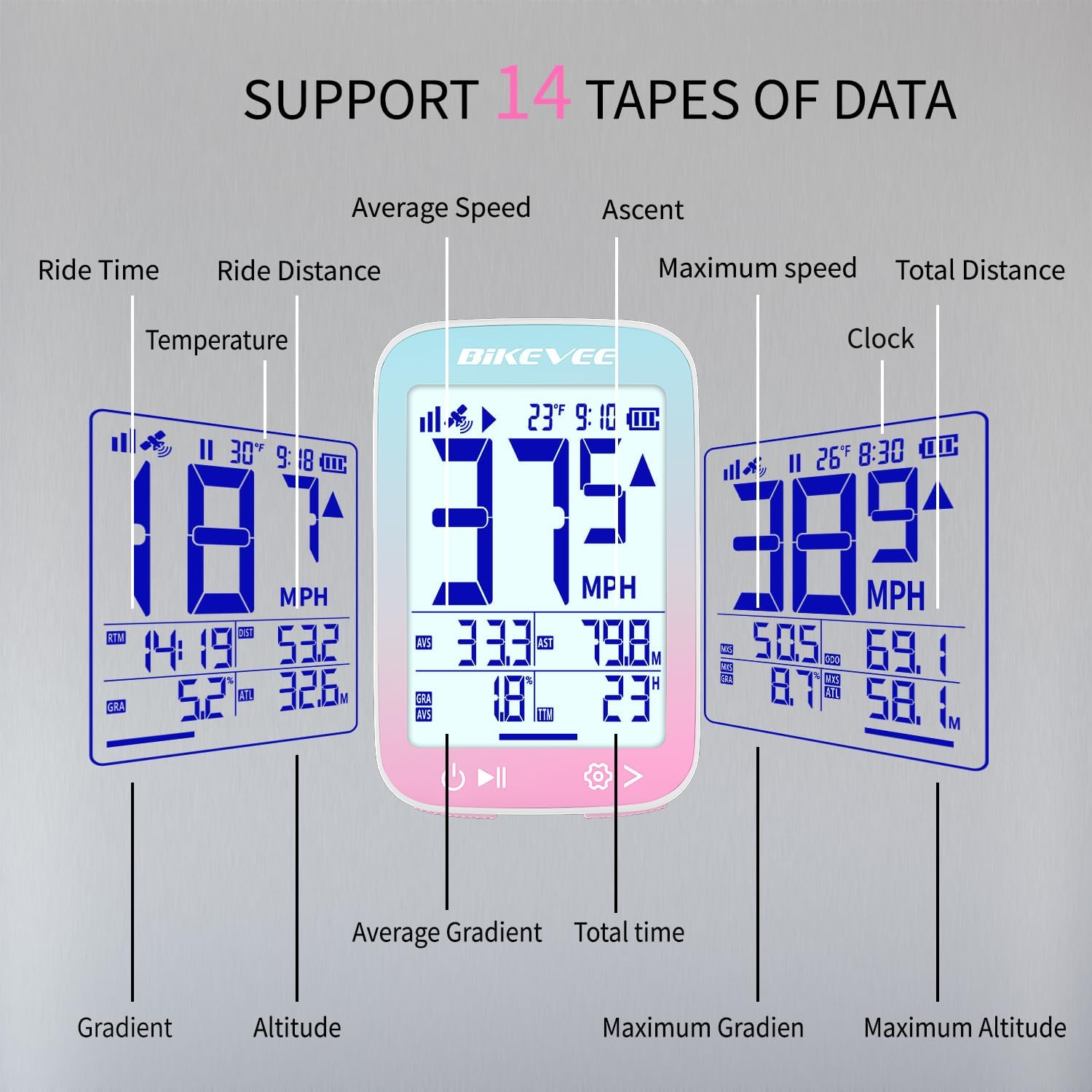
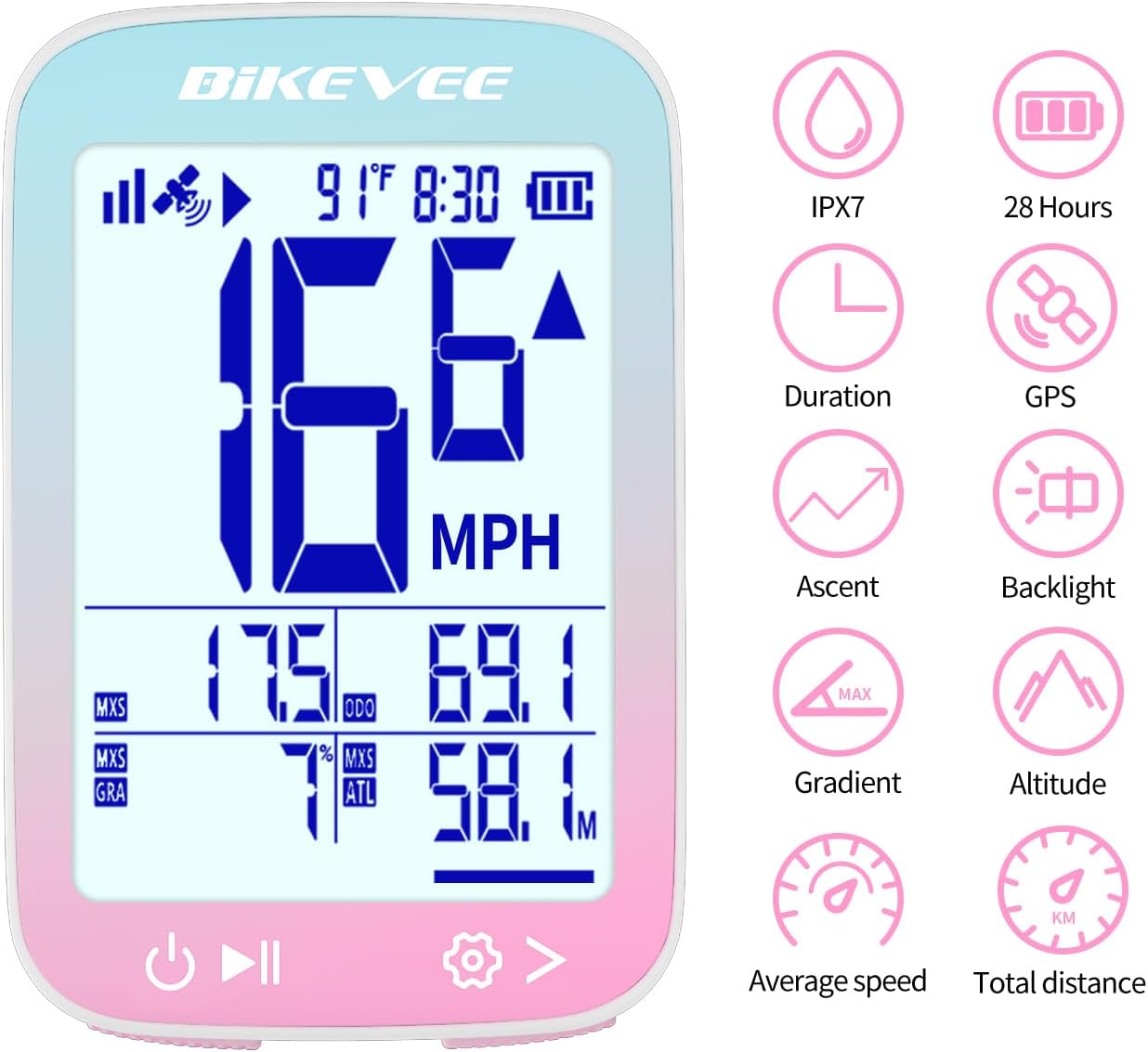
Based on the product information, the display covers key ride stats such as: - Max and average speed - Ride time and trip distance - Total distance - Altitude-related data (ascent/altitude) - Gradient/grade - Temperature (with readings in °C/°F)
In a typical use case, you might start your commute, glance at your current speed while waiting at traffic lights, then later check your max speed and total distance without needing a separate app workflow. For longer road days or MTB loops, altitude and gradient data are the bits that usually make riders actually look at the screen beyond “speed only”.
Key features worth caring about
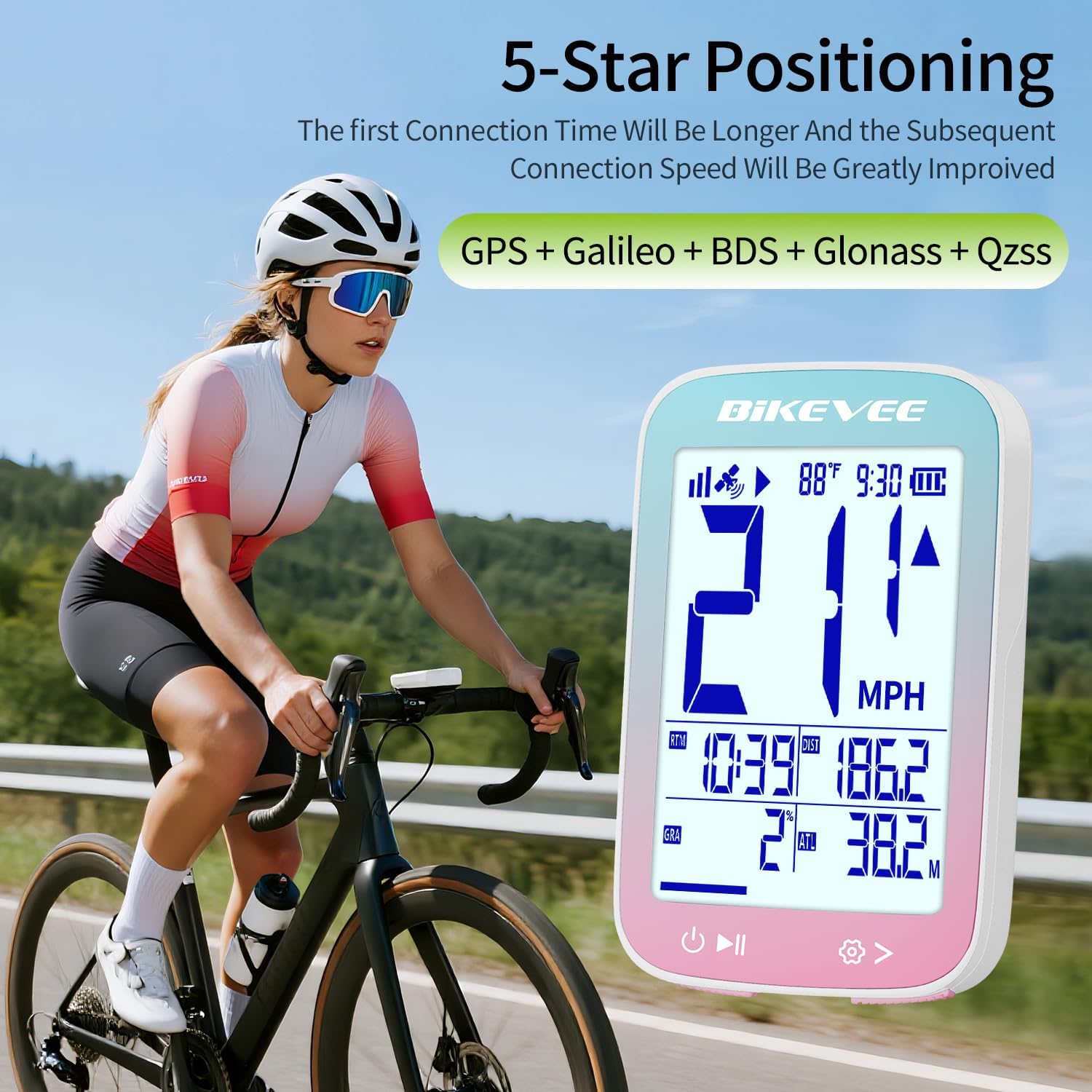
GPS-based speed and distance tracking is the headline. If you prefer a cleaner setup than magnet/sensor systems, this is the direction it’s taking.
The display is another real-world factor. A 2.4-inch FSTN panel with backlighting is meant to remain readable in sun and at night, so you’re less likely to end up turning the bike into a “stop and check” project.
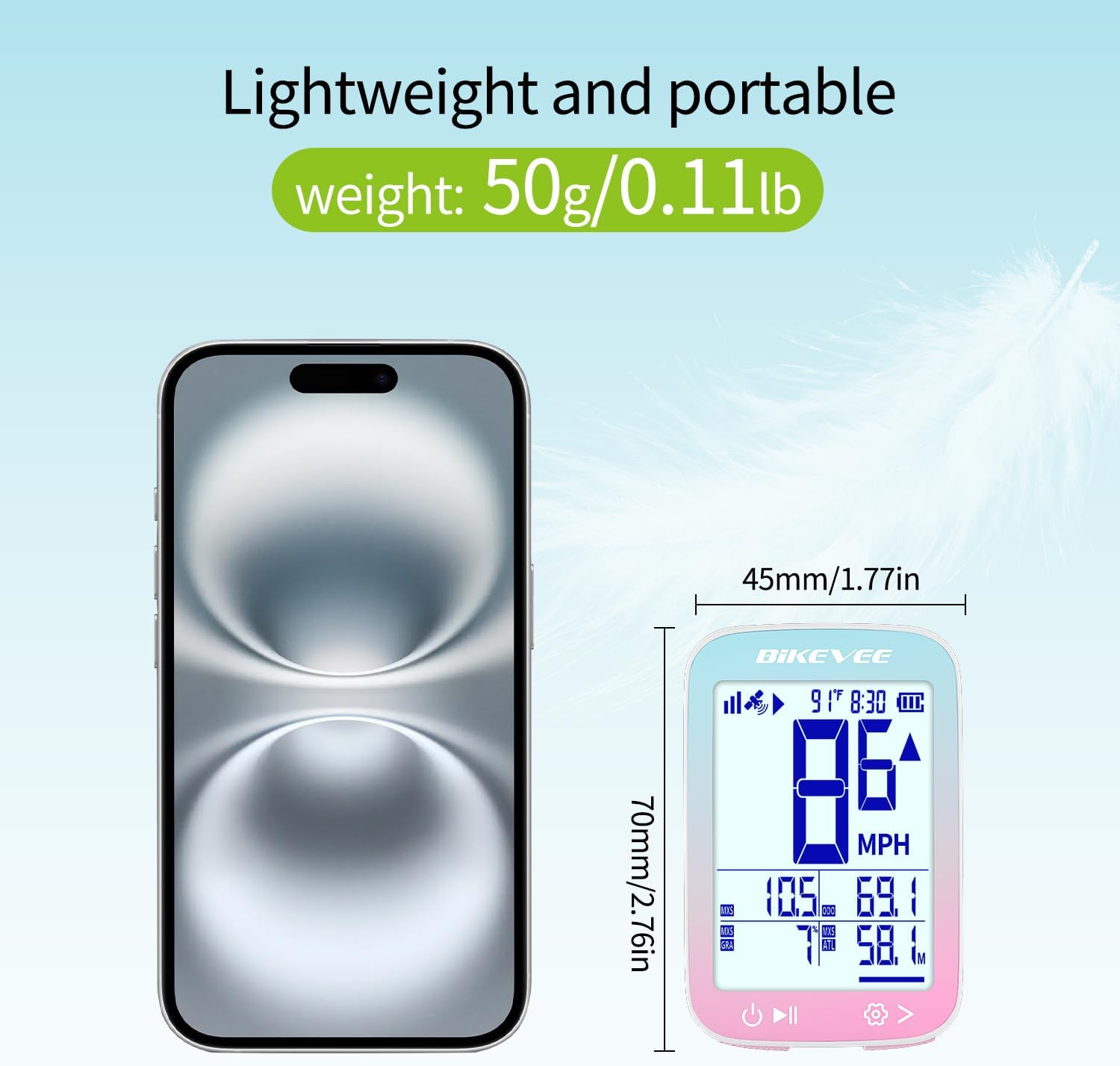
Battery life is listed as up to 28 hours, which is fairly substantial for typical training blocks and multi-ride weeks. The unit is also very light at 50 g, so it’s not adding meaningful bulk to your handlebars.
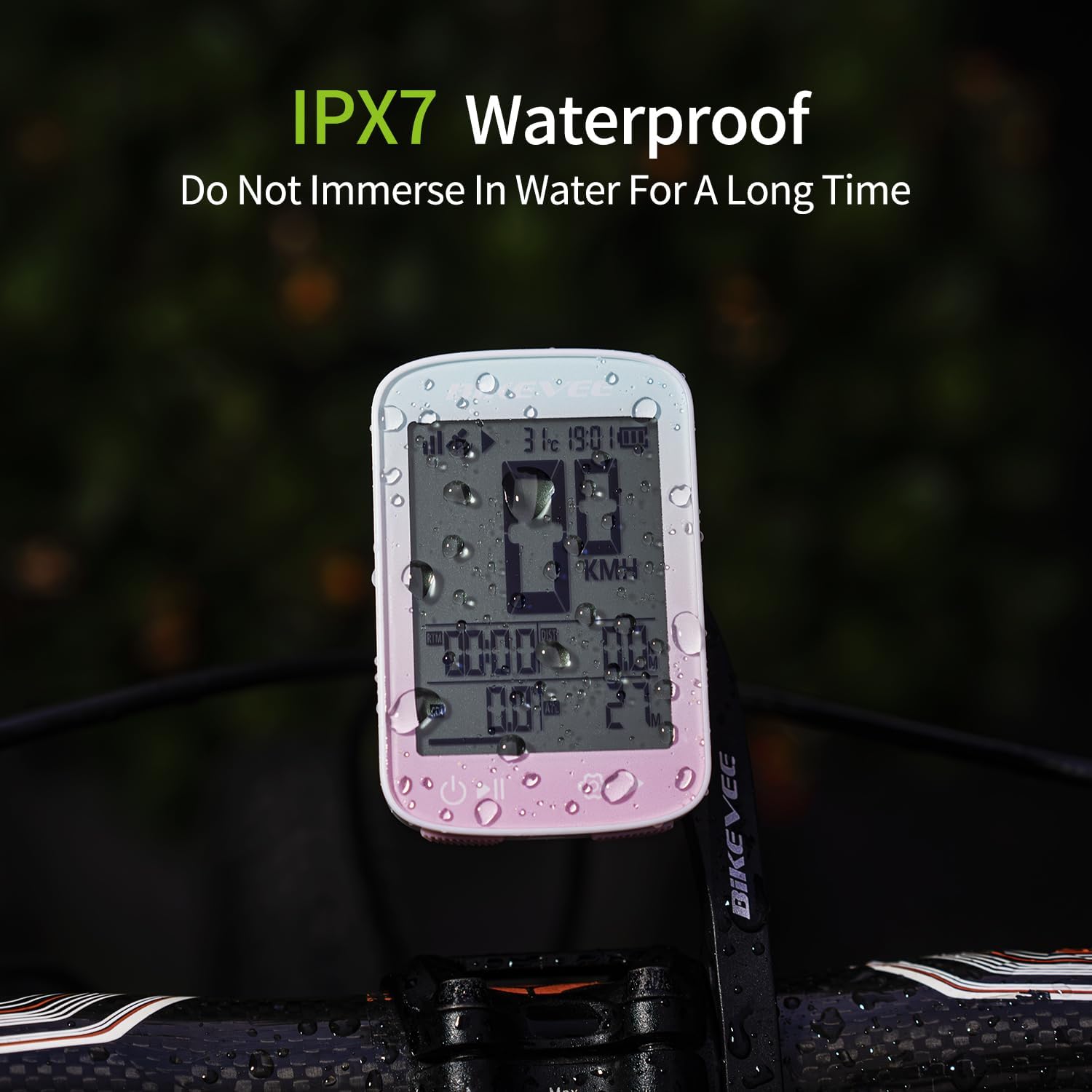
One more practical point: it’s rated IPX7 for water resistance. That’s the kind of spec that makes daily riding feel less stressful if the weather turns on you.
Tech details that matter (and where you should double-check)
You’re getting a 2.4-inch FSTN display with backlight, and the unit is described as supporting GPS-based measurement (including speed and distance) without conventional magnet/cable sensors.
It also mentions wireless operation and an IPX7 water resistance rating, plus auto start/stop behaviour.
However, there’s one limitation to keep in mind: the information provided doesn’t spell out exactly what level of GPS accuracy you should expect or how quickly it locks on in different conditions. If you regularly ride under heavy tree cover, through tunnels, or in frequent stop-start patterns, you may find any GPS computer needs a moment to stabilise.
Battery, durability and reliability in UK conditions
Up to 28 hours of battery life is the sort of figure that can remove a lot of stress from ownership. It’s especially useful if you don’t want to remember charging every few rides.
For reliability, IPX7 water resistance is the standout. While nobody wants to fully submerge electronics as a hobby, an IPX7 rating generally gives you a good margin for rain, humidity and wet weather riding.
The 50 g weight is also a small plus. Many riders notice weight mostly when they’re checking steering response or when the handlebars feel busy. Here, it’s positioned as lightweight rather than chunky.
Who it’s for, and who should look elsewhere
It’s a good fit if you want GPS-based stats for road, MTB or general riding, and you’d rather avoid fitting magnets or running cables. The altitude, ascent and gradient data suggests it suits riders who care about hills and not just flat speed.
It’s also worth considering if you want a clear screen with backlight, and you ride in changeable weather where water resistance matters.
It may not suit you if you need guaranteed sensor-style accuracy in every environment, or if you’re expecting an advanced training platform with deep customisation—this description doesn’t indicate that kind of capability. It might also feel limiting if you primarily want ultra-simple speed readouts and don’t care about altitude/gradient.
Mini FAQ
How does it measure speed and distance?
It uses GPS to measure speed and distance, rather than relying on conventional magnetic or cable-based sensors.
Is the display usable at night?
The 2.4-inch FSTN screen includes backlighting, and it’s described as remaining readable in sunlight and in the dark.
Is it waterproof for rainy rides?
It’s rated IPX7, which indicates strong water resistance for weather exposure.
How long does the battery last?
The battery life is stated as up to 28 hours.
Does it start and stop automatically?
It’s described as having auto start/stop.
Is it worth it?
Worth buying if you like the idea of GPS-based speed, distance and hill-related metrics (altitude/ascent/gradient), and you want a light, IPX7-rated computer with a readable backlit 2.4-inch screen. The 28-hour battery life is also a sensible “less hassle” feature for regular rides.
You may want to skip it if your riding environment is tough for GPS signal or if you’re specifically chasing the consistency you get from dedicated wheel sensors. In those cases, a more sensor-first approach can be less dependent on satellite lock and signal conditions.