


Bibado Dippit Baby Spoon and Dipper 2-Pack
Product description
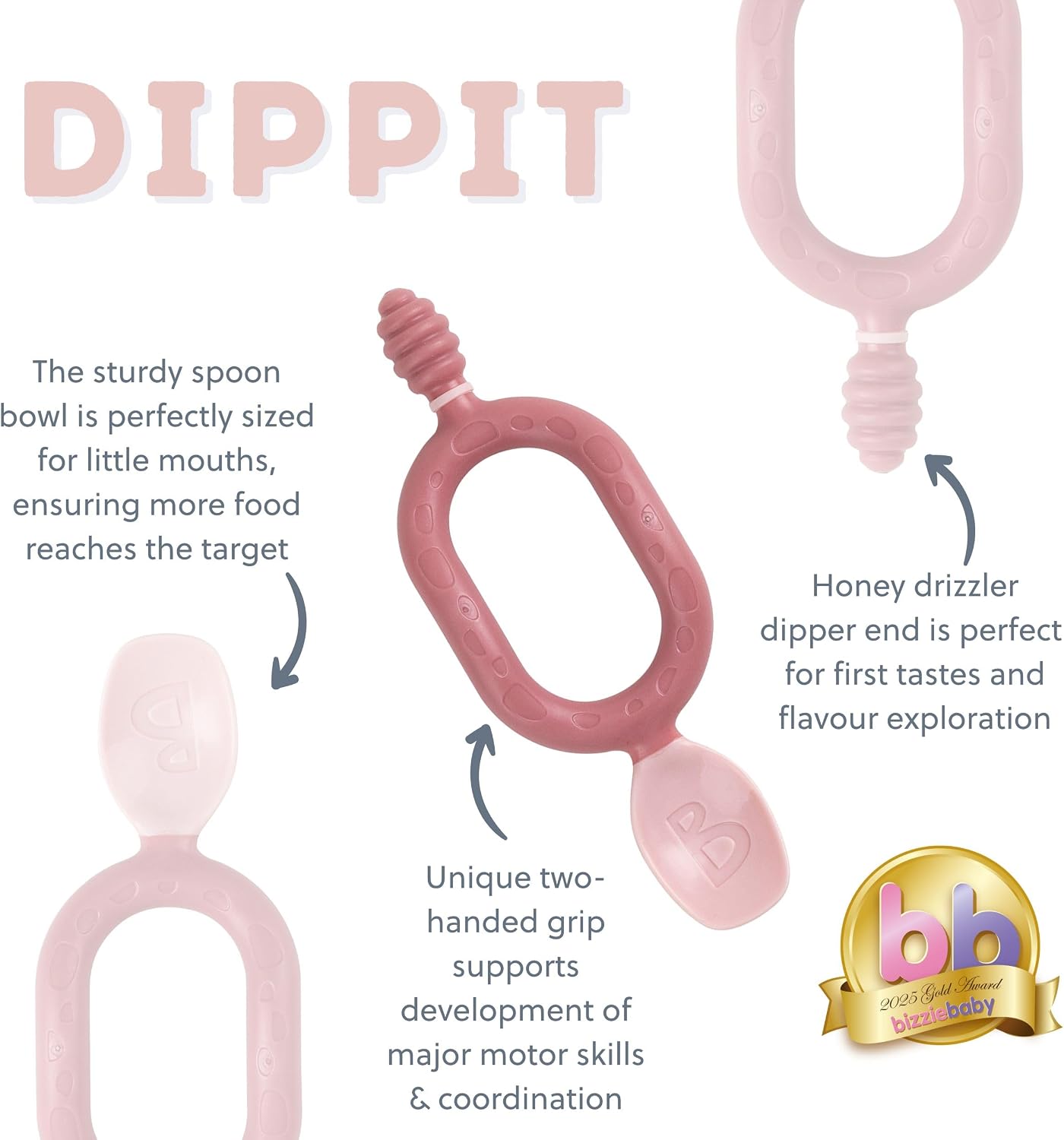
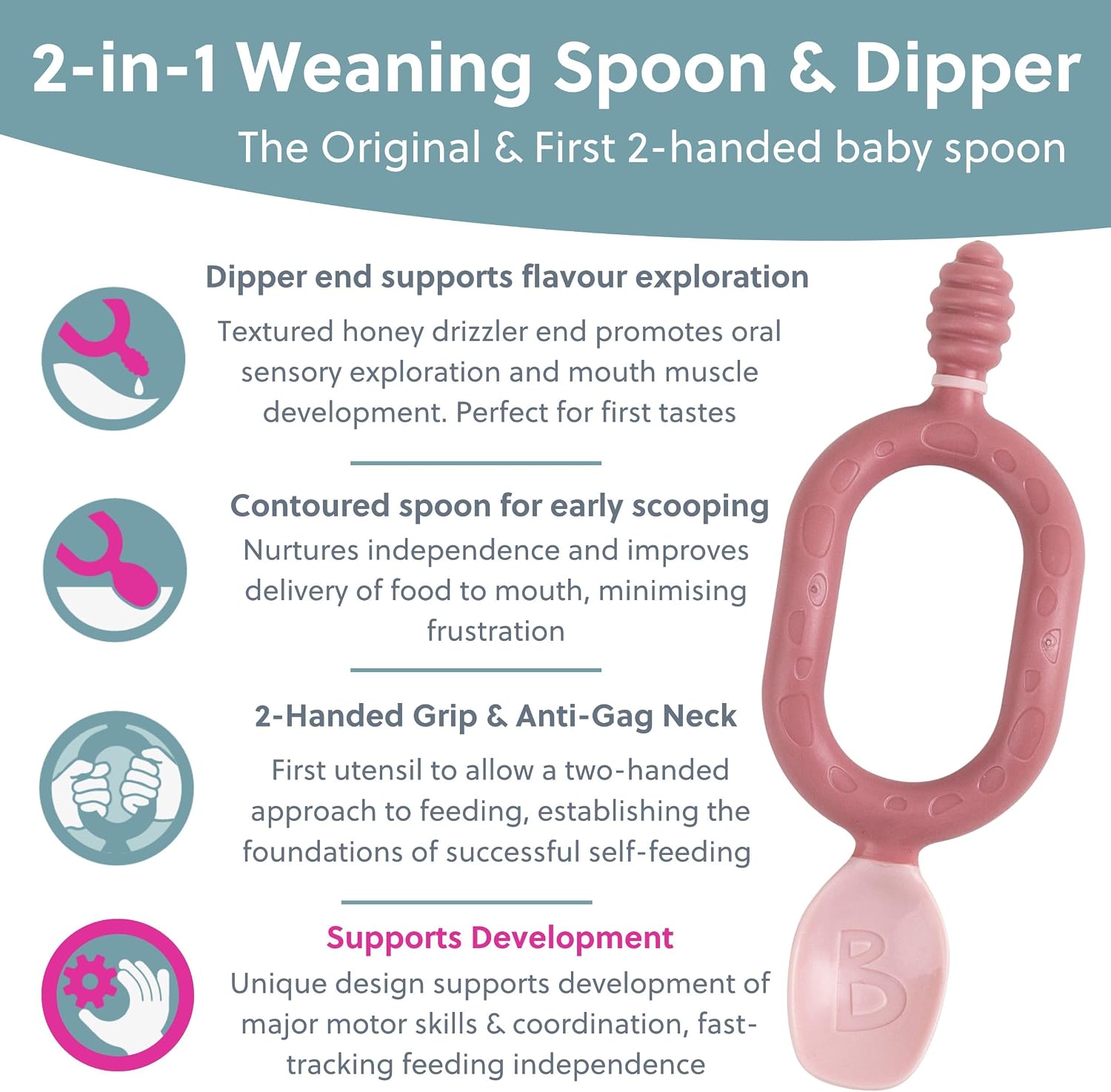
This compact two-piece set is a practical baby weaning spoon set that helps infants explore textures and flavours while building hand control. The Bibado Dippit combines a textured, soft dipper end for early tasting with a deep spoon for scooping as a baby progresses, making mealtimes more hands-on and less messy.
Key Points
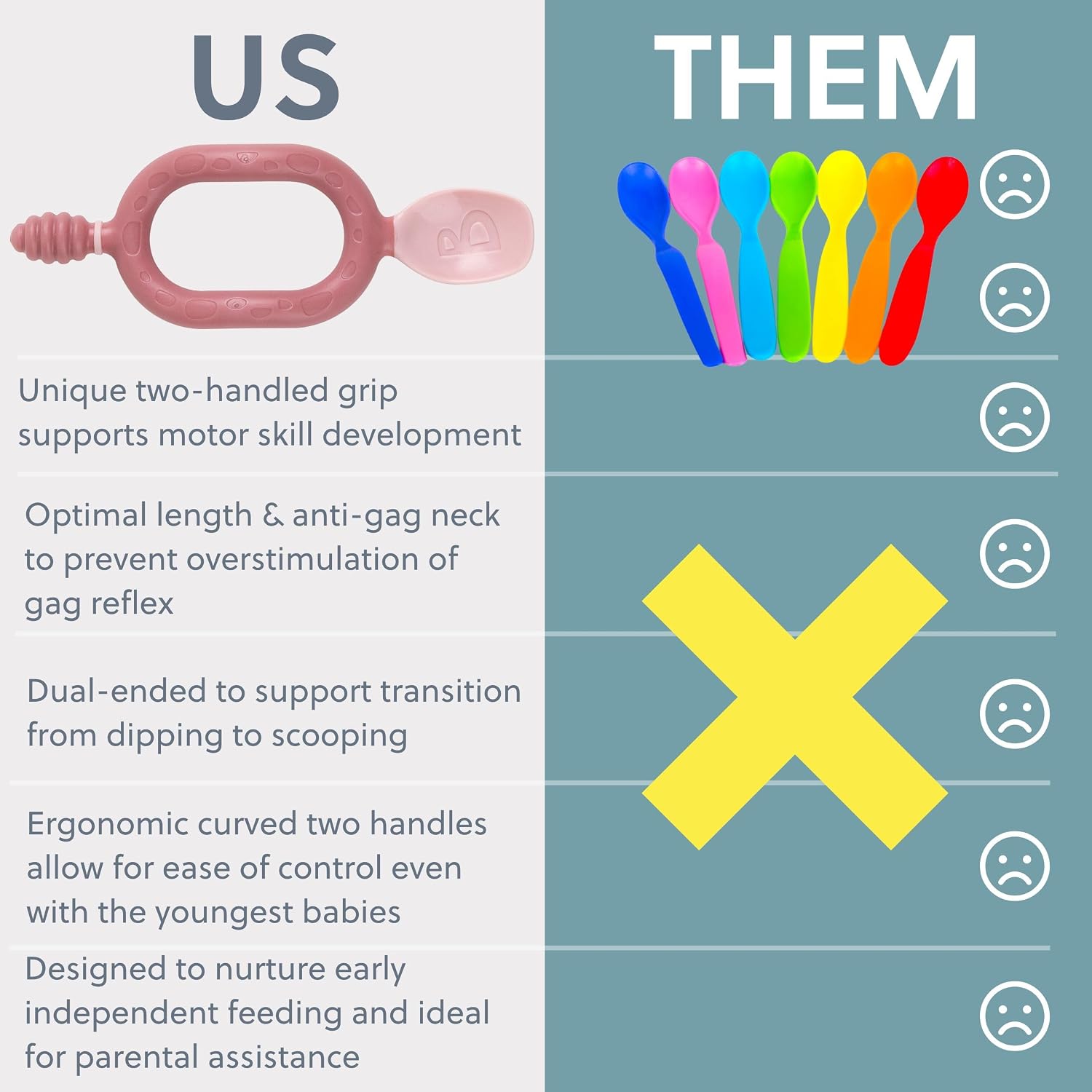
The dual-ended design allows babies to taste food with the anti-gag, wide-neck dipper and then flip to a more traditional spoon for scooping, encouraging autonomous feeding. The ergonomic curved handles give little hands a natural place to grip, supporting the elbow flexion and wrist control needed for self-feeding. Made from silicone, the tool is soft and chewable which is reassuring during teething and sensory play 😊. According to the manufacturer, the set is free from BPA which adds a layer of safety for repeated use.

The textured surfaces help develop tactile exploration and hand-eye coordination while the deep spoon shape holds a reasonable portion for practising scooping and bringing food to the midline. Parents can use it alongside baby-led feeding or for guided assistance during the earliest stages of weaning. Consider that some babies may prefer a firmer utensil as they near toddlerhood and strong scooping motions.
Technical Specifications
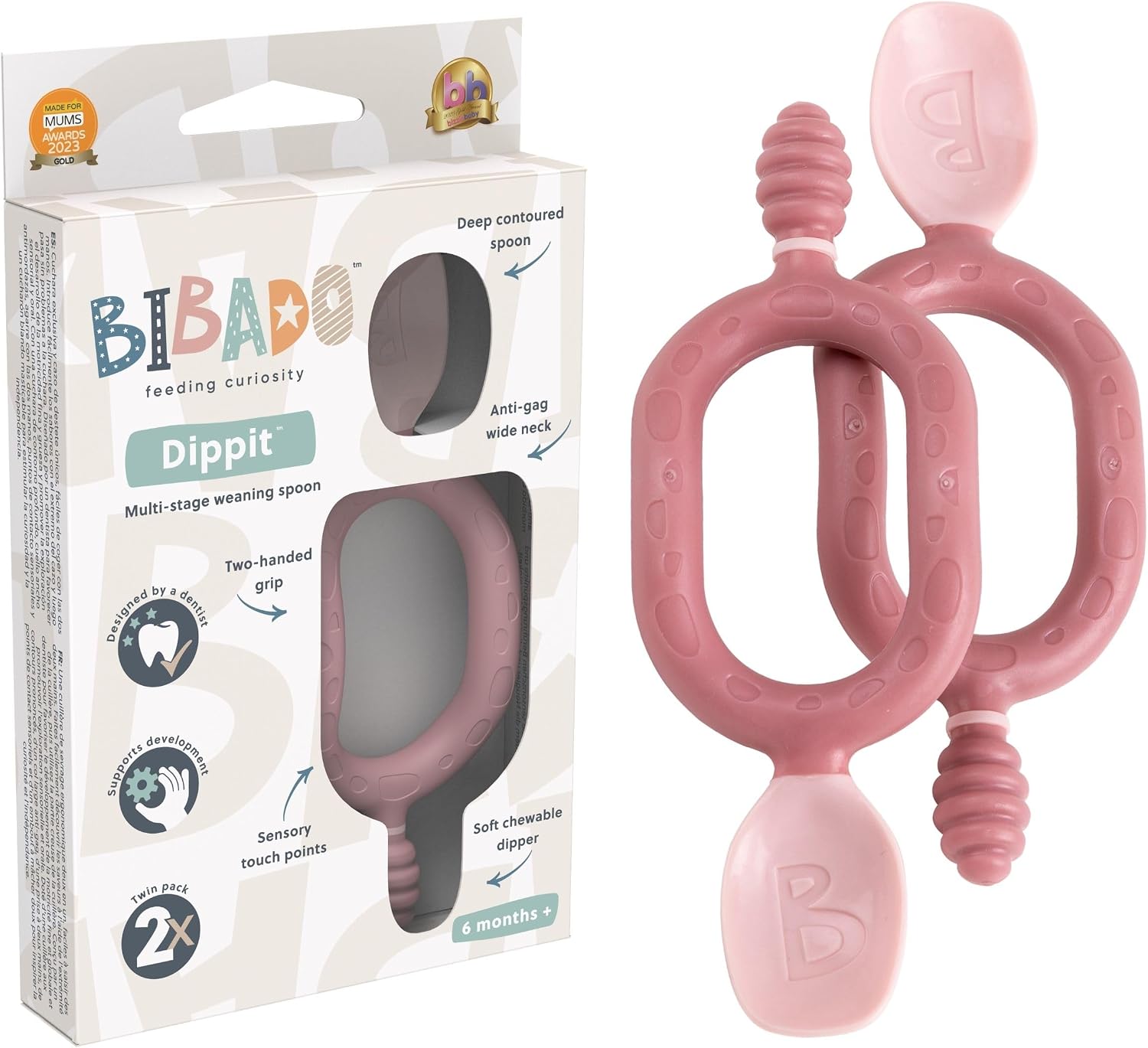
- Name: Bibado Dippit (2-Pack)
- Material: 100% BPA-free silicone
- Pack contents: 2 pieces, dipper and spoon
- Age recommendation: 6 months+
- Colour: Blush
Usage Recommendations
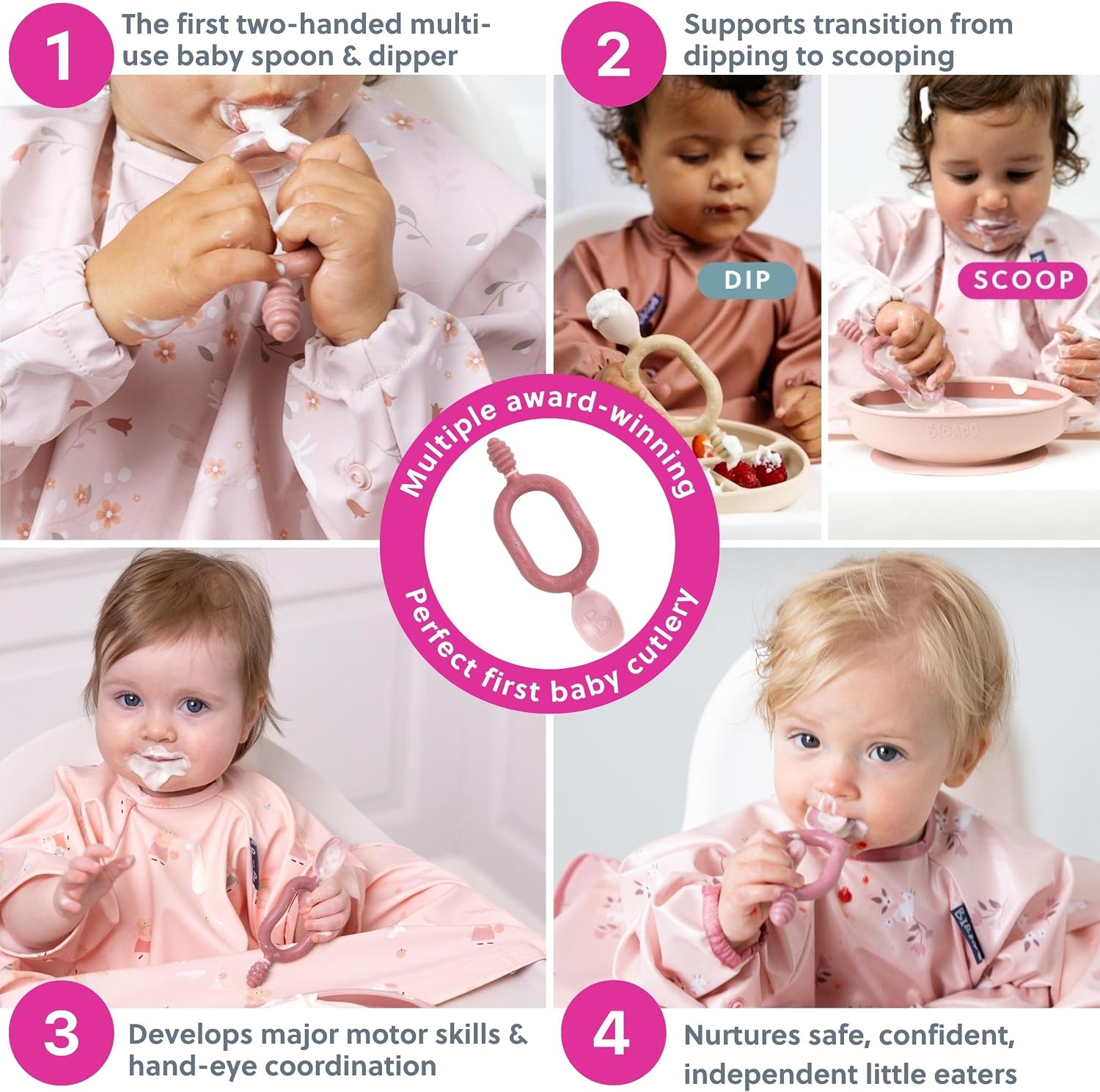
Begin offering the dipper end with soft purees and smooth finger foods to let the baby investigate taste and texture while reducing gag reflex risks. For first tries, sit close and allow the child to hold the spoon with assistance, then encourage independent holds as coordination improves. Rotate between supervised free exploration and short guided feeding sessions to develop oral muscles and grip strength 🍼.
Washing is straightforward as silicone resists staining and can usually be cleaned with warm soapy water or placed on the top rack of a dishwasher if needed. Avoid using abrasive cleaners to preserve the textured surface. If the child shows a strong preference for metal or heavier spoons later on, the soft silicone may feel too yielding for vigorous scooping, so consider introducing alternate utensils gradually.