

BESTEK Power Inverter 12V to 240V 300W with PD20W USB-C, QC18W USB-A & 3-Pin Socket
Product description
What this car power inverter is for
If you often end up with “my devices need charging” on one side and “I only have a 12V socket in the car” on the other, a car power inverter is the obvious bridge. The BESTEK Power Inverter turns 12V car power into 240V output, so you can run or charge devices that normally expect a mains-style connection.
On top of the 240V output, it also includes dedicated USB fast-charging ports (one USB-C and one USB-A). That combination matters in real life: you’re not forced to choose between charging a phone/tablet and using a 3-pin accessory that needs AC power.
That said, it’s not a “unlimited power” solution. With a rated output of 300W, you should think of it as a handy travel and car-device converter rather than something to rely on for power-hungry household equipment for long periods.
At a glance: the features that actually help
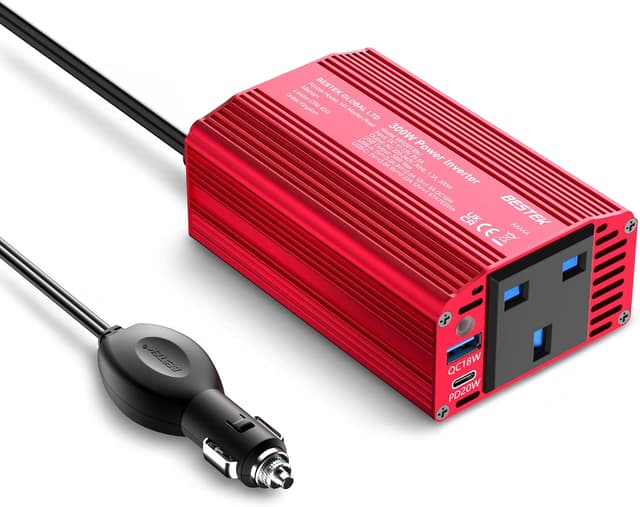
Where this model earns its keep is the mix of outputs and the practical charging standards. You get:
- A 12V to 240V inverter rated at 300W for powering/using compatible devices
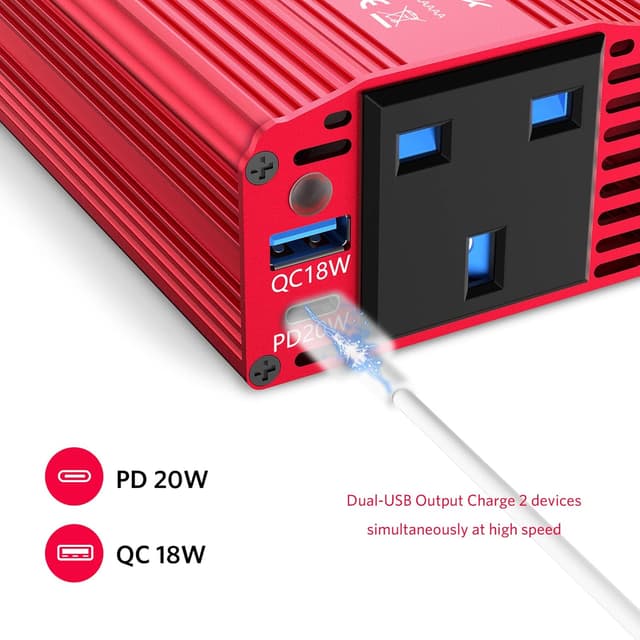
- USB-C with Power Delivery (PD20W)
- USB-A with Quick Charge (QC18W)
- A 3-pin socket, which is useful for laptops/tablets/charging gear that expects a conventional plug shape
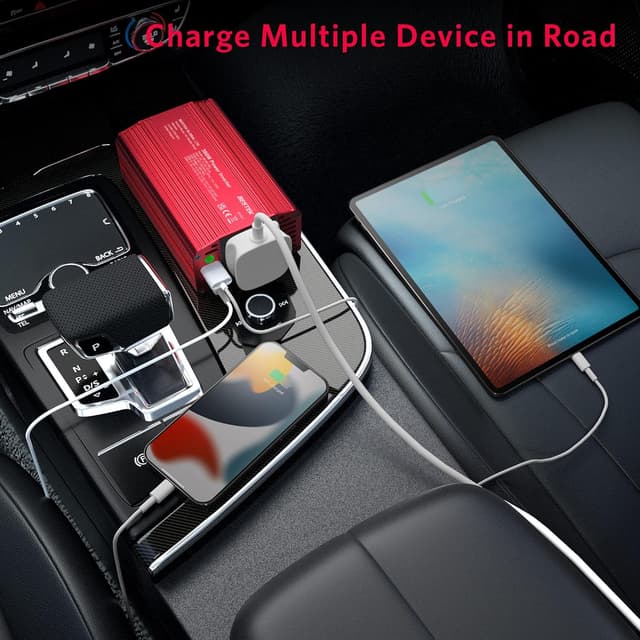
- A compact build designed to fit in a vehicle setup (car console or behind-seat passenger use)
If you’re packing for camping or road trips, this kind of “one box for many needs” layout is exactly what reduces the cable clutter. Imagine arriving at your campsite, plugging the inverter into the car, running a small device via the 3-pin socket, and charging a phone and tablet at the same time through the fast USB ports.
What to know about power limits and real-world expectations
The 300W rating is the main number to keep in mind. In theory, the inverter “meets consumers’ various needs” for charging and powering devices, but in practice, different devices draw power differently. So even if a device has a plug, it doesn’t automatically mean it’s a comfortable match under 300W.
A sensible approach is to use the 3-pin socket for lower-wattage electronics and chargers, and treat the USB ports as your everyday “grab-and-go” charging lanes. If you prioritise fast charging for mobiles and tablets while also needing occasional AC power, this model’s layout makes sense.
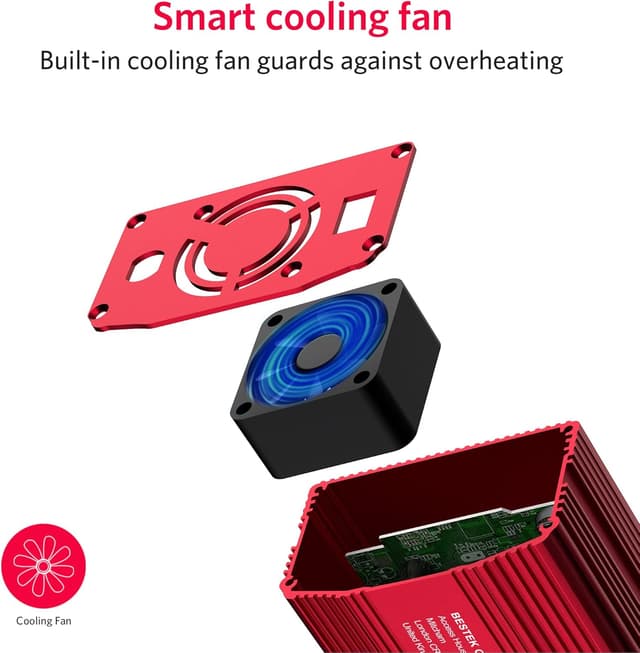
Also worth noting: the size is listed as 119×76×46mm, which reads as genuinely portable. Still, installation and placement depend on your vehicle setup and cable length—compact devices don’t remove the need for decent airflow and neat routing.
USB fast charging: PD20W + QC18W works like you’d expect
The inverter supports two fast charging protocols: PD20W on the USB-C port and QC18W on the USB-A port. The key practical detail is that each USB port outputs power independently, so you can charge multiple devices at the same time.
On a long drive, that’s often the difference between “everyone has a charger but nobody’s getting enough speed” and actually keeping passengers and navigation gear topped up.
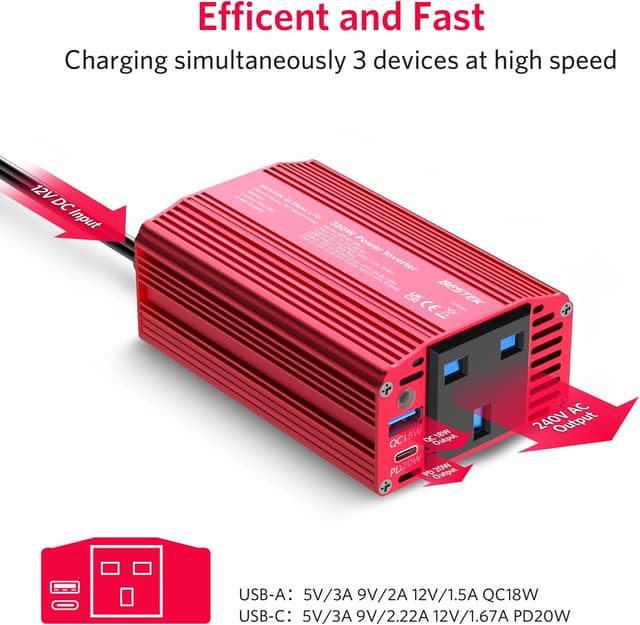
One small limitation to consider: your phone/tablet (or the device you plug in) needs to support the relevant fast-charging standard for you to see the full benefit. If it doesn’t, charging may be slower—so it’s worth checking your device specs before you assume PD/QC automatically means peak speed.
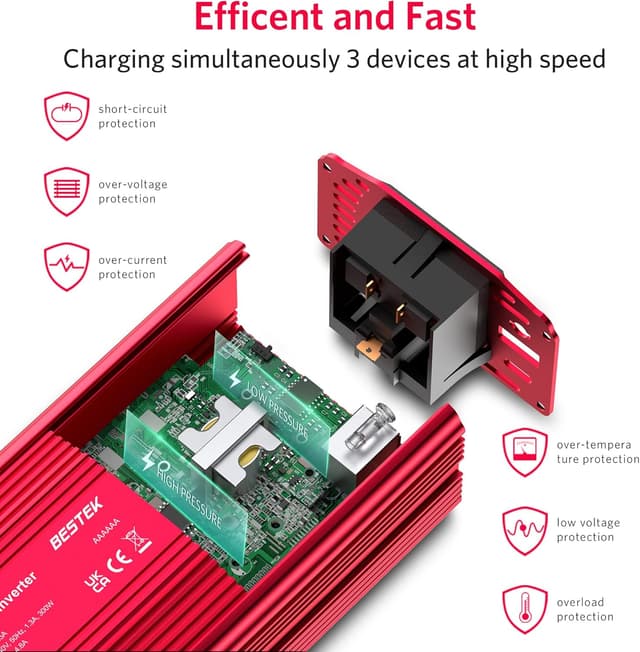
Safety and stability: fewer worries on paper
The product description highlights an efficient, stable circuit design with multiple protection mechanisms, specifically mentioning prevention against overvoltage, overcurrent, and overload. The intent is straightforward: keep the output voltage stable and reduce the risk of equipment damage or safety issues.
That’s reassuring, particularly for weekend use where you might be bouncing between locations and plugging/unplugging gear more than at home. It’s not a substitute for using common sense (for example, matching the inverter to your device needs), but it does add confidence to the concept.
Compact build and where it fits in your setup
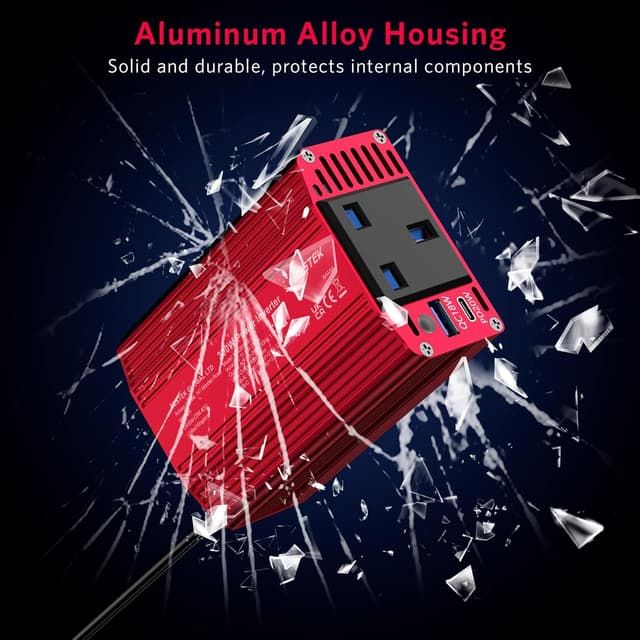
At 119×76×46mm, it’s aimed at being easy to carry and relatively easy to install. The description even points to practical placement in the car—such as in the central console or for passenger use behind the seat.
In terms of “value versus hassle”, this kind of size helps if you don’t want a permanent setup that dominates your boot. It also makes it more believable as a travel gadget for home/travel/camping scenarios, not just something you leave in the glovebox.
Still, installation isn’t always plug-and-play. You’ll want to ensure your car’s 12V outlet can supply what you need for your connected load, and that cables aren’t under strain.
What to look for before you buy
Before committing, it helps to sanity-check a few things:
1) Your devices’ power needs: since the output is rated at 300W, focus on devices that fit the inverter’s capacity and typical travel use. 2) How you plan to use the 3-pin socket: make sure the devices you want to plug in are compatible with the 3-pin format and are sensible candidates for inverter use. 3) Fast charging expectations: if you want PD20W/QC18W speed, check your phone/tablet supports those charging standards. 4) Space and placement: the compact size is a plus, but your vehicle layout and cable routing still matter.
Is it worth it?
A solid pick if you want a single car power converter that covers both 240V via a 3-pin socket and fast charging via PD20W USB-C and QC18W USB-A—especially for road trips, car-based charging, and camping-style setups where you don’t want to manage multiple chargers.
It may not be the best choice if you’re planning to run genuinely power-hungry appliances for extended periods, because 300W has to cover everything you plug in. You may also want to skip it if your main goal is charging only and you’re not interested in the flexibility of an AC 3-pin output—dedicated chargers can be simpler in those cases.
When it makes sense, it’s because the outputs are doing different jobs at the same time: USB for daily devices, 3-pin for the occasional mains-style need. That’s the practical sweet spot for this inverter.
Mini FAQ
Can this inverter charge multiple devices at once? Yes, the USB-C and USB-A ports are described as outputting independently, so multiple devices can be charged simultaneously.
Does it support fast charging? It supports PD20W on USB-C and QC18W on USB-A, though fast charging depends on your device supporting the relevant standard.
What does the 3-pin socket do? It provides a 3-pin AC-style connection for compatible devices, complementing the USB charging ports.
Is the 300W output enough for everyday travel gear? For typical charging and lower-wattage electronics, it’s designed for those kinds of uses. For higher power appliances, it could feel limiting—so check your devices’ needs first.