


AUTOUTLET 3-Way Toslink Optical Audio Splitter 1m
Product description
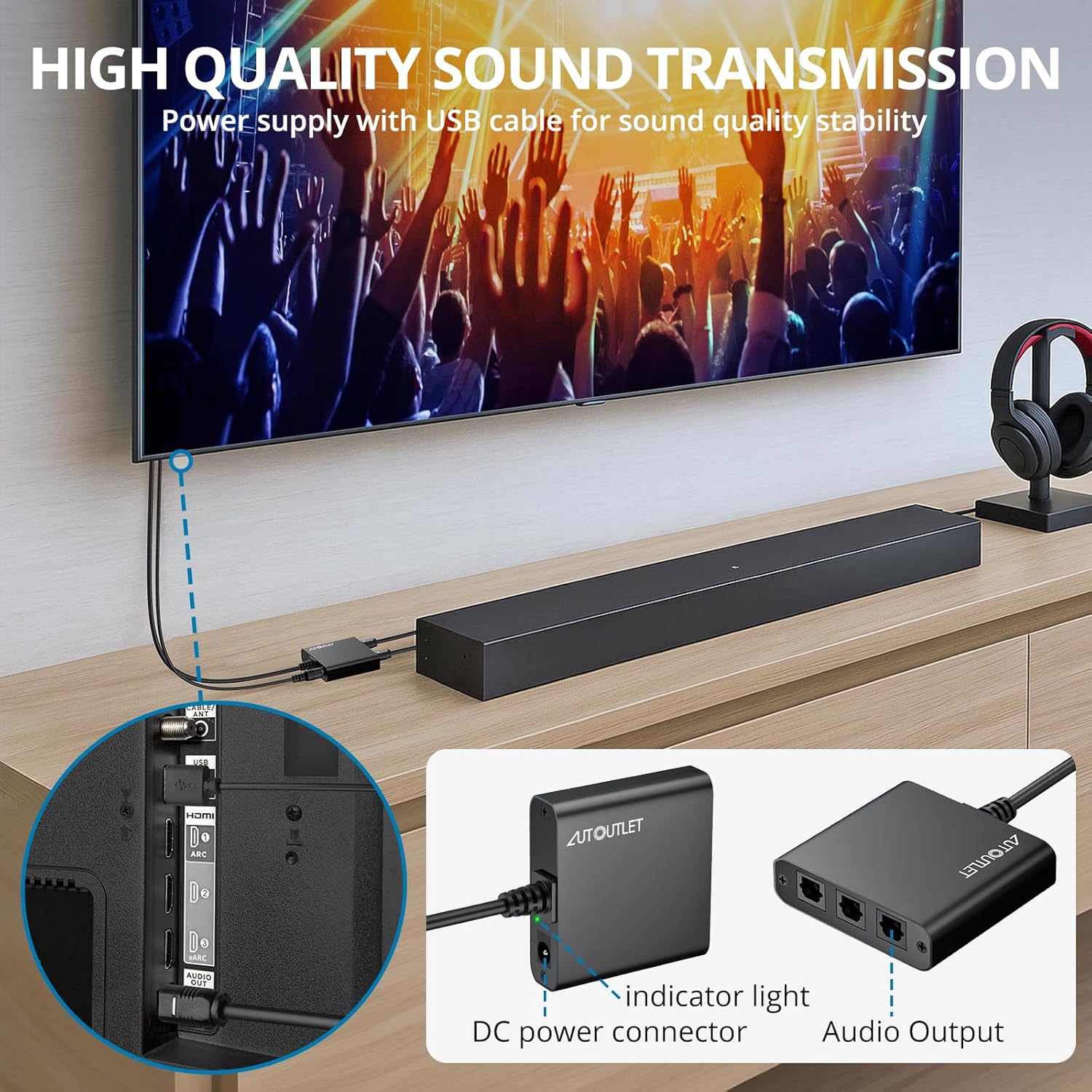
This optical audio splitter distributes a single Toslink signal to three outputs so you can route the same source to a soundbar, headphones and a secondary system at once. It is useful for living rooms and small home cinemas where one Blu-ray player or game console needs to feed multiple audio devices, and it includes a built-in cable for quicker setup. 🎧
Key Points
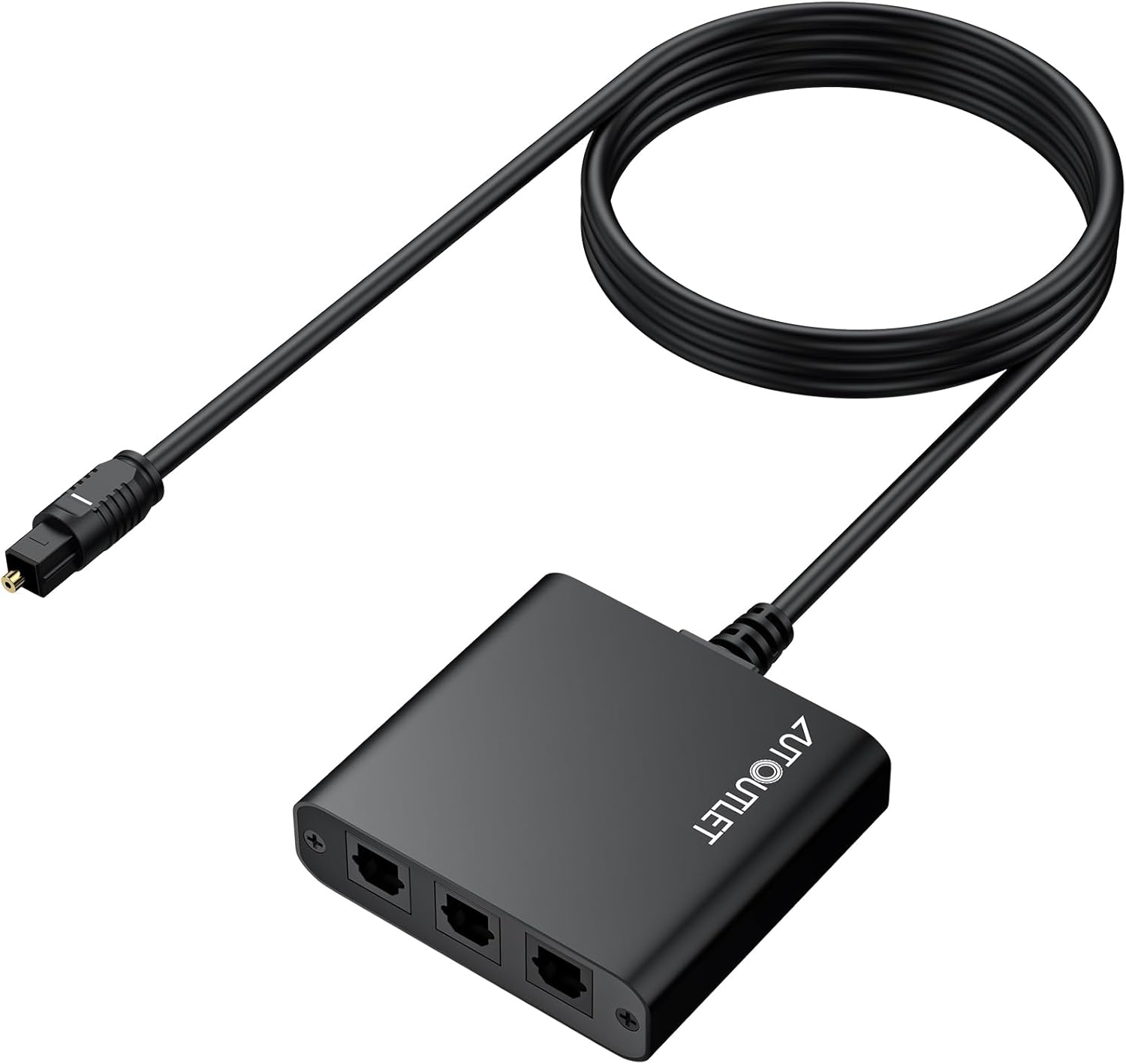
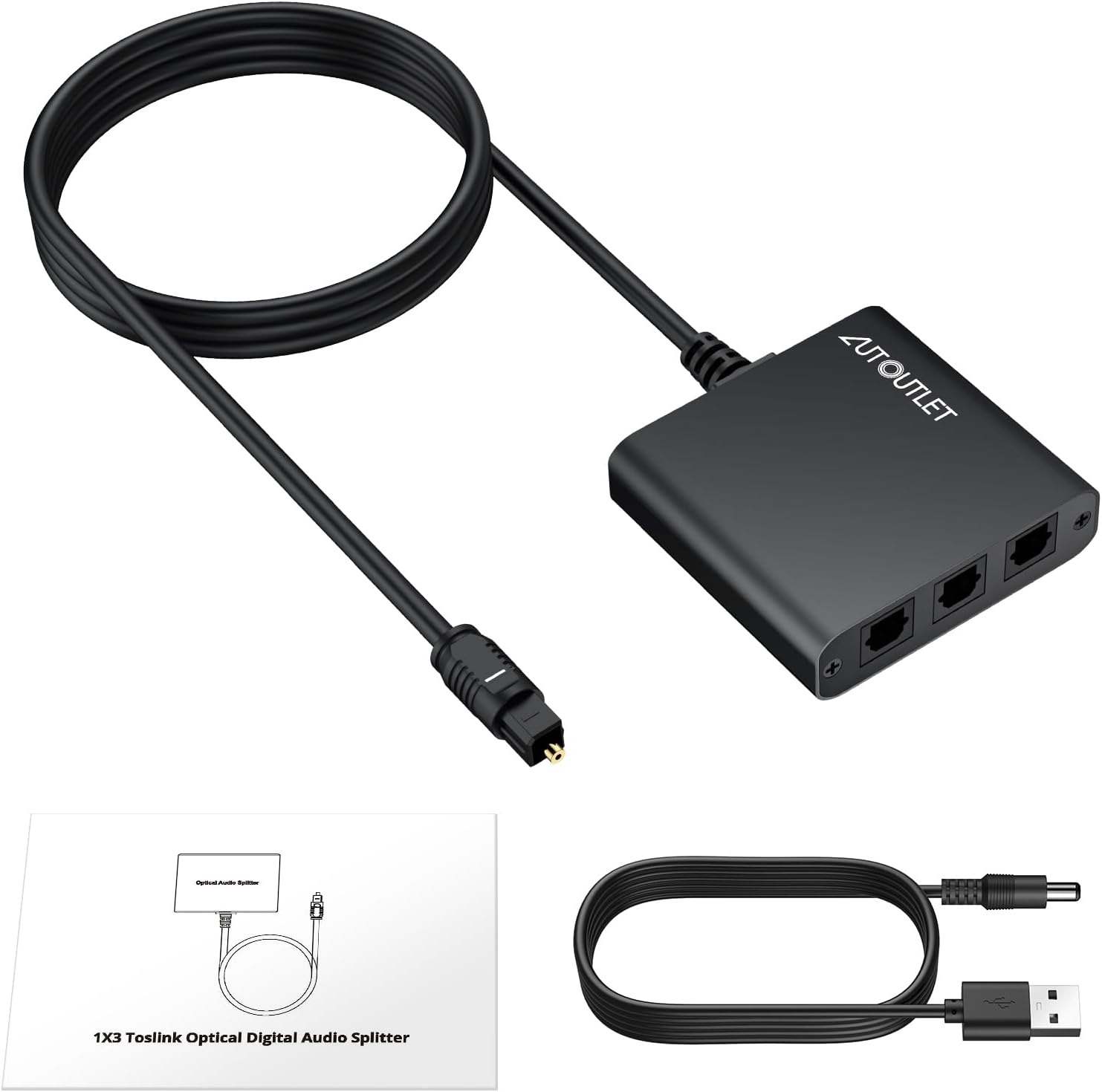
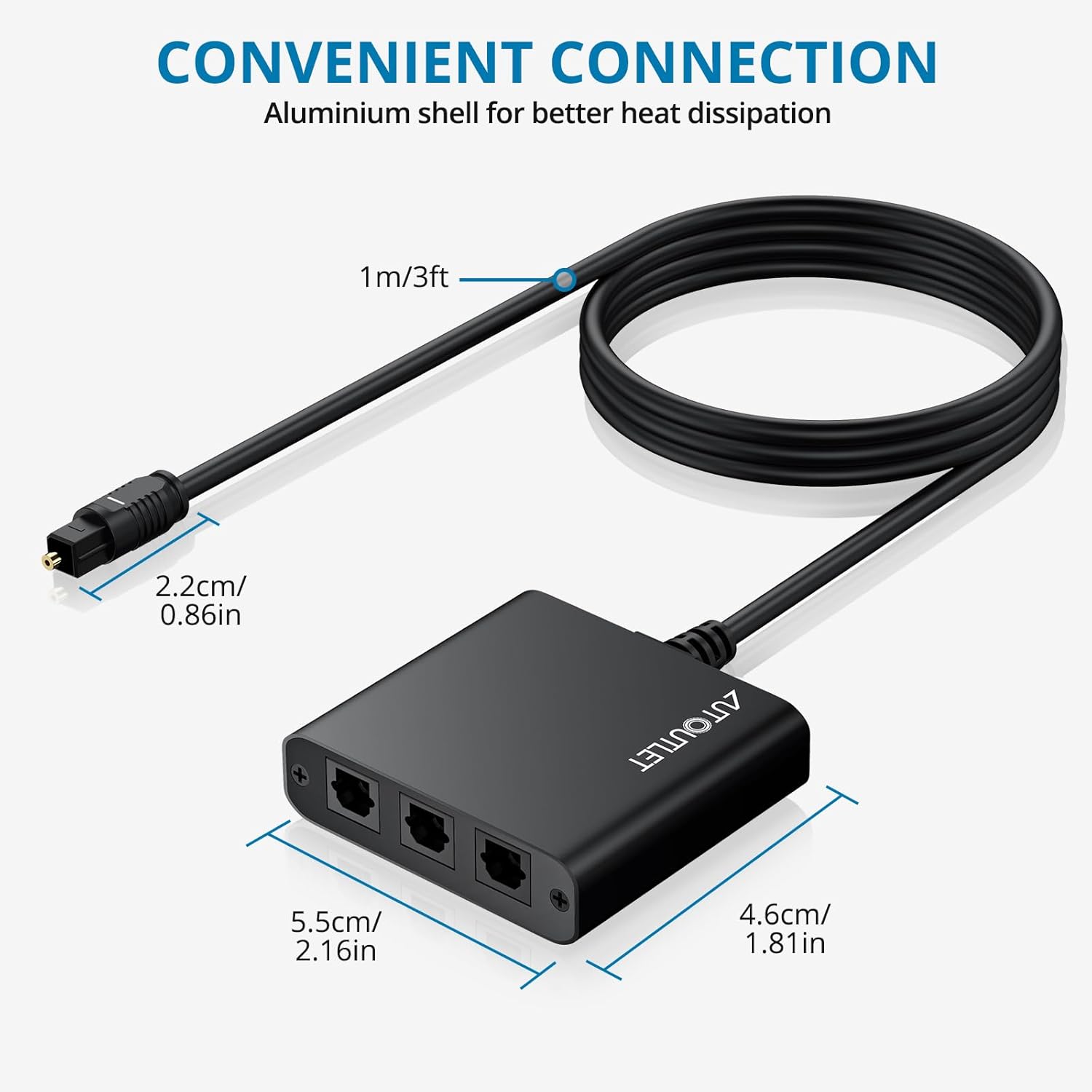
The unit accepts one male optical input and provides three female Toslink outputs, enabling simultaneous connection of several audio systems without constant swapping of cables. The built-in 1 metre cable saves a step when connecting a TV or console. The small footprint keeps the device discreet in crowded AV cabinets and makes it easy to move between rooms for temporary setups. Note that format handling is limited to common compressed and stereo streams, which may not cover advanced multichannel PCM formats according to the manufacturer. 🔌
Technical Specifications
- Name: AUTOUTLET 3-Way SPDIF Toslink Optical Digital Audio Splitter
- Input: 1 x Toslink male
- Outputs: 3 x Toslink female
- Built-in cable length: 1 m optical cable
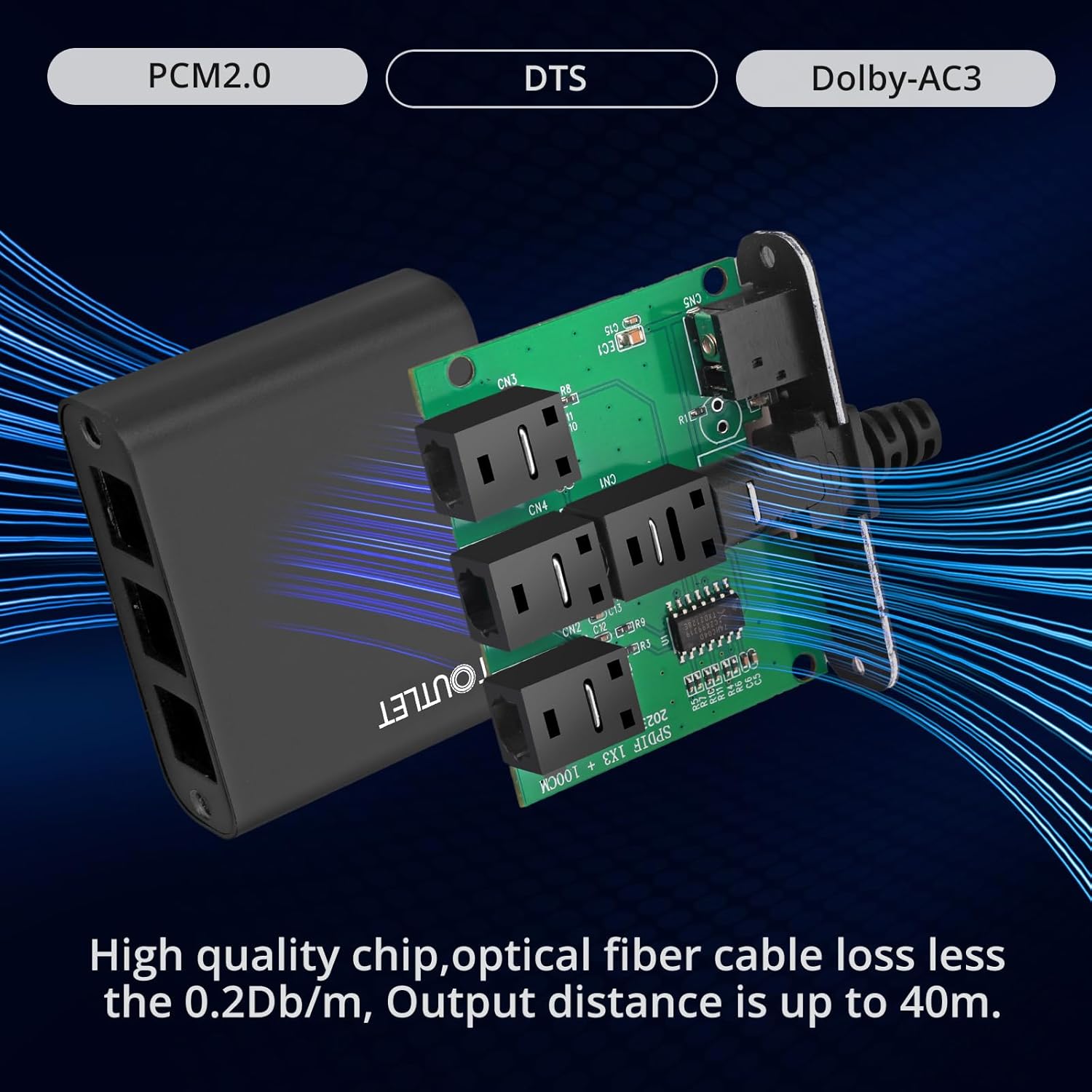
- Supported formats: LPCM 2.0, DTS, Dolby-AC3
- Signal loss: less than 0.2 dB/m (manufacturer claim)
Usage Recommendations
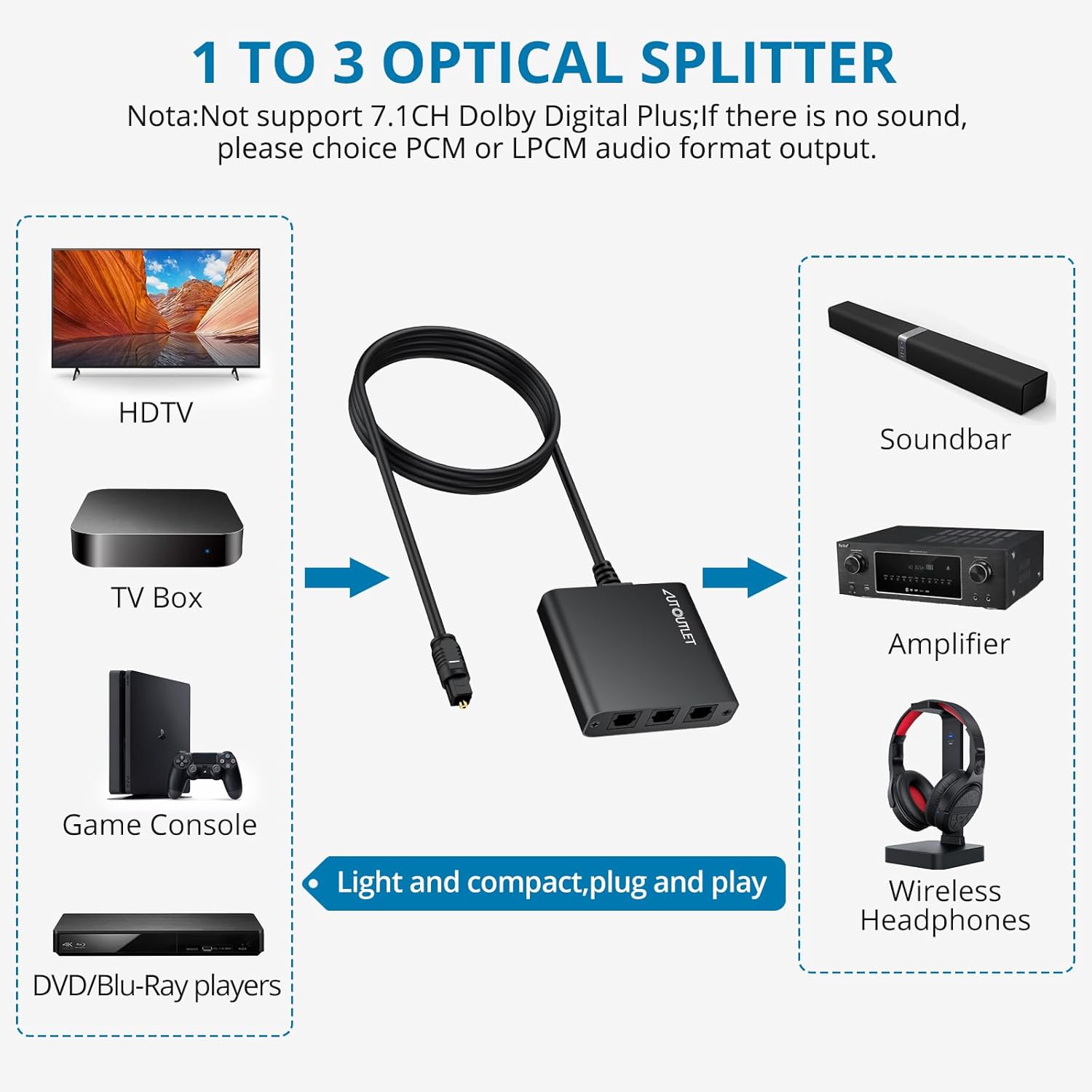
Place the splitter as close as practical to the source to reduce connector strain and to keep cable runs tidy. For longer distances between devices consider the stated signal loss so you can plan cable routing and avoid interference. If you are switching between devices frequently, label the outputs to match each connected device for faster identification. For gaming setups, ensure your console audio output is set to an accepted optical format so the splitter transmits sound correctly. 🎮
Advantages
This splitter allows one source to power multiple listening zones without an AV receiver or extra converters. It supports common formats used by films and games which helps maintain compatibility with most soundbars and home cinema equipment. The power indicator light helps confirm when the unit is active, which can save troubleshooting time when a device is not producing audio. Consider that it distributes the same signal to all outputs rather than providing independent streams, so volume and source selection remain controlled at the receiving devices.