

ATsafepro 1/2" Drive Torque Wrench 20–230 Nm
Product description
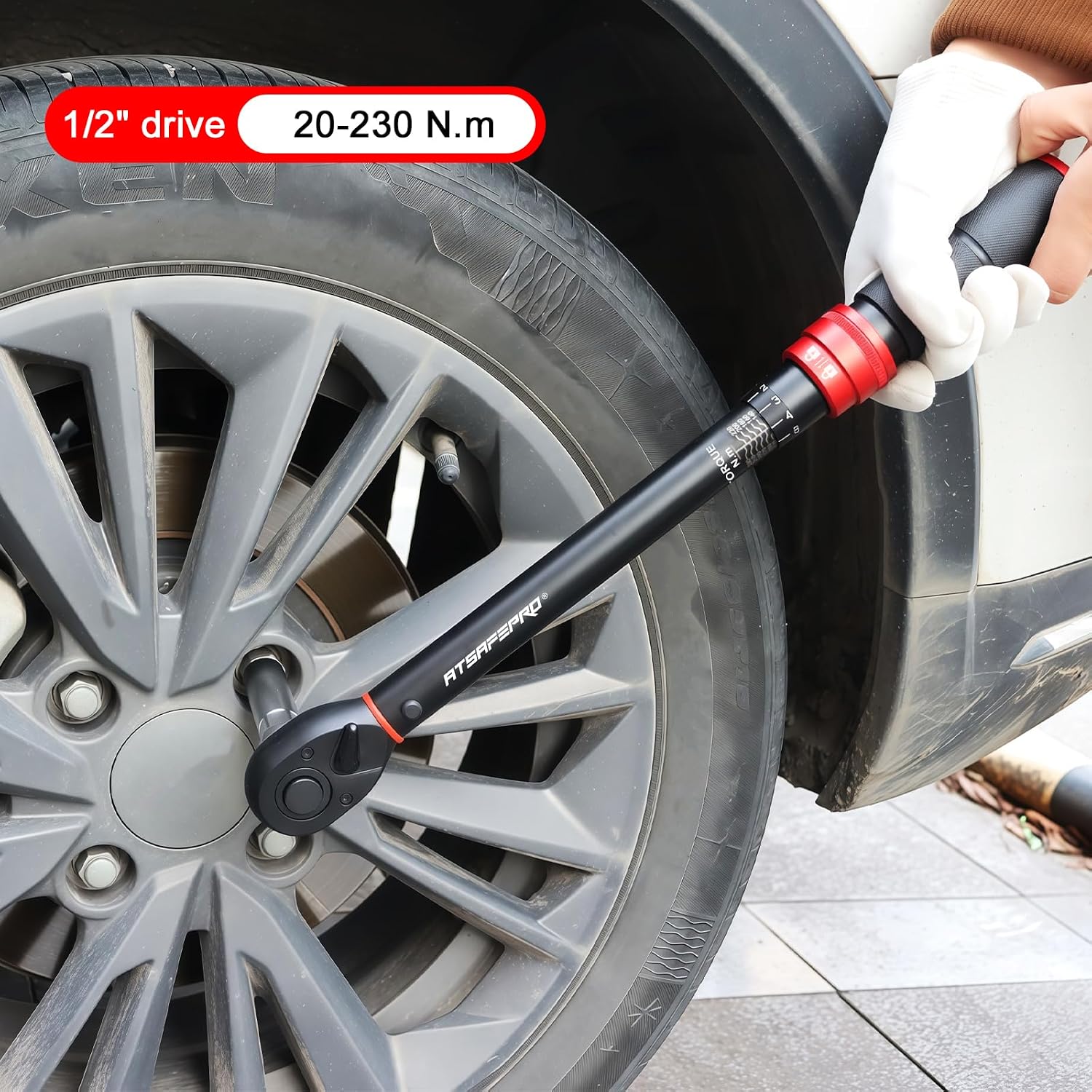
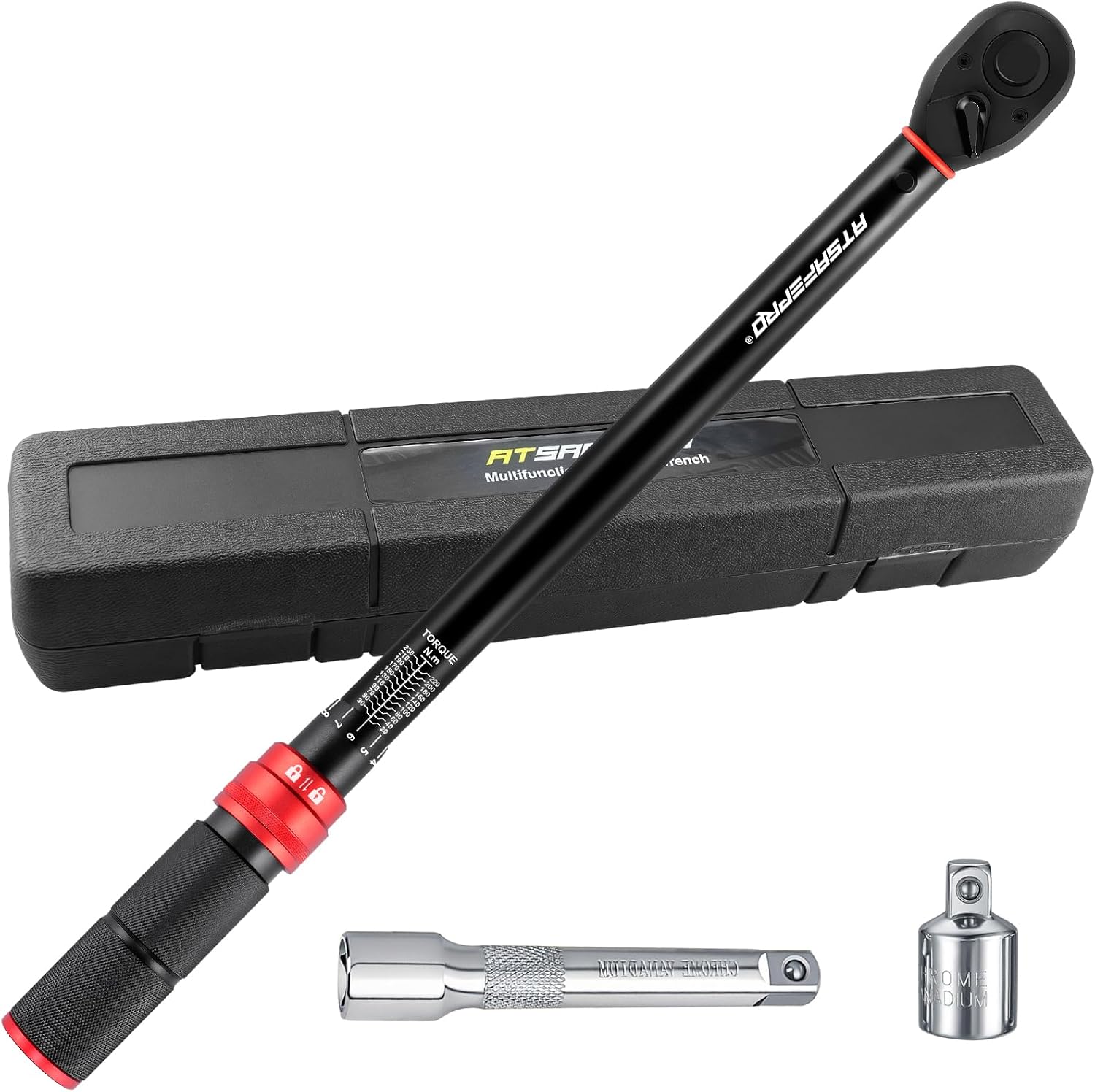
This 1/2" drive torque wrench set is built for workshop and roadside tasks where controlled tightening matters, offering a broad range up to 230 Nm for car wheels, motorcycles and light trucks. It combines a single high-precision ratchet wrench with an extension and a 1/2" to 3/8" adapter to make common maintenance jobs more flexible and straightforward.
Key Points
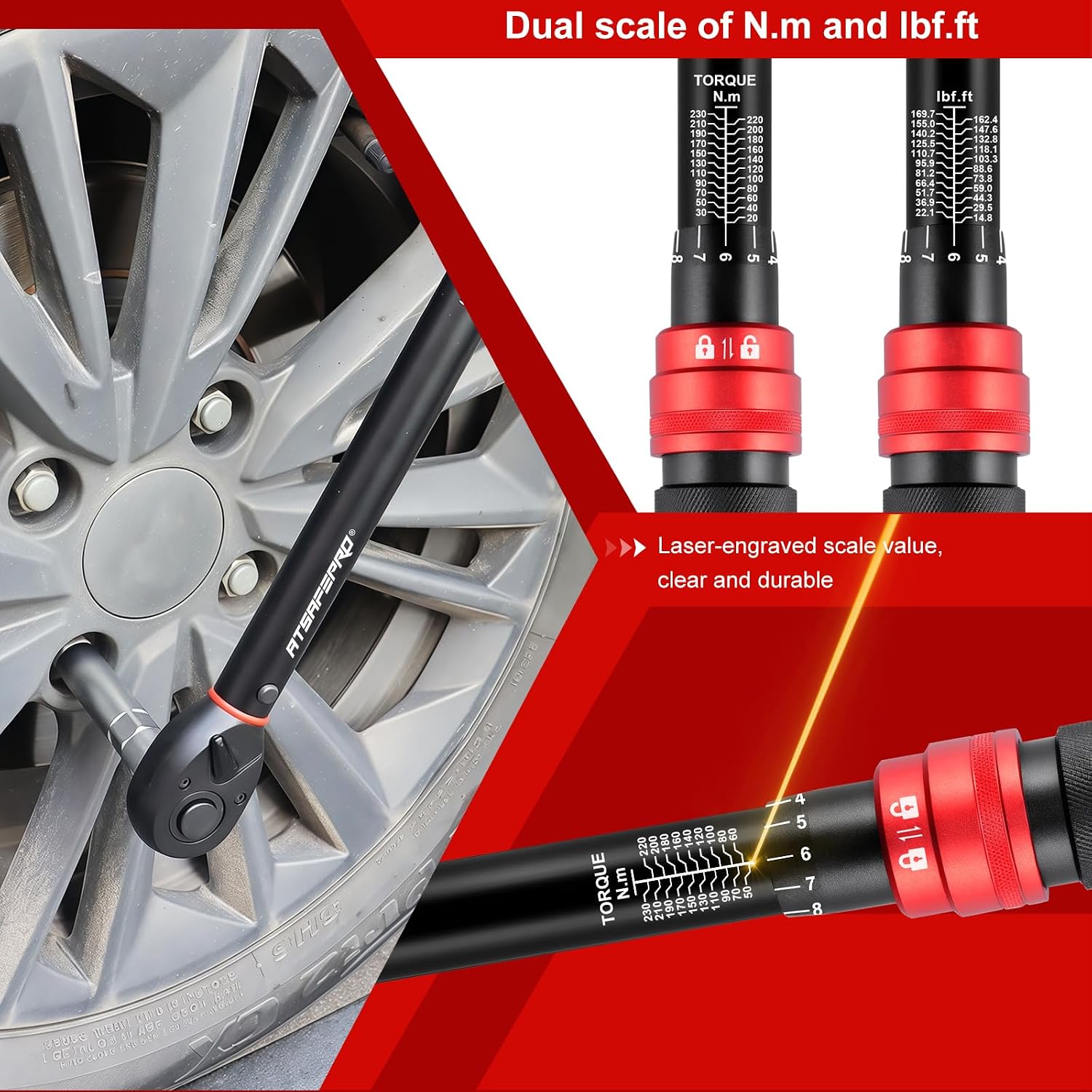
The set is designed to deliver repeatable torque with a clear audible and tactile click when the preset value is reached, helping to avoid overtightening. The handle and body use chrome-vanadium steel with a corrosion-resistant finish and laser-etched dual scales in Nm and lbf·ft that remain legible with frequent use. ⚙️
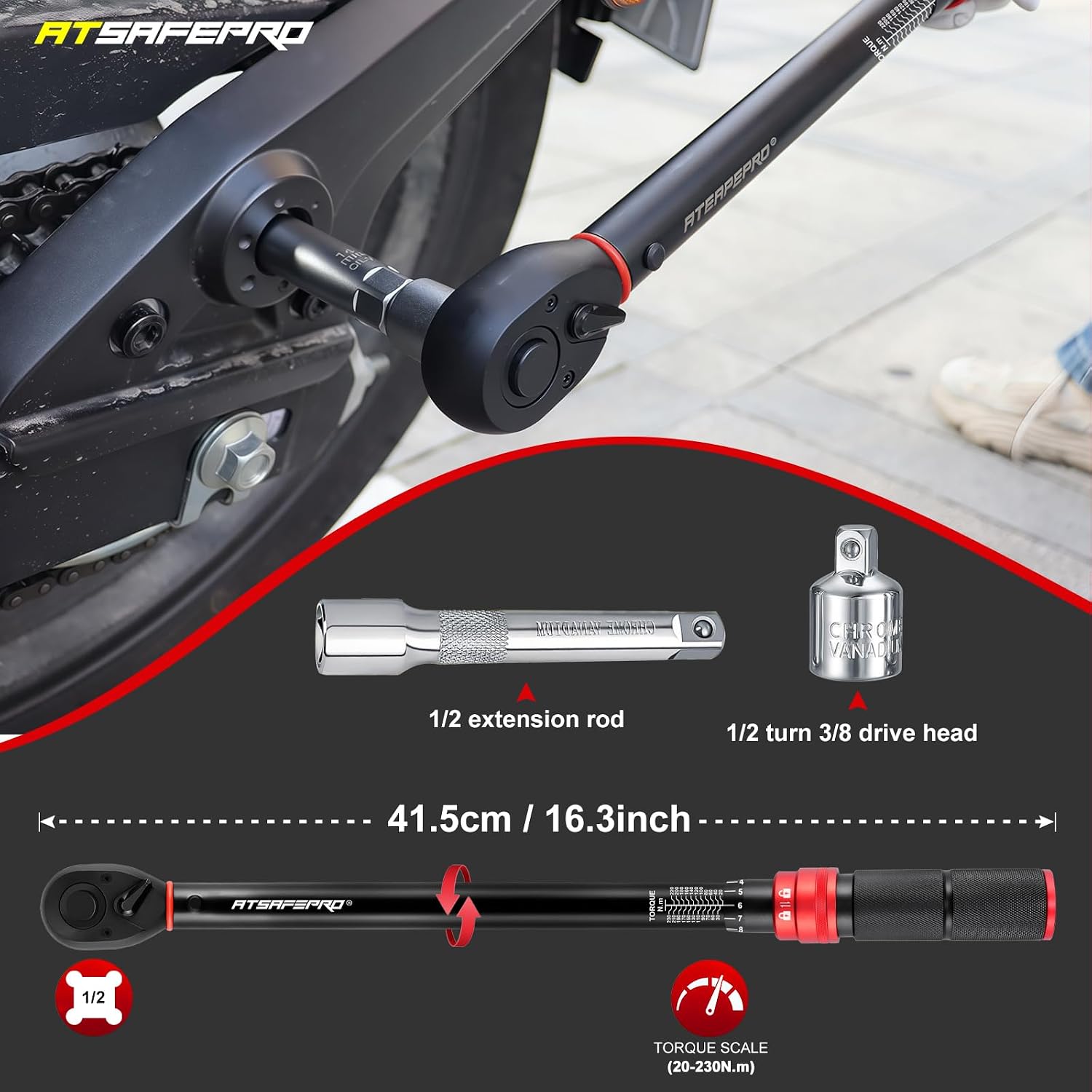
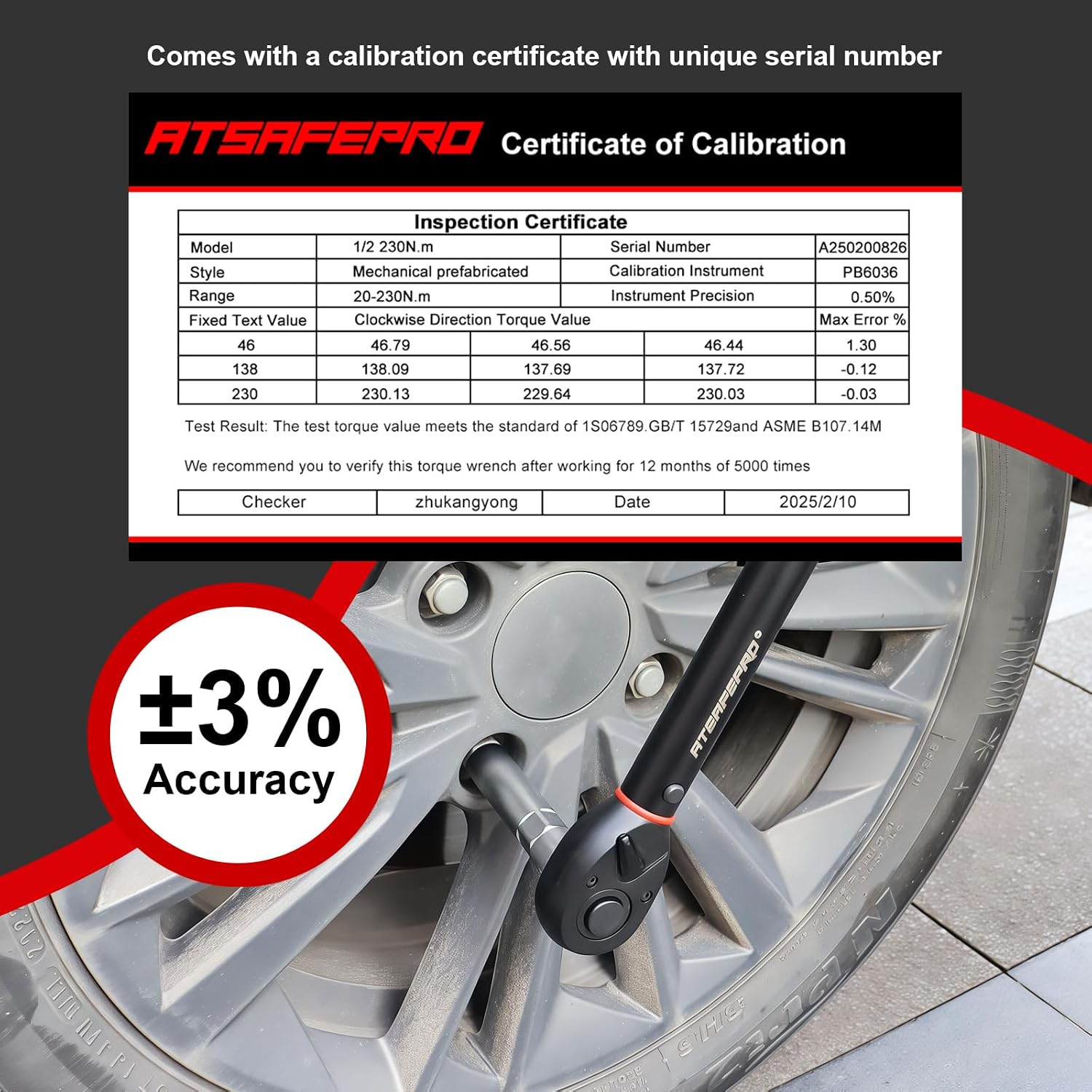
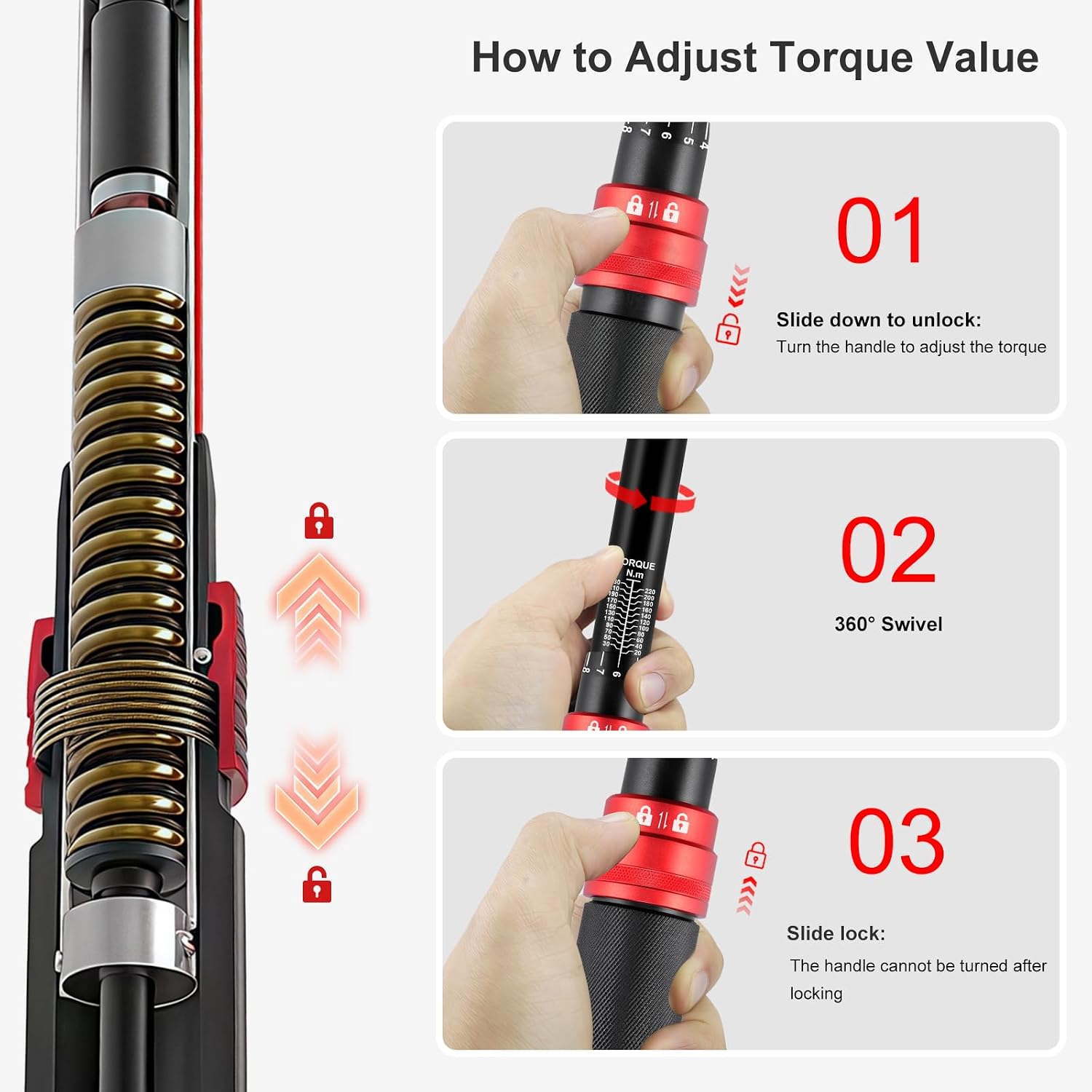
Adjustment is bidirectional, so the torque wrench can be used for both tightening and loosening operations by changing the ratchet direction. The manufacturer supplies individual calibration certificates with each unit, which supports traceability and workshop quality control. 🔧
Consider that the useful range begins at 20 Nm and goes up to 230 Nm, so very low-torque fastenings below 20 Nm are outside this tool’s calibrated window and may require a smaller torque wrench according to the manufacturer.
Technical Specifications
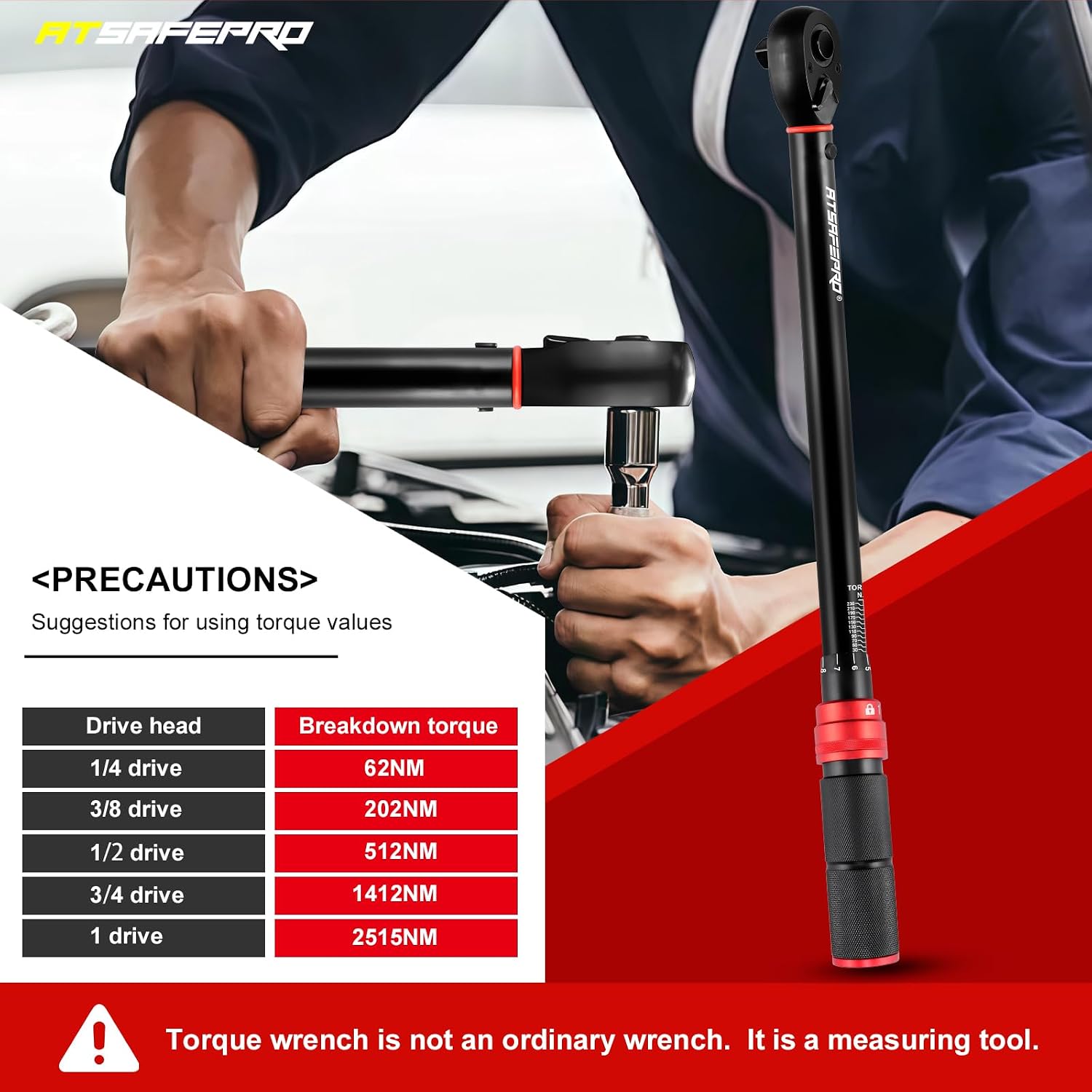
- Name: ATsafepro 1/2" Drive Torque Wrench Set
- Torque range: 20–230 Nm / 14.8–169.7 lbf·ft
- Accuracy: ± 3% (manufacturer stated)
- Drive size and accessories: 1/2" drive wrench, 1/2" to 3/8" adapter, extension bar
- Teeth: 72-tooth ratchet mechanism
Usage Recommendations
For wheel nuts, engine components and general vehicle maintenance this wrench covers most common torque values used on cars and SUVs. Use the audible click as your stop signal and apply force steadily rather than with sudden jerks for best results. For assembly tasks requiring very fine torque increments below 20 Nm or electronic torque logging, pair this set with a smaller torque wrench or a digital torque analyser. 🛠️
When not in use adjust the setting to the minimum torque to relieve spring tension and help prolong the life of the mechanism. Periodic recalibration is advisable if the wrench is used heavily or after impacts, as accuracy is essential for safety-critical fastenings.