Astronomy Telescope 90mm Refractor for Beginners 📷

Description:
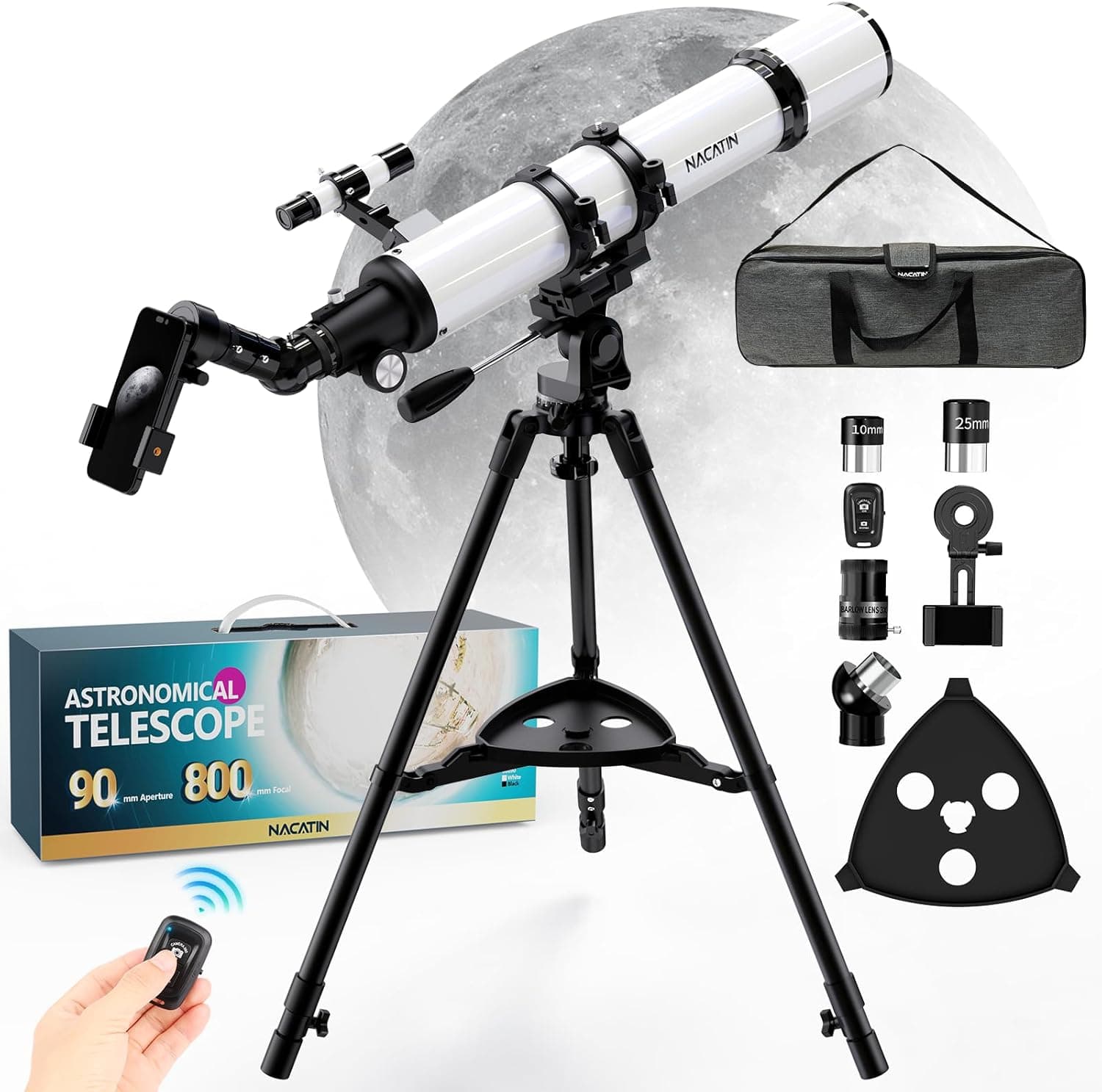
This 90 mm refractor telescope from NACATIN is a portable entry-level instrument designed to bring clear views of the Moon, planets and brighter deep-sky objects to beginners and casual observers. With an 800 mm focal length it balances magnification and field of view, making it suitable for lunar observation, planetary detail and basic stargazing sessions in suburban skies.
Key Points
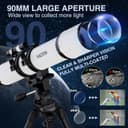
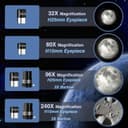
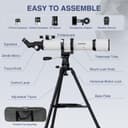
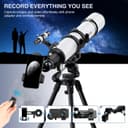
The optical configuration is a refractor with a 90 mm aperture and 800 mm focal length, which gives useful light-gathering for detailed lunar and planetary views. The set includes a tripod made of iron and an adjustable mount that keeps the tube steady during observation, so a simple setup is possible at parks or in the garden. Also supplied are eyepieces covering a magnification range from 32x up to 240x using the included lenses and Barlow options, and a phone adapter is provided to capture images through the eyepiece for simple astrophotography. A lightweight backpack allows easy transport and protected storage when moving the kit between observing sites.
Technical Specifications
- Name: NACATIN 90 mm Refractor 800 mm
- Aperture: 90 mm
- Focal length: 800 mm
- Magnification range: 32x–240x
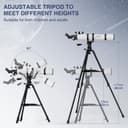
- Mount/tripod: Iron tripod with adjustable head
- Accessories: Phone adapter, backpack, multiple eyepieces
Benefits
Eyepiece choices and the focal ratio deliver relatively sharp, high-contrast views of the lunar surface and the brighter planets. The 90 mm aperture gathers enough light to reveal cloud bands on Jupiter and rings of Saturn in decent seeing conditions, according to the manufacturer. The included phone adapter makes it straightforward to take casual images with a smartphone, which is convenient for sharing moments or documenting progress as skills improve.
The iron tripod provides added stability compared with very light camera-style tripods. Stability helps when using higher magnifications where small hand movements would otherwise spoil the view. The backpack and compact design also make the telescope a good option for someone who wants to carry gear to a local dark-sky site or store it without taking much space.
Usage Recommendations
For best results, allow the telescope to thermally acclimatise after moving it outdoors for 20–30 minutes, especially if it has been stored in a warm room. Start observing with the lowest-power eyepiece to locate targets and then increase magnification gradually as conditions permit. Use the phone adapter in a stable position and avoid touching the phone while capturing images to reduce blur. Note that in heavily light-polluted areas deep-sky performance will be limited and planetary and lunar observing will generally deliver the most satisfying views.