


ANCEL BA301 6V/12V Car Battery Tester & Charging System Test Tool (100–2000 CCA)
Product description
The essentials
If you want a practical way to check whether a battery is really struggling (rather than guessing), the ANCEL BA301 is built around quick load and charging-system testing for 6V and 12V lead-acid batteries. On paper, it aims to cover a lot of common battery types and vehicle use cases with one tool: cars, motorcycles, light trucks, boats and more.
It’s also more than a simple “read the voltage” gadget. The BA301 is positioned as a digital load tester that can look at cranking performance and alternator charging conditions, and then show the results in a clear, colour-coded way. There’s even a one-touch “WAVEFORM” function that records voltage changes during ignition so you can see what’s happening instead of relying only on a single number.
That said, it’s not perfect for every situation. If you mainly need a basic voltage check, you might find something simpler does the job with less fuss. And if your priority is deep fault diagnosis, remember the accuracy still depends on selecting the correct battery type, standard, and rating before testing.
What it does for battery health and starting/charging
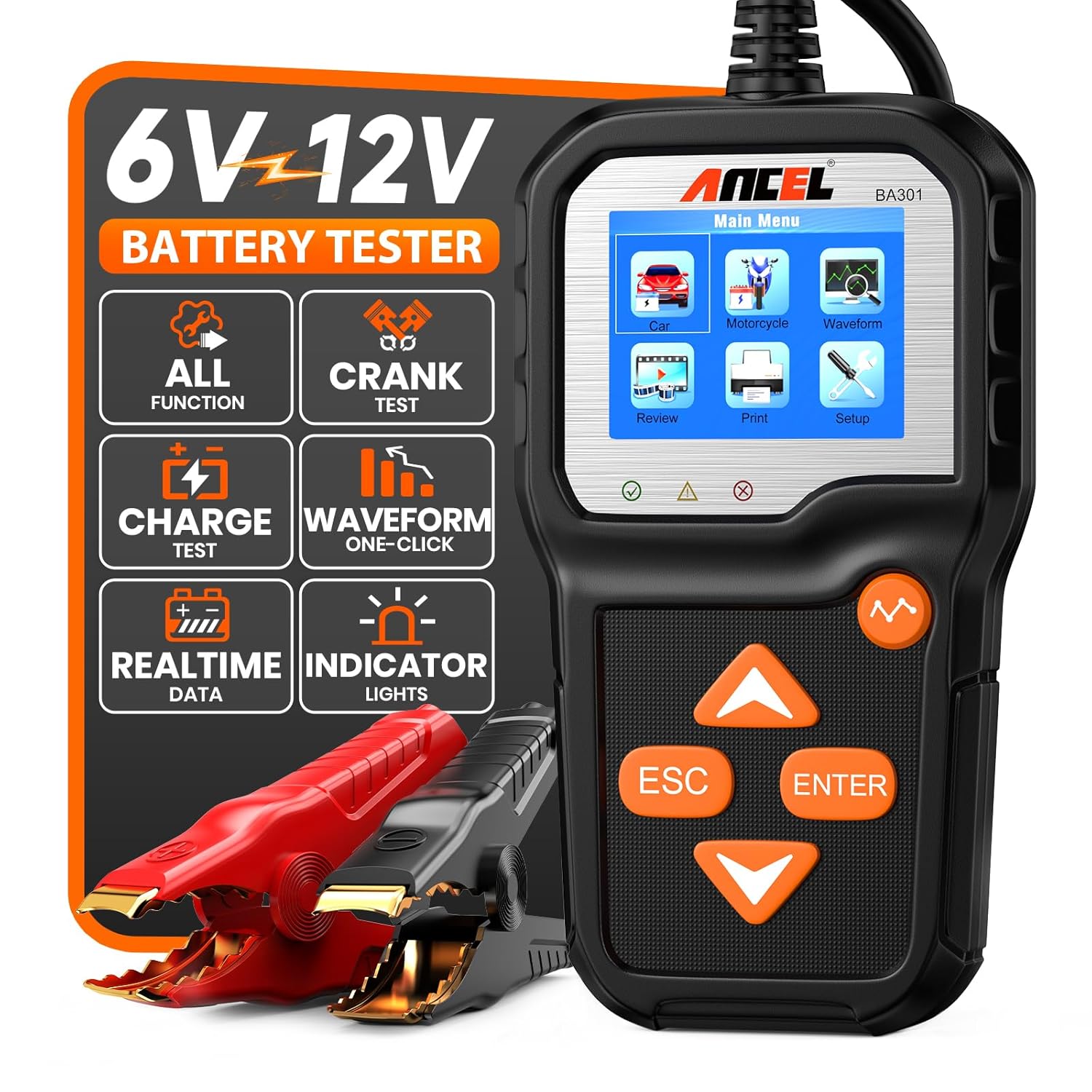
The BA301’s core promise is straightforward: you can test battery health and help determine whether it’s time to replace it, and you can also assess starting and charging system behaviour.
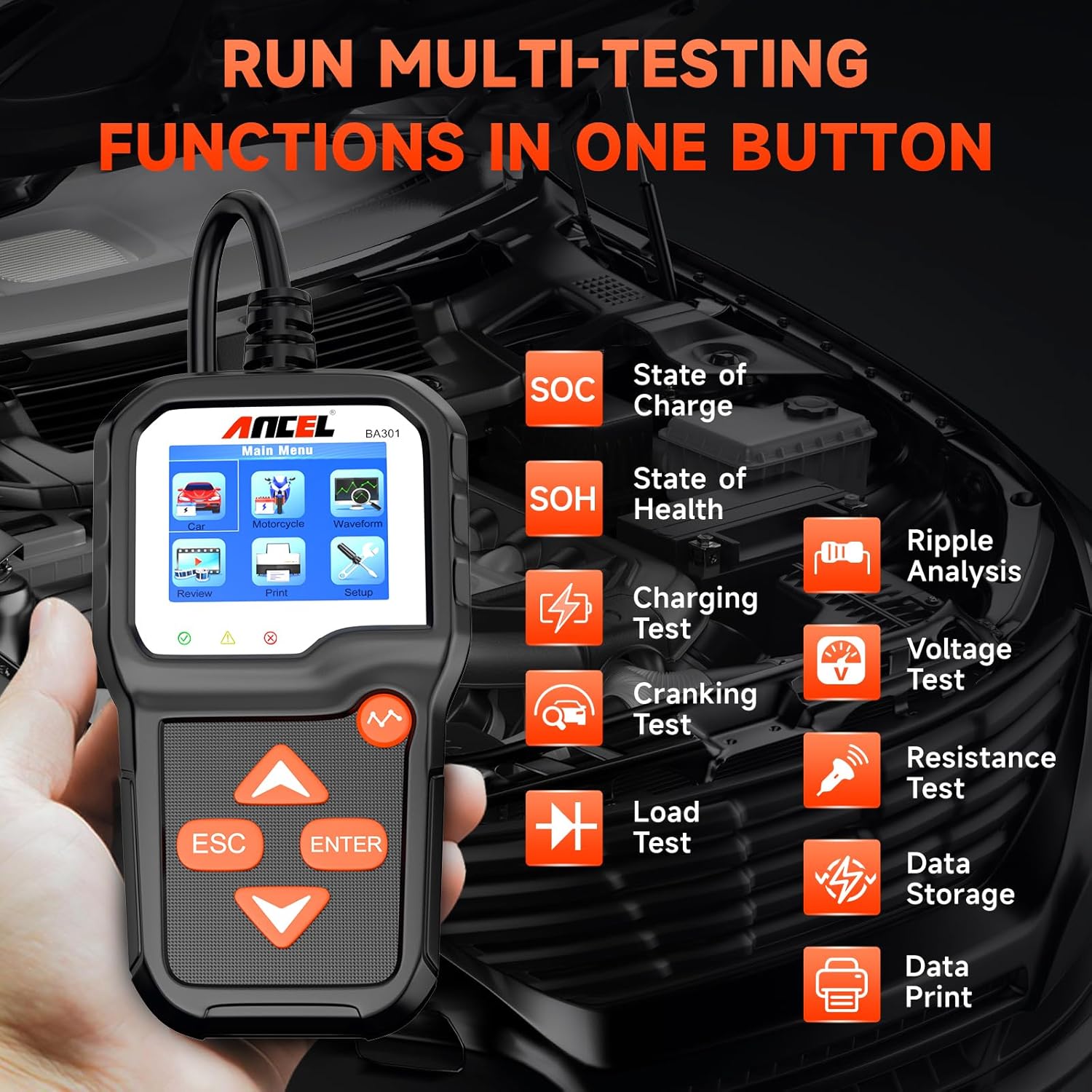
From a buyer’s point of view, this matters because real problems often hide in the “in between” readings. A battery might show reasonable voltage yet struggle under load when the starter draws power, or the alternator might not be charging consistently. The BA301 is designed to measure starting-related values (including starting voltage, time and status, as described) and alternator health (including load/unload voltage, ripple, and charging status, as described) in seconds.
Waveform view: the standout feature
One of the more interesting elements is the one-click “WAVEFORM” function. Rather than giving only a static result, it graphically records voltage changes during ignition—current voltage, maximum voltage and minimum voltage (as stated). That can make the battery’s health status easier to interpret at a glance.
In real-world terms, imagine you’re checking a vehicle that cranks slowly and sometimes feels “fine” until you try to start it. With the waveform view, you’re effectively looking at how the battery behaves under the stress of ignition, which is often the difference between “it reads okay” and “it’s actually struggling”.
Worth noting: to get meaningful results, the tester asks you to ensure the battery type, standard and rating are correct. If those selections are off, the reading won’t be as trustworthy.
Battery coverage: what it’s meant to handle
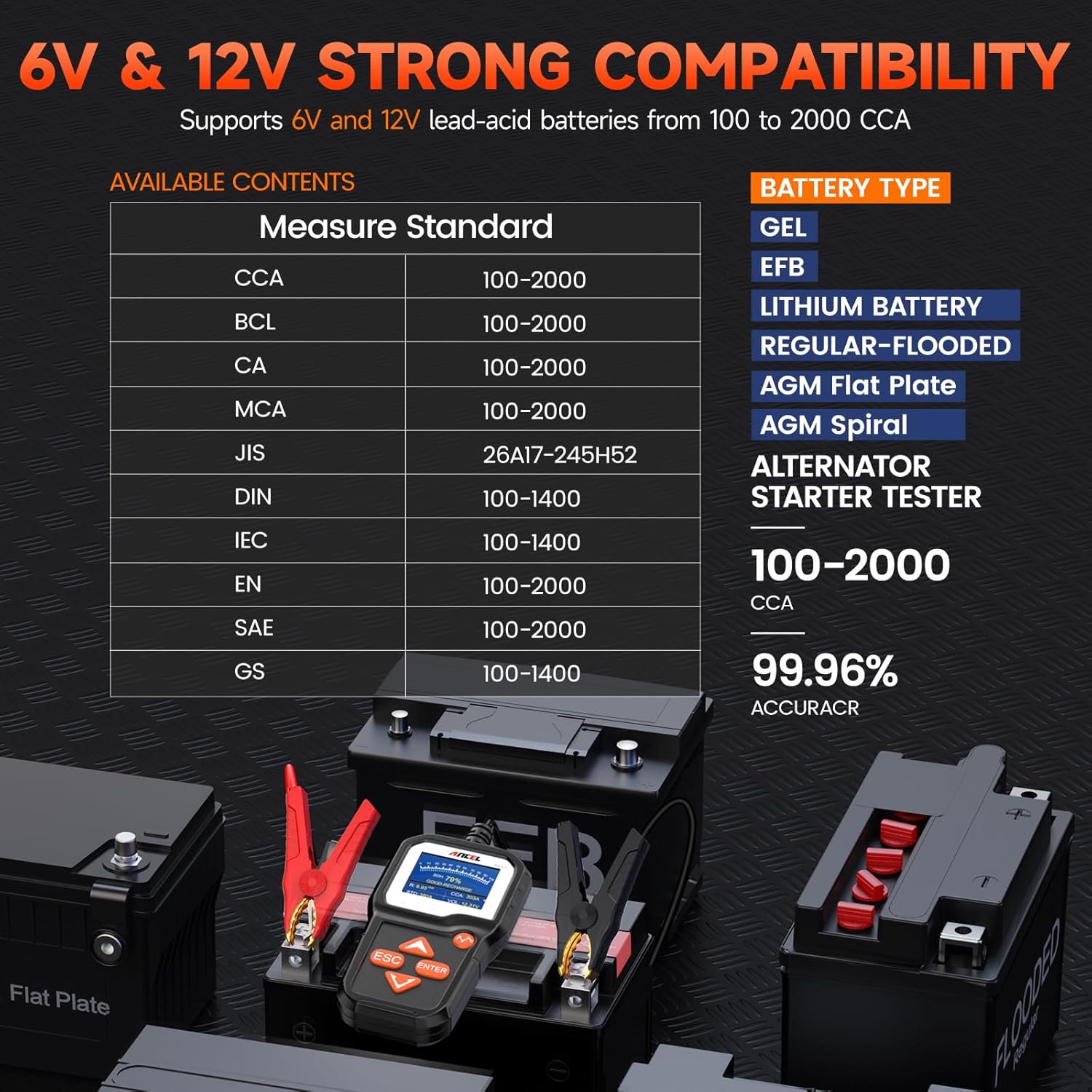
According to the information provided, the BA301 supports 6V and 12V lead-acid batteries with a stated range of 100–2000 CCA. It’s described as compatible with regular flooded, AGM flat plate, AGM spiral, GEL, EFB batteries—and it even mentions lithium car batteries.
That broad “one tool” approach is where it earns its keep, especially if you look after different vehicles or carry out routine checks across a fleet of machines like cars, motorcycles, boats or lawn equipment. The tool is also described for alternator and starter-related testing, so it’s not limited purely to battery replacement decisions.
However, coverage on paper doesn’t always remove all doubt in the garage. If you’re working with a battery chemistry or specification that isn’t straightforward, it becomes extra important to match the tester’s required battery details to your battery’s markings.
Key takeaways on usability and safety

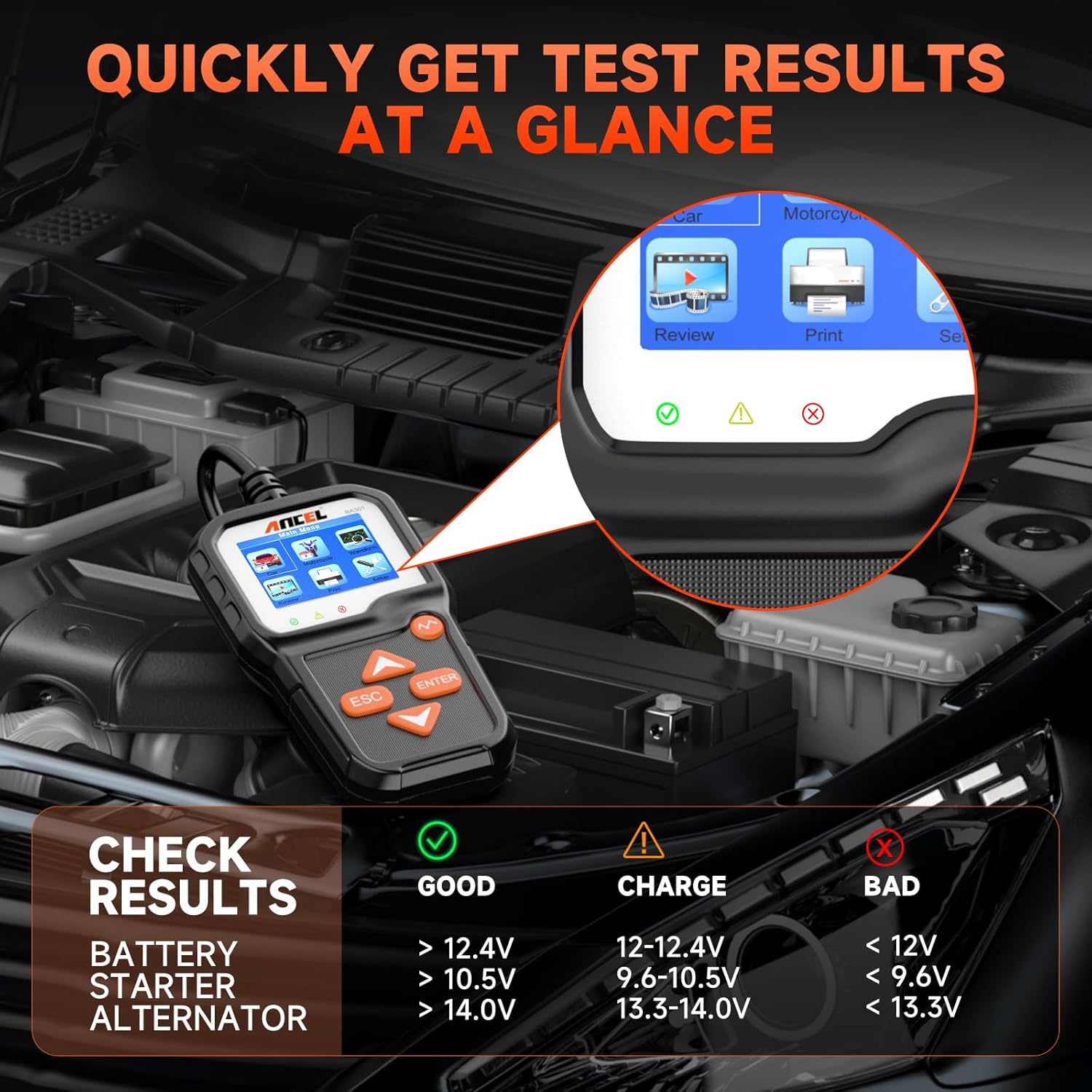
The BA301 leans towards being easy to interpret. It uses three LED lights—GREEN, YELLOW and RED—to represent different health statuses. That’s useful when you’re testing more than one battery and don’t want to squint at numbers every time.
It also includes the ability to store, review and transfer test results to a computer for printing and further analysis, which could be handy if you’re keeping records or comparing results over time.
On safety, the tester is described with a high-quality safety copper clip, reverse polarity protection and arc protection, overvoltage protection and automatic temperature compensation. In practice, these protections matter because battery testing is exactly the sort of task where you want the connection to be stable and the risk of mishandling kept low.
Is it worth it?
It’s a solid pick if you want a 6V/12V digital battery tester that also checks cranking and charging system behaviour, not just idle voltage. The waveform function and the colour-coded LED health status make it easier to interpret results quickly, and the 100–2000 CCA range (as stated) gives it a broad fit for many typical automotive batteries.
You may want to skip it if you only need very basic battery checks, because a simpler tester could be enough and this one is clearly aiming at more detailed diagnostics. It might not be a great match if you’re not comfortable inputting the correct battery type/standard/rating before testing—since the guidance specifically says accurate results depend on those selections.
Who it suits most: DIY vehicle owners, mechanics’ helpers, and anyone who maintains multiple vehicles and wants more confidence around “replace or not?” decisions.
Who should avoid: buyers looking for a quick voltmeter-style tool, or anyone who expects it to diagnose every underlying electrical fault without needing proper setup.

Mini FAQ
Can it test both 6V and 12V batteries?
Yes. It’s described as a 6V and 12V battery tester, designed for lead-acid batteries within the stated 100–2000 CCA range.
Does it only test the battery, or also the charging system?
It’s intended for both. The description mentions cranking/start performance checks and alternator charging condition analysis.
What is the “WAVEFORM” function used for?
It records voltage changes during ignition (current, maximum and minimum voltage as described) so you can view battery behaviour more clearly.
How are results shown?
The tester uses three LED lights in GREEN, YELLOW and RED to represent battery health status.
Does it include safety features?
Yes. The description mentions reverse polarity protection and arc protection, overvoltage protection and automatic temperature compensation.