

Amazon Basics 1/4 inch (6.35 mm) Noiseless Straight-to-Right-Angle Instrument Cable, Tweed Braided Cloth Jacket, 10 ft/3 m
Product description
If you’re fed up with cables that pick up noise or feel awkward to route, this amazon Basics straight-to-right-angle instrument auxiliary cable is designed to make day-to-day setups more straightforward. On paper, it leans into cleaner signal transmission, plus shielding aimed at reducing outside interference.
The right-angle end is the kind of small detail that can save you hassle behind an amp, on a crowded pedalboard, or when space is tight at the back of a keyboard. That said, whether it’s the right choice depends a lot on what you’re trying to connect and how noisy your environment is.
The essentials
This is a 6.35 mm (1/4 inch) auxiliary instrument cable with straight-to-right-angle 1/4 inch connectors, built for electric guitars, basses and keyboards. Amazon Basics positions it as a “noiseless” option, and the construction details support that idea: a 23 AWG oxygen-free copper (OFC) centre conductor, plus shielding intended to block interference.
The outer jacket is a braided yellow-and-brown tweed-cloth style, which should feel more robust than basic plastic coverings. It also sounds like the sort of cable you’d want if you’re rolling it up regularly, leaving it set up for rehearsals, or moving gear around between rooms.
What matters for clearer sound
The two technical claims most relevant to sound quality are the oxygen-free copper (OFC) centre conductor and the interference shielding.
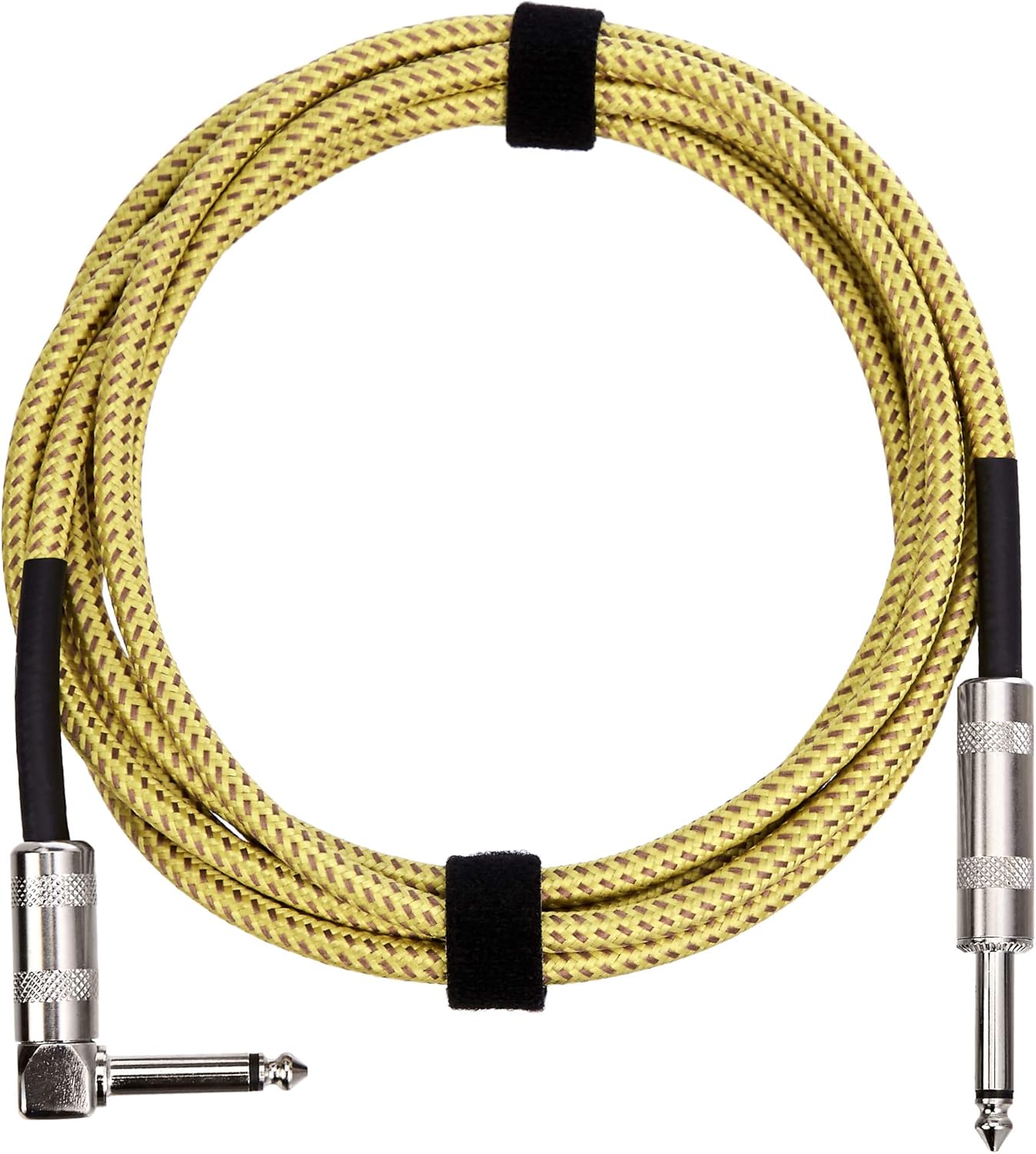
- 23 AWG OFC centre conductor: In practice, this is about maintaining signal integrity rather than introducing extra loss or instability.
- OFC spiral shield and conductive PVC shield: The intent is interference blockade, so you get clearer and more uninterrupted sound transmission when external sources are around.
A sensible way to think about it: if your current cable setup is already fairly quiet, you may not hear miracles. But if you’ve ever noticed hum, buzz, or “hash” creeping into the signal when cables cross power leads or sit near other electronics, this kind of shielding-focused build is at least aiming at the right problem.
The build and everyday handling
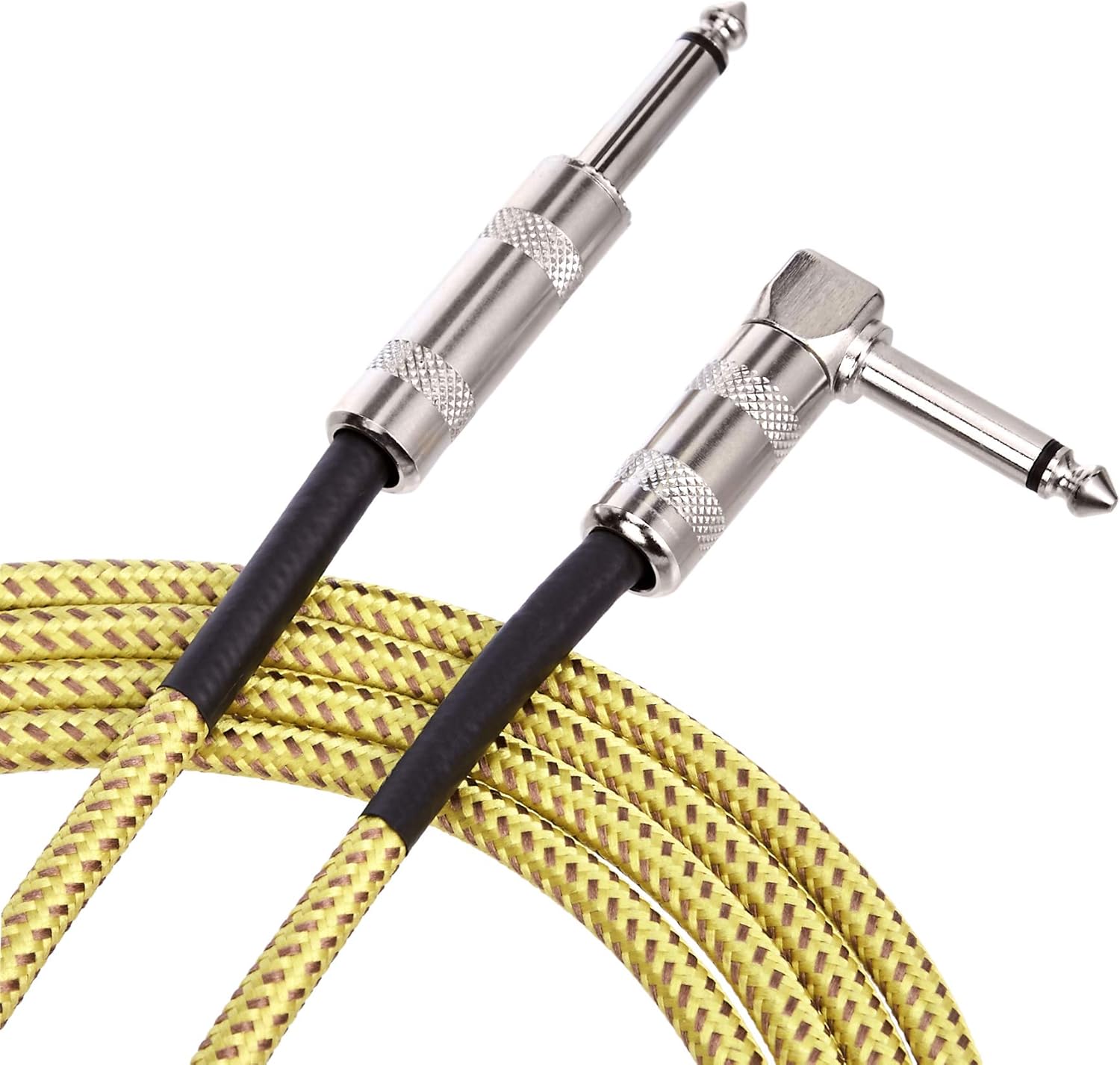
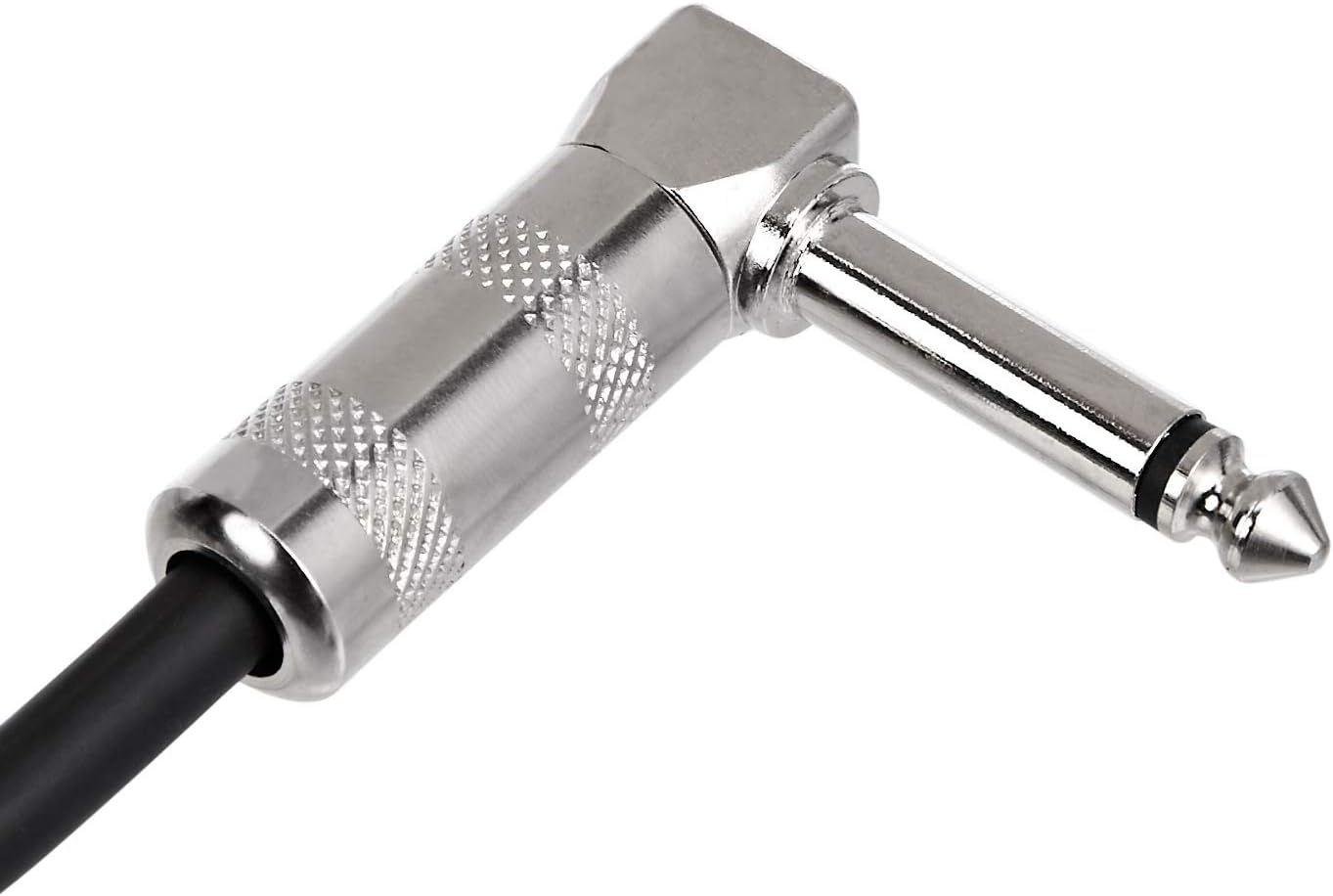
A cable that’s easy to live with is often the one you actually use. Here, the straight-to-right-angle connectors are the obvious convenience. They’re meant to help you plug in more cleanly when the port on your amp or keyboard is hard to reach, or when you need the cable to sit flatter rather than sticking out at an awkward angle.
The braided tweed-cloth outer jacket is also a practical touch. It’s described as giving reliable strength and flexibility, which can matter if you’re constantly moving instruments between home, rehearsal, and gigs.
Still, do keep expectations realistic: a braided cloth jacket can be tougher than some, but it’s not a magic shield against every kind of wear and tear. If you regularly kink cables, haul them by the connector, or store them tightly twisted, any cable will eventually complain.
Where it shines (and where it may not)
It makes sense if you want a straightforward 1/4 inch instrument cable that aims for better signal clarity and reduced interference, while also fitting into tight setups thanks to the right-angle connector.
It might not be the best match if you’re looking for something ultra-specific to studio use where you’re comparing many cable variables beyond shielding and conductor materials. In other words, this is positioned as a practical “noiseless” auxiliary cable, not as the most exotic, boutique-grade option for people who obsess over every last detail.
Also, if you’re mostly plugging into gear that’s always set up in open space, the right-angle benefit can feel less meaningful.
Practical tips for using it
Try routing this cable so it doesn’t run parallel to power adapters or mains cables for long stretches. Even with shielding, separation helps reduce the chance of interference building up.
A micro “setup” example: if your amp is pushed against a wall and your guitar lead needs to curve around the back panel, the straight-to-right-angle connector can let the cable exit more neatly. That often means fewer accidental tugs on the jack and less strain when you move your instrument in and out.
Tech summary
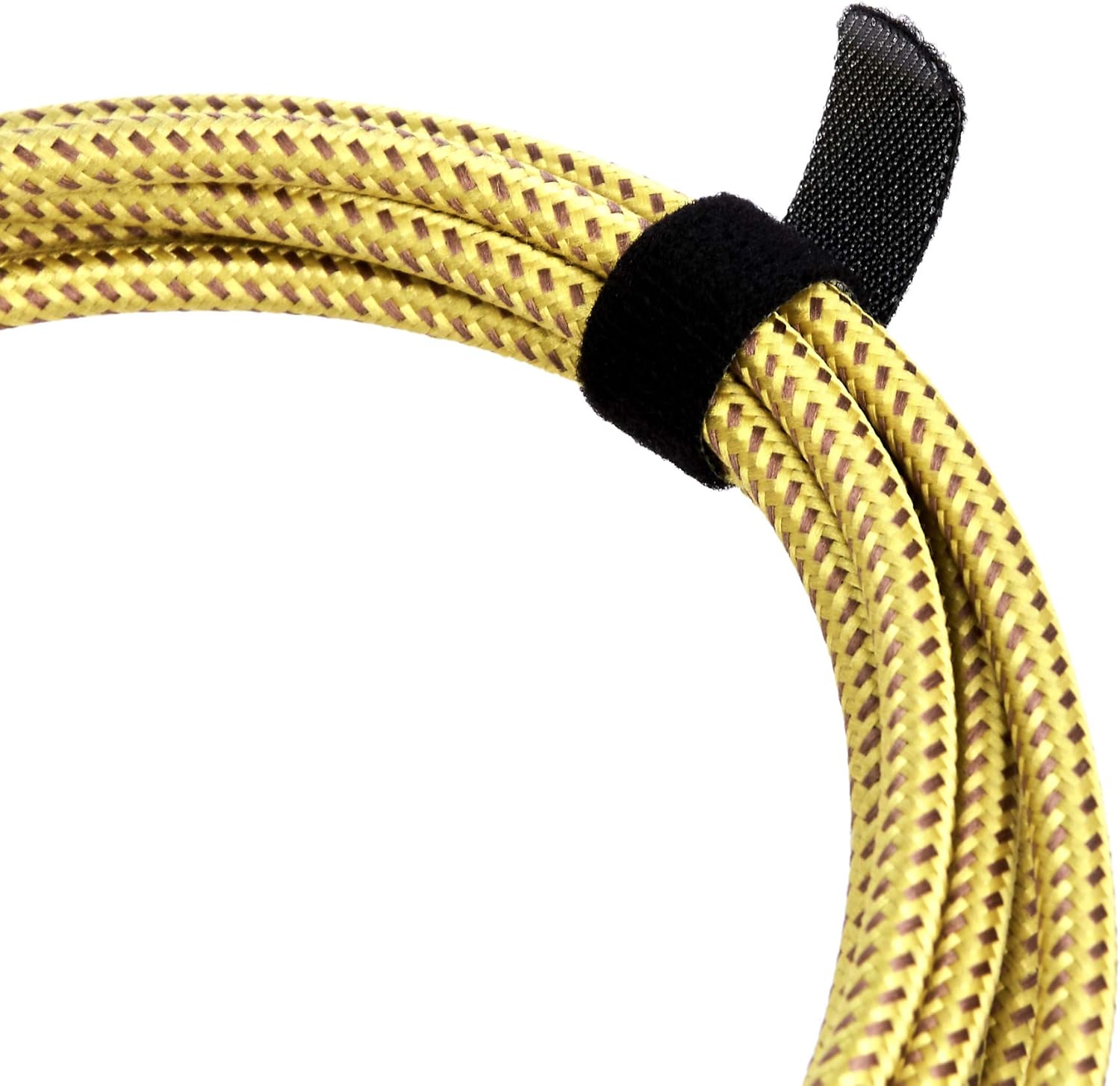
- Type: Noiseless straight-to-right-angle instrument auxiliary cable
- Name: 1/4 inch (6.35 mm) connector
- Conductor: 23 AWG oxygen-free copper (OFC)
- Shielding: OFC spiral shield and conductive PVC shield
- Outer jacket: Braided tweed-cloth (yellow & brown)
- Length: 10 ft/3 m
FAQs
Will this cable work for electric guitars, basses and keyboards?
Yes. It’s described as suitable for connecting electric guitars, basses and keyboards to amplifiers or PA systems.
What does “noiseless” mean here?
The cable’s construction is geared towards improved signal clarity and interference blockade, using an OFC centre conductor and shielding. Real-world noise depends on your environment, but the approach targets outside interference.
Does the right-angle connector help in tight spaces?
That’s the idea. The straight-to-right-angle design is meant to make connections easier when the back panel is close or ports are awkward to reach.
Is the tweed-cloth jacket more durable?
It’s described as offering reliable strength and flexibility. It should stand up well in demanding environments for an everyday instrument cable, though no cable is indestructible.
What to check before you buy
Before ordering, double-check you actually need a 6.35 mm (1/4 inch) straight-to-right-angle lead and that the length of 10 ft/3 m suits your usual setup. If your connections are always in open, accessible positions, the right-angle convenience may be less important—if you’re tight on space, it’s more likely to feel worth it.
Final verdict
This Amazon Basics 1/4 inch straight-to-right-angle instrument cable is a sensible pick if you want clearer signal transmission and interference blocking on paper, plus an easier plug-in angle for real-world cramped setups. It’s more in the practical, mid-range “buy it and get on with playing” category than something for people chasing the most extreme, niche cable comparisons.
It’s not the best choice if you specifically need a very different connector type, a length outside your requirements, or if you only care about convenient routing and already run your cables in a very clean, noise-free environment.