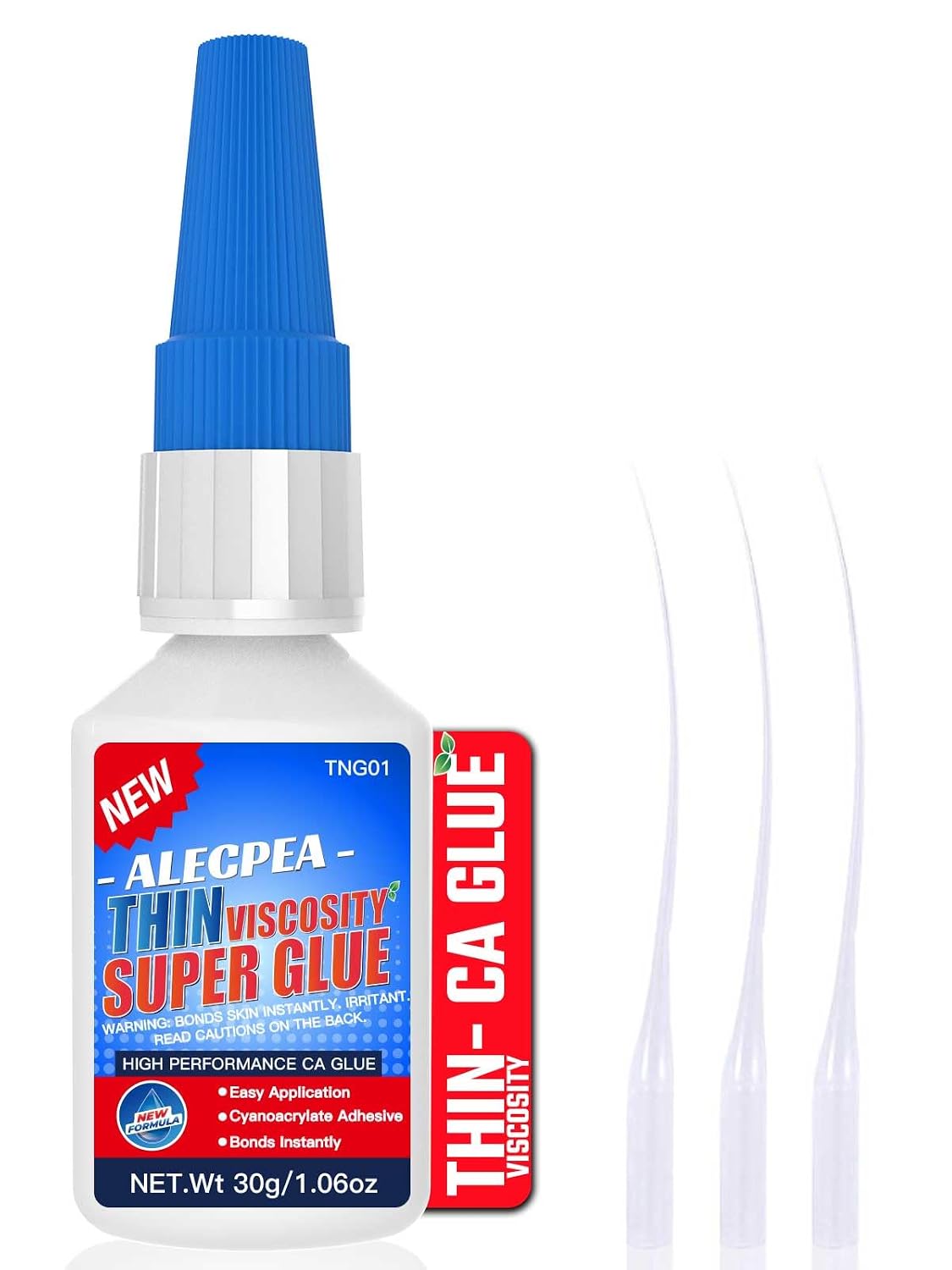
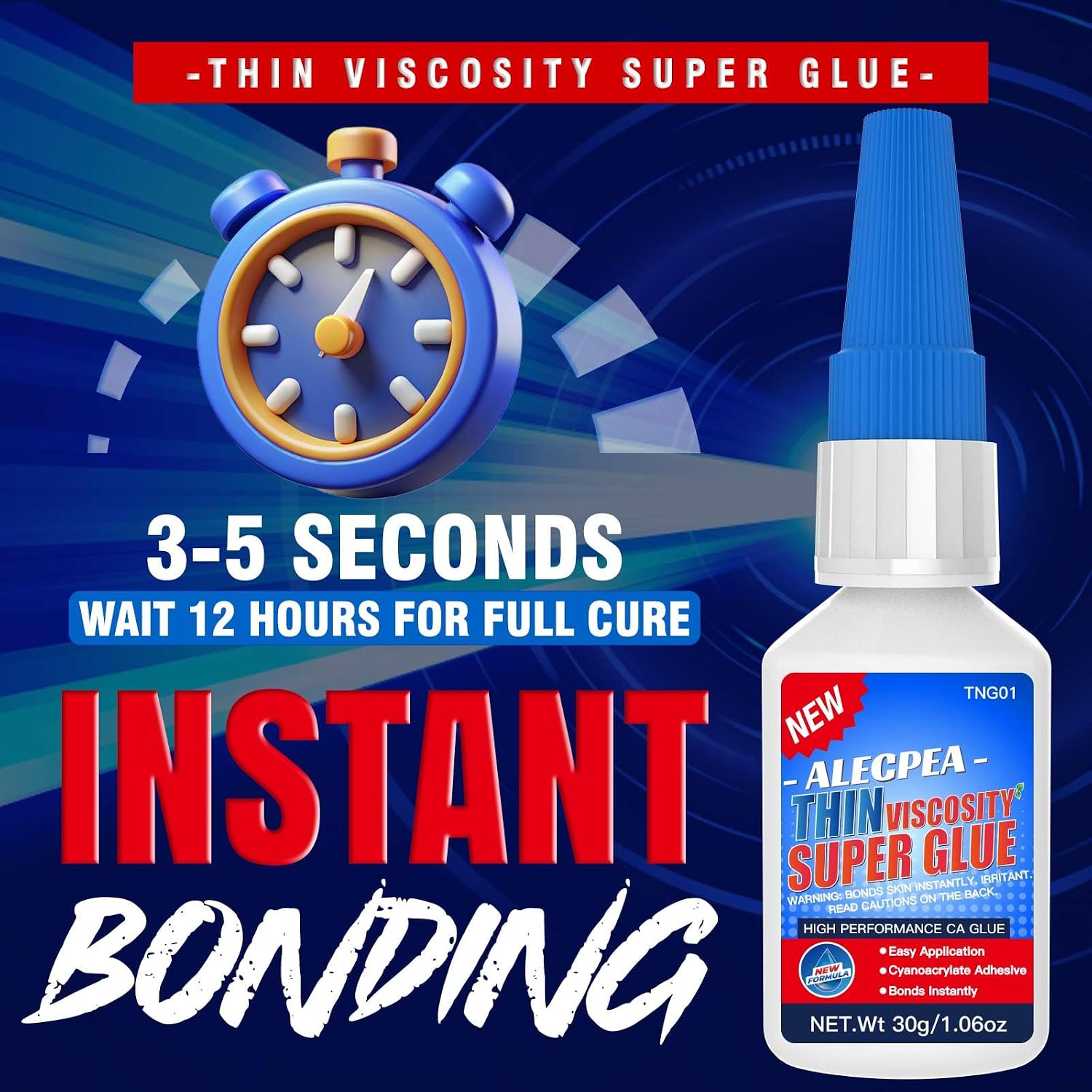
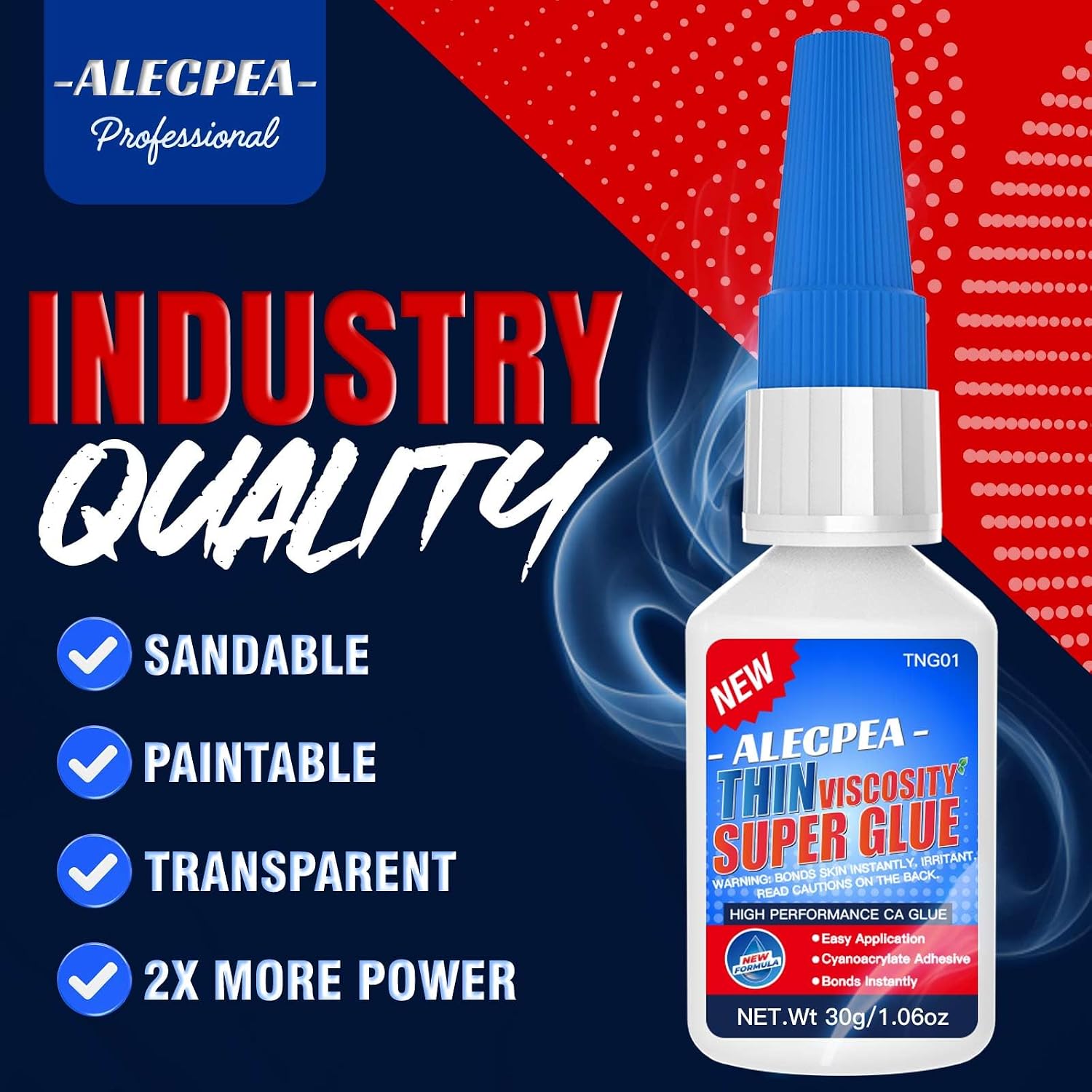
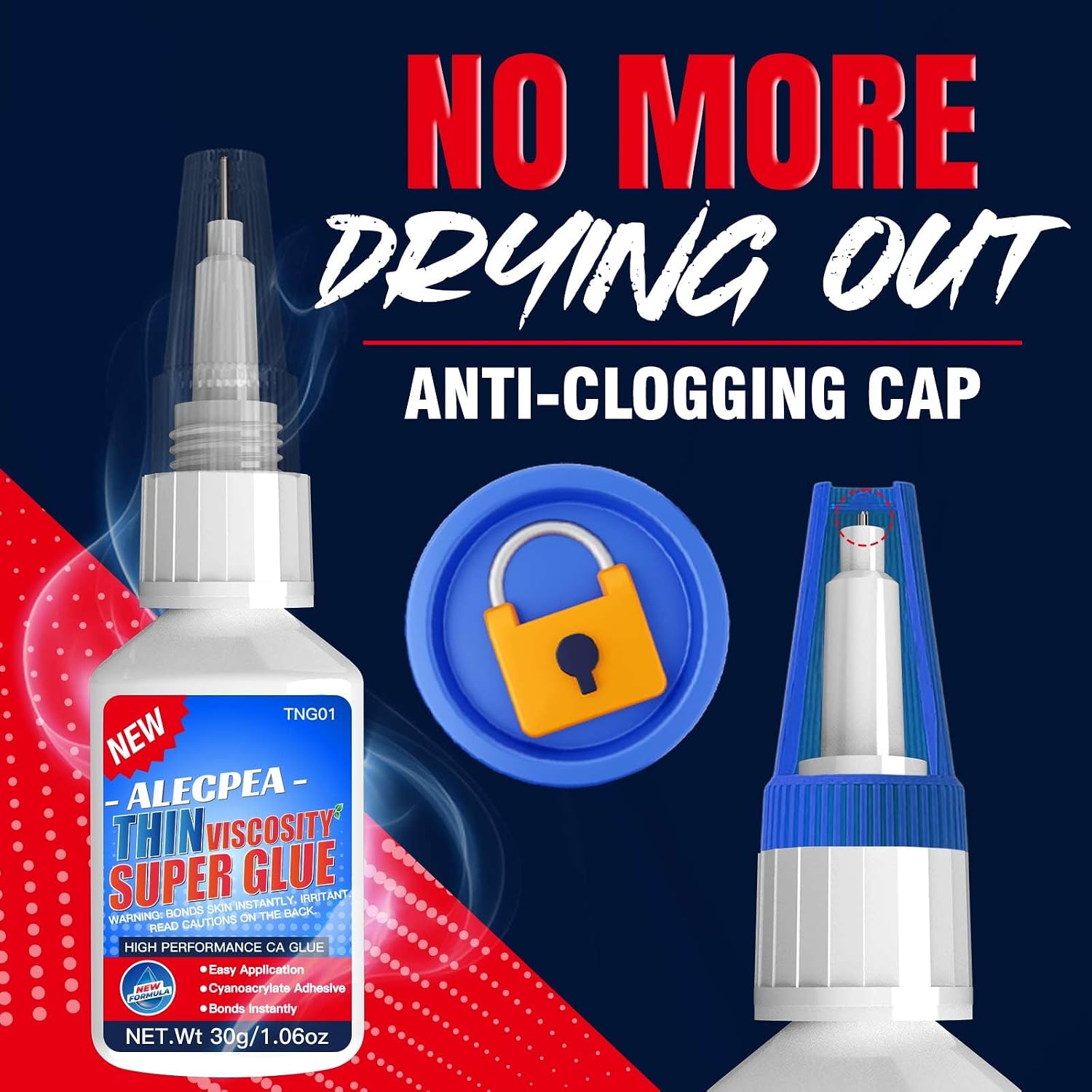
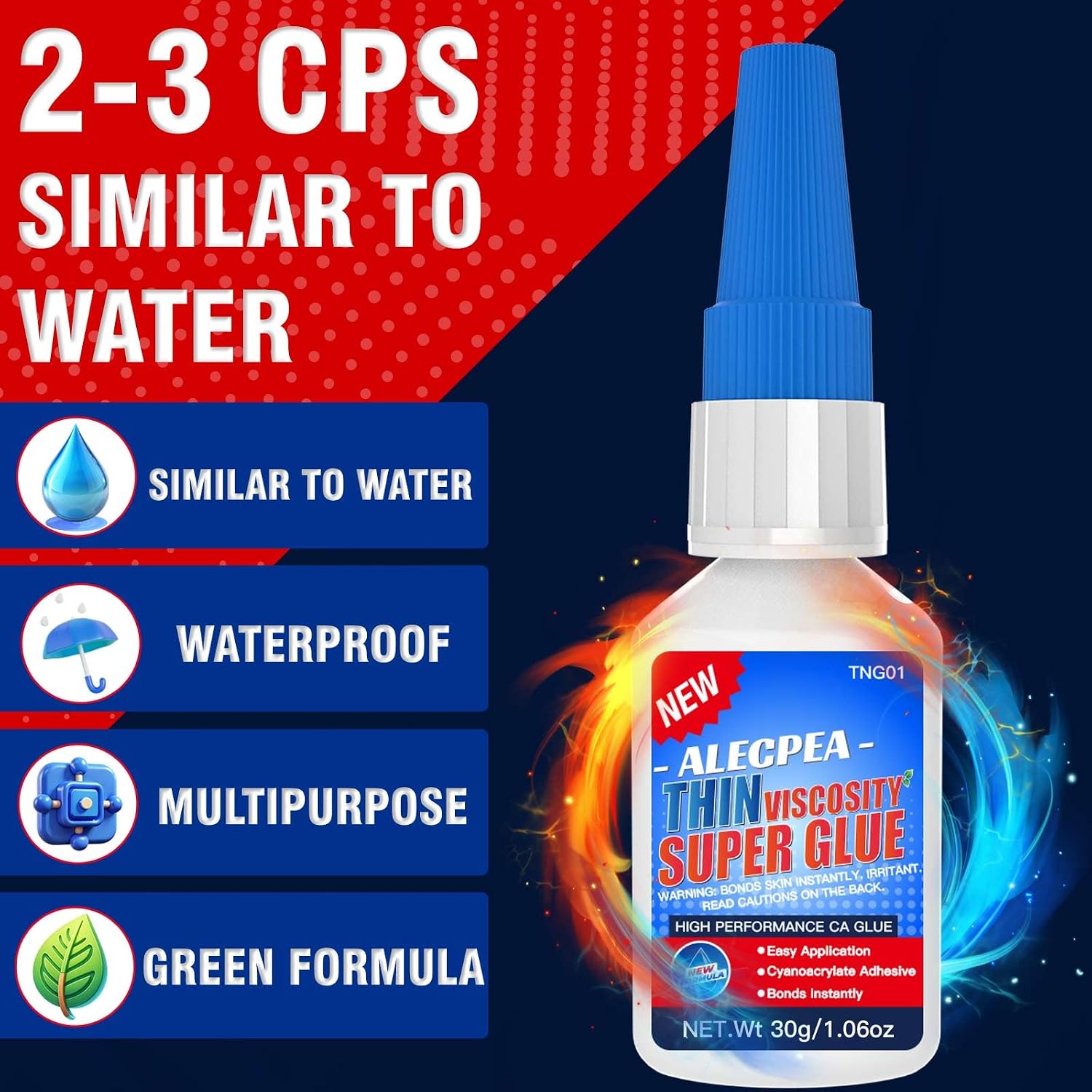
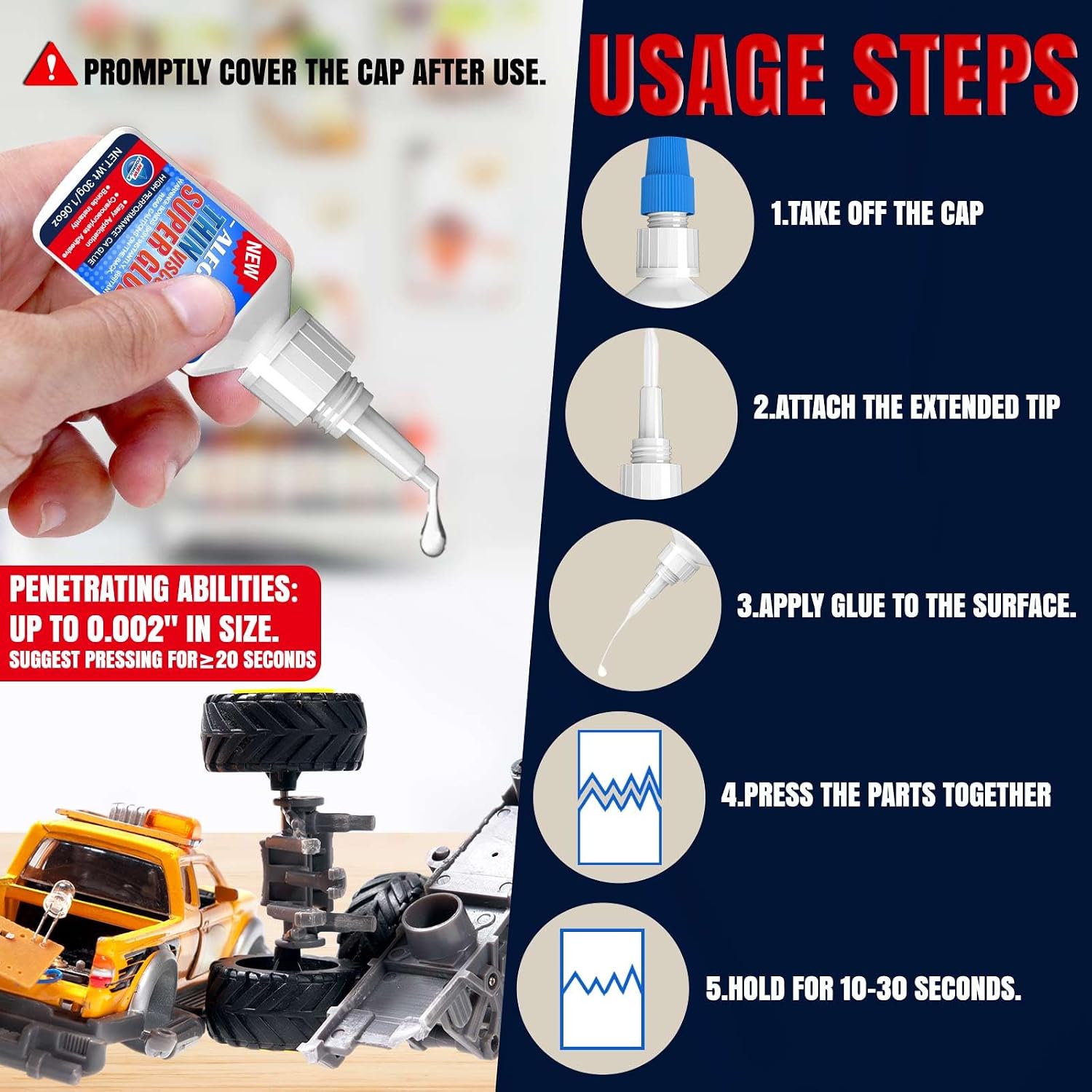
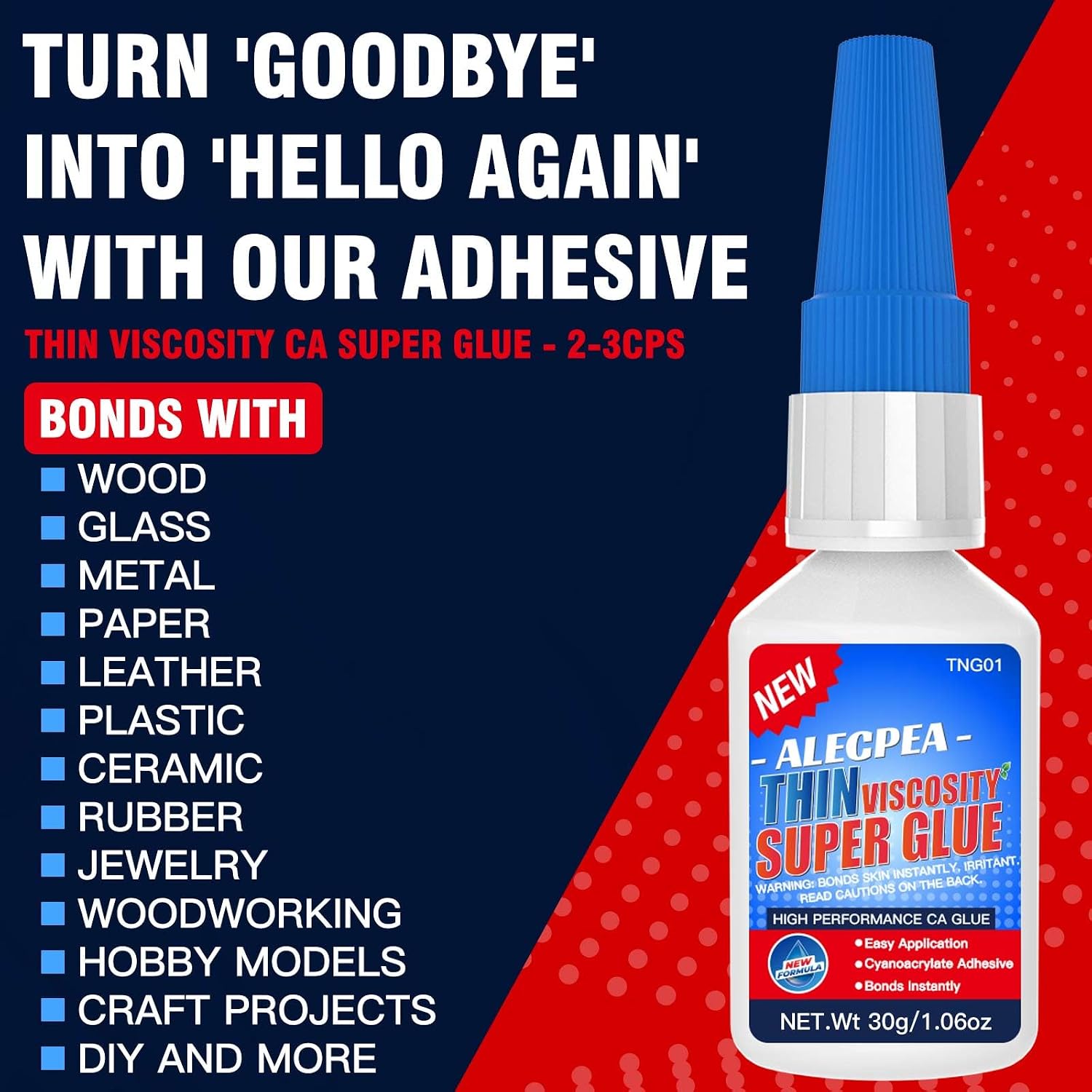
What it is and what it’s for\nALECPEA Thin CA Glue is a 30g bottle of fast-setting cyanoacrylate designed for small, precise bonding in woodworking, model-making, and delicate repairs. The 2–3 cps (centi-poise) viscosity is formulated to wick into hairline seams and tight joints rather than sit on the surface, making it suitable for pen turning, inlays and repairs in balsa and other small components. On paper, this kind of thin glue prioritises penetration and reduced surface blobs, which can translate to neater repairs and crisper detail in miniature builds.\n\n## How it performs in practice\nIf you’re building or repairing miniatures, RC parts, ceramics or hard plastics, the glue is meant to grab quickly—usually within 3–5 seconds—while allowing a 12-hour full cure for stronger, resilient joints. The clear formula is designed to dry low-profile, helping to minimise visible glue lines on close-fitting parts or decorative work.\n\n## Strengths you’ll notice\n- Rapid initial grip helps keep tiny components aligned during assembly, reducing the chance of crooked joints.\n- Low-profile dry finish suits fine model work and detailed woodworking where big glue beads would ruin the appearance.\n- The formula flows into tight spaces where thicker glues can’t reach, making it a practical option for small joints and delicate repairs.\n- Clear, unobtrusive cure can help maintain the aesthetic of ceramic, glass or stone repairs and light-touch woodwork.\n\n## Limitations and caveats\n- It’s a thin glue, so it may not be the best choice for large gaps or where a thicker build is required. If you over-apply, you risk runny flow that can flood fine details, a single light drop is usually enough to bond most small joints.\n- Like other CA glues, skin exposure should be avoided and a careful handling routine is advisable. After bonding, wipe the nozzle and recap to prevent wastage and crusting.\n- The performance can depend on material porosity and surface preparation, clean, dry surfaces typically yield the most reliable results.\n\n## Who it’s for\nThis product suits hobbyists and professionals who frequently bond small components in wood, models, ceramic, glass, stone and hard plastics. It’s particularly handy for pen-turning inlays, trim work and tiny RC parts where a fast-setting, clear finish matters. If your projects involve larger joints or you expect a lot of misalignment risk, you may want to consider a thicker adhesive or different bonding method as a complement.\n\n## When it makes sense to buy\n- You need fast, contained initial tack to hold small parts during assembly.\n- A near-invisible glue line is important for your project’s appearance.\n- You work with tight seams where a low-viscosity glue can reach where thicker adhesives cannot.\n- You’re repairing delicate pieces (ceramics, glass or stone) where bulkier glue would look unsightly or alter shape.\n\n## What to check before purchasing\n- Surface condition: ensure parts are clean and dry for best adhesion.\n- Quantity and storage: reseal after use and store upright to prevent leaks.\n- Compatibility: while the formula targets a range of materials, very smooth or highly porous surfaces may behave differently.\n- Application technique: use minimal drops and avoid pooling on intricate details.\n\n## Practical use case examples\nA tiny rail on a wooden model can benefit from a quick drop that sinks into the joint without creating a visible bond line. In a ceramic repair, a clear, thin bead helps fill micro-cracks without obscuring the surrounding finish. When used on hard plastic or glass, the fast grab helps maintain alignment during assembly and reduces scrambling of small components.\n\n## What you might compare it with (implicit alternatives)\nIf you’re choosing between glues for small joints, you’ll likely consider a thicker CA or a dedicated wood glue for gaps. For ultra-fine work, a faster-setting option with even thinner flow could be preferable, while thicker variants shine on larger gaps or where more gap-filling is required. This ALECPEA product sits in the middle ground: aimed at precise, small-scale work with a clean finish.\n\n## Is it worth it? Final thoughts\nWorth considering if your projects demand quick joins with a discreet finish and you’re bonding tight joints on wood, models or decorative materials. It’s not the best option for large gaps or high-strength structural bonds, but for precise, low-profile repairs and inlays it offers practical value. If you prioritise minimal glue lines and a fast initial grab, this thin CA glue could be a sensible addition to your workshop kit.\n\n## FAQ (short answers)\n- How quickly does it set? Typically within 3–5 seconds for a initial hold, full cure at 12 hours.\n- Is it safe on ceramic or glass? Yes, it dries clear and can be used on ceramic or glass repairs, though take care to keep surface clean and free of oils.\n- Can I use it on wood? Yes, it sinks into tight seams and helps reduce visible glue lines on fine woodwork.\n