

ACMER M2 Rotary Roller for Laser Engravers: 360° Y-axis Rotary Module for Cylindrical Objects
Product description
What it is and what it does
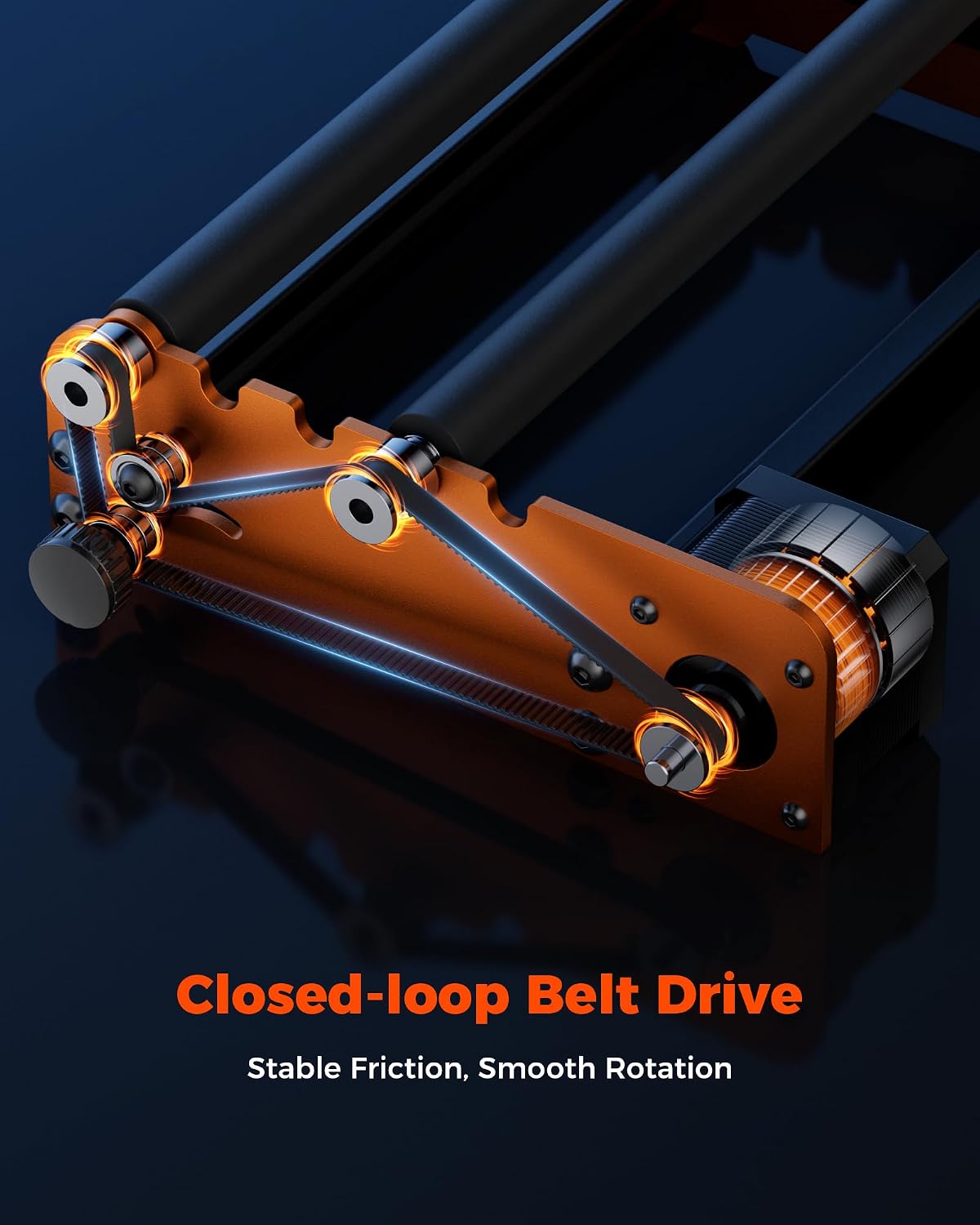
The ACMER M2 Rotary Roller is a plug‑and‑play Y‑axis rotary module designed to enable 360° engraving on cylindrical and tapered items. Built with high‑friction 70A rubber rollers and a robust steel frame, it aims to deliver stable rotation and repeatable results on materials such as mugs, tumblers, wine bottles, glasses and similar curved objects. The unit is described as 100% pre‑assembled and ready to connect to the Y‑axis wiring of compatible laser engravers, with an adjustable engraving table height to accommodate a range of cylinder diameters. A toggle switch provides a quick way to switch between rotary and non‑rotary modes, which can simplify workflows when rotating isn’t needed.
How it fits with your laser setup
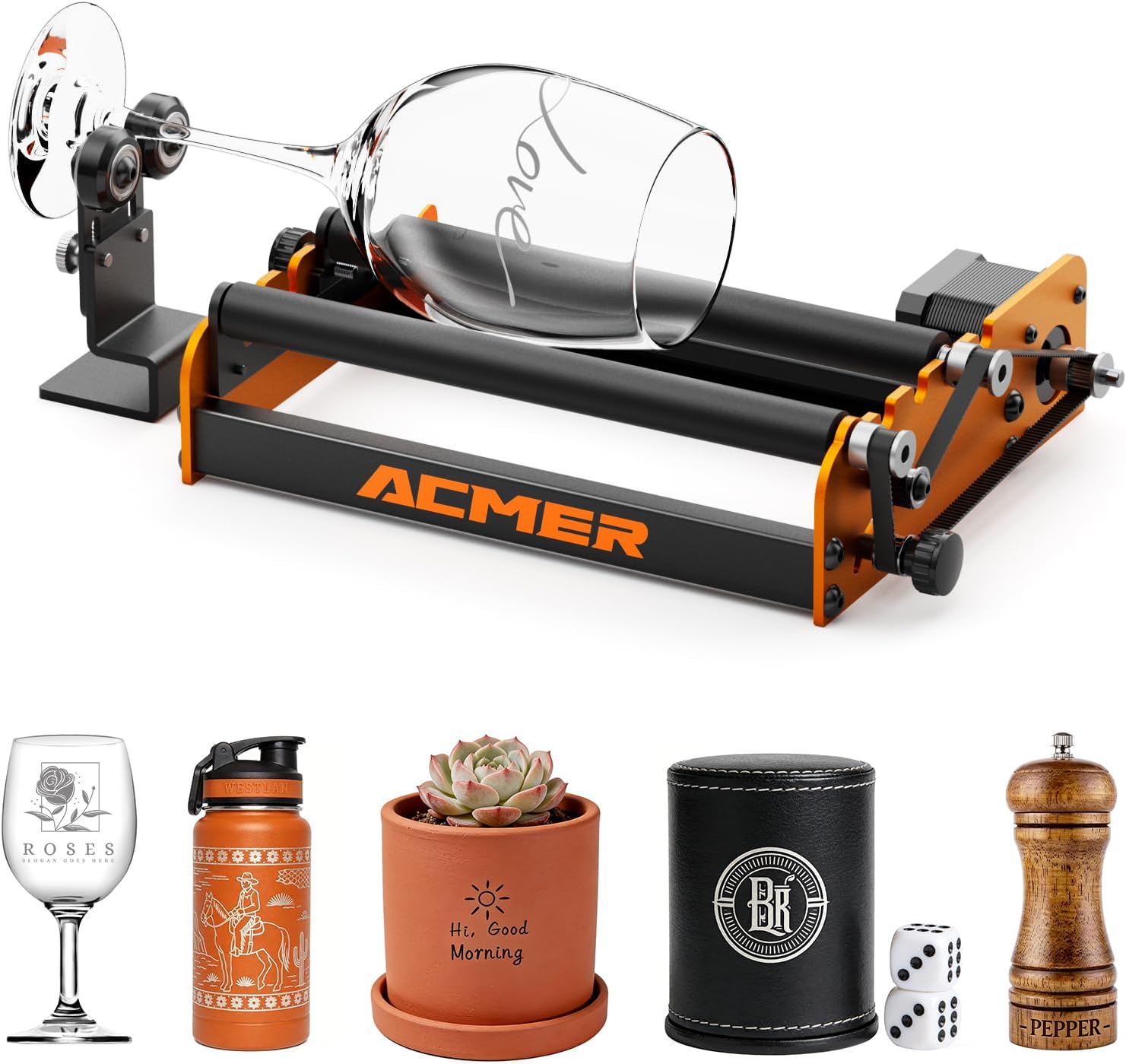
On paper, this module is geared towards ACMER S2, P1 and many other laser engravers that support a Y‑axis rotary attachment. The key interaction point is the added height and the need to ensure the laser head and engraving table can clear the rotary unit when in use. If your machine’s mounting and wiring are compatible, the M2 promises a straightforward, “plug and play” integration rather than a bespoke retrofit.
The positives at a glance
- Designed for smooth 360° engraving on cylindrical and tapered items, expanding the range of objects you can personalise.
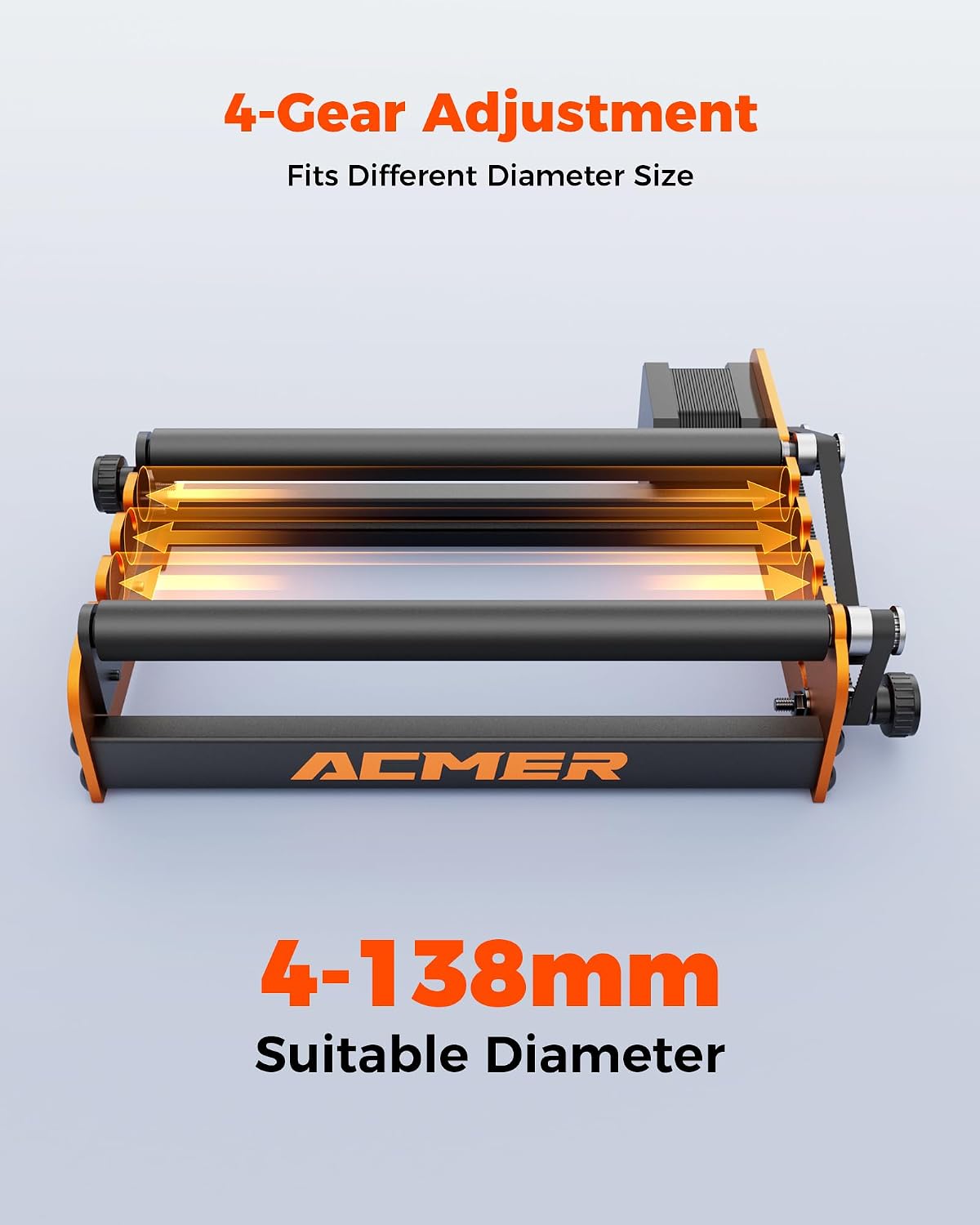
- Adjustable axes mean you can work with a variety of diameters, increasing versatility.
- High‑friction rubber rollers and steel construction should contribute to durability and stable rotation.
- Quick mode switching and simple sliding adjustments save setup time between different job sizes.
- Pre‑assembled and includes an adapter cable for immediate use.
What could give you pause
- The description assumes compatibility with a broad set of laser engravers, if your model’s mechanical and electrical layout differs, integration may require additional adaptation.
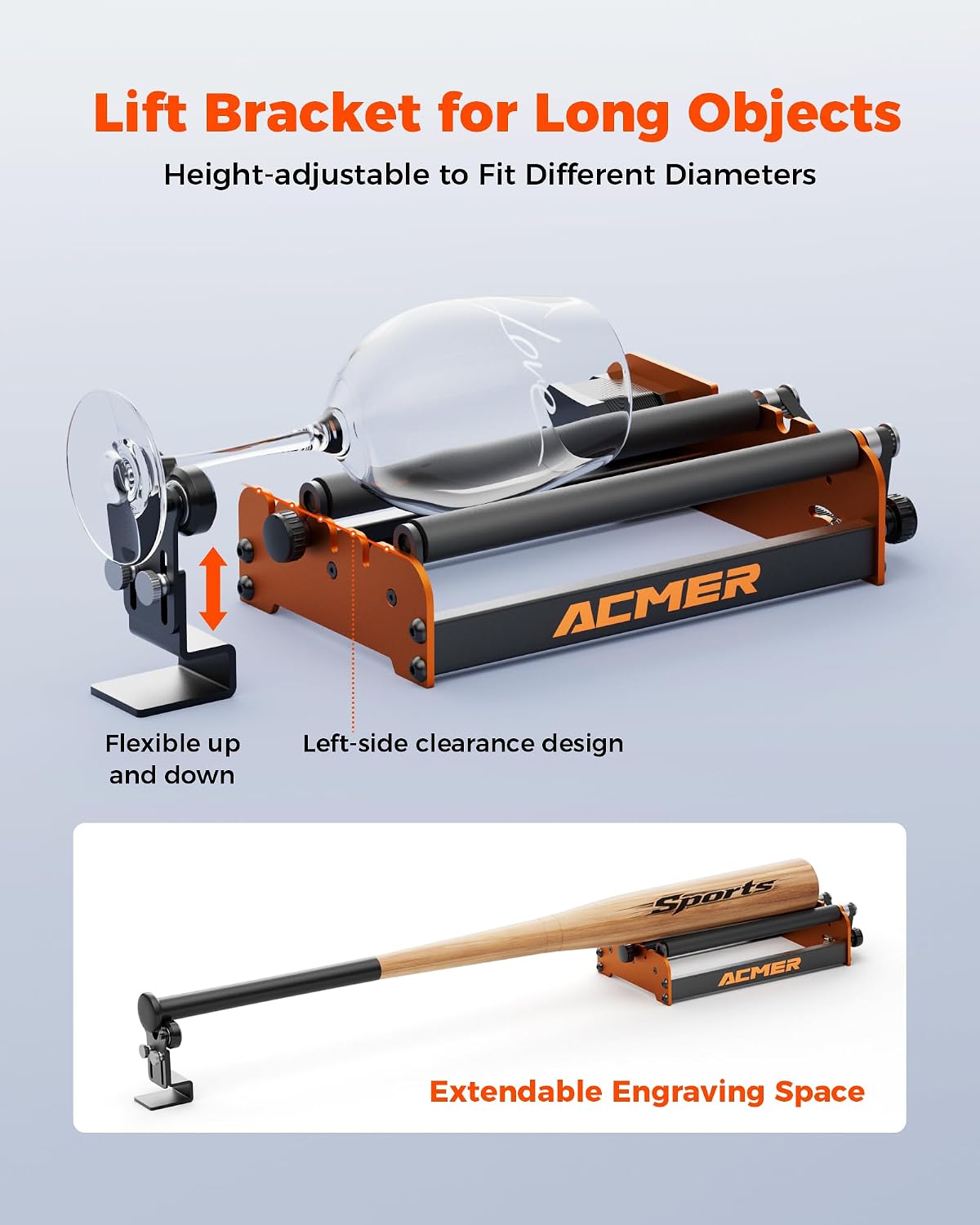
- You’ll want to verify that your laser head clearance and overall gantry height can accommodate the extra module height before use, to avoid collisions.
- The rotary module is aimed at cylindrical and tapered items, flatter or irregular shapes won’t benefit from rotation in the same way.
Who this is for
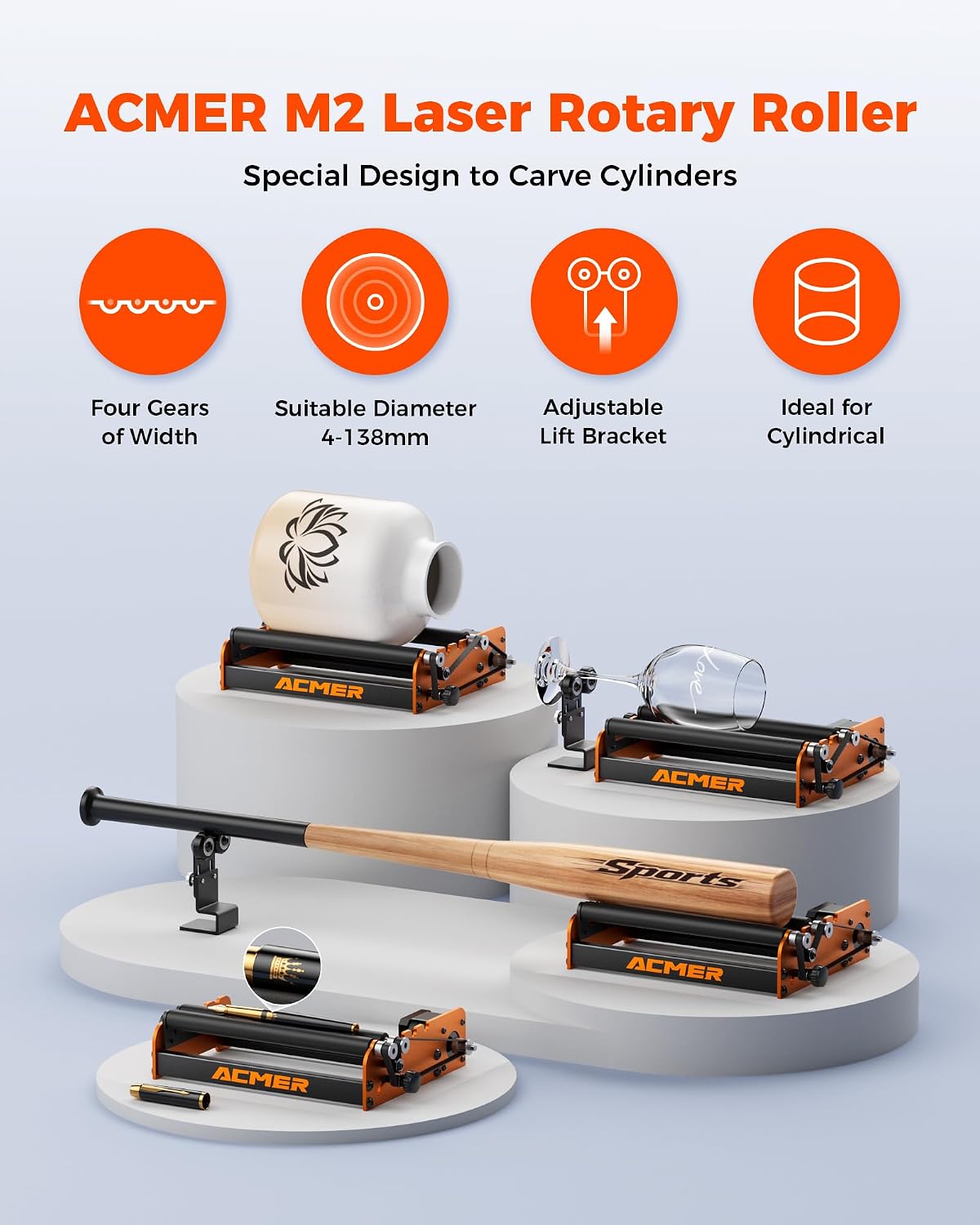
It’s worthwhile for makers who regularly personalise drinkware, candle jars, bottles and similar vessels and want a single, compact rotary option rather than multiple standalone devices. If you already own a compatible ACMER model or similar system that accepts a Y‑axis rotary, this module can extend capabilities without a large reconfiguration.
Who might want to skip it
If you seldom engrave cylindrical objects, or if your laser engraver lacks the mounting or wiring compatibility, you may not see enough value. Likewise, if your typical diameter range falls outside the adjustable height of the unit, you may need a different rotary solution.

Buying considerations before you commit
- Check compatibility: confirm your laser engraver supports a Y‑axis rotary module and that the necessary wiring is accessible.
- Measure clearances: assess the distance between the laser head and engraving table with the rotary engaged to ensure no interference.
- Consider job mix: evaluate whether most of your projects are cylindrical objects, if not, the investment might not deliver continuous use.
- Review handling and maintenance: the rubber rollers are a wear item, consider replacement availability and service life in your planning.
Practical usage scenario
Imagine personalising a stainless steel travel mug. You’d mount the mug in the M2, line up your engraving target, switch the unit to rotary mode, and let the 360° rotation produce a continuous wrap‑around design. When you’re done, flip back to non‑rotary mode to engrave a flat lid tag or a straight line on a pen, demonstrating how the module can adapt to varied tasks within the same session.
Technical snapshot (brief)
- Engraving space range: designed for a wide set of cylindrical items (exact diameters not specified)
- Construction: high‑hardness rubber rollers on a steel frame
- Adjustment: adjustable axes for different diameters, sliding distance for quick sizing
- Power / wiring: plug and play via adapter cable to Y‑axis wiring
What to know before buying
- This is meant to extend engraving capabilities rather than replace a dedicated non‑rotary workflow.
- It is positioned as compatible with several ACMER models and “Most Laser Engraver” setups, but exact fit depends on your machine’s interface and mechanical dimensions.
- If you prioritise throughput on flat surfaces, the rotary feature adds a distinct workflow, if your business rarely uses cylindrical engraving, the return may be slower.
Is it worth it?
Final verdict: a solid pick if you regularly engrave cylindrical objects and your laser system supports Y‑axis rotary attachments. It makes sense if you want a compact, ready‑to‑go solution with easy in‑field adjustment. However, it may not be the best option if your diameters consistently exceed the unit’s adjustable range or if you need a rotary option for a broader set of shapes.
FAQ
- What objects can I engrave with the ACMER M2? Cylindrical and tapered items like mugs, bottles, glasses, tumblers and similar curved shapes.
- Do I need to buy anything else to use it? It ships 100% pre‑assembled with an adapter cable for plug‑and‑play connection to compatible laser engravers.
- Can I use it on non‑rotary jobs? Yes, there is a toggle to switch between rotary and non‑rotary modes.
Should you buy it?
A considered choice if your workload includes a meaningful share of cylindrical engraving and your machine supports the attachment. If the majority of your projects are flat or irregular shapes, you may want to weigh up whether the ongoing utility justifies the space and cost.