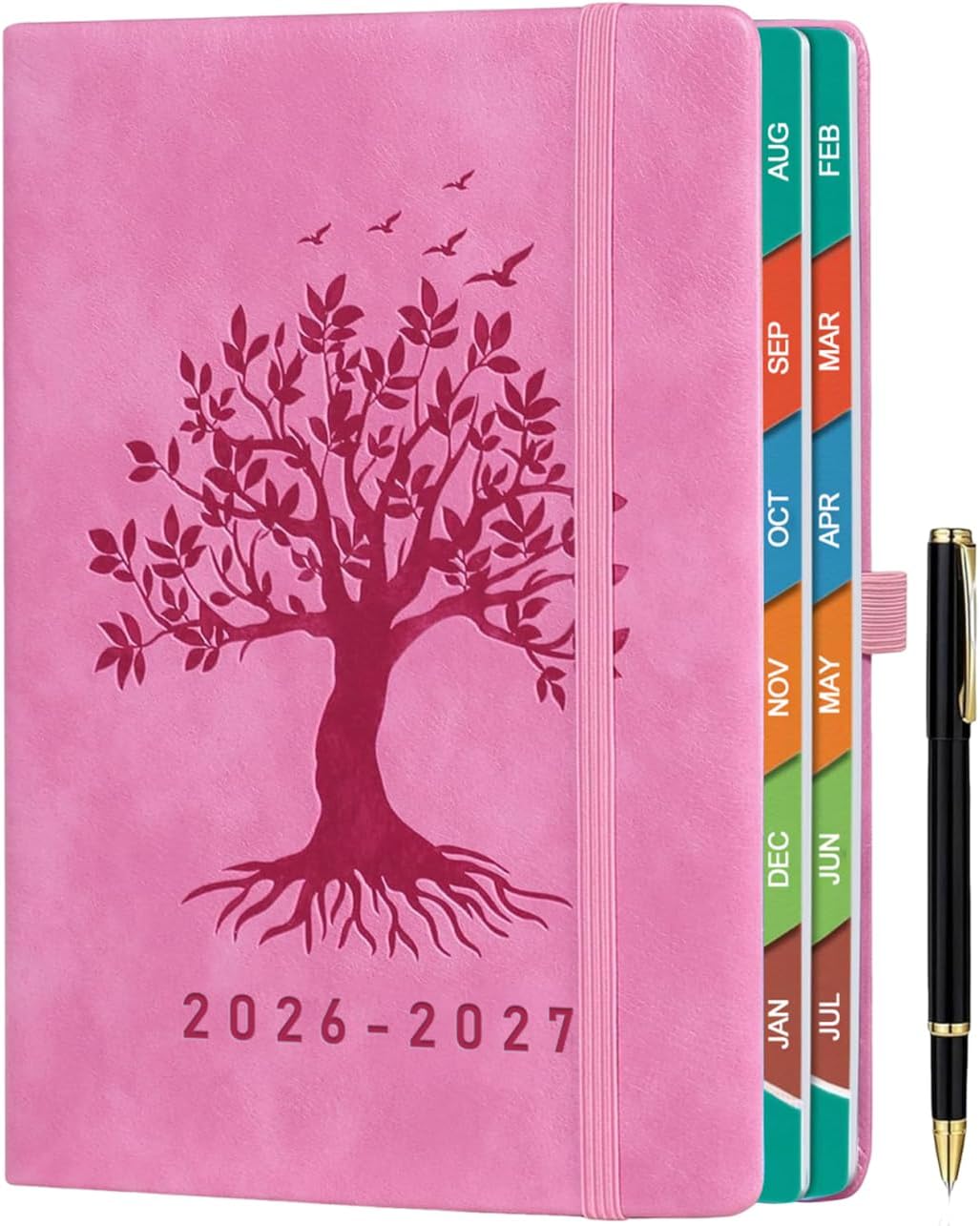
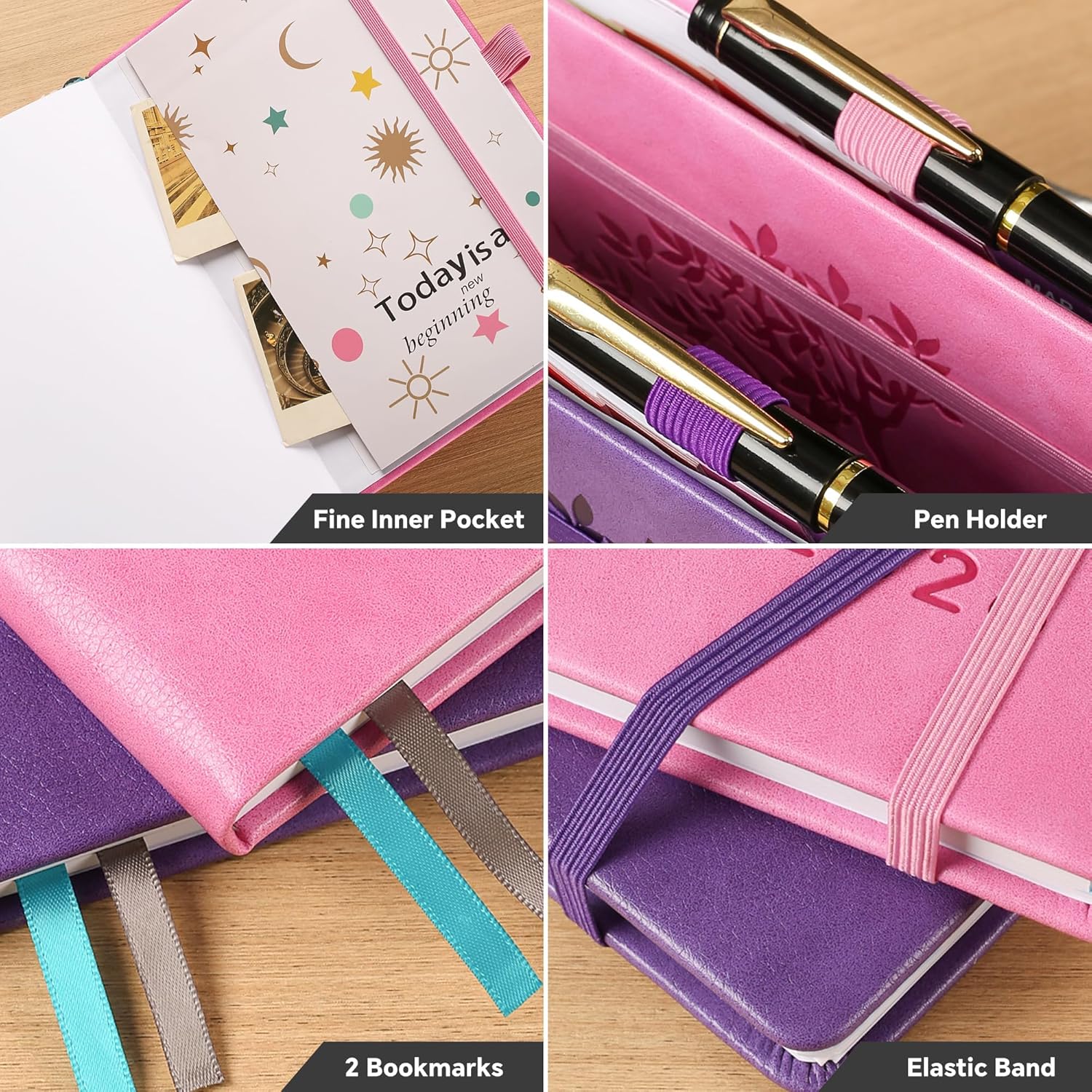
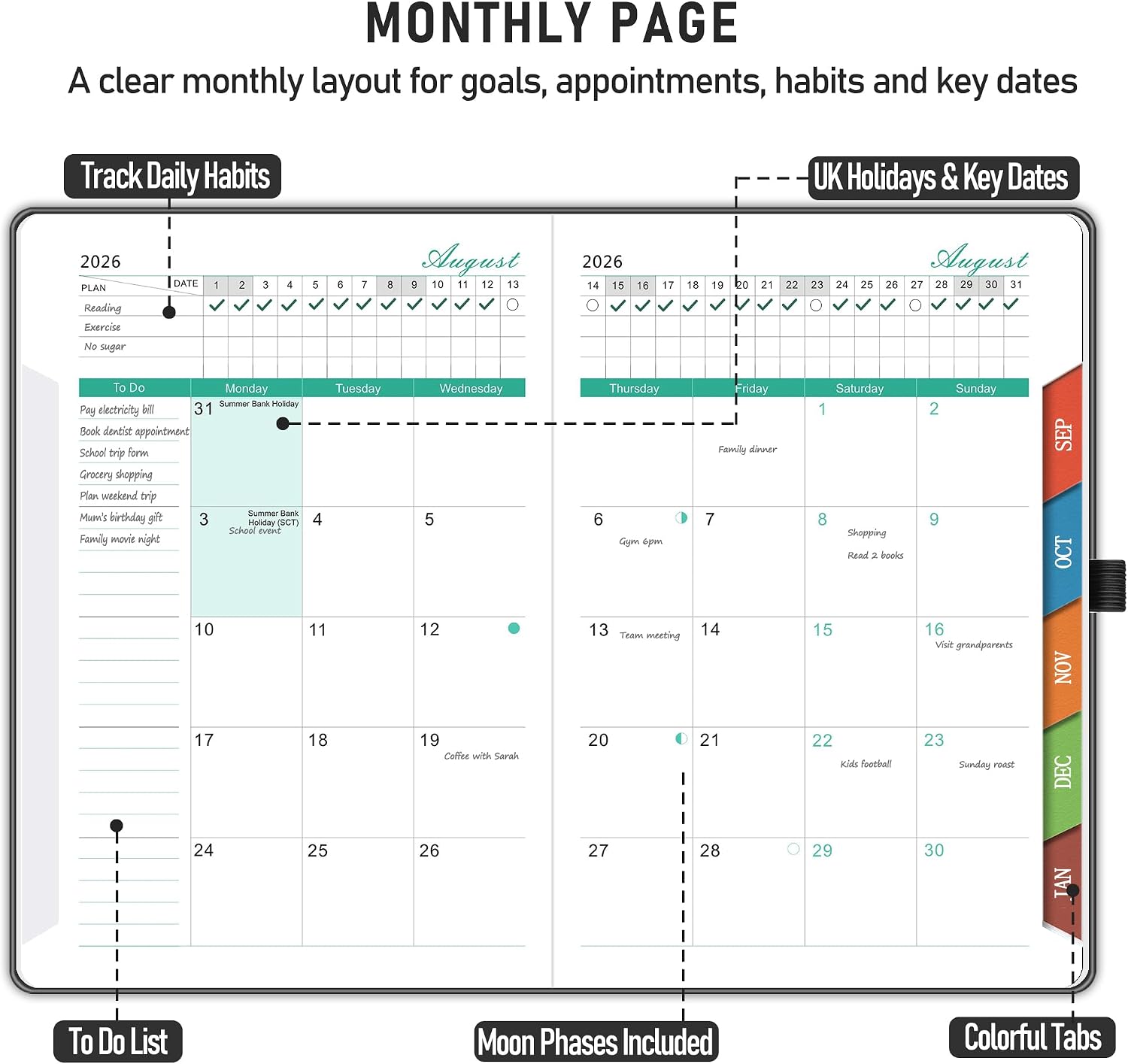
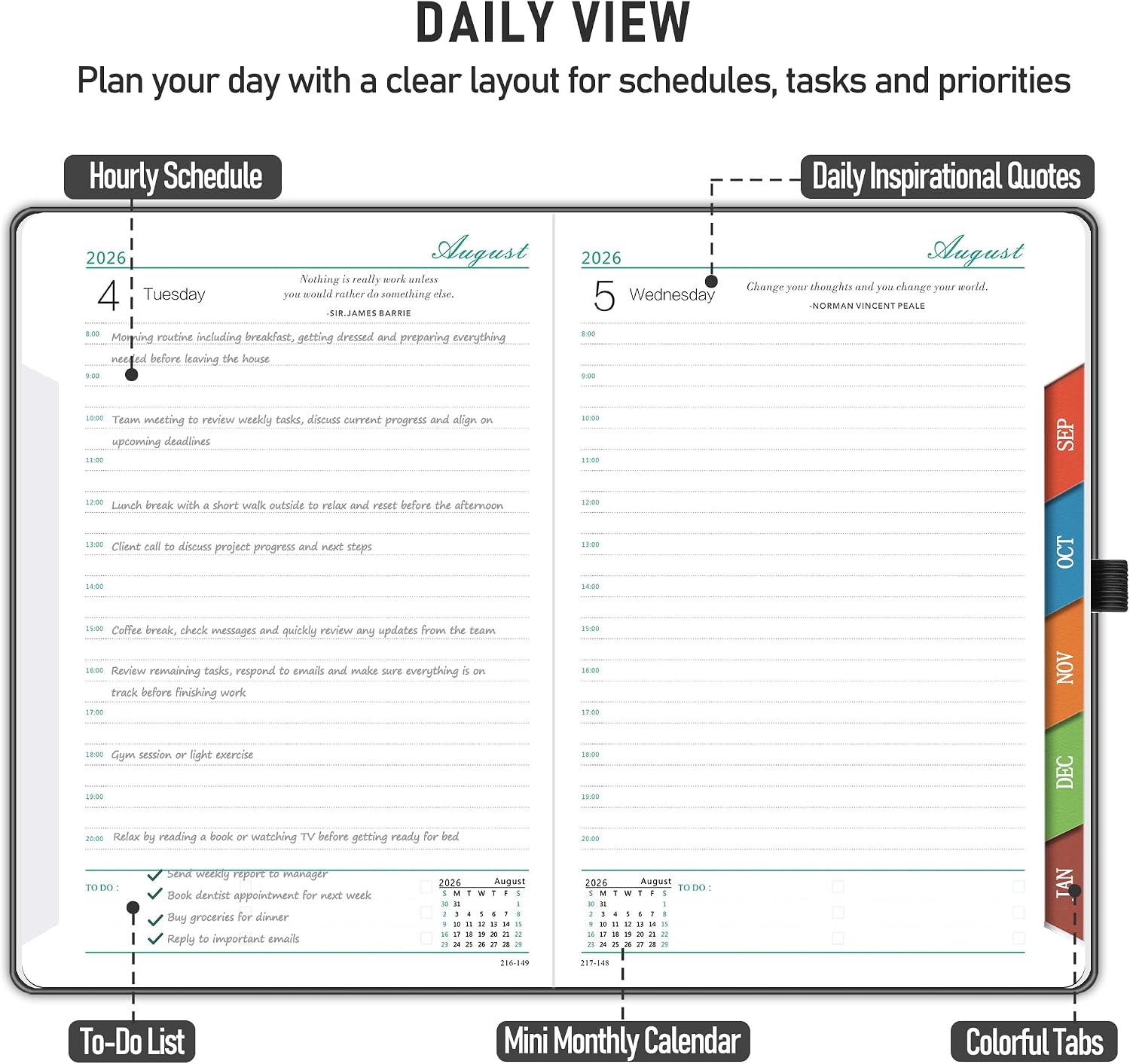
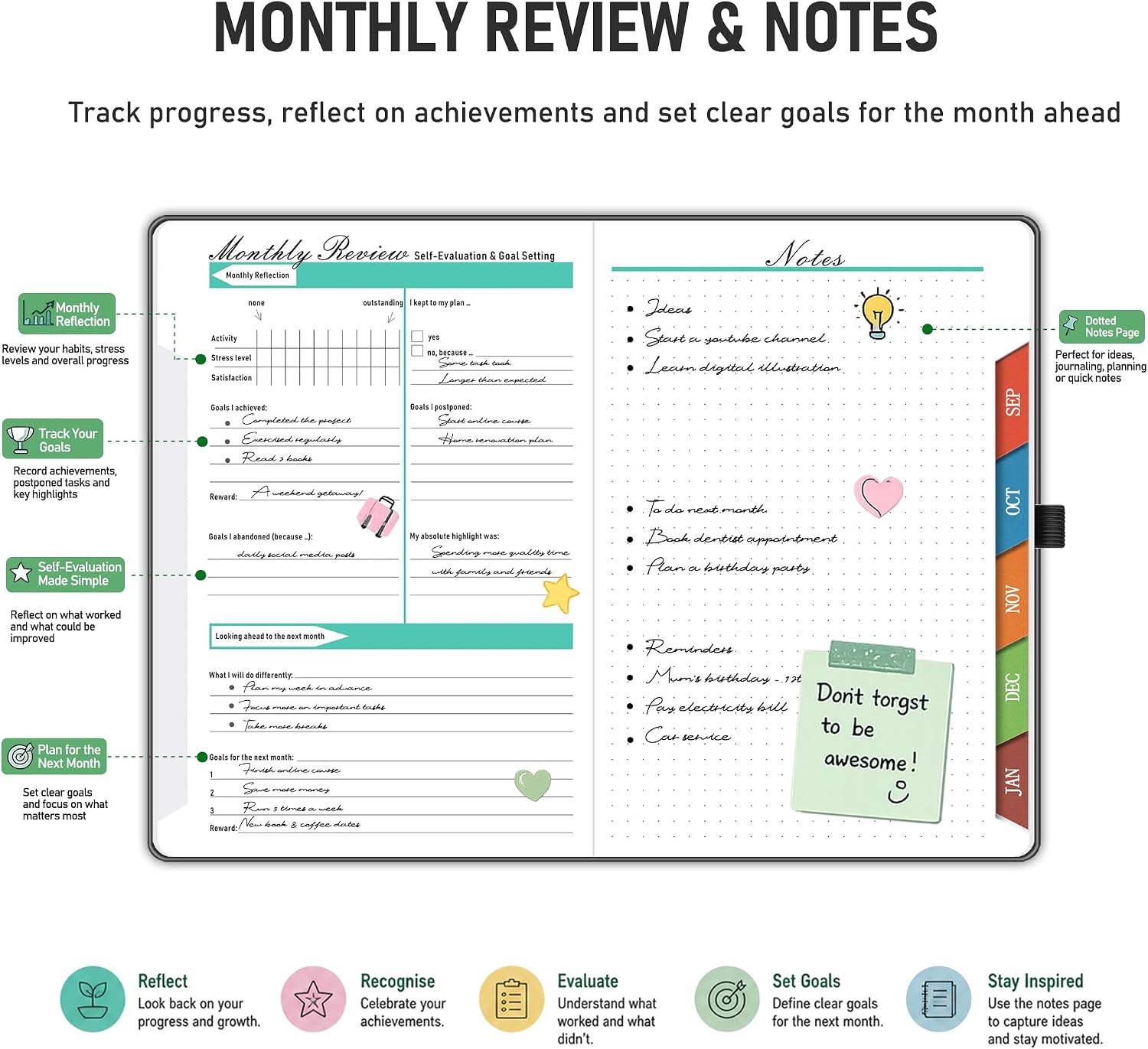
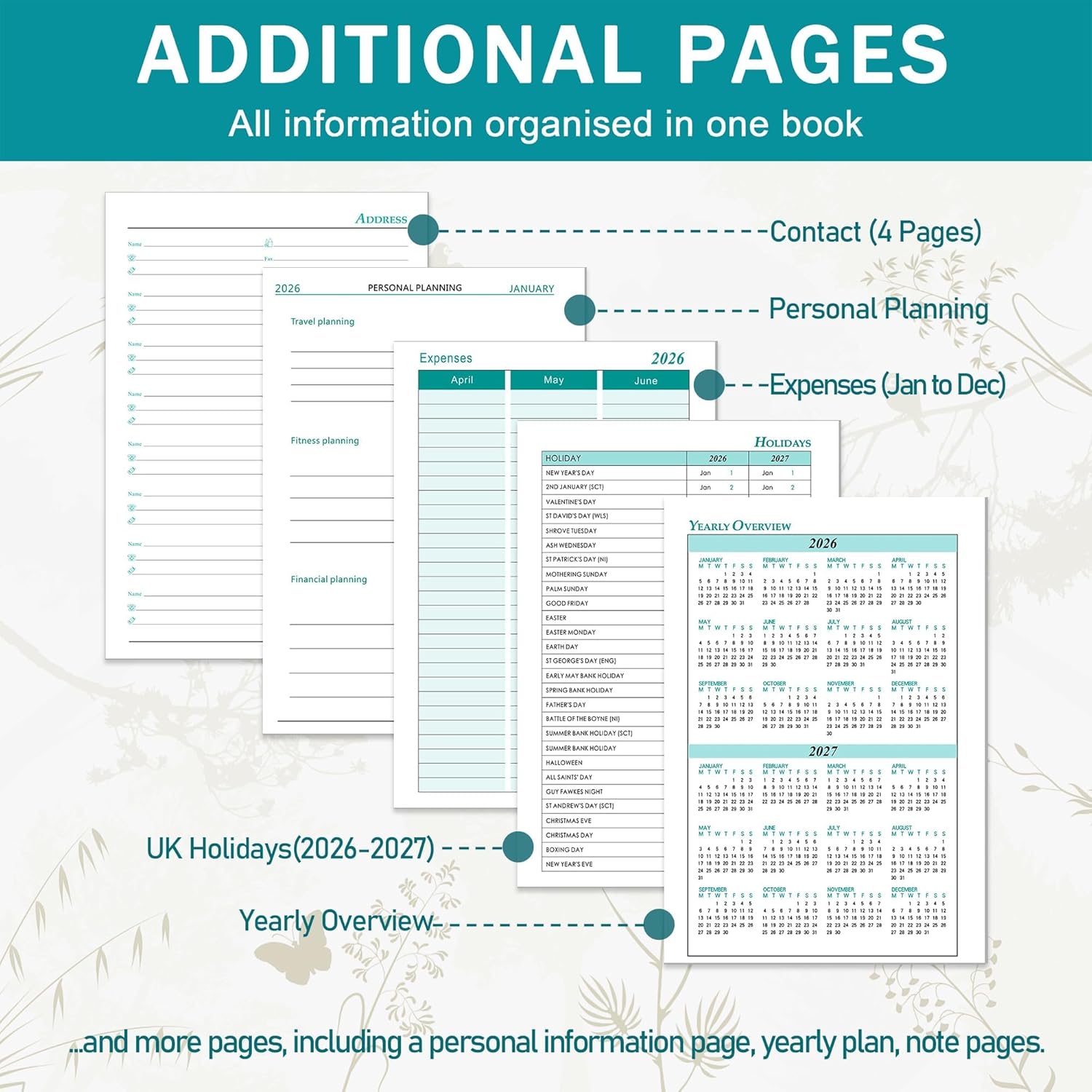
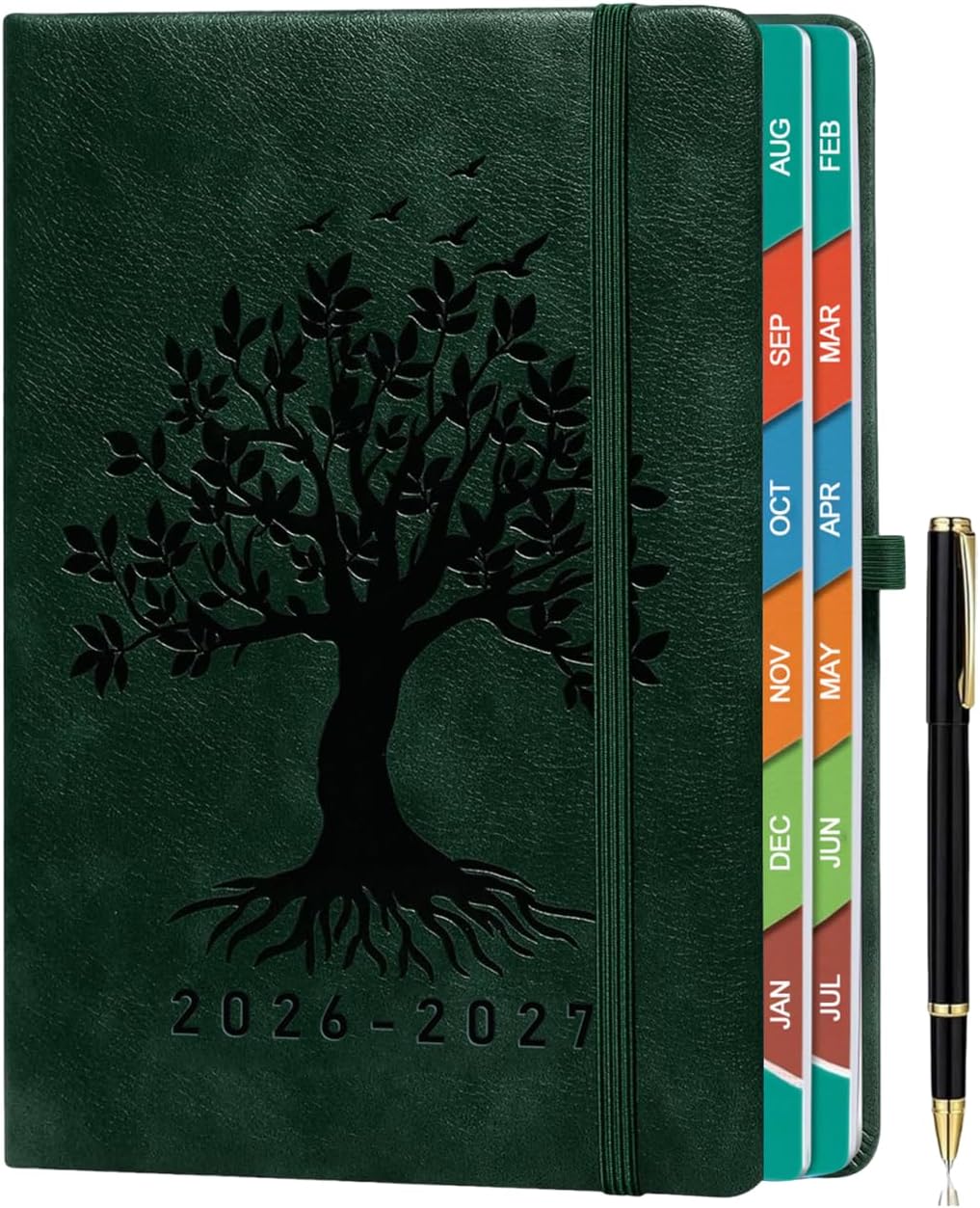
What is it and who is it for\nThis is a UK‑year academic diary designed to run from August 2026 to July 2027, in a practical A5 page‑a‑day format. It combines daily planning space with monthly overviews, making it suitable for students, teachers and professionals who want a dedicated place to schedule, reflect and organise finances and contacts. If you prioritise having a compact, sturdy planner that supports detailed daily entries while keeping essentials in reach, this diary aims to cover that need.\n\n## How the layout works\nEach day has its own page, with colour‑coded monthly tabs that ease navigation between the big picture and the day‑to‑day. The design supports both appointment tracking and journaling, so you can note reminders, tasks and quick reflections in one place. The monthly sections include a review and a forward plan, encouraging a habit of evaluating progress and setting tangible goals for the upcoming weeks.\n\n## What stands out about the build\nThe diary is bound in a water‑resistant faux leather cover with a Tree of Life emboss. Inside you’ll find colour‑printed pages on 100gsm paper, which helps handling everyday notes and lists without excessive show‑through. A practical pen set with a pen loop, two bookmarks, a fine back inner pocket and an elastic closure completes the package for daily use.\n\n## What you get beyond the pages\nIn addition to the daily pages, there are income and expense records for 2026–2027 and yearly planners for both years, plus a handful of contacts and reference pages. The kit is all‑in‑one, eliminating the need to juggle loose sheets or multiple notebooks.\n\n## Pros and cons in real terms\nPros: compact A5 size, clear day‑per‑page planning, colour tabs for quick access, integrated financial and contact pages, sturdy cover with a premium feel. Cons: the mid‑year start date means you’ll be planning across two academic years, which may require a quick mental adjustment if you’re used to calendar years, the page count is capped by the A5 format, so very dense schedules could feel tight.\n\n## Practical use cases\n- A university student organising lectures, deadlines and budgets.\n- A teacher tracking term dates, meetings and student notes.\n- A professional balancing work tasks with personal appointments, plus expense tracking.\n\n## Who it suits and who to avoid\nIf you value a dedicated academic calendar with monthly reviews and a built‑in budgeting section, this is a strong fit. It may not be the best option if you need extra room for extensive writing or if you prefer a calendar that starts in January.\n\n## Things to check before you buy\nEnsure the page‑a‑day format suits your writing style and that you’re comfortable with the UK academic year layout. Look at the thickness of the diary to confirm it will fit your bag or desk space, and consider whether you’ll use the monthly tabs and review pages to their full potential.\n\n## A quick comparison approach\nIf you’re torn between this diary and a simpler weekly planner, weigh whether you need daily entries and explicit monthly reviews. For detailed daily planning with financial tracking in one place, this option offers a cohesive solution rather than using separate notebooks.\n\n## FAQ (quick answers)\n- Does it cover August 2026 to July 2027 exactly? Yes, aligned to the UK academic year.\n- Is there space for notes or journaling beyond daily entries? Yes, there are notes sections and reference pages.\n- Is the cover durable for daily carry? It’s described as water‑resistant faux leather with a robust finish, suitable for everyday use.\n\n## Final verdict\nOverall, this Academic Diary is a sensible choice if you want a consolidated planning tool that blends daily scheduling with monthly reflection and practical extras in a compact A5 format. It’s particularly appealing for students and professionals who value organisation, habit tracking and easy navigation between a broad monthly view and day‑to‑day detail.