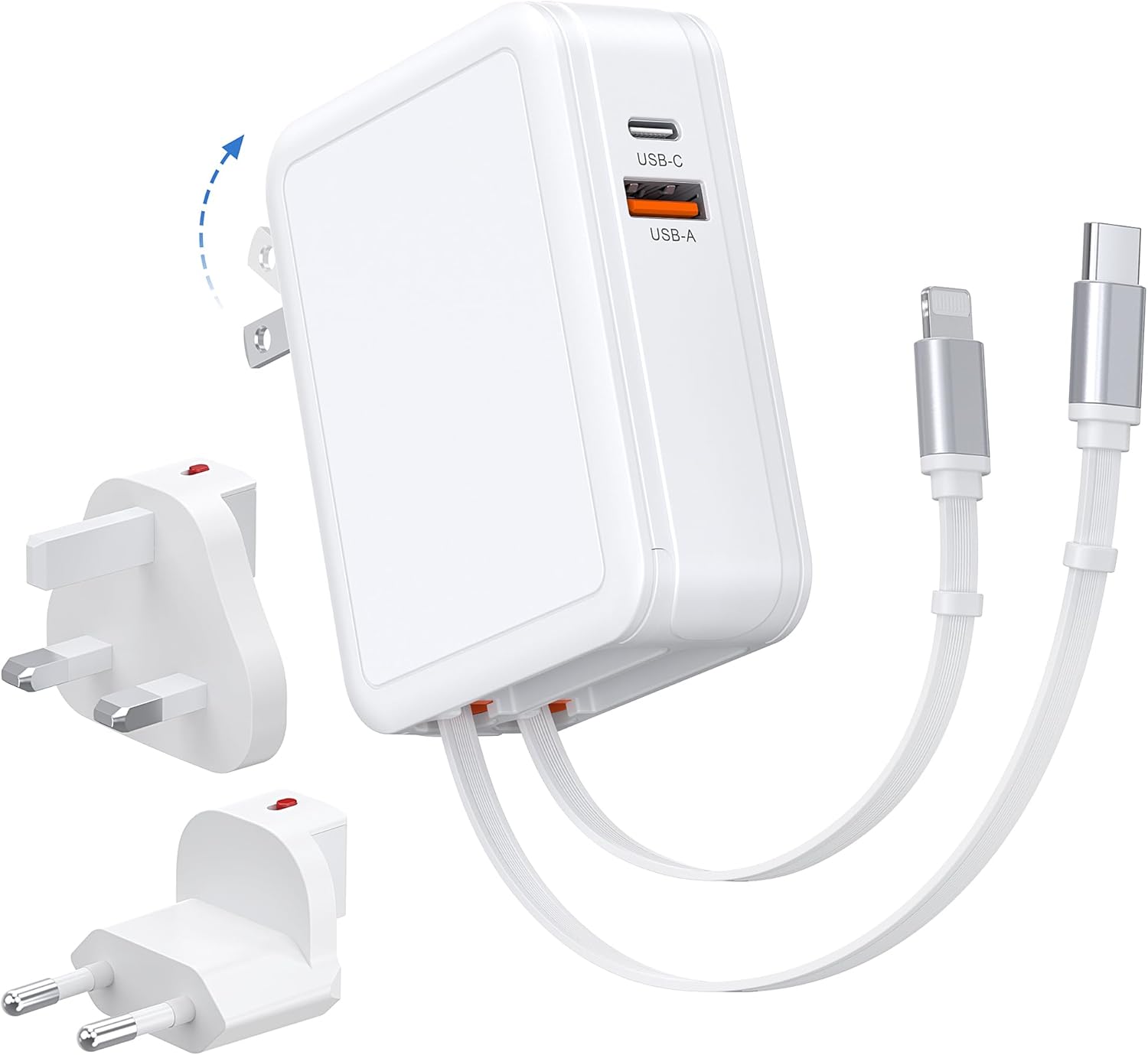
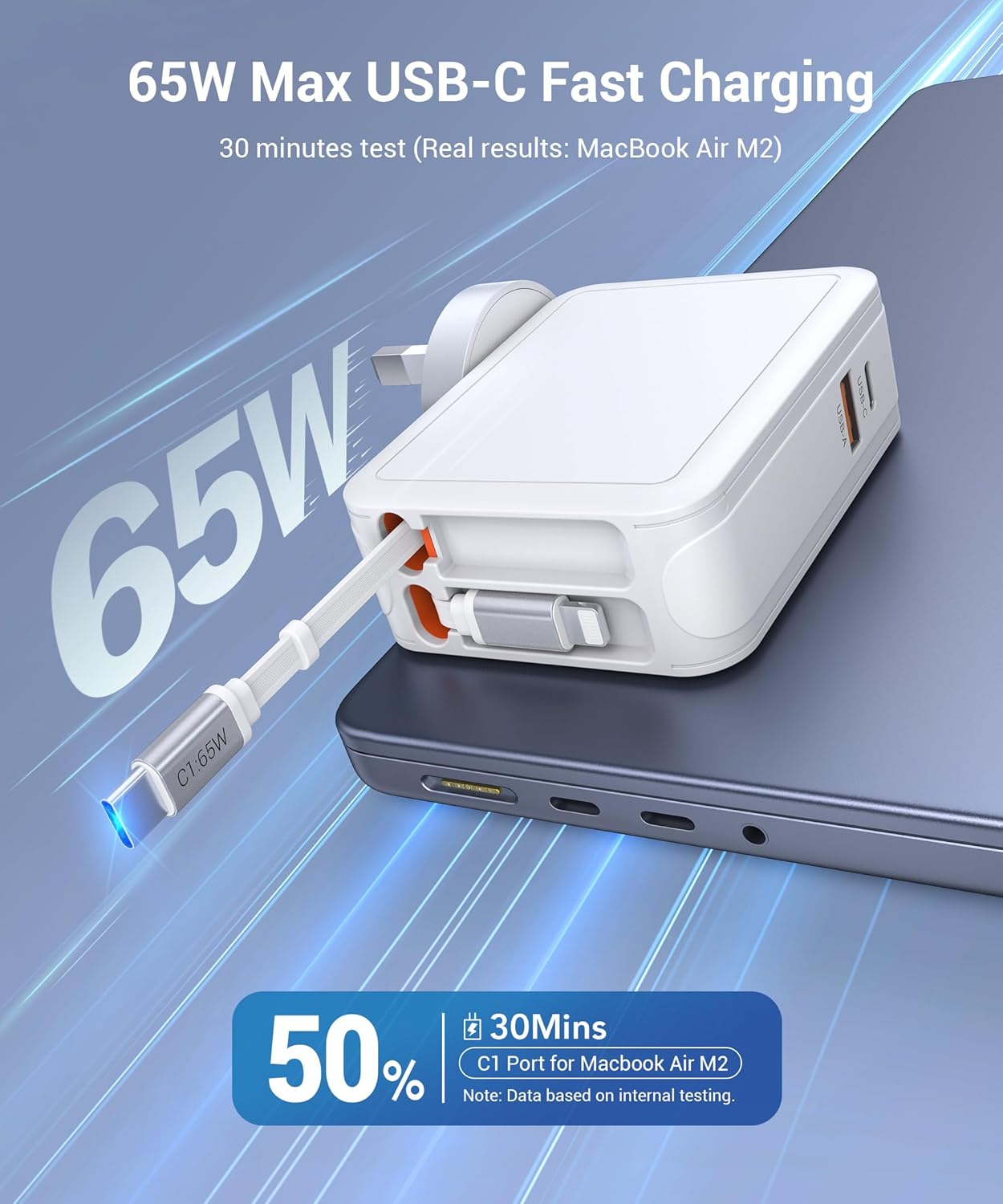
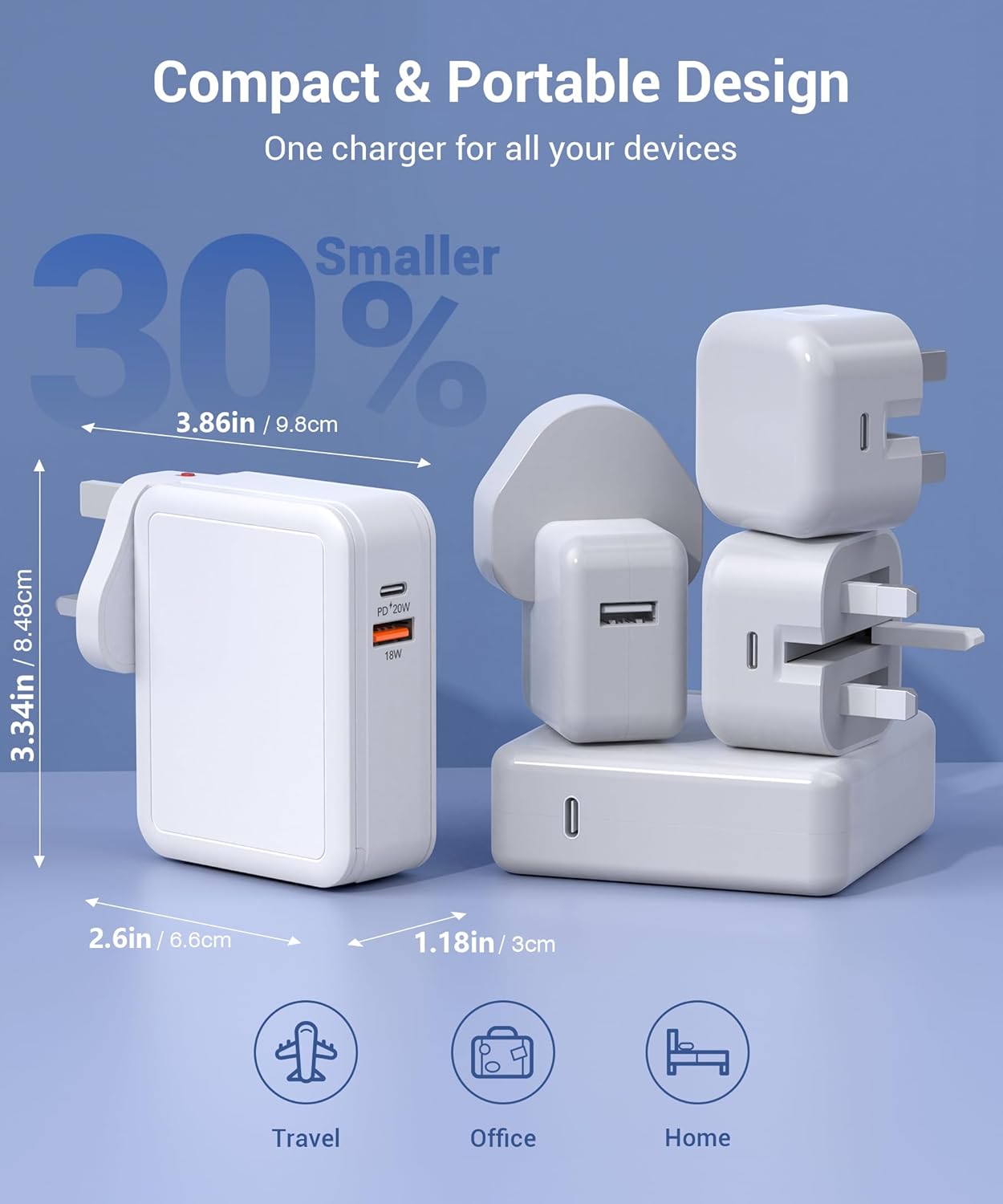
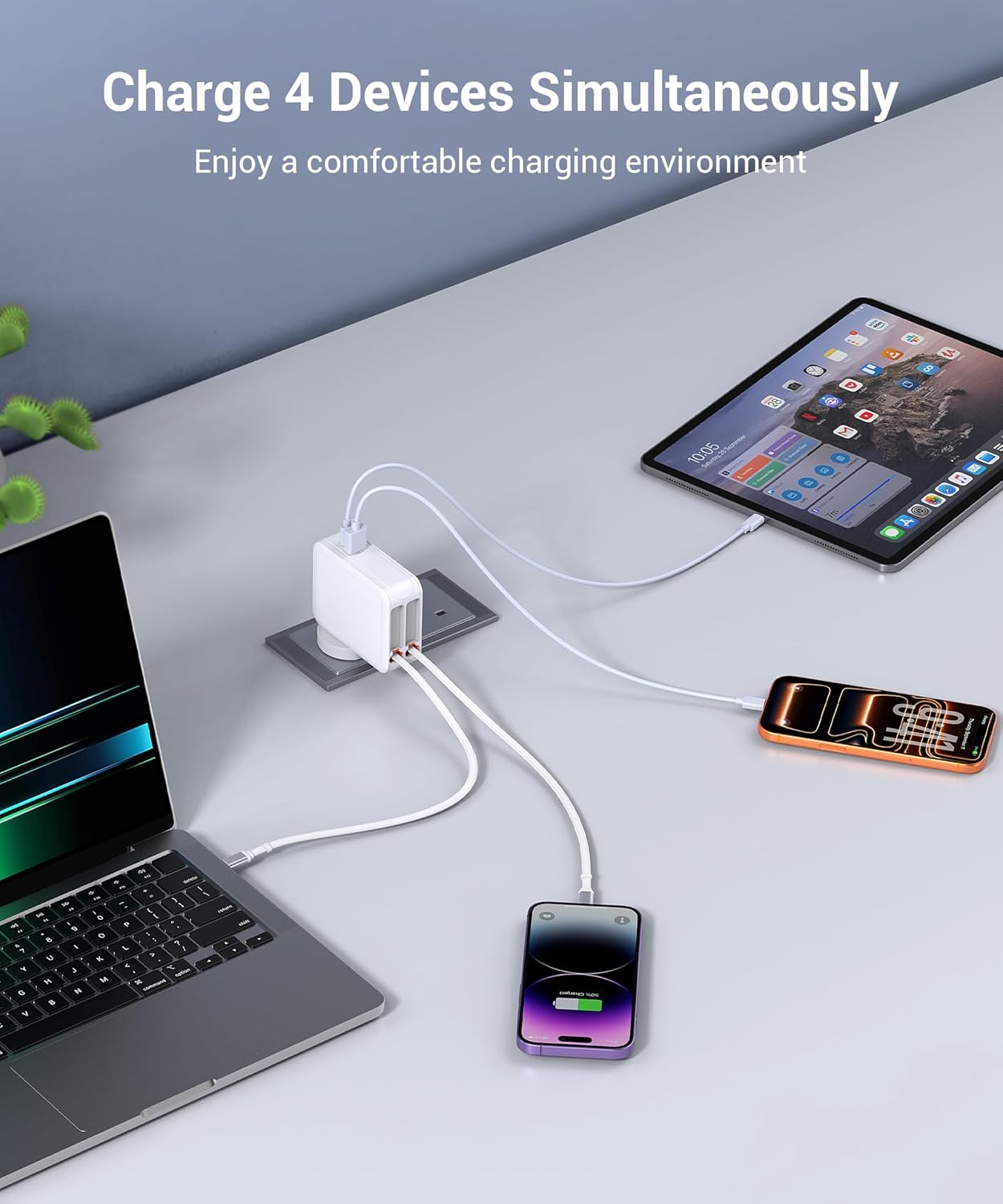
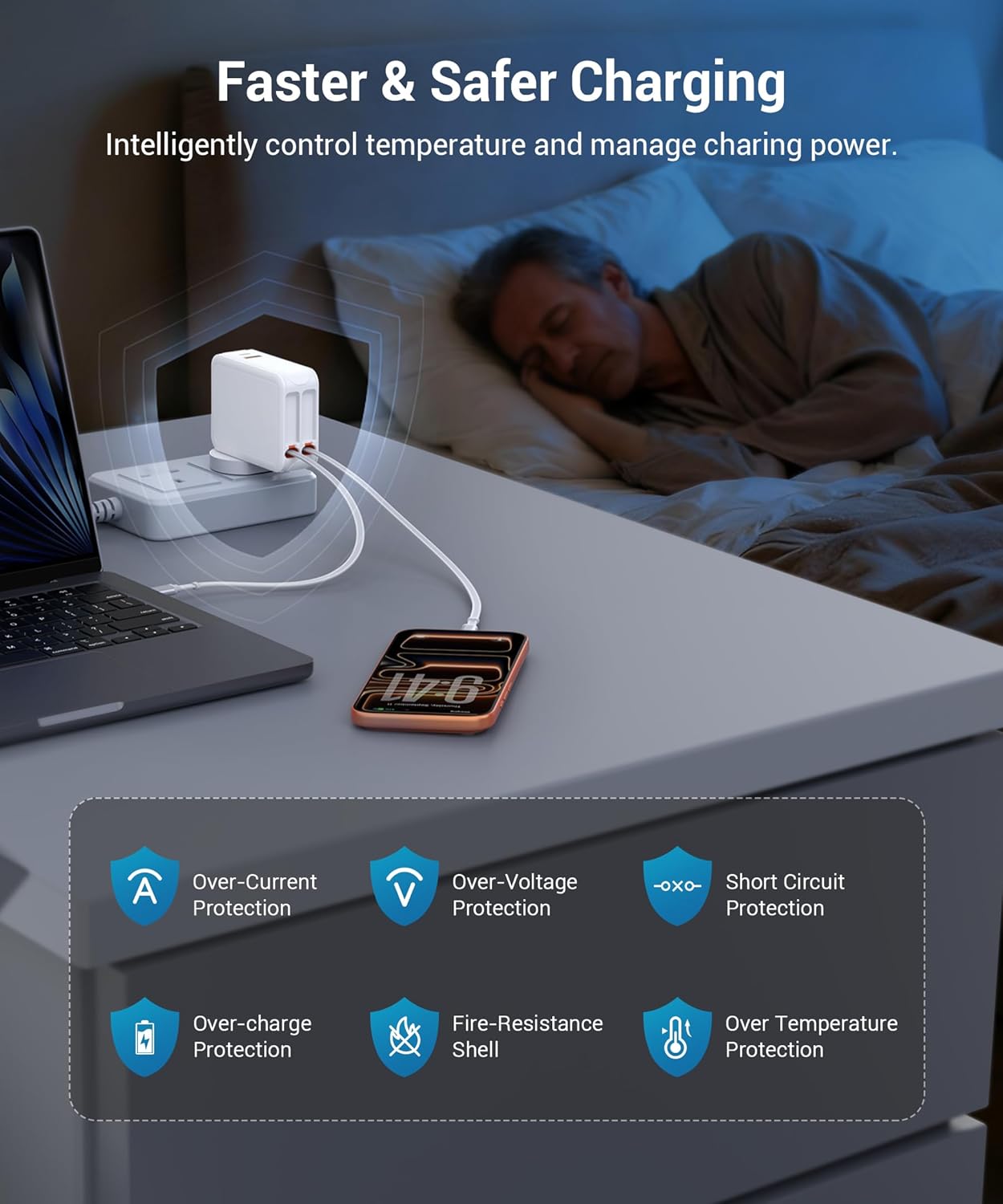
What this is and what it solves\nThis is a compact 65W wall charger designed to power up to four devices at once using a single plug. It combines a 15W USB-C PD port with a USB-A (QC3.0) port alongside two retractable cables (Lightning and Type-C). On the surface, it aims to simplify travel and home charging by replacing several adapters with one wall brick. If you often juggle an iPhone, iPad or MacBook Pro alongside other devices, it promises a neater setup and fewer tangled cables.\n\n## How it works\nThe charger uses USB Power Delivery (PD) and Quick Charge alongside two built‑in retractable cables. The PD-enabled USB-C port handles higher‑speed charging for compatible devices, while the USB-A port provides a fallback option. The retractable Lightning and Type‑C cables are designed to stay organised when not in use, and the unit is built with ABS+PC flame‑retardant material for added safety.\n\n## What stands out in use\nOn paper, the 65W total output supports rapid charging for phones and some laptops, with a claim of charging a phone to about 60% in 30 minutes. The real-world performance depends on the device and cable quality, but the combination of PD and QC3.0 covers a broad set of gadgets. The retractable cables mean you’re less likely to end up with a spaghetti of cords in your bag or on your desk.\n\n## The good and the less convincing\nWhat works well: the single brick design, multi‑port capability, and portable form factor. It’s particularly handy for travellers who want to minimise bulk and keep cables tidy. What may disappoint some users: the total 65W is shared, so if you draw maximum from both USB ports and the cables simultaneously, the fastest possible charging for each device could be affected. It’s also worth noting that the retractable mechanism relies on a gentle tug to extend and a small extra movement to retract, which isn’t unusual but isn’t perfectly foolproof for heavy daily use.\n\n## Who this is for\nThis product suits people who carry multiple devices—especially Apple devices and USB‑C laptops—while valuing portability and a tidy charging setup. It’s a pragmatic option if you want a single charging brick for home and travel, and you don’t require heavy, sustained high‑duty charging for laptops with demanding power needs.\n\n## When it makes sense to buy\nOpt for this charger if you prioritise convenience and cable management over maximum dedicated wattage to a single device. It’s a sensible choice for a compact travel kit or a small home office where a single multiport charger can replace several adapters.\n\n## What to check before buying\n- Confirm your devices support USB‑C PD and/or Quick Charge to realise the intended fast charging.\n- Consider the total wattage you typically use across devices, if you frequently need to push a high draw to multiple devices for extended periods, you may prefer a higher‑powered or more device‑specific solution.\n- Check the compatibility list for your main devices, as very new models or less common tablets may have mixed results.\n\n## Practical usage example\nYou’re on a business trip with an iPhone, iPad, a MacBook Pro, and a wireless headset. You plug the iPhone into the USB‑C PD port, the iPad into the USB‑A QC3.0 port, and rely on the Lightning and Type‑C retractable cables to connect the others. In a hotel room, this reduces clutter and makes it easy to charge all devices from one wall outlet.\n\n## What’s in the box / In the box (contextual)\nThe description notes a 65W multiport wall plug with two retractable cables. It is positioned as a travel‑friendly brick, suitable for a range of devices including iPhone, iPad, and MacBook Pro.\n\n## FAQ (selection)\n- Can I charge a MacBook Pro and iPhone at the same time? Yes, via the USB‑C PD port and USB‑A port, though charging speed will depend on the device and overall draw.\n- Are the cables easily replaceable if damaged? The product relies on built‑in retractable cables, there is no explicit mention of replaceable cables.\n- Is it safe to use in a hot room? The unit uses protective mechanisms to prevent overload and overheating, but normal care applies.\n\n## Final decision: Is it worth it?\nWorth considering if you want a compact, all‑in‑one charging solution for home and travel, with sensible limits for mixed device use and a tidy setup. If you need dedicated maximum wattage for heavy laptops or long sessions of high load, you may prefer a more specialised or higher‑powered charger.