

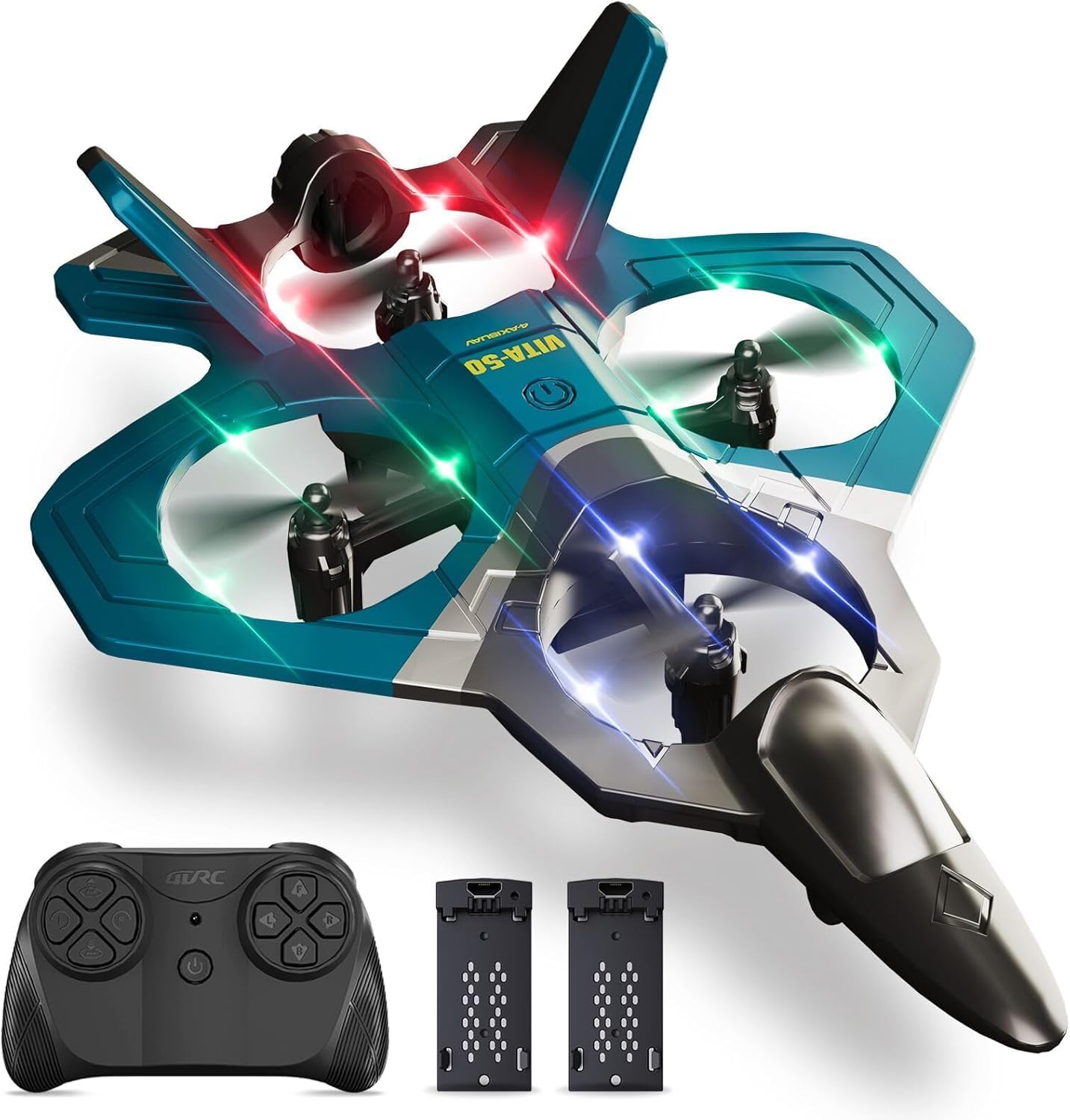
4DRC V50 RC plane with 2 batteries and lights ✈
Product description
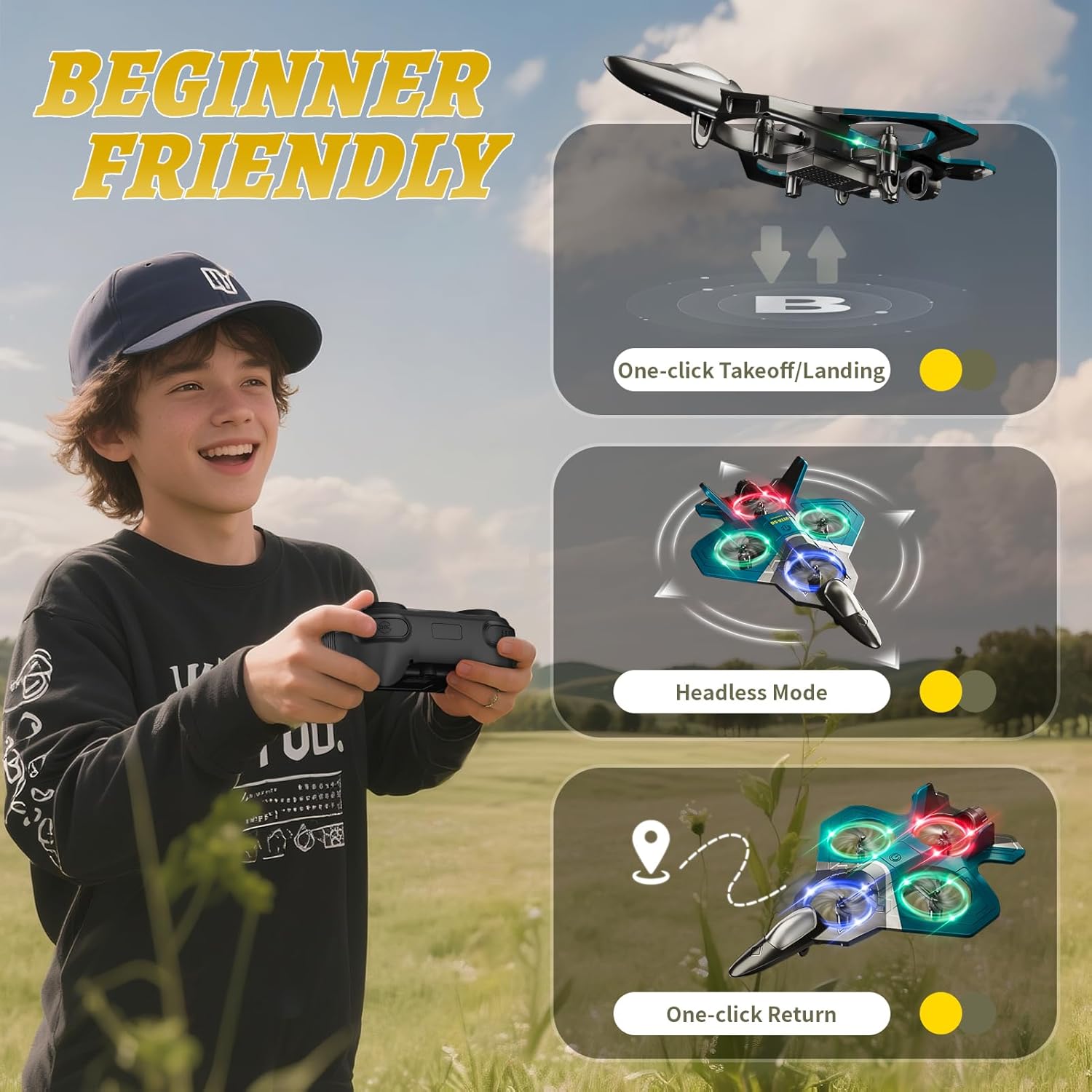
This lightweight RC glider combines simple controls and stunt capability to make outdoor flying more approachable. Designed as an RC plane for beginners, it includes hand-throw and glide take-off options and built-in stabilisation to help new pilots get airborne with less fuss.
Key Points
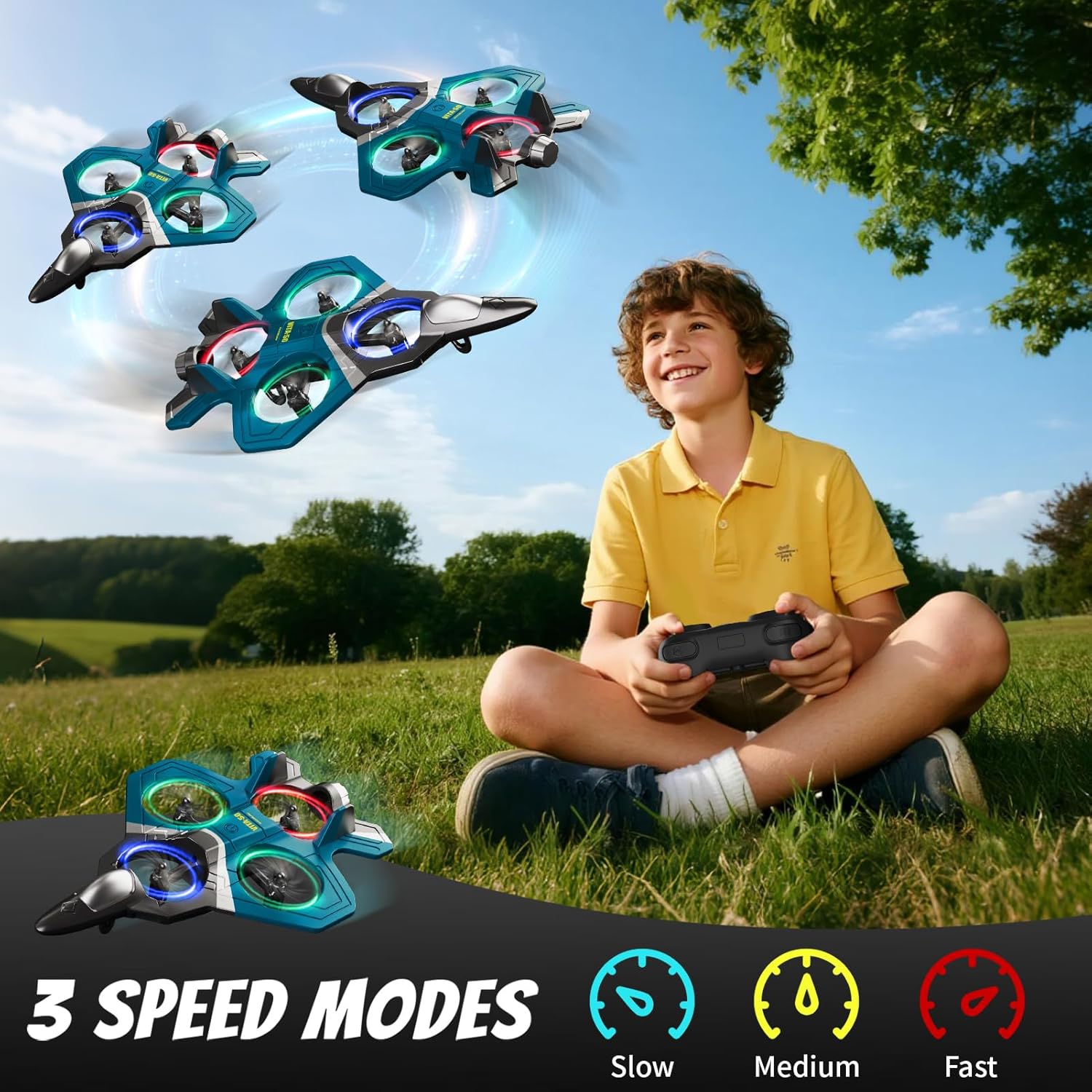
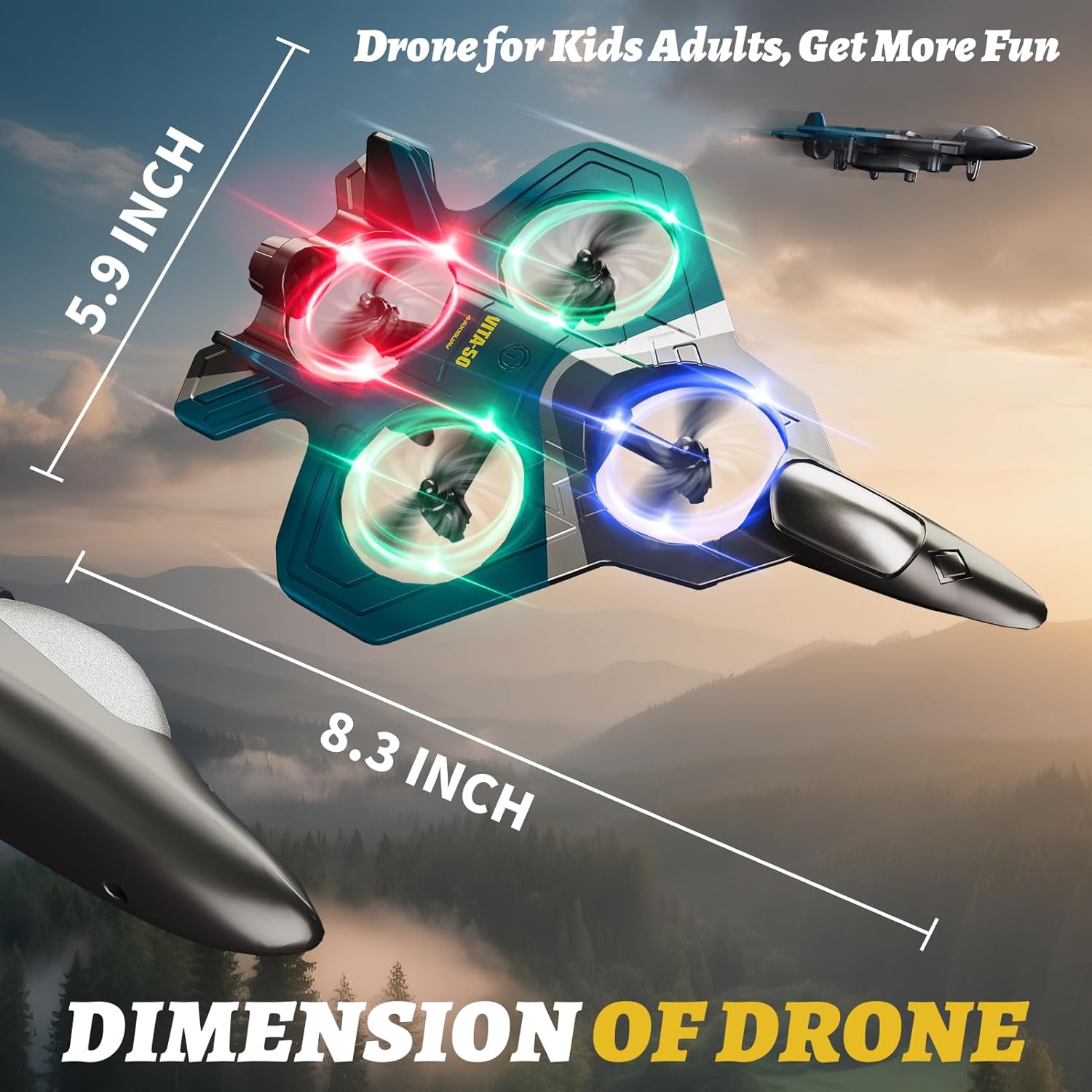
The model supports multiple flight modes, including headless mode and altitude hold, which simplify orientation and hovering during practice sessions. It also has three speed settings so you can start slow and increase pace as you gain confidence. LED lights make evening flights visible and add visual appeal during stunts. 🛩️
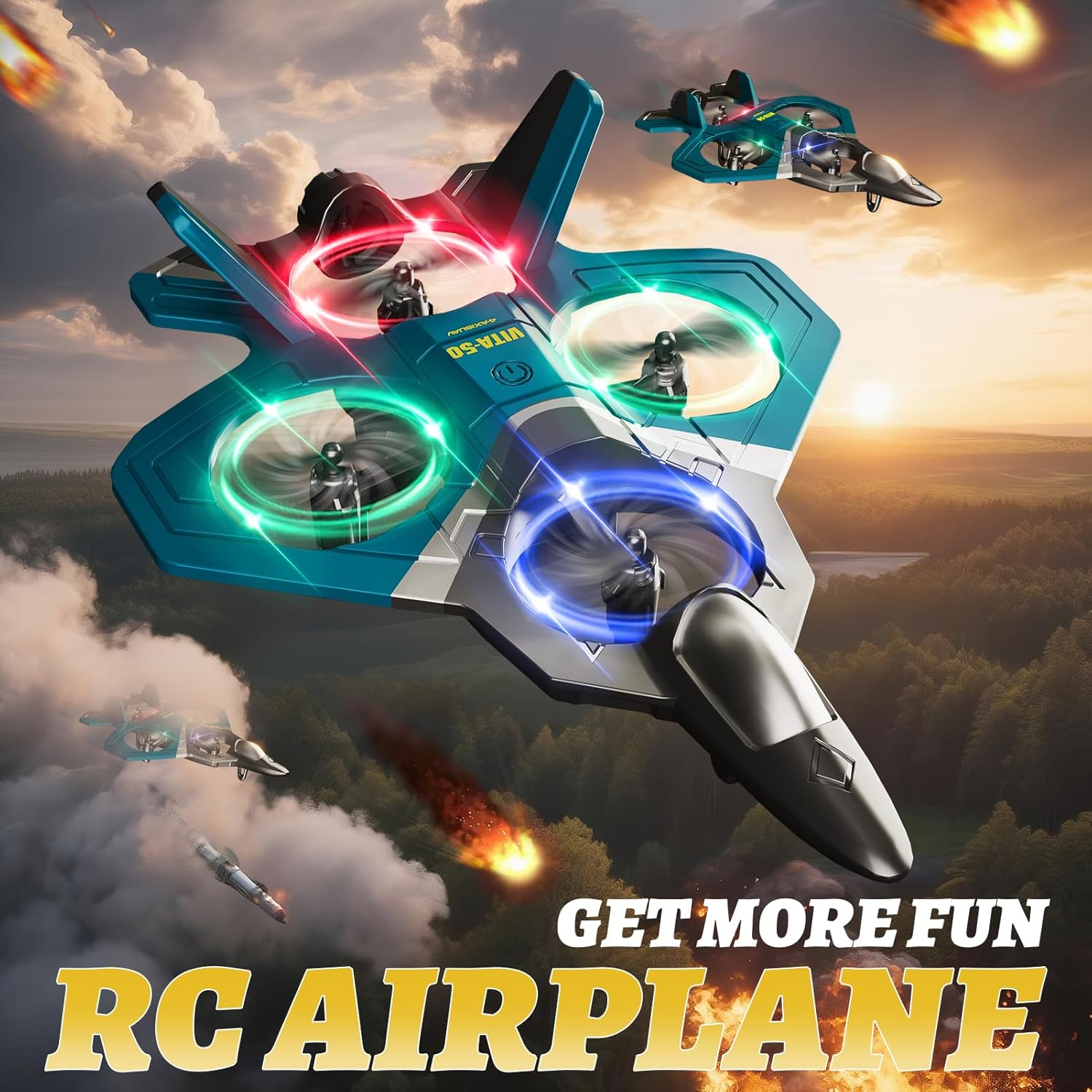
Durability is built into the airframe with a TPU shell and honeycomb internal structure that help absorb impacts and protect the fuselage in rough landings. The enclosed propellers reduce the risk of accidental contact, and the overall weight stays low to aid manoeuvrability. Note that, according to the manufacturer, exact flight time can vary depending on flight style and wind conditions.
Technical Specifications
- Name: 4DRC V50
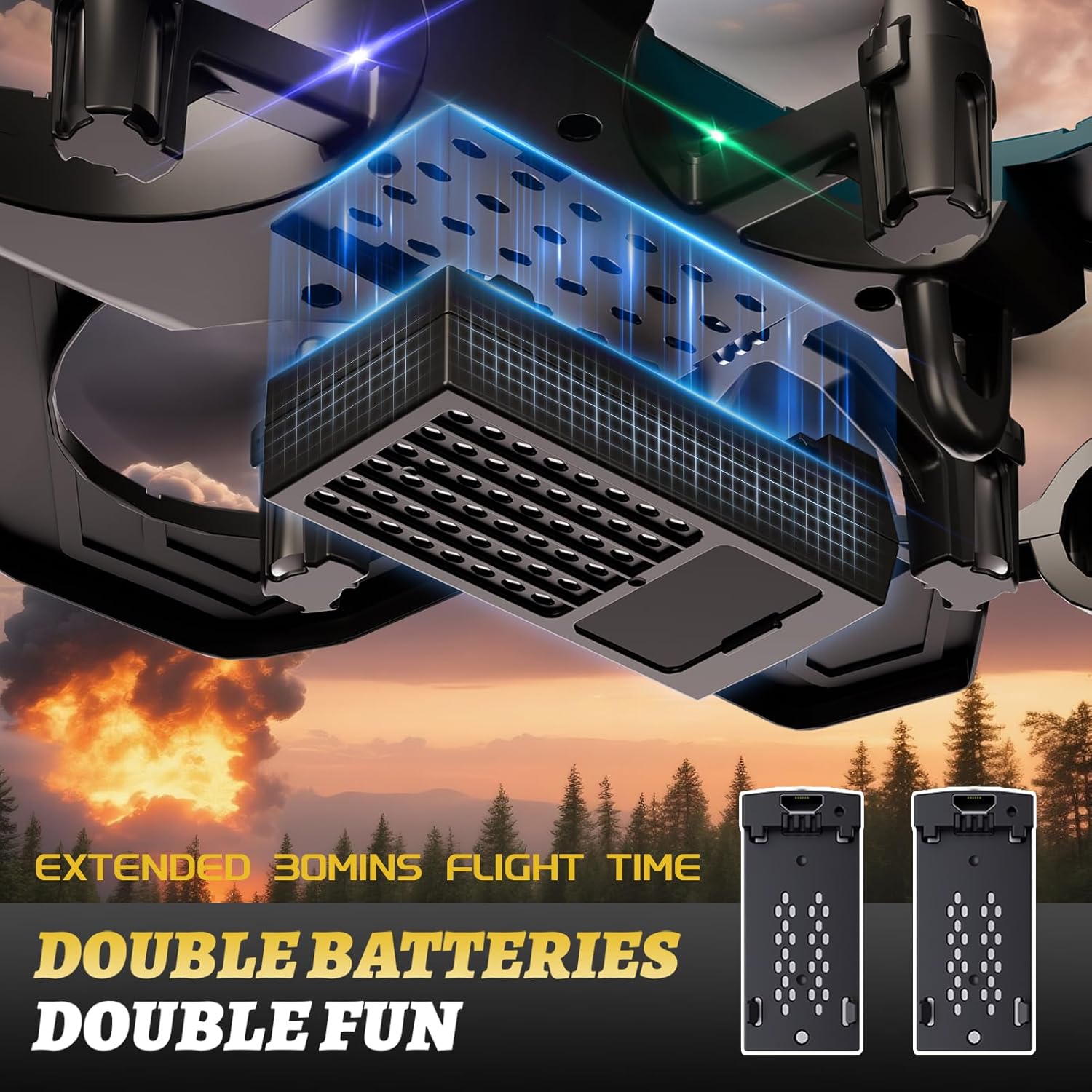
- Battery: 2 modular batteries, up to 30 minutes per battery according to the manufacturer
- Radio: 2.4 GHz remote control
- Motors: 4 high-power motors
- Flight modes: Headless mode, altitude hold, one-key takeoff/landing/return and emergency stop
Practical Tips
Start by practising basic take-offs and landings in an open area without obstacles. Using the hand-throw take-off can be quicker for beginners, while the glide take-off gives a bit more control for precise launches. Adjust trim settings after the first flights to correct any tendency to drift left or right. ⚙️
If you plan night flying, test the LED visibility from a short distance first to confirm orientation before attempting stunts. For longer sessions, swap the modular batteries to extend flying time and let cells cool between runs. Consider flying in light wind conditions until you are comfortable with the three speed modes and the one-key flip functions.
Usage Recommendations
Charge both batteries fully before the first flight and inspect propellers and the fuselage for any transport damage. Keep firmware or transmitter batteries updated when updates are available from the manufacturer and check transmitter range during initial tests. Remember that rapid manoeuvres will reduce actual flight time, so plan sequences accordingly.