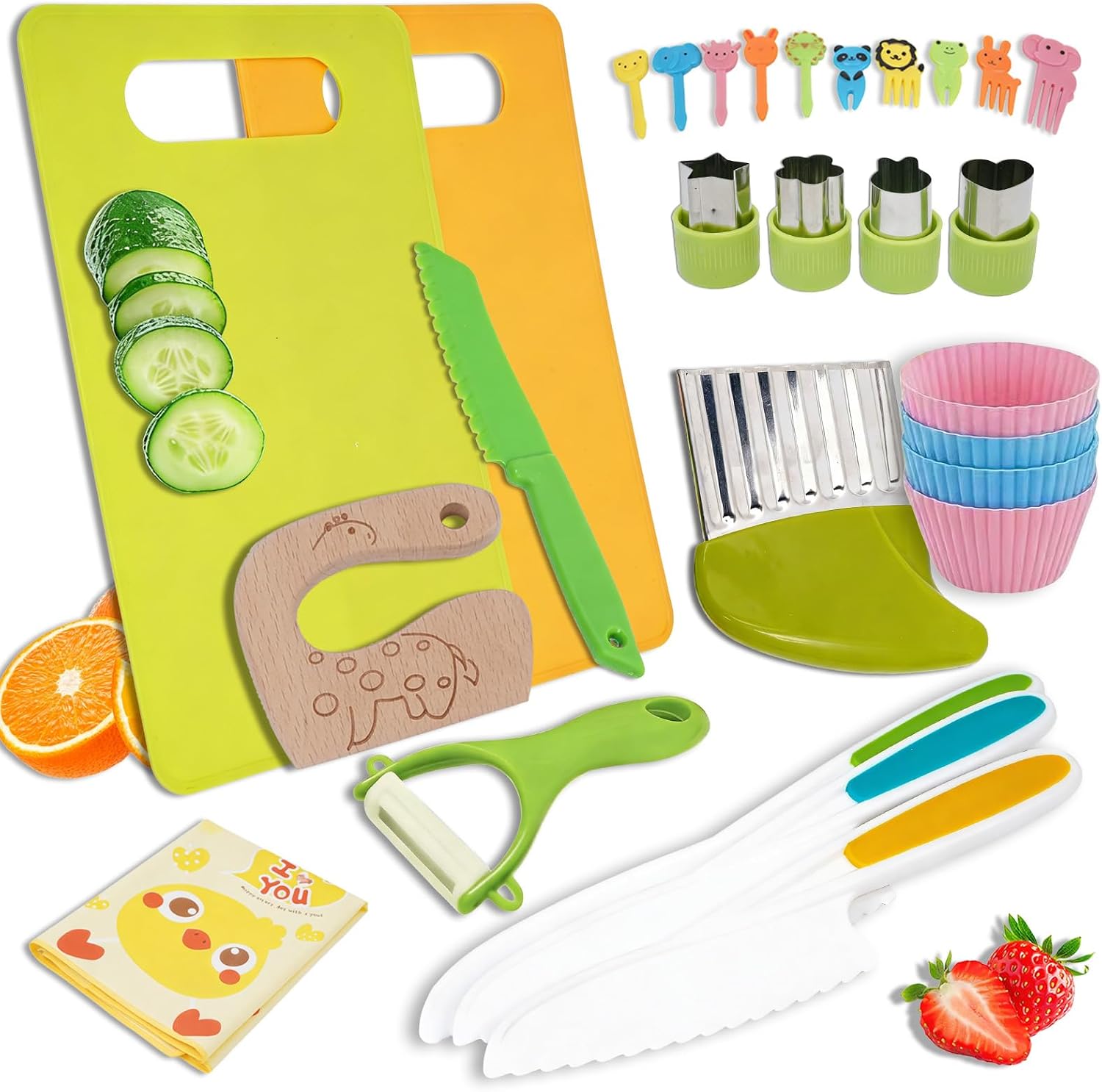
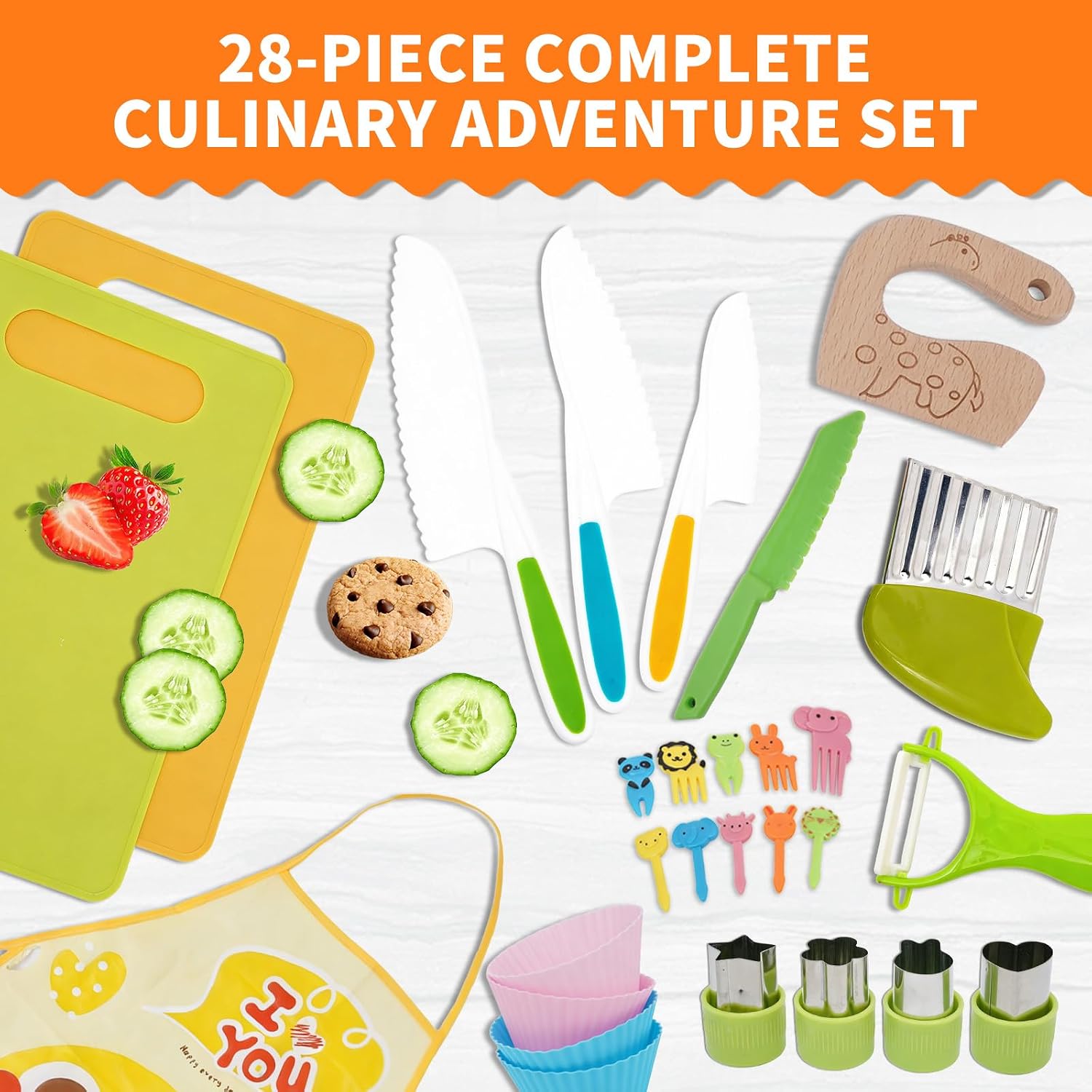
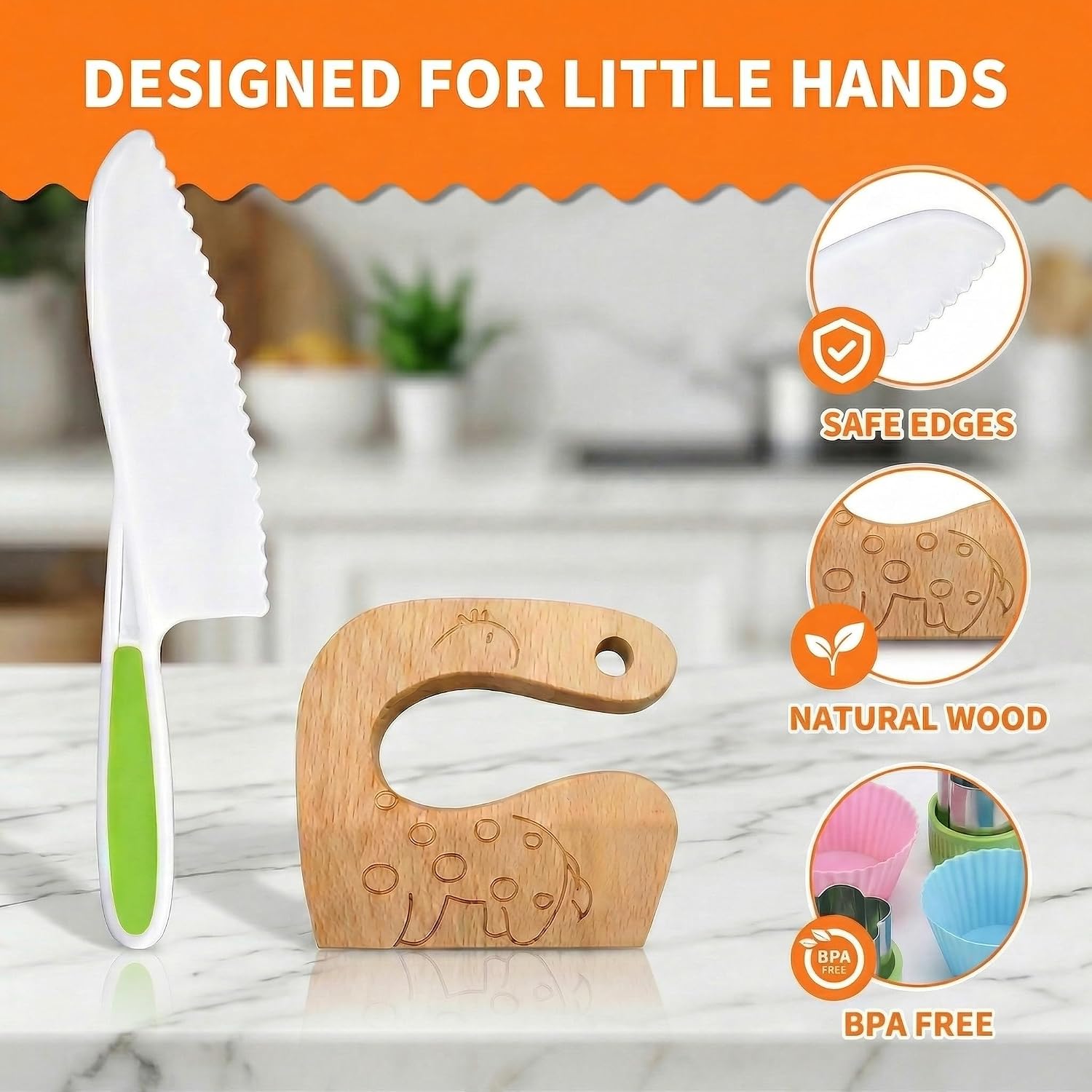
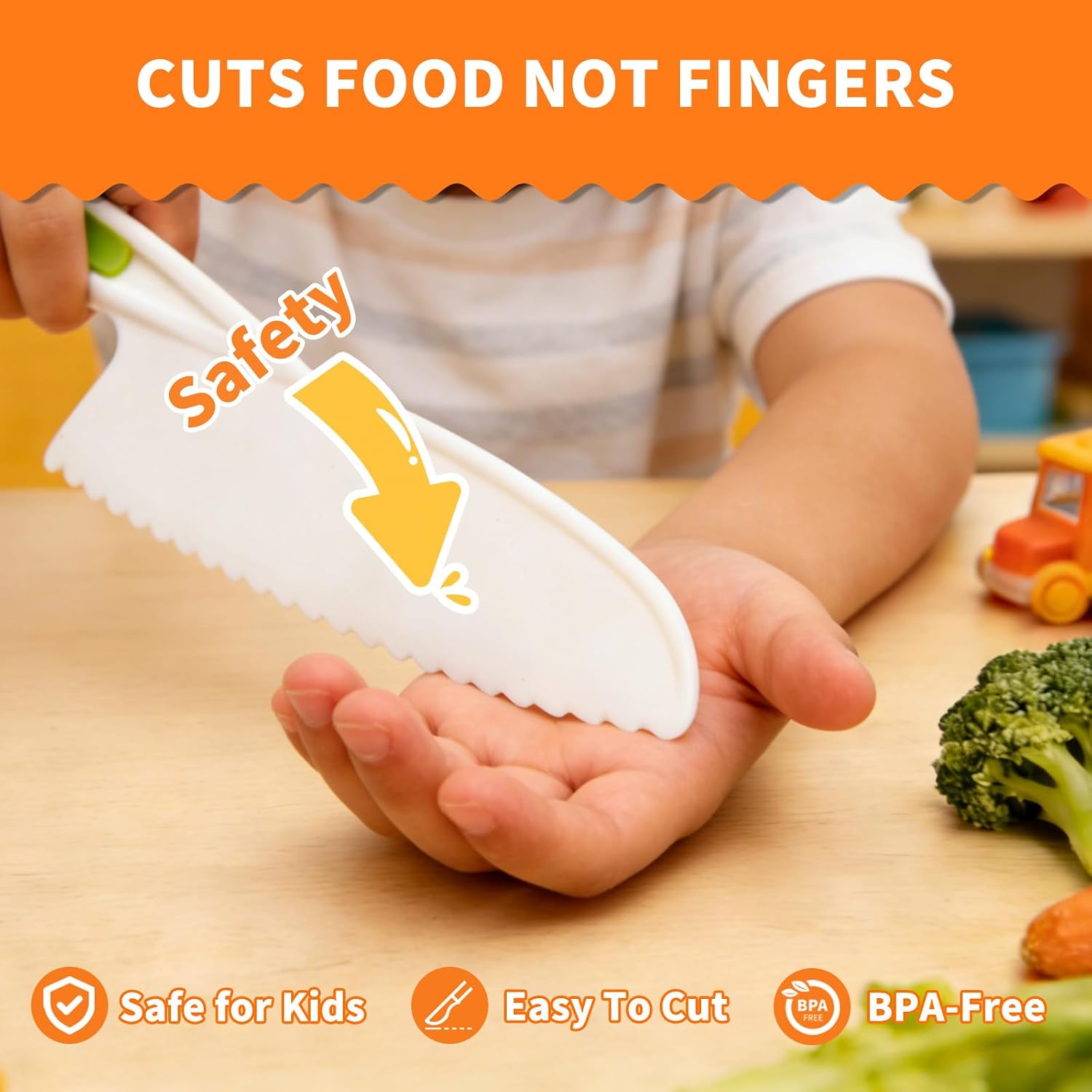
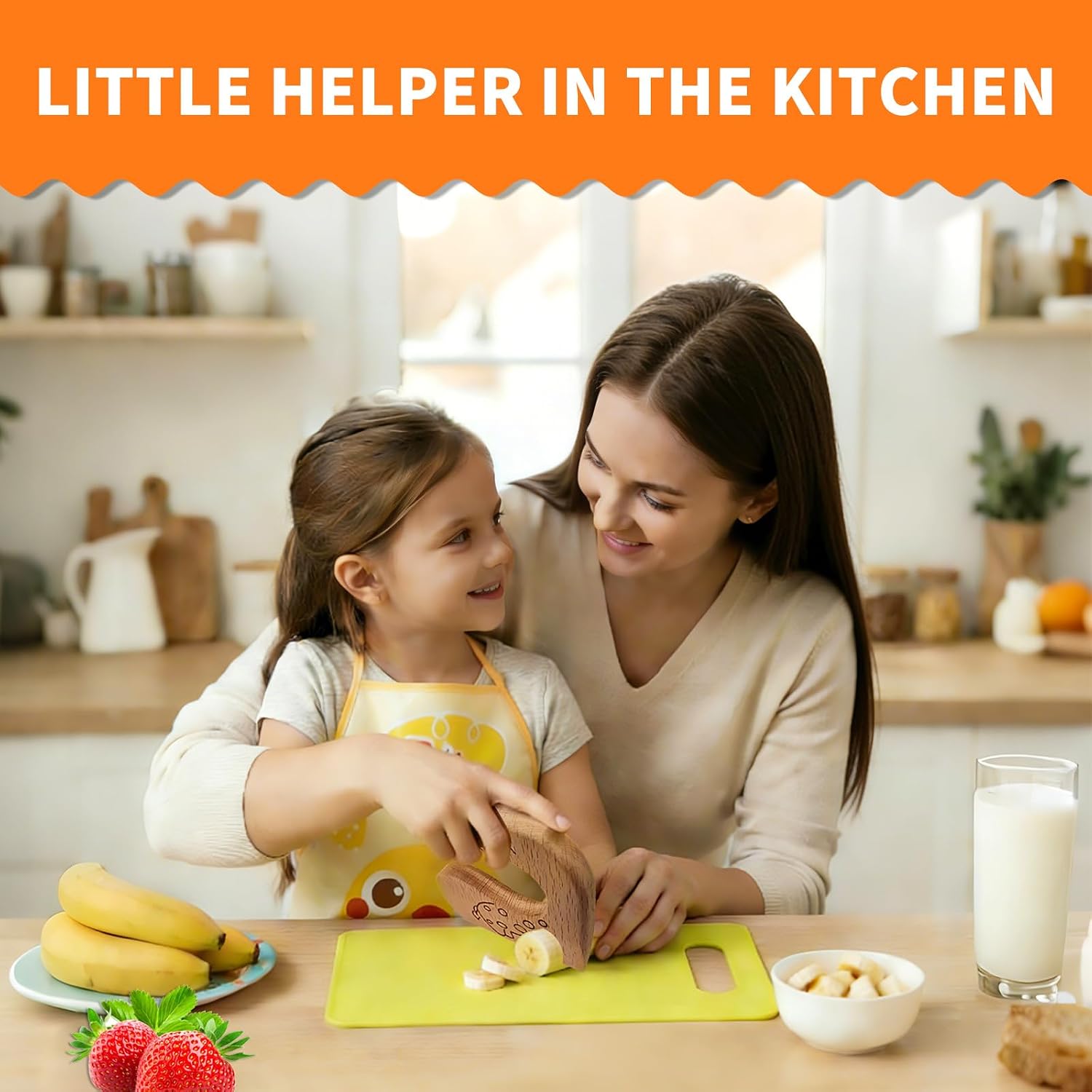
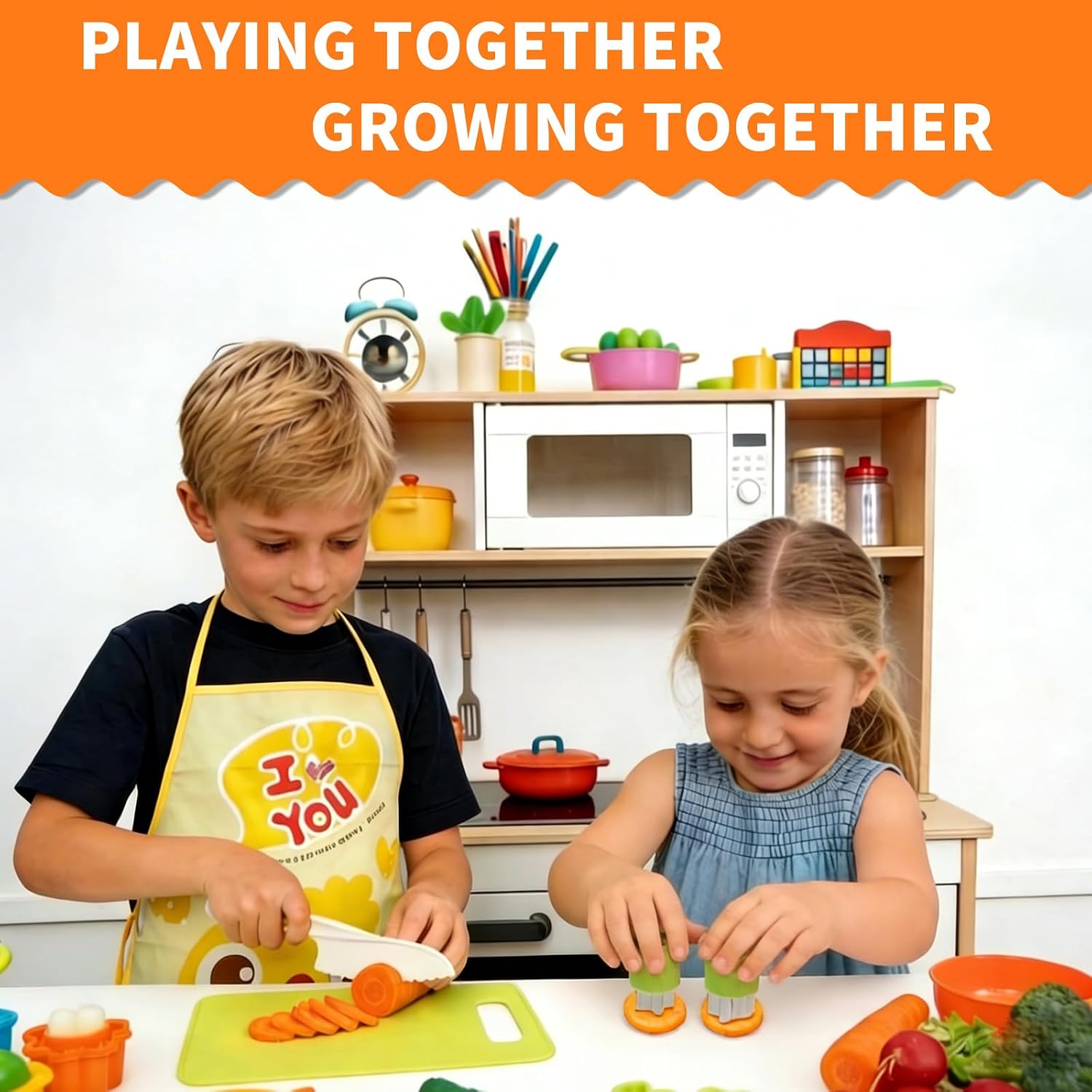
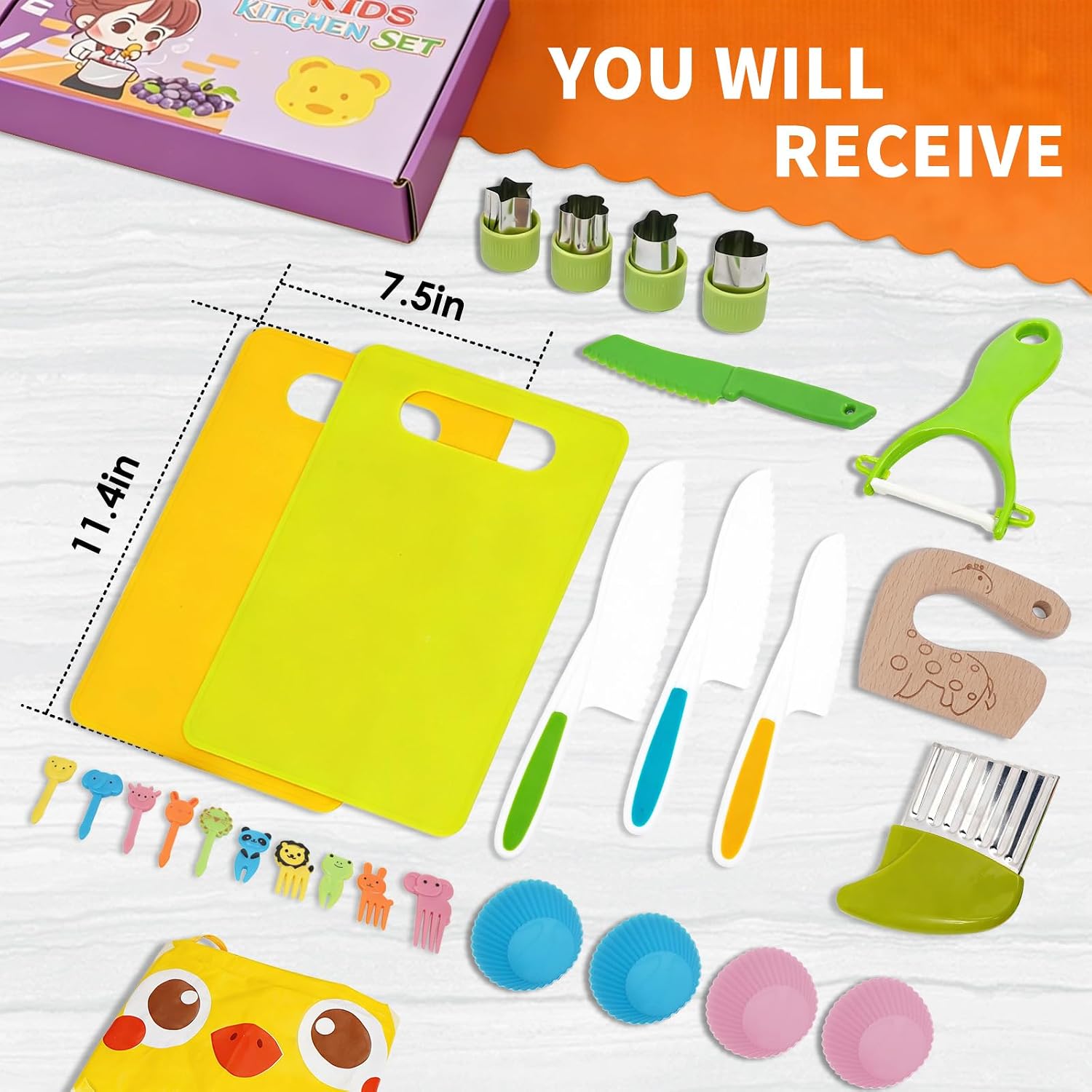
What this is and what it helps with\nA 28-piece Montessori-inspired set designed for toddlers to practise kitchen tasks with safe, child-friendly tools. It includes a wooden knife, 4 serrated child-safe knives, 2 chopping boards, a Y-peeler, a crinkle cutter, 4 fruit cutters, an apron, 10 forks and 4 muffin cups. On the surface, it looks like a pretend play set, but the idea is to give little cooks a concrete way to help in the kitchen, build confidence with real food preparation, and enjoy hands-on activities that support early motor skills.\n\n## Why it matters on the table\nThe set is pitched as more than a toy: it aims to let children participate in real cooking tasks such as cutting vegetables, fruit and bread. The blades are described as stainless steel and designed to cut food rather than fingers, which is central to a safer, more engaging pretend-to-cook experience. The materials are BPA-free and edges are rounded, prioritising safety in the early cooking phase.\n\n## What stands out in use\nThe bright colours and giraffe motif on the wooden knife add a playful element that can capture a child’s interest and speed up the transition from pretend to practical activity. For little hands, the wooden handle and light construction are easier to grip than heavier metal tools, which can help with fine motor development as they practise safe sawing, slicing and transferring pieces.\n\n## Pros and reasonable caveats\n- Pros: a broad set of tools in one package, designed with safety in mind, promising opportunities for family bonding during cooking sessions. The inclusion of cutting boards and various utensils supports a range of food-prep activities, not just pretend play.\n- Cons or caveats: while described as safe for toddlers, supervision is still essential when new cooks are handling any cutting activity. The effectiveness of “real cooking” tasks will depend on the child’s dexterity and the types of foods chosen for practice. The specific toy nature means it’s best seen as a foundational, introductory set rather than a full culinary kit.\n\n## ¿Who it’s for and who it isn’t ideal for\nIdeal for parents wanting practical, game-based kitchen role-play that teaches basic skills and independence. It may suit preschoolers who are ready for loose, guided food-prep tasks. It might not be the best choice for those seeking a highly realistic or professional simulation, as this remains a toy-based set with safety-first design.\n\n## When it makes sense to buy\nIf you’re aiming to encourage early cooking involvement, develop fine motor skills, and create opportunities for shared mealtime moments, this set offers a balanced mix of play and practical activity. It also fits well for family bonding and simple kitchen education at home.\n\n## What to check before buying\n- Confirm the child’s age and ability to handle basic tools under supervision.\n- Consider how you will introduce the tools: starting with cutting practice on soft foods can reduce frustration.\n- Think about storage: with 28 pieces, ensure you have space to keep everything organised and safe when not in use.\n\n## How it compares to other approaches\nCompared with purely play kitchen sets, this option leans into real-food cutting activities, which can help demystify cooking and reduce modelling gaps when kids observe adults cooking. It isn’t a substitute for adult supervision or for more advanced kitchen activities, but it bridges pretend play with real-world tasks.\n\n## Practical example of use\nImagine a weekend task: you and your toddler wash vegetables, they help with cutting using the wooden knife and light-friction actions, then you assemble a simple salad together on the chopping boards. It becomes a small, shared cooking moment rather than a separate activity.\n\n## FAQ (quick answers)\n- Is the set safe for toddlers? The product emphasises BPA-free materials and rounded edges, with safety being a top priority. Supervision is still recommended.\n- Can children actually cut real food? The knives are described as capable of cutting food, not fingers, which supports early cooking tasks under guidance.\n- What if a piece breaks or wears? As with any plastic/wooden toy set, inspect periodically for wear and tears and remove any damaged pieces from play.\n\n## Final verdict\nIt’s a solid pick if you want a Montessori-aligned kitchen kit that blends play with practical cooking tasks for toddlers. It leans more toward enabling real, supervised practice than purely pretend play, though it won’t replace more advanced kitchen equipment and techniques. If you prioritise safety-first design, a broad range of utensils, and the potential for family bonding around cooking, this set is worth considering.\n\n## Quick note on use and expectations\nTen features to note: safe knives, wooden knife with a giraffe motif, included chopping boards, and a family-friendly assortment of utensils. Expect some pieces to be suited to soft foods initially, with progress likely tied to the child’s confidence and dexterity.\n