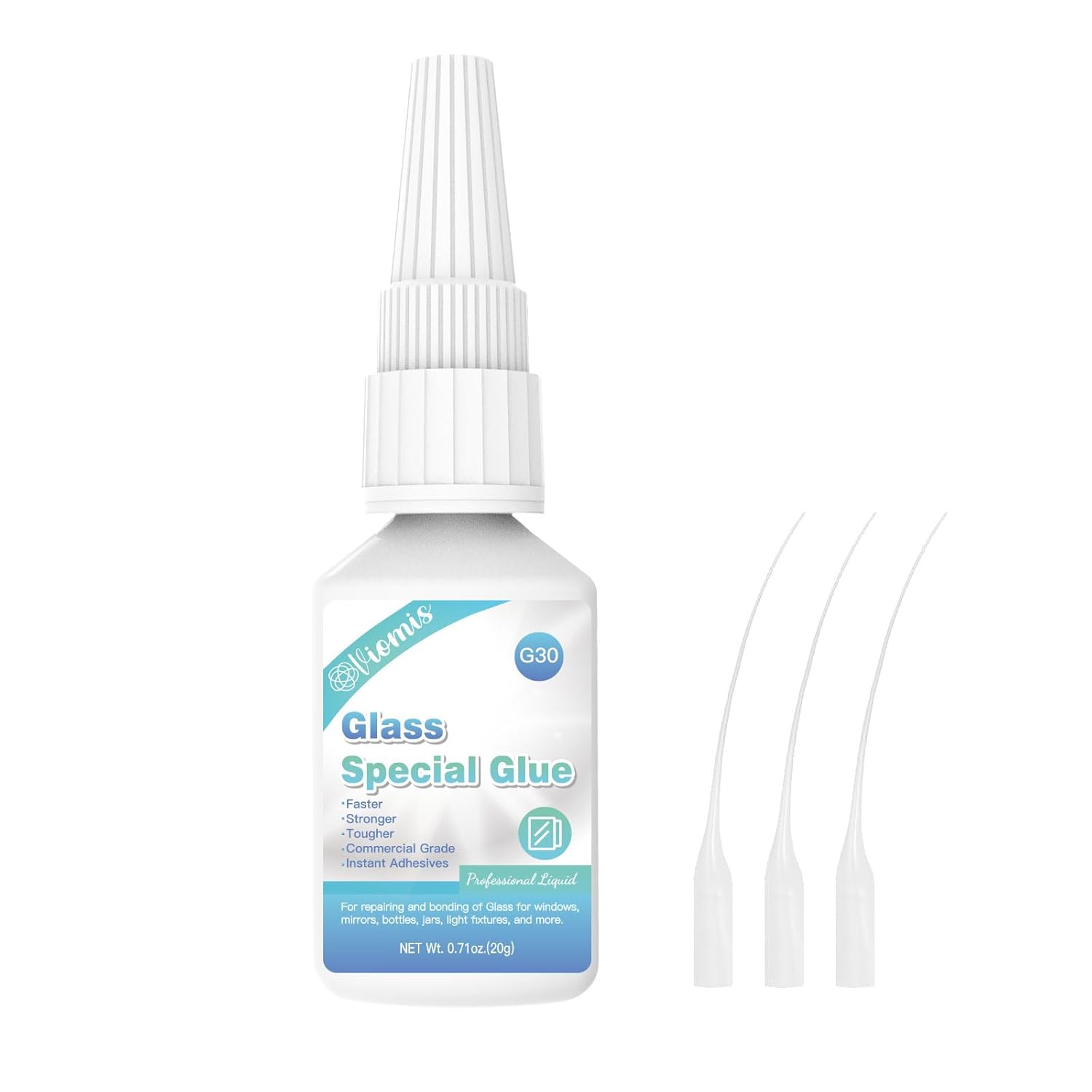
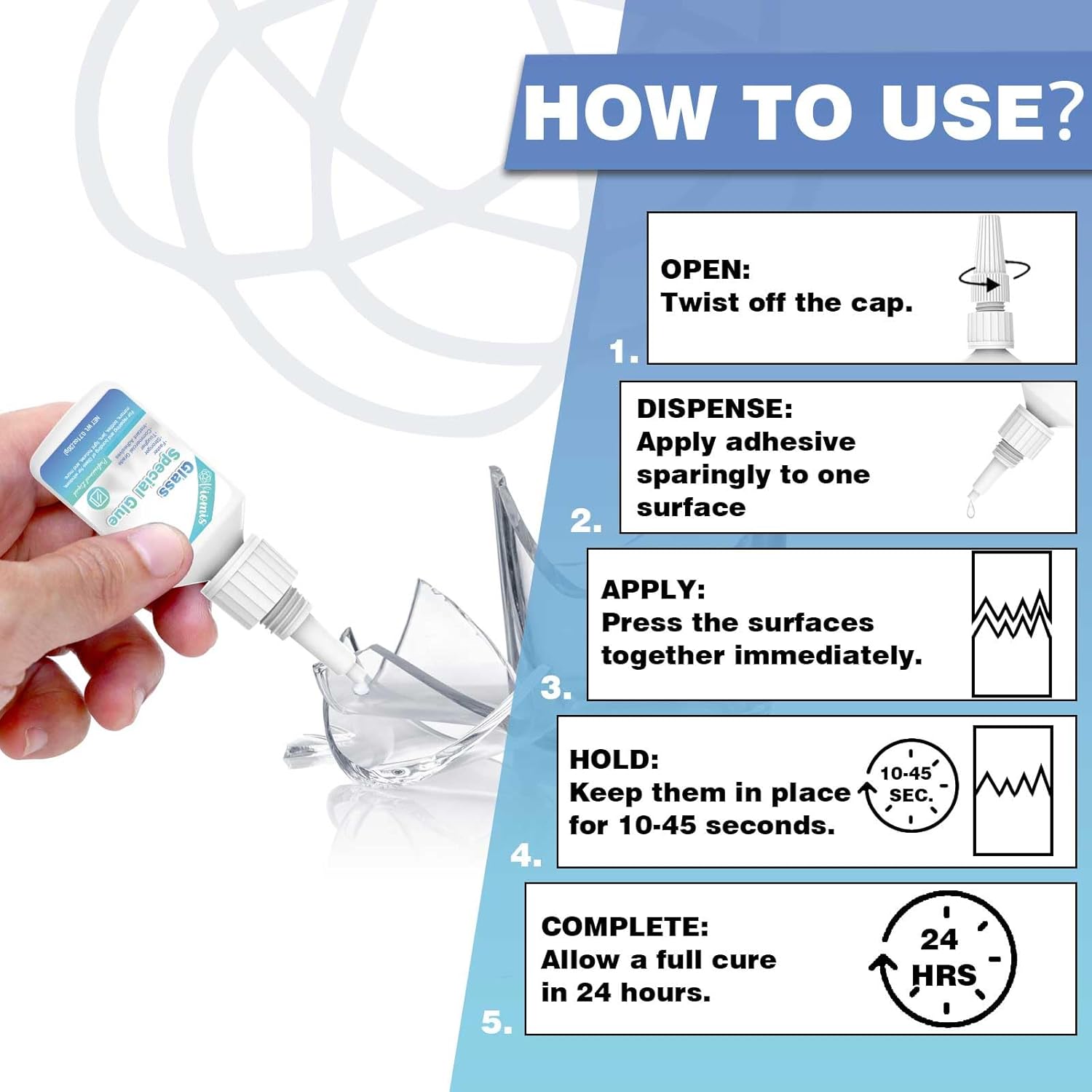
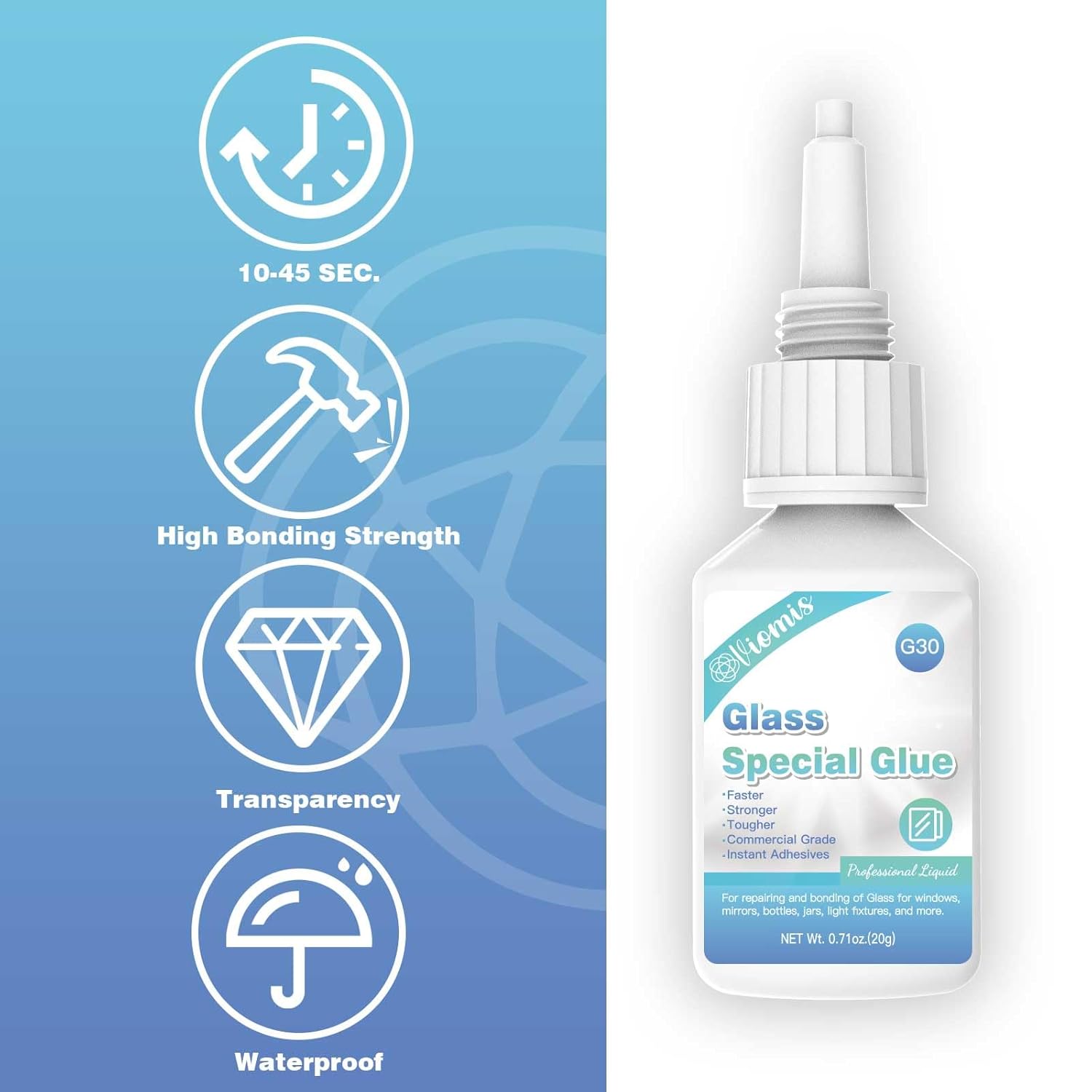
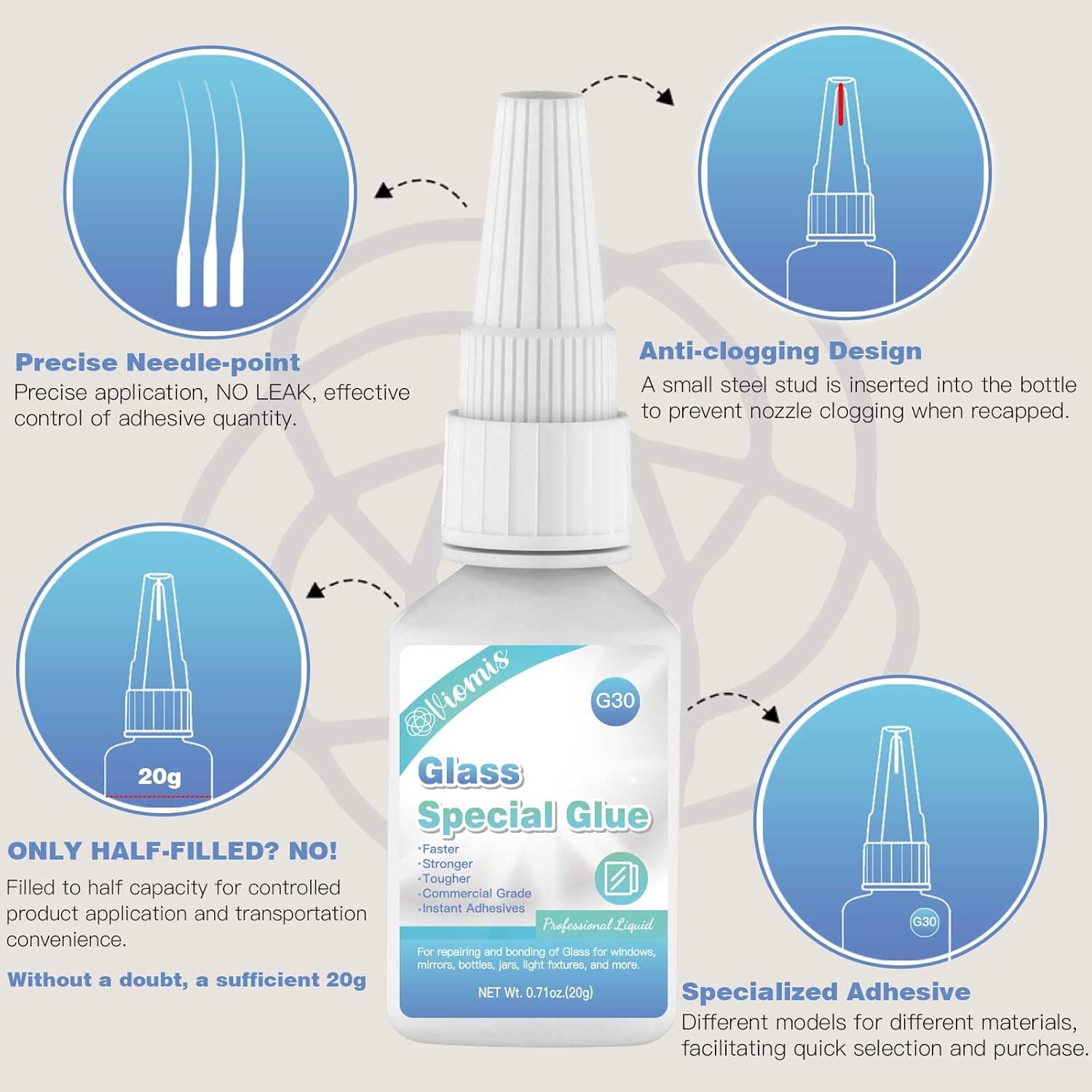
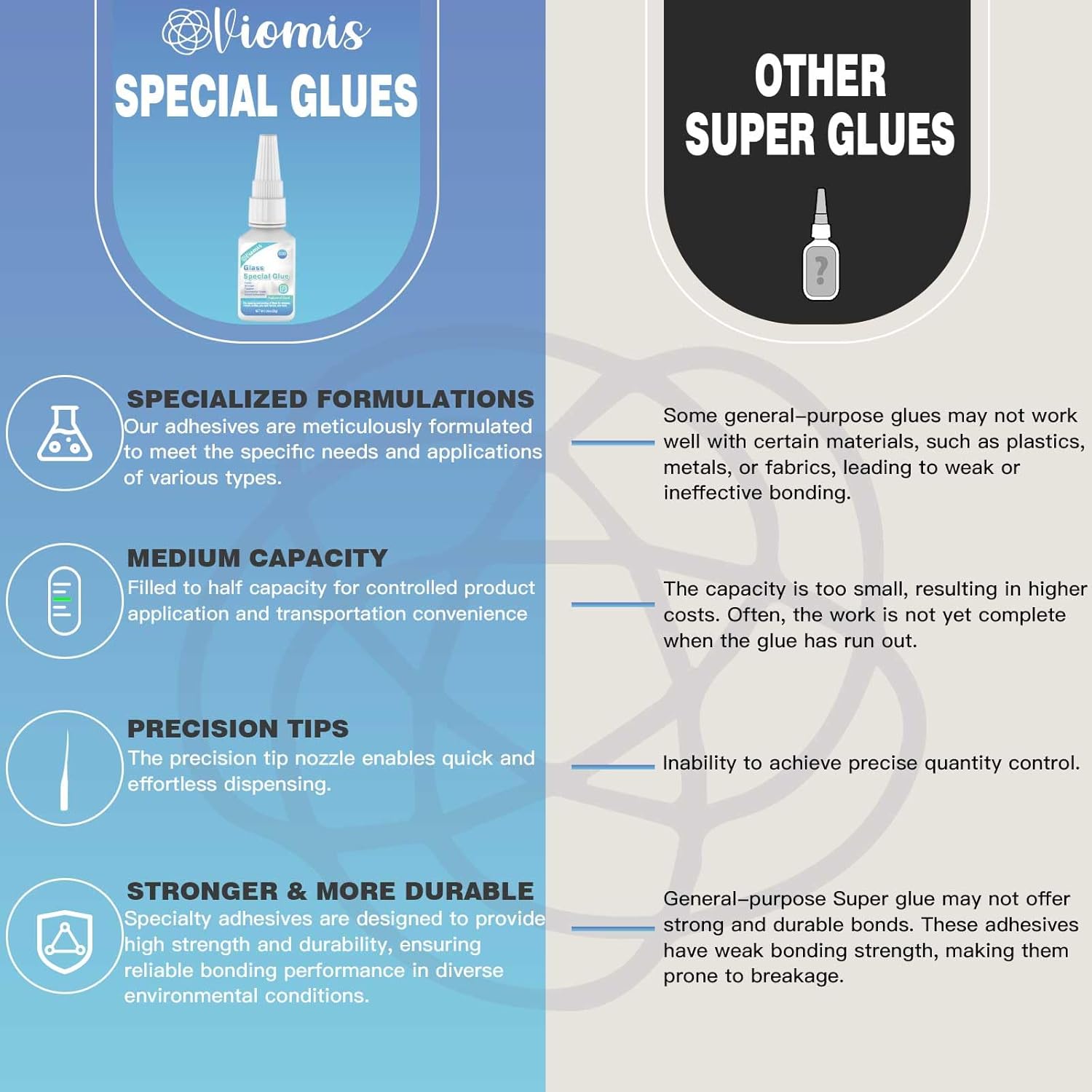
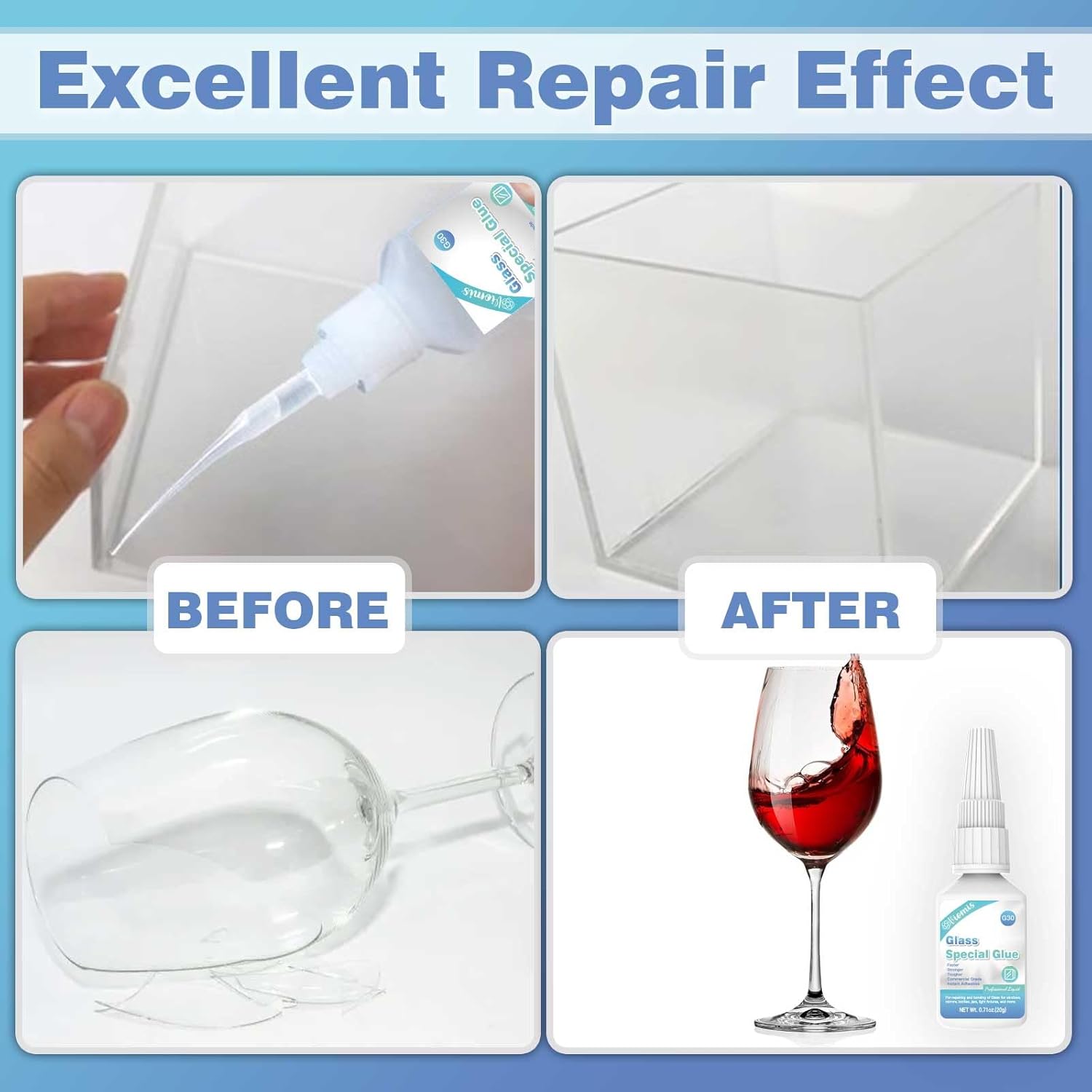
What this is and what it solves\nThis is a 20g clear, instant glass glue designed for quick, durable repairs on glass and similar materials such as acrylic. It targets everyday fixes and craft projects where a clean, almost invisible bond is preferred. On paper the formula promises a strong hold that remains stable under typical use, helping to repair broken glass, glass crafts, mirrors and some accompanying materials. It isn’t a universal industrial adhesive, but for household repairs and hobby builds it aims to offer a reliable finish without visible residue.\n\n## Real-world take: strengths and limitations\nIf you prioritise speed, the drying time is a notable point—advertised as around 15 seconds, which can speed up small repairs and spur quick project progress. The bond is described as long-lasting and resistant to temperature changes, reducing worries about discolouration or brittleness over time. Practically, this can help keepsake items like mirrors and glass accents secure in daily use. However, the actual performance depends on proper surface preparation and realism of load. For particularly high-stress joints or surfaces with oils, extra caution may be needed. This isn't presented as a cure-all for structural damages or valuable items, the safety notice recommends testing on a small area first and avoiding use on irreplaceable pieces.\n\n## What stands out in daily use\nThree precision tips are supplied to improve application control, enabling neat repairs even in tricky corners or vertical surfaces. The liquid is designed to bond smoothly to uneven surfaces, which helps when faces aren’t perfectly flat. The finish is described as clear and resistant to whitening or darkening, which supports a seamless, almost invisible repair. In practice, you’ll notice that setup time matters: careful alignment before curing is key for a tidy result.\n\n## Who it's for\nThis glue could suit DIY enthusiasts, hobby crafters and small repair tasks at home—think repairing a chipped glass ornament, fixing a broken mirror frame, or bonding glass components in craft projects. It may also appeal to hobbyists who work with glass and acrylic, where quick setting and low-visibility bonds are valued. It’s less clearly aimed at professional glass fabrication or heavy-load repairs where industrial adhesives or specialised equipment might be more appropriate.\n\n## Who it isn’t ideal for\nIf you’re dealing with high-stress joints, heavy mechanical loads or items of great sentimental or monetary value, you may want to proceed with extra caution or consider alternatives. The safety note advises that it’s not intended for valuable or irreplaceable pieces, and to verify compatibility with the specific materials you’re bonding.\n\n## What to check before buying\n- Confirm your surface is clean, dry and free from oils to maximise adhesion.\n- Test on a small area first to gauge reaction with the material.\n- Ensure you can access the repair site for precise application using the included tips.\n- Be mindful of the working environment and avoid exposing the glued joint to extreme temperatures before full cure.\n\n## Practical use: a micro‑scenario\nImagine repairing a cracked glass photo frame. You’d clean the crack, apply a tiny amount of glue along the fracture line with a precision tip, align the pieces and hold for the brief initial set. The clear finish helps keep the repaired seam discreet, so the frame looks intact rather than patched. This kind of scenario highlights the value of controlled application and a fast drying window.\n\n## Alternatives and buying considerations\nIf you want a slower-setting, more forgiving option, you might opt for a different adhesive with longer open time. Conversely, for simple, neat fixes on glass or acrylic where speed and invisibility matter, this 20g glue provides a practical balance. The choice depends on whether you prioritise rapid cure, ease of use in tight spaces, or maximum long‑term durability under varied conditions.\n\n## Decision: when it makes sense to buy\n- You need a quick, clear bond on glass or acrylic for small projects or repairs.\n- You want a compact 20g bottle with precision application to avoid mess.\n- You’re okay following basic safety guidelines and performing a spot test first.\n\n## FAQ (quick answers)\n- How clear is the bond on transparent surfaces? The glue is marketed as clear and non‑whitening, aimed at an invisible repair.\n- Can I use it on other materials? It’s intended for glass and similar materials, compatibility with metal or fabric isn’t specified.\n- How soon can I handle a repaired item? The product advertises a 15s dry time, but full cure times aren’t stated here. It’s prudent to wait beyond the initial set for strength when in doubt.\n