

Voucher stacking in the UK: when it works (and when it backfires)
A practical UK guide to stacking vouchers, cashback and gift cards without wrecking returns, delivery or your final price.
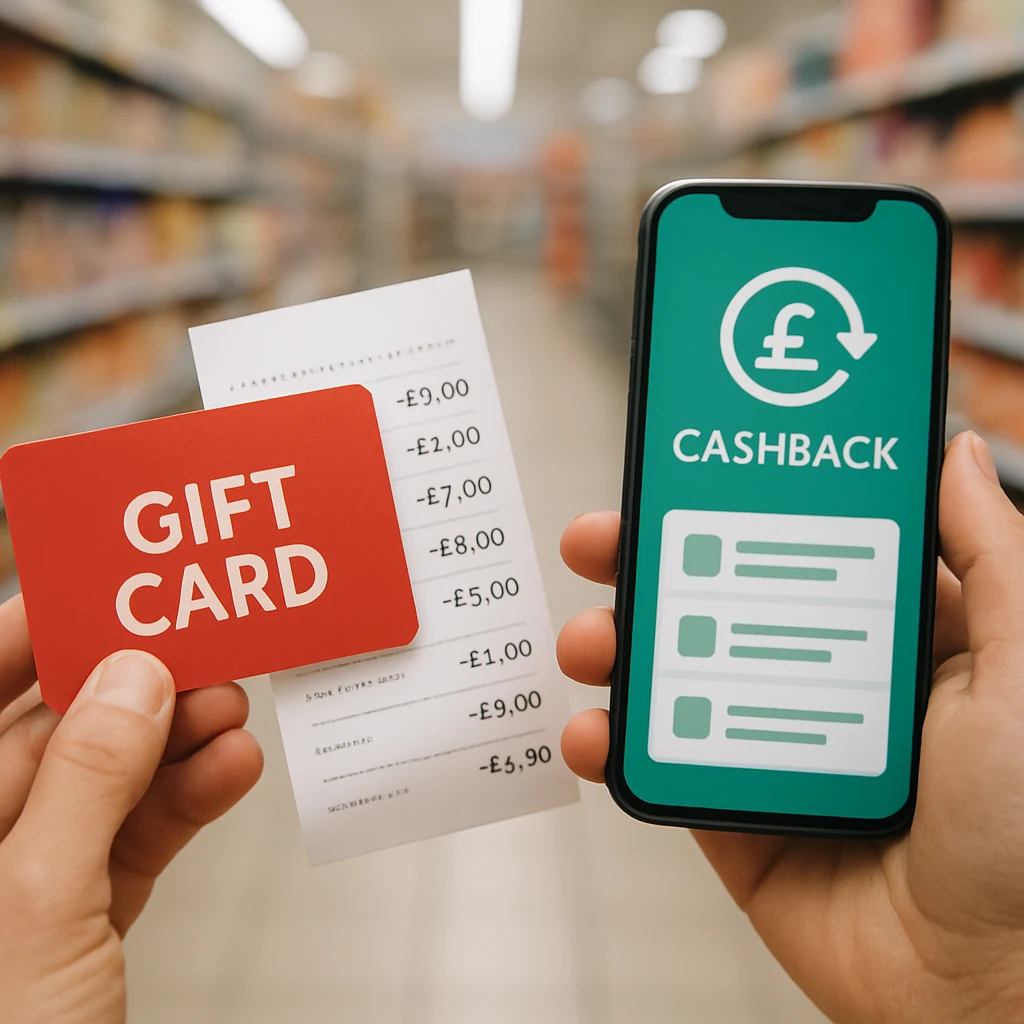
Everyone loves the idea of “stacking” savings: a voucher code on top of cashback, paid with a discounted gift card, delivered for free. In the UK it can work brilliantly — but it can also quietly cancel your cashback, break free-delivery thresholds, or make returns more awkward than they need to be.
This guide focuses on real-world decisions and trade-offs, using typical UK shopping scenarios. The goal isn’t to squeeze every last penny at any cost; it’s to save money without creating a mess at checkout or when you need to return something.

The UK “stack” in plain English: what usually combines (and what often doesn’t)
A typical online savings stack in the UK might include:
- a retailer voucher code (welcome code, newsletter sign-up, seasonal promo)
- cashback (via a cashback site, a bank/app offer, or card-linked cashback)
- discounted gift cards (bought through employee benefits portals or cashback routes)
- loyalty pricing/points (think supermarket loyalty schemes or retailer clubs)
The catch is that retailers (and cashback networks) treat these as different “channels”. Some combinations are fine; others conflict.
A good rule of thumb: the more “third parties” involved (cashback portals, affiliate links, marketplace sellers), the more fragile the stack becomes. If your order doesn’t track, you may end up with a saving on paper but not in your bank account.
Case 1: You’re buying a £200-ish tech item — should you chase cashback or a voucher?
You’ve found a decent price on headphones, a router, or a small appliance. You’ve got two tempting options:
Option A is a voucher code (say, a first-order code or a seasonal promotion). Option B is cashback.
Here’s the trade-off UK shoppers hit all the time: cashback frequently excludes voucher usage, especially if the voucher wasn’t listed on the cashback site itself. Sometimes it still works. Sometimes it tracks at first and later gets declined. And sometimes it never tracks.
So how do you decide?
A practical decision path
If the voucher discount is immediate and meaningful, it’s often the safer bet. You see the saving at checkout, and you’re done.
Cashback is better treated as a bonus rather than a guarantee — particularly on higher-value items where you don’t want admin later. If you do want to try cashback, keep it clean:
- start with a fresh browser session (or private window)
- don’t click around through other deal sites before purchasing
- avoid adding extra codes that weren’t shown on the cashback page
- pay attention to exclusions (certain categories, delivery charges, VAT, gift cards)
None of this is glamorous, but it’s the difference between “tracked” and “mystery missing cashback”.
One more UK-specific thought: protection vs saving
If you’re buying something pricier, paying by credit card can add protection (for qualifying purchases under Section 75 rules, the item price is a key factor). If you pay entirely by gift card, you might be giving up some of that card-based protection.
That doesn’t mean “never use gift cards”. It means: for high-value electronics, you may prefer to pay at least part by credit card and treat gift cards as a saving tool for lower-risk purchases.
Case 2: Clothing order with likely returns — the stack that can cost you money
Fashion is where “stacking” most often backfires, because returns and thresholds matter.
You place a £85 basket to hit free delivery. You apply a 15% code. Now your basket drops under the free-delivery threshold, so delivery is added back on. Or the retailer calculates free returns eligibility based on post-discount spend. Or you return a couple of items and your kept items no longer meet the “spend X, get Y” promo.
The trade-offs to think about before you hit pay
1) Free delivery and thresholds. In the UK, free delivery thresholds are common, and discounts can push you below them. Sometimes it’s cheaper to add a small “keeper” item you actually need (socks, basics, toiletries) than to pay delivery.
2) Returns and refund calculations. Retailers typically refund what you paid, not what you “would have paid” without the code. If the voucher was spread across items, returns can be prorated.
3) “Buy more, save more” promotions. Multi-buy deals are great until you return one item and the discount recalculates. If you’re unsure about sizing, avoid building a deal that only works if you keep everything.
A simple approach that keeps you sane
For clothing where returns are likely, prioritise:
- the retailer with the easiest returns process (clear policy, simple labels/QR returns, realistic timeframes)
- a straightforward discount you can see at checkout
- avoiding stacks that depend on keeping every item
If you want to use cashback here, treat it as optional and don’t let it force you into a retailer with awkward returns.

Case 3: Household essentials — when gift cards and loyalty pricing beat codes
For everyday items (toiletries, cleaning supplies, pantry top-ups), voucher codes can be hit-and-miss. Some retailers rarely issue meaningful codes; others exclude “everyday value” lines.
This is where discounted gift cards and loyalty pricing can quietly win, because they apply to your whole basket without needing a promo code at all.
The UK reality: lots of shoppers already have access to some form of discounted gift card route (workplace benefits, rewards apps, occasionally bank-linked offers). You’re not relying on a flash code that expires at midnight; you’re just reducing the cost of the same shop.
The trade-offs:
- Refunds can go back to gift card balance, not cash. Fine for repeat purchases, annoying if you want the money back.
- You may lose flexibility if you buy a gift card for a retailer and then find a better price elsewhere.
- Gift cards can complicate splitting payments, especially if you’re trying to combine with a credit card for protections.
A practical middle ground is to use discounted gift cards for retailers you shop with regularly, and keep “one-off” purchases on a normal card.
The order of operations: a reliable UK checkout routine
When you’re trying to stack savings, the sequence matters. Here’s a routine that prevents the most common “I thought I saved money” moments.
First, settle the basics: final price including delivery, and the returns policy. Then stack.
A sensible order:
- Check the delivered price (item + delivery) and whether VAT is clearly included.
- Decide whether easy returns are worth paying a little more for.
- Choose either voucher-first (guaranteed saving) or cashback-first (possible extra saving).
- Add gift cards only when you’re confident you’ll keep the order or shop there again.
This avoids the classic trap of spending ages on a complex stack that saves less than switching to a retailer with better delivery or simpler returns.
“Stacking” red flags that UK shoppers should watch for
A few patterns tend to cause disappointment:
Cashback + voucher code not listed by the cashback site. This is the #1 reason for declined cashback.
Marketplace sellers with different policies. On large marketplaces, different sellers can mean different returns processes and warranty handling, even if the listing looks similar.
Auto-applied codes and browser extensions. They can be helpful, but they can also interfere with tracking. If you’re chasing cashback, simplicity wins.
Too-good-to-be-true seasonal urgency. UK peak deal seasons (Black Friday, Cyber Monday, Boxing Day, January sales) are great times to buy — but “extra 30% off if you check out in 10 minutes” messaging doesn’t automatically mean a genuine bargain. Focus on the delivered price and your likelihood of returning.
If you want more UK-focused shopping strategies, you can browse the rest of our guides at /.
FAQs: quick answers UK shoppers actually need
Can I use cashback and a voucher code together in the UK?
Sometimes, yes — but it depends on the retailer and the cashback terms. The safest approach is to use codes that are explicitly listed on the cashback page for that retailer. If you add a random newsletter code, your cashback may not track or may be declined later.
If I return an item bought with a voucher, do I get the full discount back?
Usually you get refunded what you paid for that item (often with the discount allocated across the basket). If the voucher depended on a minimum spend and your kept items drop below it, the retailer may adjust the refund.
Are discounted gift cards “always” the best saving?
They’re great for regular spending because they reduce cost without relying on promo codes. But refunds may go back to gift card balance, and you’re locking money to one retailer, so they’re not ideal for uncertain purchases.
Does free delivery still apply after discounts?
Often it’s based on the post-discount basket total, but policies vary. Before applying a code, check whether it pushes you below the threshold — it can turn a “saving” into a higher final price.
The one action to take next
Pick one retailer you already trust and one product category you buy regularly (for many people: household essentials or skincare), then test a simple stack: discounted gift card + no voucher code, and compare the delivered price to your usual route. If that works smoothly, you’ll know when it’s worth adding cashback or codes — and when to keep it boring and bank the guaranteed saving.
You may also be interested

The UK Wishlist Method: Plan Your Next Online Deal (No Panic Buying)
A practical UK step-by-step guide to saving online by setting target prices, tracking drops, and buying at the right moment—without falling for “was/now” hype.
Marketplace vs Retailer: How UK Shoppers Pick the Real Deal
A practical UK guide to choosing between marketplaces and direct retailers—price, delivery, returns, warranty and hidden costs—so the ‘deal’ stays a deal.
After You Buy: UK Tricks to Save with Price Drops & Returns
A practical UK guide to saving after checkout: price-drop checks, delivery refunds, returns timing and safe ways to re-order for less.