

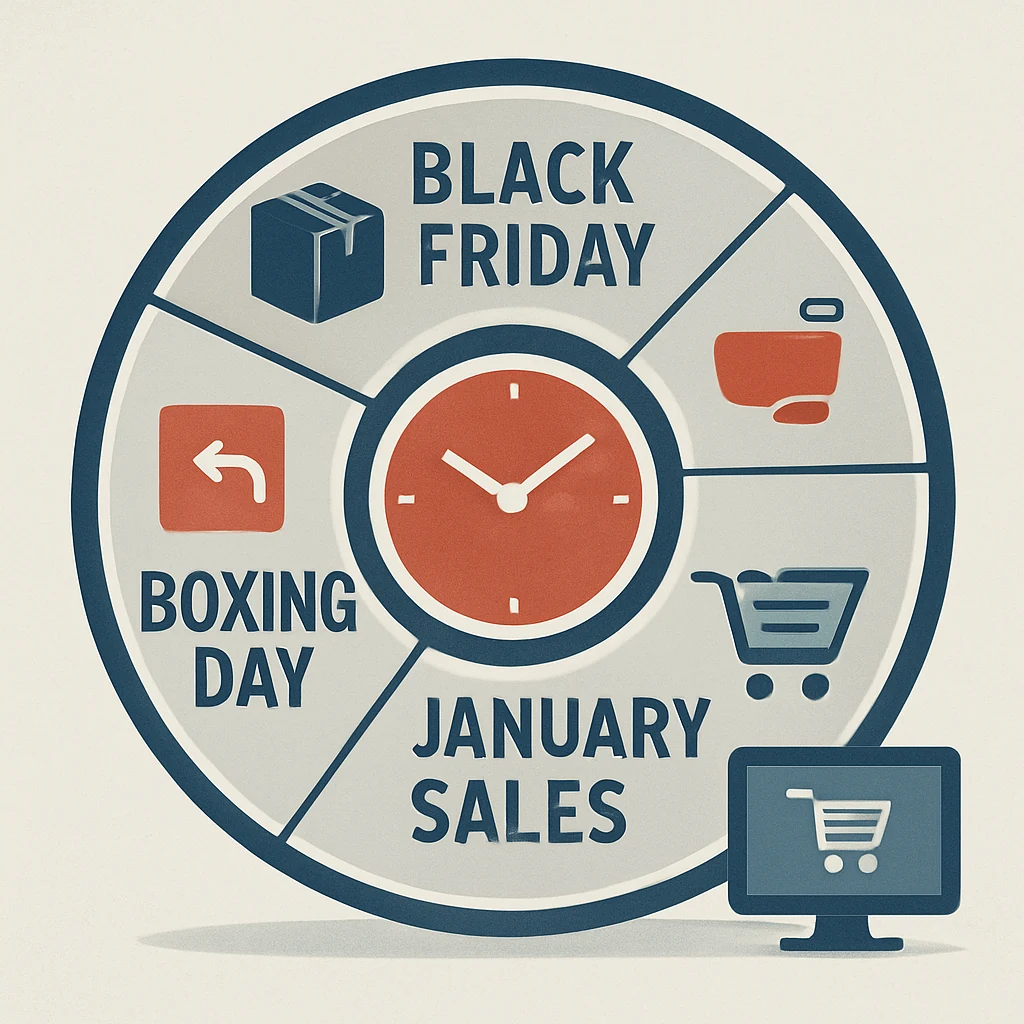
UK Online Sale Timing Mistakes (and How to Buy at the Right Moment)
A practical UK guide to saving money online by avoiding timing mistakes around Boxing Day, January sales, Black Friday, delivery cut-offs and returns.
Buying at the “wrong” time is one of the easiest ways to overpay online in the UK. Not because you’re careless — but because sale seasons, delivery cut-offs, restocks and returns windows all collide. This guide focuses on the timing mistakes that quietly block you from the best price, and what to do differently next time.

Mistake 1: Treating Black Friday as the only real savings moment
Black Friday and Cyber Monday are loud, obvious and genuinely useful for some things — but the biggest mistake is planning everything around them. In the UK, a lot of retailers run “Black Friday” pricing for weeks, while other categories do better at completely different points in the year.
What to do instead: match your shopping to the kind of item, not the hype.
If you’re after tech, headphones, small appliances or gaming, Black Friday can be strong — but you’ll often see similar pricing again in winter clearance and occasional brand-led events. If you’re buying home essentials, bedding, DIY bits or garden items, you may do better in end-of-season clearances rather than late November.
A practical habit: when you see a tempting Black Friday price, sanity-check whether you actually need it before Christmas. If not, you’ve got more freedom to wait for Boxing Day or January reductions.
Mistake 2: Forgetting that Boxing Day and January are built for clear-outs
UK retailers love a stock clear-out. That means Boxing Day and the January sales can be brilliant for anything seasonal, anything “last year’s colour”, and anything that takes up warehouse space.
The common timing error is spending in early December because you want the job done — then seeing the same category reduced after Christmas.
What to do instead: split your basket into “must have now” and “can wait”.
If it’s a gift you need in hand before Christmas, that’s the “now” pile. But if it’s something for you (new trainers, homeware refresh, kitchen kit, spare bedding, luggage, storage), make it a “can wait” purchase and plan to buy during post-Christmas clearance.
This is also where UK-specific details matter: you might still pay for delivery even when the item is reduced, so check whether click & collect is available — especially if you live near an Argos, Tesco, or a retailer offering store pickup.
Mistake 3: Shopping too close to Christmas without factoring delivery cut-offs
It’s easy to focus on the discount and forget the practical side: delivery becomes the hidden cost during peak periods. You can “save” £15 on a deal and then pay it back (and more) in next-day delivery, nominated day fees, or missed delivery problems.
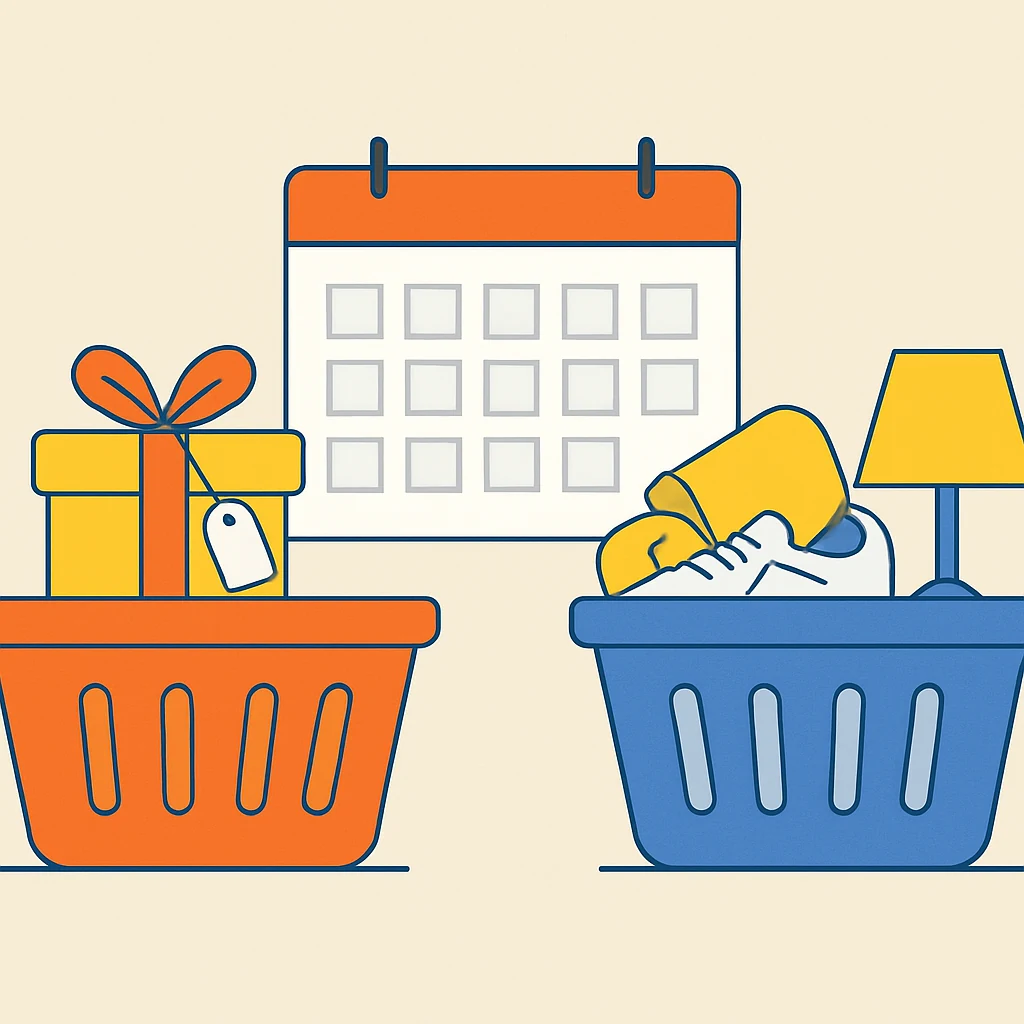
What to do instead: treat delivery like part of the price.
Before you hit pay:
- Check the estimated delivery window, not just “in stock”.
- Compare standard delivery vs next-day and decide if speed is worth it.
- Consider click & collect to avoid rushed couriers.
- Look at who’s delivering (Royal Mail, Evri, DPD etc.) and whether that works for your address.
Timing tip: if you know you’ll be shopping late, prioritise retailers with reliable collection options and clear tracking, rather than gambling on the cheapest marketplace listing.
Mistake 4: Buying during peak demand, when prices and fees quietly rise
Certain weeks are just expensive weeks. Not always in the sticker price — sometimes in delivery charges, fewer voucher codes working, or fewer sizes/colours available so you end up buying the pricier version.
Typical UK peak-demand moments include the run-up to Christmas, back-to-school season, and sunny-weekend spikes where everyone suddenly wants a fan, BBQ bits or garden furniture.
What to do instead: shop one season ahead where you can.
A few examples that fit UK shopping patterns:
- Fans, paddling pools and summer gear are often cheapest before the first heatwave panic.
- School shoes and uniforms can be better value before the late-August rush.
- Coats and boots can be more competitively priced either very early in autumn (promo-heavy) or much later (clearance), rather than mid-winter when demand is steady.
You don’t need to predict the future — just recognise “everyone’s buying this today” as a warning sign.
Mistake 5: Ignoring returns windows and then rushing into the wrong purchase
Sales are exciting, but they can also pressure you into buying fast and deciding later. The timing mistake is assuming you’ll be able to return easily — then discovering the returns window is shorter for sale items, the process is fiddly, or you have to pay return postage.
What to do instead: check returns before you pay, especially during major sale periods.
Look for:
- How many days you have to return (and whether it changes during Christmas).
- Whether returns are free, and how (drop-off shop, collection, or post).
- Whether marketplace sellers have different rules from the main retailer.
If two deals are close in price, choose the one with simpler returns. That flexibility is worth money — because it stops you keeping something you don’t really want simply to avoid the hassle.
Mistake 6: Waiting for a “better deal” so long you miss stock and end up paying more
There’s a fine line between being patient and being stuck. UK shoppers often do this with popular trainers, limited colourways, giftable gadgets, toys, and anything seasonal.
You wait for the price to drop again, stock disappears, and then you either:
- buy from a third-party seller at a higher price, or
- pay for faster delivery elsewhere, or
- settle for an alternative that isn’t what you wanted.
What to do instead: decide your “good enough” price in advance.
If you’ve seen a price you’d genuinely be happy with, and it’s from a retailer you trust, don’t let perfection cost you. You can still protect yourself by choosing retailers with decent returns.
If you want a more structured way to do this, keep it simple: a one-line note in your phone with “Item Ofertas happy price Ofertas latest buy date”. That’s enough to stop endless scrolling.
Mistake 7: Forgetting the VAT/duties angle when ordering from outside the UK
This one catches people out because it looks like a bargain. You spot a low headline price from a seller overseas, click through, and only later realise delivery times are long — or that handling fees, VAT treatment, or returns become awkward.
What to do instead: make “total cost to your door” your comparison point.
When you compare a UK retailer with an overseas listing, think beyond the checkout total:
- How long will delivery actually take?
- If it’s wrong or faulty, how realistic is the return?
- Is the product covered in the way you expect (warranty/support can be different)?
Sometimes it’s still worth it. But for gifts, urgent items, or anything you might need to return, the UK option often wins even if it’s a few pounds more.
Quick tips to save more with better timing
If you only change a few habits, make them these:
- Put delivery cut-offs in your calendar for Christmas shopping, so you don’t pay “panic delivery”.
- Split purchases into “need now” vs “can wait for Boxing Day/January”.
- Check returns rules during sale periods — especially for marketplace sellers.
- When a price is good enough, buy from a retailer with easy returns instead of chasing the perfect drop.

How to build your own UK deal rhythm (without living on bargain sites)
You don’t need to be “always on” to get good prices. A calmer approach is to align big spends with predictable UK shopping moments.
For example, if you know you’ll need a few household bits, plan a single order around a retailer promo (free delivery threshold, multi-buy, or a site-wide code). If you’re shopping for Christmas, buy the predictable items early (wrapping, cards, stocking fillers, basics) and leave the flexible “nice-to-haves” for post-Christmas clearance.
And if you want a steady stream of deal ideas without the noise, dip into the guides on the homepage at / and use them as a reference rather than a daily scroll.
FAQs
Is Boxing Day always cheaper than Black Friday in the UK?
Not always. Black Friday can be strong for certain electronics and headline items, while Boxing Day/January can be better for clearance stock, fashion, and end-of-line homeware. The smarter play is buying urgent gifts when you need them, and saving personal purchases for clearance.
Should I pay for next-day delivery to secure a deal?
Only if you genuinely need it quickly or you’re trying to avoid a missed gift deadline. Otherwise, a good “saving” can disappear in delivery fees. Click & collect can be a good middle ground if it’s convenient.
Are sale items harder to return?
They can be. Some retailers change their returns terms during sale events or for certain categories, and marketplace sellers may have different rules. Always check the returns policy before you buy, not after.
When is the best time to buy seasonal items?
Usually either ahead of peak demand (before everyone wants the same thing) or right at the end of the season when retailers clear space. Mid-season is often the priciest moment because stock is selling steadily.
How do I stop overthinking and still get a good deal?
Pick a “happy price” and a latest buy date. If you hit both — and the retailer has decent delivery and returns — you’ve done well. Chasing the absolute lowest price often costs more in time, stress, or compromised choices.
You may also be interested

The UK Wishlist Method: Plan Your Next Online Deal (No Panic Buying)
A practical UK step-by-step guide to saving online by setting target prices, tracking drops, and buying at the right moment—without falling for “was/now” hype.
Marketplace vs Retailer: How UK Shoppers Pick the Real Deal
A practical UK guide to choosing between marketplaces and direct retailers—price, delivery, returns, warranty and hidden costs—so the ‘deal’ stays a deal.
After You Buy: UK Tricks to Save with Price Drops & Returns
A practical UK guide to saving after checkout: price-drop checks, delivery refunds, returns timing and safe ways to re-order for less.