


The UK Savings Stack: How to Combine Online Discounts Properly
A practical UK guide to stacking vouchers, cashback, gift cards and delivery perks—without invalidating your discount or risking returns.
Saving money online in the UK isn’t just about finding one big discount. The most reliable wins usually come from stacking several small, legitimate savings in the right order—so nothing gets “disqualified” at checkout and you still keep decent delivery and returns.
What does “stacking” mean (in a UK context)?
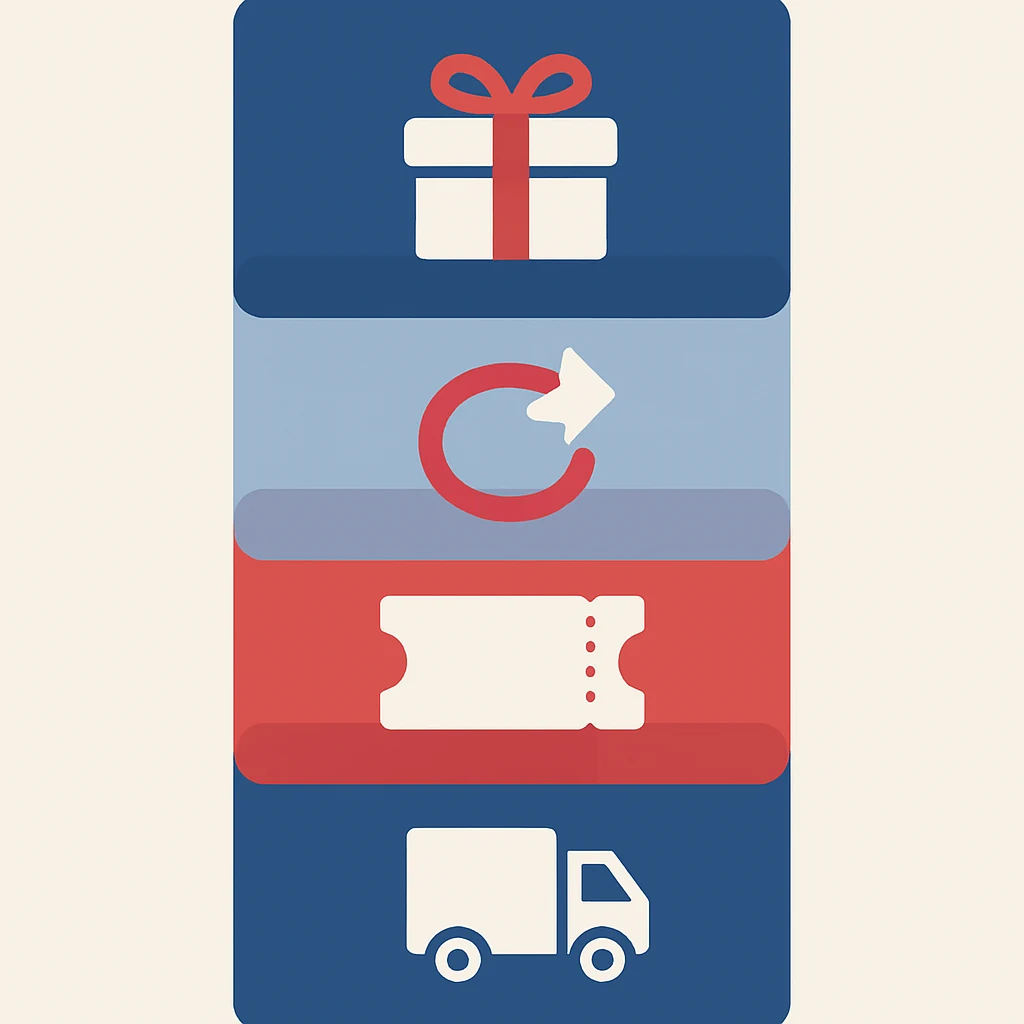
Stacking is simply combining compatible savings on the same purchase. In practice that can mean using a discounted gift card, clicking through cashback, applying a voucher code, and choosing a delivery or subscription option that reduces the overall cost.
The key is “compatible”. UK retailers and cashback sites often have rules (sometimes buried in the terms) about what invalidates what. If you stack in a sensible order and keep proof, you can usually avoid the most common disappointments.
Can you stack discounts everywhere?
Not everywhere. Many shops allow only one promo code, and some exclude categories (electronics, consoles, certain brands) from vouchers entirely. Cashback can also be declined if you use certain codes, or if you pay via a method the cashback site doesn’t track well.
A useful mindset is: treat stacking as a bonus, not a guarantee. If one layer doesn’t stick, the others might.
Which saving layer should you start with: gift cards, cashback or vouchers?
Start with the layers that change how you pay (gift cards) and how you’re tracked (cashback), then move to checkout discounts.
If you do it the other way round, you can easily end up with a voucher applied but cashback declined, or you might miss the chance to pay with a cheaper balance.
Here’s a simple, UK-friendly stacking order that works for a lot of common scenarios:
- Price check first (so you know the “real” target price before any extras)
- Cashback click-through (open a fresh tab from the cashback site)
- Add items and choose delivery option (standard vs next day, delivery pass, click & collect if offered)
- Apply voucher Ofertas promo code at checkout
- Pay with discounted gift card or rewards-linked card (where possible)
That’s not a hard rule, but it’s a good default.

How do you use cashback without breaking it?
Cashback is one of the most misunderstood savings tools because it’s not instant. You’re essentially being tracked as a referral, and lots of little actions can disrupt the tracking.
What usually causes cashback to be declined?
Common UK culprits include:
- Using a voucher code that isn’t listed/approved by the cashback site
- Clicking away to compare prices mid-session, then returning and checking out
- Adding items from a different device later (basket started on mobile, paid on laptop)
- Paying with “buy now, pay later” options that the cashback terms exclude
Should you always use the retailer’s app?
Not always. Some cashback sites track better in a browser than in an app, and some retailers push app-only offers. If the discount in-app is clearly better, take it—but consider that you may be swapping cashback for the app offer. Decide based on which saving is more certain.
Do you need incognito mode?
Not necessarily. It can help to use a clean session, but the bigger win is simply: click through once, don’t keep opening new tabs from other deal sites, and check out in one go.
Are voucher codes worth it if they risk killing cashback?
Sometimes yes, sometimes no. The practical approach is to treat voucher codes as “cashback-sensitive”.
How can you tell if a code is safe to use?
If you’re using cashback, use codes that are:
- Provided by the retailer directly (homepage banner, email newsletter, your account)
- Listed on the cashback site for that retailer
If it’s a random code from a forum or an old newsletter screenshot, it might still work—but it can also invalidate cashback.
What about “new customer” codes?
These can be excellent, but read the small print. Some exclude sale items, some require a minimum basket value, and some won’t apply if you’re paying partly with gift card credit. If you’re opening a new account purely for the code, make sure you’re also happy with the returns policy, especially for clothing and footwear.
How do delivery and returns change the “real” deal?
In the UK, the deal isn’t just the price tag. Delivery fees and return costs can wipe out a discount quickly—especially on low-ticket items.
Is it worth paying for faster delivery?
Only if it prevents a second order. Next-day delivery can be a false economy if you’re not 100% sure on sizing, compatibility, or colour. If you’re likely to return, prioritise:
- clear returns windows
- easy drop-off options
- whether the retailer charges for returns labels
What about delivery subscriptions and passes?
If you buy from the same retailer repeatedly (think household essentials), a delivery pass or membership can reduce per-order delivery costs. Just don’t let the membership itself push you into buying more than you need. If the next order isn’t already planned, it’s not “saving”.
Do UK prices include VAT?
Most UK consumer pricing is VAT-inclusive, but watch for marketplace sellers or business-focused sites where VAT may be shown separately. If the price suddenly jumps at checkout, pause and read the VAT line carefully.
Can you combine gift cards with discounts safely?
Often, yes—gift cards are simply a payment method. The catch is that some promotions exclude gift-card purchases, and some “money off” codes don’t apply if you’re using gift card credit.
Where do discounted gift cards fit in?
If you’re using a discounted gift card (for example, bought via a workplace benefits scheme or a reputable UK gift card marketplace), it can be one of the cleanest stacks because it doesn’t depend on tracking. But be choosy:
- Stick to well-known providers with clear terms.
- Keep receipts/emails in case the balance needs chasing.
- Check expiry dates and whether you can use multiple gift cards in one transaction.
What happens if you return an item paid with gift card?
Retailers often refund to the original method (back to gift card balance) rather than cash. That’s fine if you’ll shop there again, but it’s not ideal if this was a one-off. Before you buy, look at the retailer’s returns and refunds wording so you’re not surprised.

How do you avoid “deal drift” during big sale events?
Big UK events—Black Friday and Cyber Monday, Boxing Day, and the January sales—create urgency. The easiest way to save is to keep your plan simple.
What’s a practical way to stay disciplined?
Pick one “anchor” per purchase:
- either a target price you’re willing to pay
- or a must-have feature list (so you don’t overpay for the wrong model)
Then stack only the layers that don’t add friction. If a code needs 20 minutes of fiddling, the best saving may be just buying the right product at a fair price and moving on.
Are Bank Holiday sales worth waiting for?
Sometimes, particularly for home and garden or big-ticket household items. But if you’re replacing something that’s already broken, waiting can cost you in convenience (or in emergency buys at worse prices). If you want a calmer approach, set price alerts and buy when your target hits rather than chasing every event. (If you want a broader shopping system, the guides on Ofertas can help you build one.)
What about marketplaces: can you still stack savings there?
Yes, but be extra careful about who you’re buying from.
How do you keep it safe on a marketplace?
Focus on the basics that protect you in the UK:
- Check whether the seller is UK-based and what the estimated delivery time really is.
- Read the returns policy for marketplace sellers (it can differ from the platform’s own).
- Keep order confirmations and messages in one place.
If the item is expensive, paying by credit card may give you stronger protection in some cases (for example, Section 75 can apply on qualifying purchases), but it depends on how the transaction is structured. When in doubt, use a payment method you trust and understand.
Mini FAQs people ask right at checkout
“Why did my voucher work yesterday but not today?”
Codes can expire, be limited to certain categories, or stop once an allocation is used up. Try removing the code, checking the retailer’s own offers page, and ensuring you’re logged in (some discounts are account-specific).
“The price changed after I added it to my basket—what’s going on?”
It can be a timed promotion ending, a different seller being selected automatically, or delivery options changing the total. Double-check the seller, delivery speed, and whether you’re looking at a multi-buy that only applies at checkout.
“Should I split my order to save money?”
Only if splitting doesn’t trigger extra delivery charges or complicate returns. Sometimes splitting helps when a voucher has a maximum discount or only applies to certain items; other times it costs more because you pay delivery twice.
“Is it worth signing up for newsletters for a first-order discount?”
If it’s a retailer you’ll use again, yes. If it’s a one-off, consider using a separate email alias so your main inbox doesn’t become a marketing feed. Make sure the first-order offer actually applies to what you’re buying.
The simplest action to take today
Pick one retailer you buy from regularly and test a “clean stack” on your next order: start with a quick price check, use one reliable voucher (retailer-issued or cashback-approved), and only then add cashback or a gift card layer. Save the order confirmation and returns info straight away. That one habit is what turns occasional bargains into consistent, low-stress savings.
You may also be interested

The UK Wishlist Method: Plan Your Next Online Deal (No Panic Buying)
A practical UK step-by-step guide to saving online by setting target prices, tracking drops, and buying at the right moment—without falling for “was/now” hype.
Marketplace vs Retailer: How UK Shoppers Pick the Real Deal
A practical UK guide to choosing between marketplaces and direct retailers—price, delivery, returns, warranty and hidden costs—so the ‘deal’ stays a deal.
After You Buy: UK Tricks to Save with Price Drops & Returns
A practical UK guide to saving after checkout: price-drop checks, delivery refunds, returns timing and safe ways to re-order for less.