

The UK Checkout Audit: 9 Mistakes That Kill Online Savings
Practical UK checkout tactics: coupons, cashback, returns, delivery and VAT — plus the common mistakes that quietly add £££ to your basket.
You can do everything right — compare prices, wait for a sale, even build a wishlist — and still lose the saving at the last step: checkout. That’s where the little extras creep in (delivery upgrades, “helpful” add-ons, awkward returns), and where most discount codes fail.
This is a practical, UK-focused checkout audit: the most common mistakes that quietly add pounds to your basket, plus what to do instead.
Mistake 1: Treating the listed price as the final price
In the UK, the price you see on most consumer retail sites should already include VAT. But that doesn’t mean it’s the price you’ll pay.
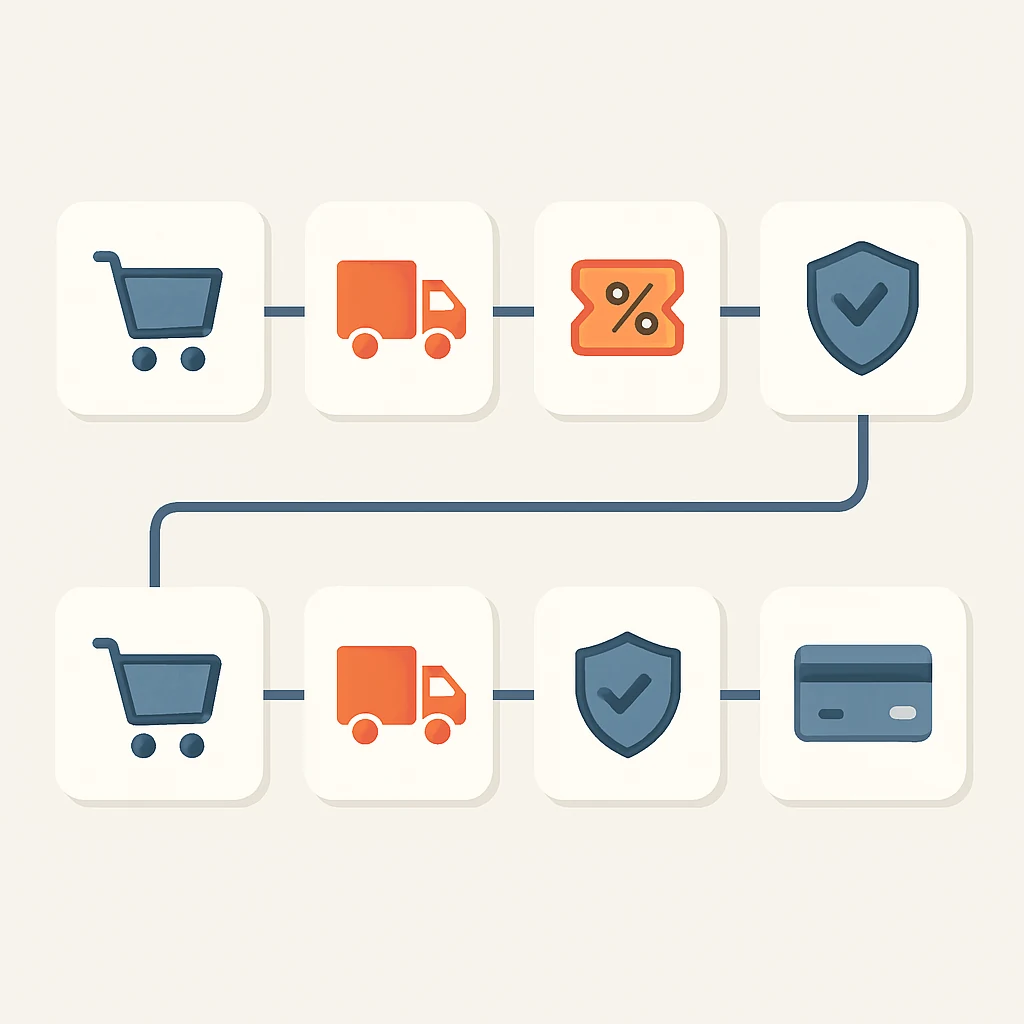
Checkout can add:
- delivery fees (or a higher fee than you expected)
- optional “protection” or gift wrap
- payment method fees in edge cases
- subscription add-ons (especially on marketplaces)
Do this instead: before you get emotionally invested, do a quick “basket test”. Add the item and head to checkout until you see the full total (you can usually do this without paying). If the deal only works with a minimum spend, you want to know early — not after you’ve spent 20 minutes hunting a code.
Mistake 2: Letting the delivery option decide the deal
Even when delivery isn’t a surprise, the delivery choice can undo a discount. It’s easy to click “next day” out of habit — or because the site nudges you there — and suddenly you’ve burned the saving.
This is especially common in the run-up to Christmas, during Black Friday/Cyber Monday week, and around bank holiday weekends when standard delivery dates look less appealing.
Do this instead: pause at the delivery step and ask one question: Do I actually need it sooner? If not, choose standard or click-and-collect where it’s offered and genuinely convenient.
Also watch for “free delivery over £X” thresholds. If you’re £3 short, it’s rarely worth adding random items that you didn’t want. It can be better to pay the delivery fee and keep the basket clean.
Mistake 3: Assuming the first voucher code you find is the best one
The UK voucher-code ecosystem is messy. Some codes are expired, some are for new customers only, and some reduce the price but remove other benefits (like free delivery or multi-buy offers).
Do this instead: treat voucher codes like a quick experiment, not a treasure hunt.
Try this order:
- site-wide percentage codes (if they apply)
- free delivery codes
- targeted codes (student/NHS/blue light, new customer, app-only)
If a code doesn’t work, don’t keep adding items hoping it will suddenly apply. Check the small print: minimum spend, excluded brands, and category restrictions are the usual culprits.
Mistake 4: Forgetting cashback is often “either/or” with discount codes
Cashback can be brilliant in the UK, but it has rules. Many retailers allow cashback only if you don’t use a voucher code (or only if you use codes listed on the cashback platform). Sometimes a code will track; sometimes it won’t.
Do this instead: decide which is better for this specific purchase: the code or the cashback.
A simple approach:
- If a code is guaranteed and meaningful, take the code.
- If the code is uncertain or tiny, prioritise cashback (and follow tracking steps carefully).
Be disciplined with the “click trail”: don’t open extra tabs, don’t swap devices mid-checkout, and avoid adding items after you’ve clicked through if the cashback site warns against it.

Mistake 5: Paying with the “default” method without checking buyer protection
Payment method can affect both savings and stress.
- Credit card can offer extra protection on higher-value items (and makes refunds simpler to track).
- PayPal can be convenient for returns and disputes, but it’s not automatically the best option.
- Buy Now Pay Later can feel like a saving, but it’s usually just spreading the cost — and late fees or missed payments can wipe out any discount.
Do this instead: match the payment method to the risk.
For pricey electronics, a method with strong protection and easy refund tracking is worth more than a tiny perk. For everyday items, speed and simplicity might matter more — but don’t let “one-click” rush you past the final total.
Mistake 6: Getting pulled into add-ons you didn’t plan to buy
Checkout add-ons are designed to feel sensible:
- extended warranties
- “priority handling”
- accessories bundles
- donation tick-boxes
None of these are automatically bad. The mistake is buying them by default.
Do this instead: treat every add-on as a separate purchase decision. If you wouldn’t open a new tab and buy it on its own today, skip it.
A quick gut-check: if you only want the add-on because you’re afraid the main item might fail, you might be better off choosing a retailer with clearer returns and warranty handling in the first place.
Mistake 7: Not reading the returns basics until it’s too late
“Free returns” and “returns accepted” can mean very different things.
In the UK, you’ll want to check:
- return window (especially around Christmas and January sales)
- who pays return postage
- whether the item must be unopened for a refund
- whether refunds go to your original payment method or store credit
Do this instead: do a 30-second returns scan before you pay. If the retailer makes returns hard to find, that’s already a signal.
This matters even more for clothing, shoes, and homeware — the categories where you’re most likely to change your mind or need a different size.
Mistake 8: Falling for fake urgency at checkout
Timers, “Only 2 left!”, and “20 people are viewing this” messages are everywhere. Sometimes stock is genuinely low, but urgency tactics are also a classic way to stop you price-checking.
Do this instead: give yourself permission to pause. If it’s not a truly limited item, you can usually find a similar price again — especially during predictable UK sales periods like Boxing Day, January sales, and mid-season promos.
If you’re unsure, open a fresh tab and do a quick check on one other reputable UK retailer. If the price is similar across the board, you’ll feel better about buying. If it’s wildly different, dig into why.
Mistake 9: Ignoring multi-buy maths (and spending more to “save”)
Multi-buy deals can be great in supermarkets and beauty, but online they often lead to cupboard-filling.
Common traps:
- “3 for 2” on items you don’t use up
- bundles where one item is unwanted
- “subscribe and save” pricing that’s only good for the first delivery
Do this instead: calculate the price per item and ask whether you’d buy the extras at full price later. If not, it’s not a saving — it’s pre-paying for clutter.
If a subscription discount is genuinely useful, take a screenshot of the terms and set a reminder to review the next delivery date. (That’s where the real cost can sneak in.)
Quick tips: a 60-second checkout routine
If you only take one thing from this post, make it a repeatable routine. Here’s a quick one that works well for UK online shopping:
- Re-check the final total after delivery is selected (don’t assume it stays the same).
- Try one voucher code, then stop — don’t chase ten “maybe” codes.
- Decide: cashback or voucher, and follow the tracking rules if you choose cashback.
- Read the returns headline: window, cost of return postage, and refund method.
That’s it. Boring, fast, and surprisingly effective.
A simple way to make this stick (without becoming obsessed)
You don’t need to turn every purchase into a project. The goal is to avoid the avoidable losses.
A practical compromise is to use two modes:
- Low-effort mode for everyday spends: basket test + delivery choice + returns scan.
- High-effort mode for higher-value buys: add voucher/cashback decision + a second retailer check.
If you want more UK deal-hunting guides and shopping strategies, you can browse the latest posts at Ofertas.
FAQs
Why did my voucher code work, but the total didn’t go down much?
Because the code may exclude certain brands/categories, apply only to full-price items, or be overridden by other promotions. Also check whether applying the code removed free delivery or a multi-buy offer.
Is “free delivery over £X” actually a good deal?
Sometimes, but only if you were already planning to spend that amount. If you’re adding items purely to hit a threshold, compare the extra spend to the delivery fee. Paying £3.99 delivery is often cheaper than adding £10 of “filler”.
What’s the safest way to handle returns on clothes bought online?
Prioritise retailers with clear returns information before checkout, keep packaging until you’re sure, and photograph labels/tags if you’re worried about disputes. Most problems come from missing the return window or not meeting “unworn/unopened” conditions.
Should I use BNPL to get a better deal?
Only if it genuinely helps your cashflow and you’re confident you’ll meet the repayment schedule. It doesn’t reduce the price by itself, and late fees or missed payments can quickly outweigh any discount.
Why didn’t my cashback track?
Tracking can fail if you used an unapproved voucher code, opened extra tabs, switched devices, had ad-blockers interfering, or took too long between click-through and payment. Each cashback platform has its own rules, so it’s worth following their steps exactly for bigger purchases.
You may also be interested

Christmas Deals: Check the Returns Before You Buy Early
Buying Christmas gifts in the sales? Check returns deadlines, fees and refund terms before an early deal becomes an expensive mistake.

Set Your Buy Price: A Smarter Way to Shop Black Friday
Use price history and targeted alerts to set a sensible buy price before Black Friday, spot genuine UK deals and avoid chasing misleading discounts.

Black Friday Lookalike Deals: Check the Model Before You Buy
Similar name, different product? Learn how to compare model numbers, specifications and bundles before buying a Black Friday deal in the UK.