


Stack UK Online Discounts: Coupons, Cashback & Gift Cards (Safely)
A practical UK guide to stacking online savings: vouchers, cashback, gift cards and delivery tactics—without getting caught out at checkout.
Saving money online in the UK isn’t just about waiting for Black Friday. The biggest wins often come from stacking small discounts the right way—voucher codes, cashback, gift cards, loyalty points and delivery tactics—without accidentally voiding your returns rights or paying more in fees.
This guide focuses on the checkout moment: what to do in the final 10–15 minutes before you press “Place order”, and when each tactic is worth the effort.

1) Start with the discount that changes the price the most (usually a voucher)
Voucher codes are still the fastest way to drop the basket total—but only if you treat them like a filter, not a treasure hunt.
Why it matters: a code that takes money off the items (or gives a genuine % off) usually beats perks like “free delivery” because it reduces the amount you pay and the amount you might need to finance/credit.
When to apply it: right after you’ve added everything to the basket, before you do anything else (especially before buying gift cards or going via cashback).
Practical UK checks that save time:
- Look for plain-English terms like “excludes sale, bundles, gift cards” and “new customers only”.
- If you’re shopping on a marketplace, confirm whether the code applies at checkout or only to items “sold by” the marketplace itself.
- If a code forces you to create an account, check you’re happy with the retailer’s returns policy and how they handle refunds (some refund to store credit by default on certain promos).
If you have multiple codes, don’t assume the biggest percentage is best. A smaller % off sometimes beats a higher one if it applies to more items (or doesn’t exclude brands).
2) Decide whether cashback is worth “breaking” your normal browsing
Cashback can stack well with voucher codes, but it’s picky. One wrong click (or a rogue pop-up voucher tool) and tracking can fail.
Why it matters: cashback is often after-the-fact savings, not guaranteed money off today. That can still be worth it—especially for larger purchases—but you need a clean run.
When to apply it: after you’ve decided the final basket and the best voucher code. Then start a fresh cashback session and complete the purchase without detours.
A simple rule for UK shoppers: if the purchase is something you might return (shoes, clothing, size-sensitive items), be cautious. Cashback can be declined if you return all or part of the order, and sometimes if you use a code that isn’t listed as “approved” on the cashback page.
Good habits that help tracking (without overcomplicating it): use a normal browser window, turn off extra voucher extensions for that transaction, and avoid switching devices halfway through.
3) Use discounted gift cards only when you’re sure you’ll keep the order
Discounted gift cards can be powerful, but they change your risk profile.
Why it matters: paying with a gift card can make refunds less flexible. Many UK retailers refund to the original payment method, which may mean back to a gift card balance rather than cash. That’s not “bad”, but it’s a pain if you needed the money back.
When to apply it: for predictable purchases you rarely return—top-up staples, household items, toiletries, printer ink, or a replacement charger where you already know the exact model.
Also watch the fine print around split payments. Some checkouts let you combine gift card + debit/credit card, others don’t. If you want Section 75 protection (for eligible credit card purchases), note that part-paying with a gift card can complicate things.
A sensible approach is to treat gift cards like a planned discount, not something you buy mid-checkout because you saw a deal.
4) Don’t pay more for delivery just to “unlock” a deal
Delivery is where “cheap online” quietly becomes expensive—especially with bulky items, timed slots, or next-day add-ons.
Why it matters: retailers often set free-delivery thresholds. It’s easy to chuck in a filler item you don’t need… and end up returning it, paying return postage, or missing the returns window.
When to apply it: whenever you’re close to a delivery threshold or you’re tempted by “express delivery”.
If you have flexibility, Click & Collect (where offered) can be the best of both worlds: you avoid delivery charges and you often get an easier returns route (depending on the retailer). Just make sure you’re clear whether the seller treats it as an online purchase (usually covered by distance selling rules) and what the collection deadlines are.
5) Use “basket splitting” to protect your returns and avoid promo traps
One of the most underrated UK deal tactics is splitting your order into two baskets.
Why it matters: promotions can create messy refunds. If a discount is conditional (“spend £X, save £Y” or “3 for 2”), returning one item can change the effective price of the rest.
When to apply it: when you’re buying a mix of “definitely keeping” and “might return” items—classic example: a phone case you’ll keep plus clothing you’re unsure about.
Put the uncertain items in one order and the keepers in another. Yes, it can mean an extra delivery charge, but it can also prevent a refund headache later. If both baskets qualify for free delivery anyway, it’s a no-brainer.
This is also useful when a retailer’s voucher is single-use. Use the code on the basket where it makes the biggest difference and keep the second basket clean.

6) Treat “buy now, pay later” as a cashflow tool—not a discount
BNPL can make a deal feel cheaper when it isn’t.
Why it matters: spreading the cost doesn’t reduce the price, and it can encourage you to keep items you’d otherwise return. It can also complicate refunds timing: the retailer may refund quickly, but the BNPL provider’s account update can lag.
When to apply it: only when you’ve already decided it’s the right product at the right price, and you’re confident you’ll keep it.
If you’re shopping because of seasonal promos (January sales, Bank Holiday weekends, back-to-school, Black Friday/Cyber Monday), it’s especially easy to overbuy. A deal is only a deal if it matches a need you had before the promotion started.
7) Don’t let loyalty points drive the purchase—use them to improve it
UK loyalty schemes are everywhere, and they can stack with other discounts.
Why it matters: points can act like a small rebate, but they’re easy to waste if you buy things just to earn them. The win is using points to reduce the price of something you already intended to buy.
When to apply it: when points are about to expire, or when you can use them to offset delivery, upgrades, or an accessory you would otherwise pay full price for.
If a retailer offers member pricing or “price promise” tools, use them as a cross-check rather than assuming membership equals best price. Sometimes the better deal is simply elsewhere—especially once delivery and returns are factored in.
8) Do a final “UK checkout sanity check” before paying
This takes less than a minute and catches the most common savings leaks.
Why it matters: the checkout page is where VAT, delivery, and promo exclusions show up clearly. In the UK, listed prices are usually VAT-inclusive for consumers—but marketplace listings, business sellers, or special categories can still surprise you.
When to apply it: every time, but especially for higher-value orders and marketplace purchases.
Quick things to scan: delivery date estimate (not just “dispatch”), return costs and method, warranty/guarantee wording, and whether you’re buying from the retailer or a third-party seller.
If you want more UK-specific deal tactics and guides, keep an eye on the latest posts at /.

FAQs
Can you stack a voucher code and cashback in the UK?
Often yes, but not always. Cashback usually has rules about which codes are valid. The safest method is to choose your voucher first, then start a fresh cashback click-through and complete checkout without adding extra codes from pop-ups or extensions.
Are gift cards a good way to save online?
They can be—if you’re confident you won’t need a refund in cash. Many retailers refund back to gift card balance. For predictable purchases, gift cards can be a tidy way to lock in a discount without waiting for a sale.
Is Click & Collect always cheaper than delivery?
Not always, but it can reduce costs and hassle. It’s most useful when delivery charges are high, when you want the item quickly without paying for express delivery, or when you prefer returning in person.
What’s the biggest mistake people make when stacking discounts?
Chasing every possible saving at once. If stacking adds friction (extra accounts, gift cards, complicated promo mechanics), you can end up paying more through delivery costs, awkward refunds, or missed return windows. Prioritise the discount that moves the final price the most.
A simple action to take today
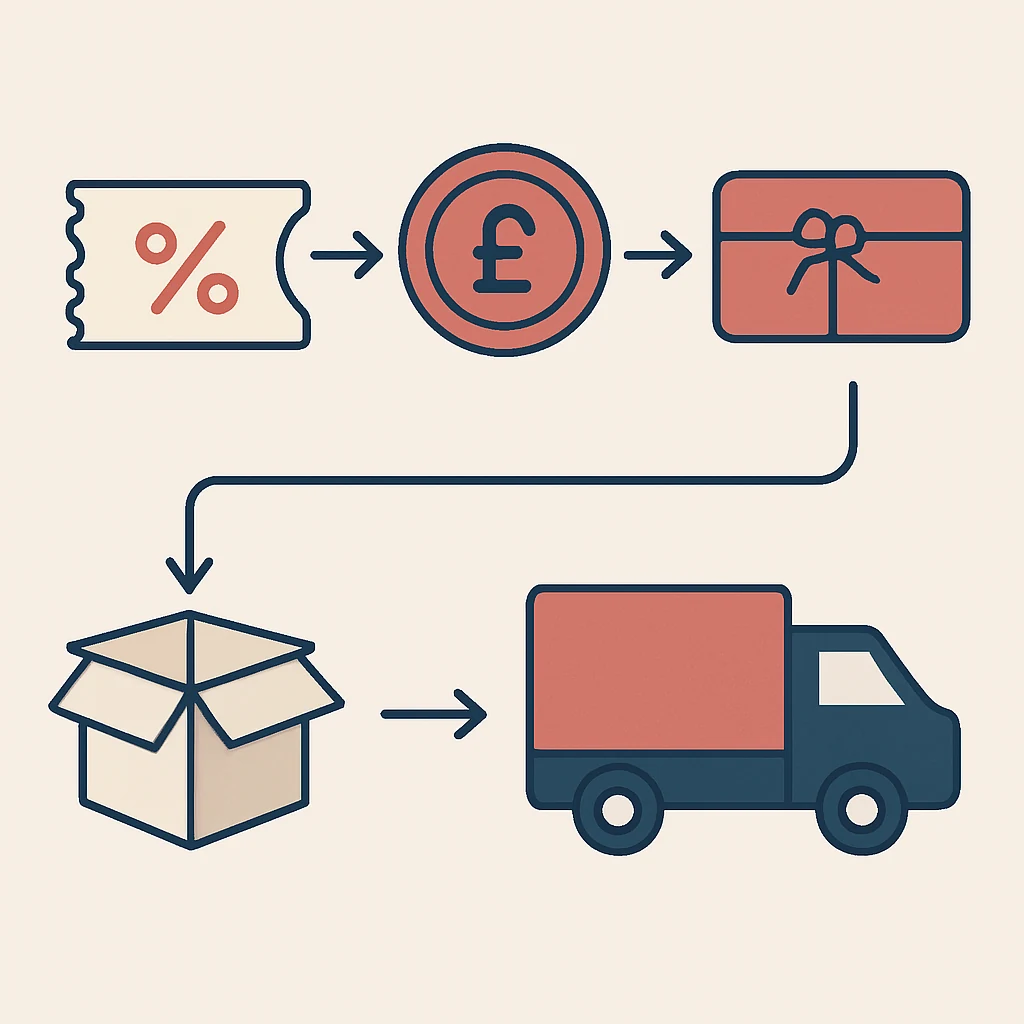
Pick one retailer you use regularly and set yourself a “stacking order”: voucher first, then cashback (if suitable), then delivery choice, and only then consider gift cards. Save that as a note on your phone so every checkout follows the same calm process—especially during peak sale periods.
You may also be interested

Christmas Deals: Check the Returns Before You Buy Early
Buying Christmas gifts in the sales? Check returns deadlines, fees and refund terms before an early deal becomes an expensive mistake.

Set Your Buy Price: A Smarter Way to Shop Black Friday
Use price history and targeted alerts to set a sensible buy price before Black Friday, spot genuine UK deals and avoid chasing misleading discounts.

Black Friday Lookalike Deals: Check the Model Before You Buy
Similar name, different product? Learn how to compare model numbers, specifications and bundles before buying a Black Friday deal in the UK.