

Save Money After You Buy: The UK “Post‑Checkout” Deals Playbook
Practical UK steps to claw money back after buying online: price drops, refunds, delivery issues, returns and payment protections—without the faff.
Most savings advice stops at the checkout. In the UK, that’s often where the next chunk of value starts — because price drops happen, delivery goes wrong, and retailers quietly offer goodwill refunds if you ask in the right way.
This guide is about “post‑checkout savings”: the practical things you can do after you’ve paid to get money back (or avoid losing it). No loopholes, no dodgy tactics — just a smarter way to shop online.
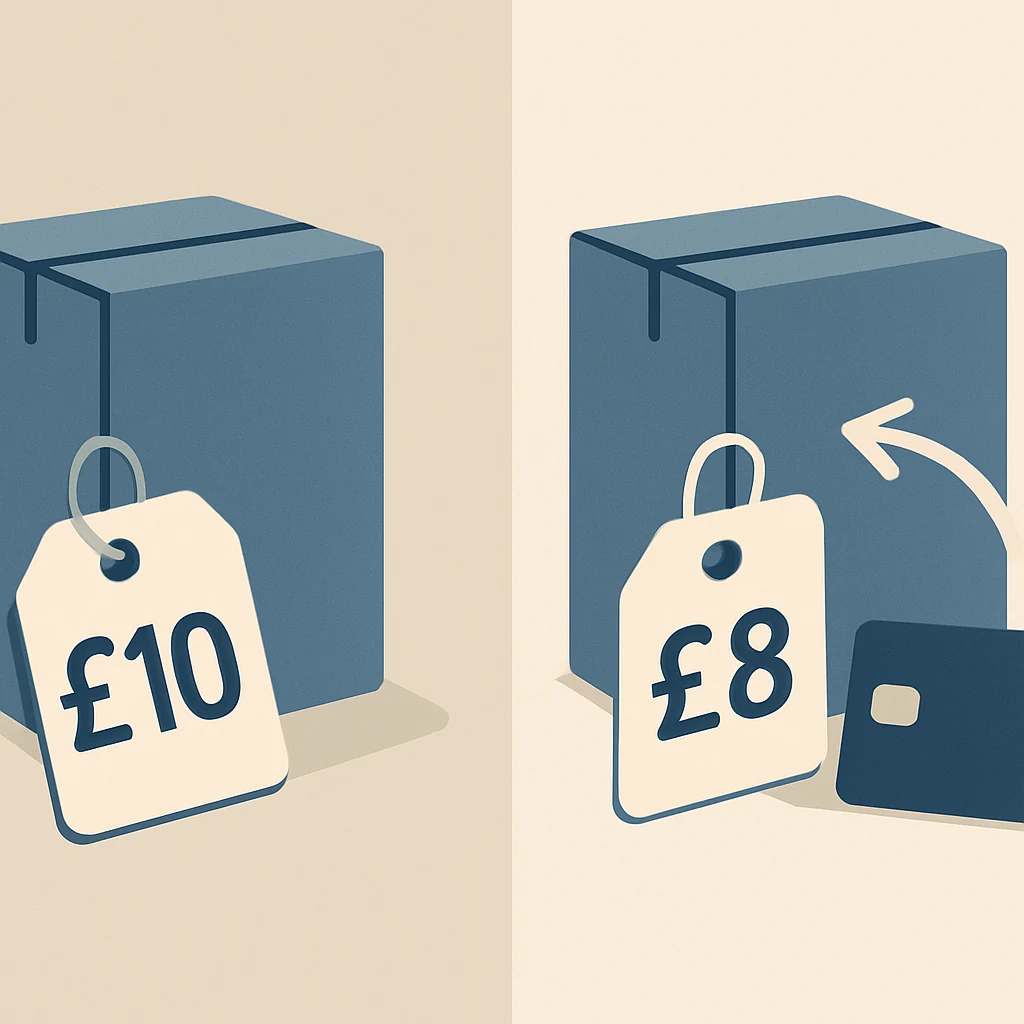
1) Check for a price drop (then ask for the difference)
Price drops are common around UK seasonal hooks like Boxing Day, the January sales, Bank Holiday events, and the run-up to Black Friday/Cyber Monday. But they also happen midweek when a competitor changes price.
Why it works: some retailers will refund the difference (or offer store credit) if you contact them quickly. Others don’t advertise it, but will do it as a goodwill gesture — especially if you’re within the returns window.
When to do it: within the retailer’s return period, and ideally soon after delivery. The closer you are to purchase, the easier the conversation.
What to do in practice: open your order confirmation, check the product page, and take a screenshot showing today’s price. If the item is now cheaper, contact customer services with the order number and ask if they can price-match their current price.
If they say no, you still have leverage: you can usually return and repurchase (as long as you’re within the returns policy and the item is eligible). Don’t threaten — just explain you’d rather avoid the hassle of a return.
2) Track your order for delivery issues (late, missing, damaged) and claim what you’re owed
Delivery problems are not just annoying — they can be expensive if you miss a birthday, end up buying a replacement at full price, or pay for premium delivery that doesn’t happen.
Why it works: retailers (not couriers) are normally responsible for getting your goods to you. If you paid for a timed/express option and it arrives late, you can often ask for the delivery charge back.
When to do it: as soon as the delivery window is missed, or immediately on arrival if the parcel is damaged.
A good UK‑specific habit: keep the dispatch email, delivery confirmation, and any tracking screenshots. If something arrives damaged, take photos before you bin the packaging — it saves back-and-forth.
Also watch for “partial deliveries”. If your order comes in multiple parcels, make sure the missing item isn’t just delayed. If it is missing, report it promptly so you don’t fall outside the retailer’s reporting timeframe.
3) Turn your returns into savings (without paying extra)
Returns are usually framed as a last resort. Used well, they’re a money-saving tool: they protect you against impulsive buys, sizing mistakes, and “looks better in the photos” moments.
Why it works: UK online purchases typically come with cancellation rights for most items bought at a distance, but there are exceptions (for example, personalised goods, sealed hygiene items once opened, and some perishable items). Retailers also have their own returns policies on top.
When to do it: whenever the item isn’t right — especially if a better deal appears soon after you buy.
To keep returns from costing you money:
- Check whether returns are free or if you’ll pay postage (and whether a drop-off option exists).
- Keep packaging tidy until you’re sure — messy packaging can complicate a return.
- If you’re comparing two sizes/colours, batch your return and get proof of posting.
One overlooked angle: if you used a voucher code that applied only over a threshold, returning one item might claw back the discount on the remaining items (some baskets get recalculated). Before you return, check the order breakdown and decide whether it’s better to return the whole order and repurchase cleanly.
4) Fix cashback tracking issues (it’s worth 5 minutes)
Cashback is brilliant when it tracks — and pointless when it doesn’t. Tracking failures happen due to ad blockers, switching devices mid-journey, or applying a code the retailer doesn’t accept.
Why it works: most cashback platforms have a “missing cashback” process. If you submit the claim with the right evidence, it can be resolved.
When to do it: once the cashback has had time to track (check your platform’s guidance), and before any claim deadline.
Keep it simple: save the order confirmation email and take a screenshot of the final confirmation page if you can. If you return the order, expect cashback to be adjusted — that’s normal.
If you want a broader savings routine (before and during checkout), you can always explore more guides on our homepage: /

5) Ask for a goodwill refund (the polite, specific way)
This isn’t about complaining for the sake of it. It’s about being clear when a retailer’s service has cost you time or money.
Why it works: customer service teams often have discretion to refund delivery charges, offer a small goodwill credit, or arrange a faster replacement — especially when you can point to a clear issue (late delivery, incorrect item, missing parts).
When to do it: when there’s a documented service failure, or when you’ve had to do extra admin to fix their mistake.
A message that tends to work in the UK is calm, factual, and specific:
“Hi, order #12345 arrived two days after the stated delivery window, and I paid for next-day delivery. Please can you refund the delivery charge? I’m happy to provide the tracking screenshot if helpful.”
Keep it one request. If you ask for three different compensations, you’re more likely to get a flat “no”.
6) Use the right payment protections (chargeback, Section 75, PayPal)
Sometimes the cheapest option is simply not to lose the money in the first place.
Why it works: UK payment methods can give you extra protection when things go wrong. A debit card may offer chargeback; credit cards can offer Section 75 protection on qualifying purchases; PayPal has its own dispute process. These aren’t “discounts”, but they can stop an online purchase from turning into a total loss.
When to do it: when the retailer is unresponsive, the item doesn’t arrive, or you’re stuck in an endless “we’re investigating” loop.
A practical approach:
Start with the retailer and put your request in writing (email/chat transcript). If that stalls, escalate via your payment method. Always keep your evidence tidy — order confirmation, delivery info, and any correspondence.
7) Watch out for subscription renewals and bundle add-ons
A lot of online “deals” come with strings: introductory prices, bundles, or add-ons that quietly renew.
Why it works: cancelling a renewal you don’t need is effectively a saving. Same goes for removing duplicate cover (for example, paying for a warranty you already get via your card or manufacturer).
When to do it: straight after purchase, and again a few days before any trial ends.
Look for:
- free trials tied to delivery perks
- add-on insurance at checkout
- “subscribe and save” options you only wanted once
The key is to set a reminder the moment you order, not when you remember three months later.
Quick tips you can do in 10 minutes tonight
- Screenshot your order confirmation and save it in one folder (it makes disputes and returns faster).
- Check the item’s price once after dispatch and once after delivery.
- If you paid for premium delivery, verify it actually arrived within the promised window.
- Make a calendar reminder for any free trial/subscription renewal linked to the purchase.
A simple “post‑checkout” routine (so you don’t have to think)
If you want something you can repeat without turning shopping into a second job, try this:
On the day you buy, save your confirmation and note the expected delivery date. When it arrives, check the condition and the contents immediately. Then do one quick price check during the returns window. If anything is off — price, delivery, damage, missing parts — raise it promptly while your evidence is fresh.
You’re not being difficult. You’re just making sure you actually receive the value you paid for.
FAQs
Can I return something just because I found it cheaper elsewhere?
Often yes, provided the item is eligible and you’re within the retailer’s return policy. UK distance-selling cancellation rights frequently apply to online purchases, but exceptions exist. Always check the retailer’s terms and the product category.
Will I lose my discount if I return part of an order?
Possibly. Some retailers recalculate the basket and remove a threshold discount or multi-buy saving. Before returning, look at the order breakdown and decide whether returning everything and repurchasing makes more sense.
If my delivery is late, am I automatically entitled to compensation?
Not always automatically, but you can often request a refund of delivery charges if you paid for a faster service that wasn’t delivered as promised. The retailer’s terms matter, and your best bet is to contact them with your order number and tracking info.
What evidence should I keep for disputes or missing cashback?
Order confirmation, invoice/receipt, delivery tracking, screenshots of the price/page if relevant, and copies of any chat/email conversations. Proof of posting is useful for returns.
Is it worth contacting customer service for small amounts?
If it’s a clear-cut issue (wrong item, damaged goods, paid-for delivery not met), yes — it’s usually a quick message. If it’s a vague “I’m unhappy”, it can become a time sink. Keep it specific, and decide your limit upfront.
You may also be interested

The UK Wishlist Method: Plan Your Next Online Deal (No Panic Buying)
A practical UK step-by-step guide to saving online by setting target prices, tracking drops, and buying at the right moment—without falling for “was/now” hype.
Marketplace vs Retailer: How UK Shoppers Pick the Real Deal
A practical UK guide to choosing between marketplaces and direct retailers—price, delivery, returns, warranty and hidden costs—so the ‘deal’ stays a deal.
After You Buy: UK Tricks to Save with Price Drops & Returns
A practical UK guide to saving after checkout: price-drop checks, delivery refunds, returns timing and safe ways to re-order for less.