

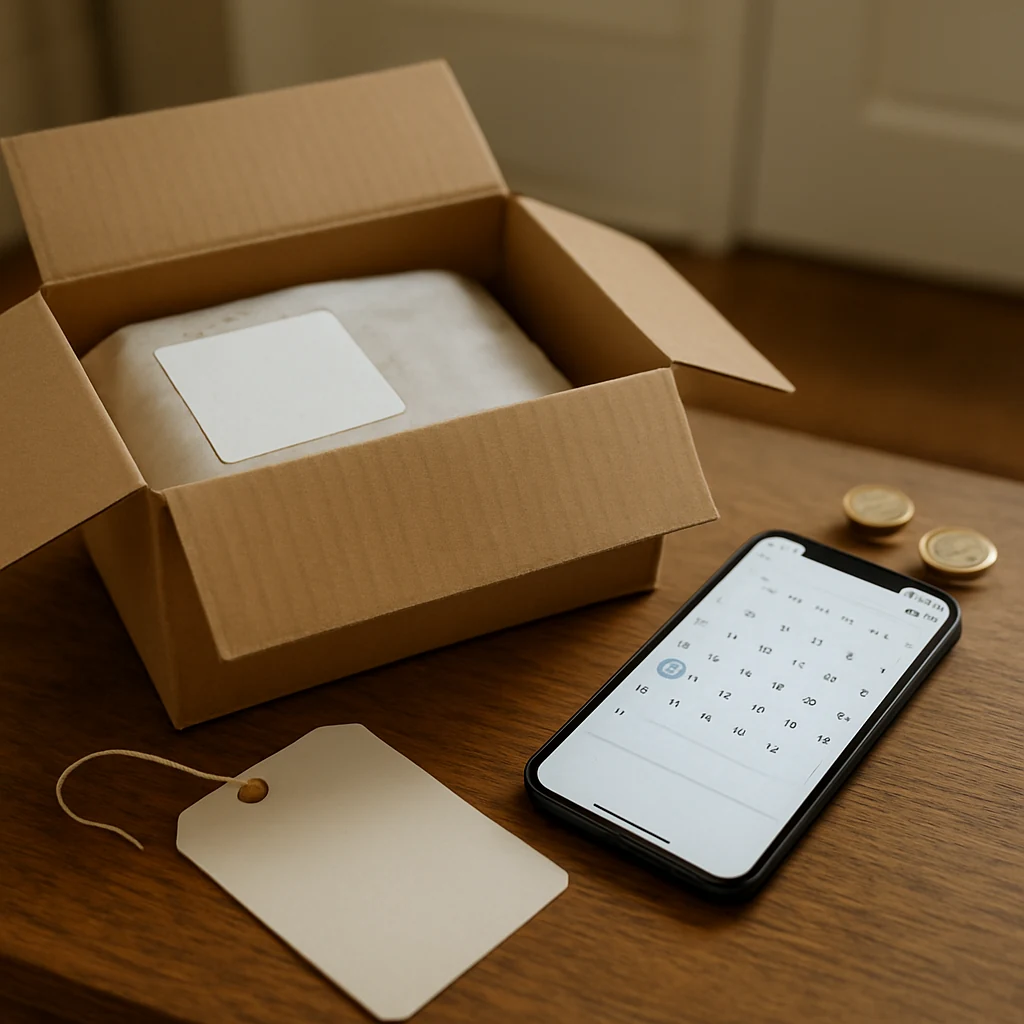
After You Buy: UK Tricks to Save with Price Drops & Returns
A practical UK guide to saving after checkout: price-drop checks, delivery refunds, returns timing and safe ways to re-order for less.
Most saving advice focuses on the moment you hit “Pay”. But in the UK, a surprising amount of money is won (or lost) in the days after your order: price drops, delivery hiccups, awkward return windows, and the small print around refunds.
This mini-guide is a simple, realistic routine you can run on any online purchase—especially around Black Friday, Boxing Day and the January sales—without relying on dodgy tricks or assumptions about individual retailers’ policies.

Step 1: Build a “purchase folder” (it takes two minutes)
Before you start chasing any post-purchase savings, make it easy for yourself to prove what you paid, when you ordered, and what was promised at checkout. The goal isn’t bureaucracy; it’s speed. When something goes wrong (or you spot a better price), you’ll be able to act quickly.
Save these basics in one place (an email label, a notes app, or a folder in your cloud storage):
- the order confirmation (with the total in GBP and any delivery charges)
- the product page screenshot or PDF (especially if delivery dates or specs mattered)
- the invoice/receipt (handy for warranties and VAT invoices where relevant)
- delivery tracking and “delivered” confirmation
- the returns page link and the return deadline date
That last bullet matters more than people think. A “30-day return” isn’t always 30 days from delivery, and some items have different rules (for example, sealed hygiene items or personalised goods).
Step 2: Put a calendar reminder for the return window
As soon as your parcel arrives, set two reminders:
-
A mid-window check-in (so you’ve got time to act if you decide to return).
-
A last-call reminder a couple of days before the deadline.
This isn’t just about returning faulty stuff. It’s also how you keep your options open if the price drops sharply, a better bundle appears, or a competing retailer does a flash sale.
A practical tip: if you bought something as a gift, don’t wait until the night before it’s needed to check it’s right. For electronics and toys in particular, a quick “power on and sanity check” early on can save a lot of hassle.

Step 3: Run a “price-drop sweep” at the right moments
You don’t need to obsessively track prices every day. In the UK, a few well-timed checks do most of the work:
- 24–48 hours after delivery (some retailers adjust pricing quickly after a promotion ends or stock levels change)
- The weekend after your purchase (many promos flip on Friday/Sunday)
- Big sale transitions (end of Black Friday week into Cyber Weekend/Cyber Monday, then into Christmas promos, then Boxing Day, then January sales)
What you do if you spot a lower price depends on the retailer, but your options usually fall into three buckets:
Option A: Ask politely for a price adjustment (where available)
Some UK retailers may offer a goodwill refund of the difference, others won’t, and many have strict conditions (time limits, identical model numbers, “sold and shipped by” requirements, and so on). Don’t assume it exists—but it can be worth a calm message if the drop is meaningful.
When you contact customer services, keep it simple: order number, current lower price link, and the date you placed the order. If it’s a marketplace listing, double-check it’s the same seller and condition.
Option B: Cancel and re-order (only if it’s genuinely safe)
If your order hasn’t dispatched yet, cancelling and re-ordering at the lower price can be the cleanest route. The key is timing: once it’s in the courier network, cancellation can become messy.
If it’s something you need urgently (a replacement charger, a birthday gift, an appliance), saving a few pounds isn’t worth risking a missed delivery.
Option C: Return and re-buy (the “maths-first” approach)
This is the common plan during peak sales: you buy early to secure stock, then the price drops.
Before you do anything, run the full cost:
- return postage (if any)
- whether the original delivery charge is refunded
- the risk of the lower-priced item going out of stock
- the time you’ll be without the item
If it’s a bulky item, return costs can wipe out the saving. If it’s a small item with free returns, the saving can be real.
Step 4: Check delivery issues for quick wins
A lot of “hidden” savings come from delivery problems that shoppers simply shrug off.
If delivery was late and you paid extra for a specific service (for example, a named-day option), it’s reasonable to ask whether the delivery charge can be refunded. Keep your message factual and include the promised delivery date/time and the actual delivery timestamp.
Also watch for partial deliveries. If an order arrives missing an item, don’t wait: report it immediately, while tracking events and warehouse logs are fresh.
Tip: if you’re buying around busy periods (Black Friday week, the run-up to Christmas, back-to-school), prefer retailers offering clear tracking and realistic delivery estimates rather than optimistic countdown timers.
Step 5: Avoid return “gotchas” that cost money
Returns are where many people lose value without realising. A few UK-specific habits help:
Keep packaging until you’re sure
You don’t need to hoard every bit of cardboard forever, but for higher-value items, keep the box and inserts until you know it’s staying. It reduces the risk of damage in transit and makes the return smoother.
Photograph condition and serial numbers (for pricey items)
It’s boring, but it can protect you if there’s a dispute about what was returned. One quick photo of the item, accessories, and the serial number label can be enough.
Don’t mix up “change of mind” with faulty
If something is faulty, your rights and remedies can be different than a simple return because you changed your mind. Keep your description accurate. If it arrived damaged or stops working quickly, say so and keep evidence.
(General note, not legal advice: UK consumer protections exist, but the practical outcome still depends on the situation and the retailer’s process. Clear documentation helps either way.)
Step 6: Use your payment method as a safety net (not a weapon)
If a retailer goes quiet or a refund drags on, your payment method can matter.
- Credit cards may offer additional protection on certain purchases.
- Chargeback (often via card provider) can be an option for disputes.
- PayPal and other payment providers have their own dispute processes.
The best approach is still to try resolving it with the retailer first, then escalate calmly if needed. Save your key dates: order date, delivery date, return date, and any customer service promises.
If you want more practical saving routines for UK online shopping, keep an eye on the guides on the homepage: /

Step 7: Do one final “cost check” before the refund closes the loop
When your return is processed (or when a partial refund is issued), compare it against your order confirmation:
- Are you getting back the full item price?
- Was the delivery charge handled as expected?
- Were any promotional discounts applied correctly?
This matters when you used a voucher or multi-buy deal. Refunds can sometimes be pro-rated, and the numbers can look odd if part of the order is kept.
If the maths doesn’t add up, query it straight away while the case is still easy to trace.
A simple routine you can repeat
The whole point is to make post-purchase savings boring and repeatable:
Buy → file the key documents → set return reminders → do a couple of price checks → act quickly if it’s worth it → confirm the refund maths.
It’s not glamorous, but over a year of regular online shopping—especially through the UK’s heavy promo seasons—it can stop you paying “early-buyer tax”.
FAQs
Is it “allowed” to return an item just because it got cheaper?
If a retailer offers returns for change of mind, a price drop can be a legitimate reason to decide you no longer want that particular purchase at that particular price. The important bit is to follow the returns terms, keep the item in resalable condition, and be honest about the reason.
What if the price drops during Black Friday week after I ordered?
This is exactly when the price-drop sweep pays off. First check if you can cancel before dispatch. If not, weigh up whether a return and re-buy actually saves money once you include return postage and the risk of stock selling out.
Do I need the original box to return something?
Often it helps, sometimes it’s required for certain items, and sometimes it’s just strongly recommended. For anything fragile, high-value, or with lots of accessories, keeping the original packaging until you’re sure is the safest move.
The retailer says they’ve refunded me, but it’s not in my account yet—what now?
Check the refund confirmation email and the payment method used. Refunds can take a few working days to appear, and different banks process them at different speeds. If it’s been longer than the retailer’s stated timeframe, contact them with the order number and refund reference.
Can I do this with marketplaces as well as direct retailers?
Yes, but be extra careful with like-for-like comparisons (same seller, same condition, same delivery terms). Marketplaces can show multiple listings that look identical but aren’t equivalent once you factor in dispatch location, warranty, or returns handling.
You may also be interested

The UK Wishlist Method: Plan Your Next Online Deal (No Panic Buying)
A practical UK step-by-step guide to saving online by setting target prices, tracking drops, and buying at the right moment—without falling for “was/now” hype.
Marketplace vs Retailer: How UK Shoppers Pick the Real Deal
A practical UK guide to choosing between marketplaces and direct retailers—price, delivery, returns, warranty and hidden costs—so the ‘deal’ stays a deal.

The UK Savings Stack: How to Combine Online Discounts Properly
A practical UK guide to stacking vouchers, cashback, gift cards and delivery perks—without invalidating your discount or risking returns.