

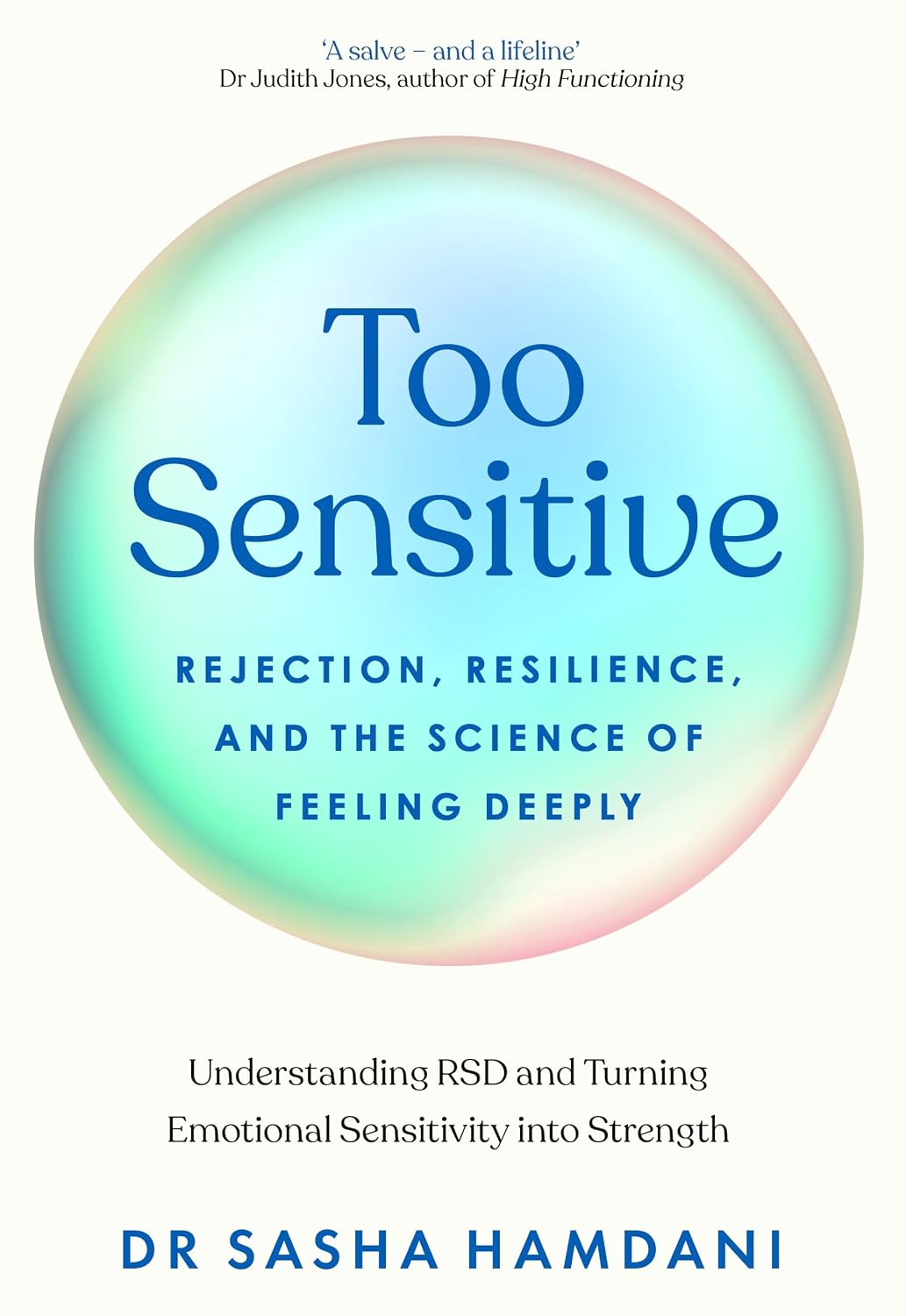
Too Sensitive: Rejection, Resilience, and the Science of Feeling Deeply book
Product description
At 6.02 x 0.94 x 9.25 inches, Too Sensitive: Rejection, Resilience, and the Science of Feeling Deeply is a book centred on emotional sensitivity, rejection and resilience. Its title also signals an interest in the science behind feeling deeply, making it relevant to readers looking for a considered introduction to those themes rather than a general self-help book.
It makes sense if you want to explore how rejection and strong feelings relate to resilience. The available details do not explain the book’s argument or approach, though, so the title alone cannot tell you how much practical guidance it offers.
Technical details
- Name: Too Sensitive: Rejection, Resilience, and the Science of Feeling Deeply
- Type: Book
- Publication date: 27 August 2026
- Reading age: 18 years and up
- Dimensions: 6.02 x 0.94 x 9.25 inches
Getting the most from it
Think about what you want from a book on this subject before choosing it. Are you mainly looking for a framework for understanding rejection, a discussion of emotional responses, or practical exercises? The title points to rejection, resilience and the science of feeling deeply, but the supplied information does not confirm which of these receives the most attention or whether exercises are included. If you need a particular style of support, look for fuller contents or a sample before deciding.
It may also suit a reader who prefers to reflect on emotional patterns through a focused book rather than start with broad, general self-help. The subject could provide a starting point for personal reading or discussion, but there is not enough information here to assess the depth of its research or the author’s perspective. Those details matter if you are comparing it with a specialist or clinically focused resource.
Tips for day-to-day use
Use the subject matter as a prompt for reflection: for example, consider what you mean by rejection and what resilience looks like in your own circumstances. That is a way to approach the themes suggested by the title, not a claim about activities in the book. If you are choosing it as a gift, its focus on emotional sensitivity and rejection is more informative than a broad self-help label, but the recipient’s interest in those topics is still the key consideration.
The listing gives no usable page count, author information or detailed contents. Not the best choice if you need those specifics to judge the book’s scope before buying. Without them, it is difficult to compare its likely depth with a shorter introductory read or a more detailed specialist text.
Is it worth it?
This is worth considering if the combination of rejection, resilience and the science of feeling deeply matches what you want to read about. It has a clearly defined subject, which makes it easier to assess its relevance than a book described only in broad self-help terms. The main reservation is about the information available: there is not enough detail to establish whether the book is research-led, practical, or primarily reflective. If that distinction will affect your choice, seek out fuller publication details first, if the stated themes are your main reason for reading, the title gives a clear starting point.