

Rust Atomics and Locks: Low-Level Concurrency in Practice by Mara Bos, Paperback
Product description
Explore Rust atomics and memory ordering through a book that connects concurrency concepts to the systems and hardware behind them. This practical perspective helps make low-level topics easier to relate to Rust’s safety model and type system.
The book brings together ideas that are often spread across language theory, processor behaviour and operating-system concepts. It is written for readers who want a more connected understanding of how low-level concurrency works.
Already know the basics of Rust and use Cargo? The material builds on that foundation, with relevant Rust concurrency concepts explained as they arise.
Who it’s for
Rust developers looking to deepen their understanding of low-level concurrency are the primary audience. The book can also suit readers who are newer to Rust but want to explore concurrency from a Rust perspective. Familiarity with basic Rust, a recent Rust compiler, and compiling and running code with Cargo gives you the groundwork to follow along.
This is a useful subject for developers who want to understand more than the surface-level rules of concurrent code. The book connects Rust’s approach to memory and thread safety with the decisions involved in working with atomics, memory ordering and concurrency primitives. Rather than treating these topics as isolated specialist knowledge, it gives readers a route into the concepts and the systems that shape them.
Tech specs
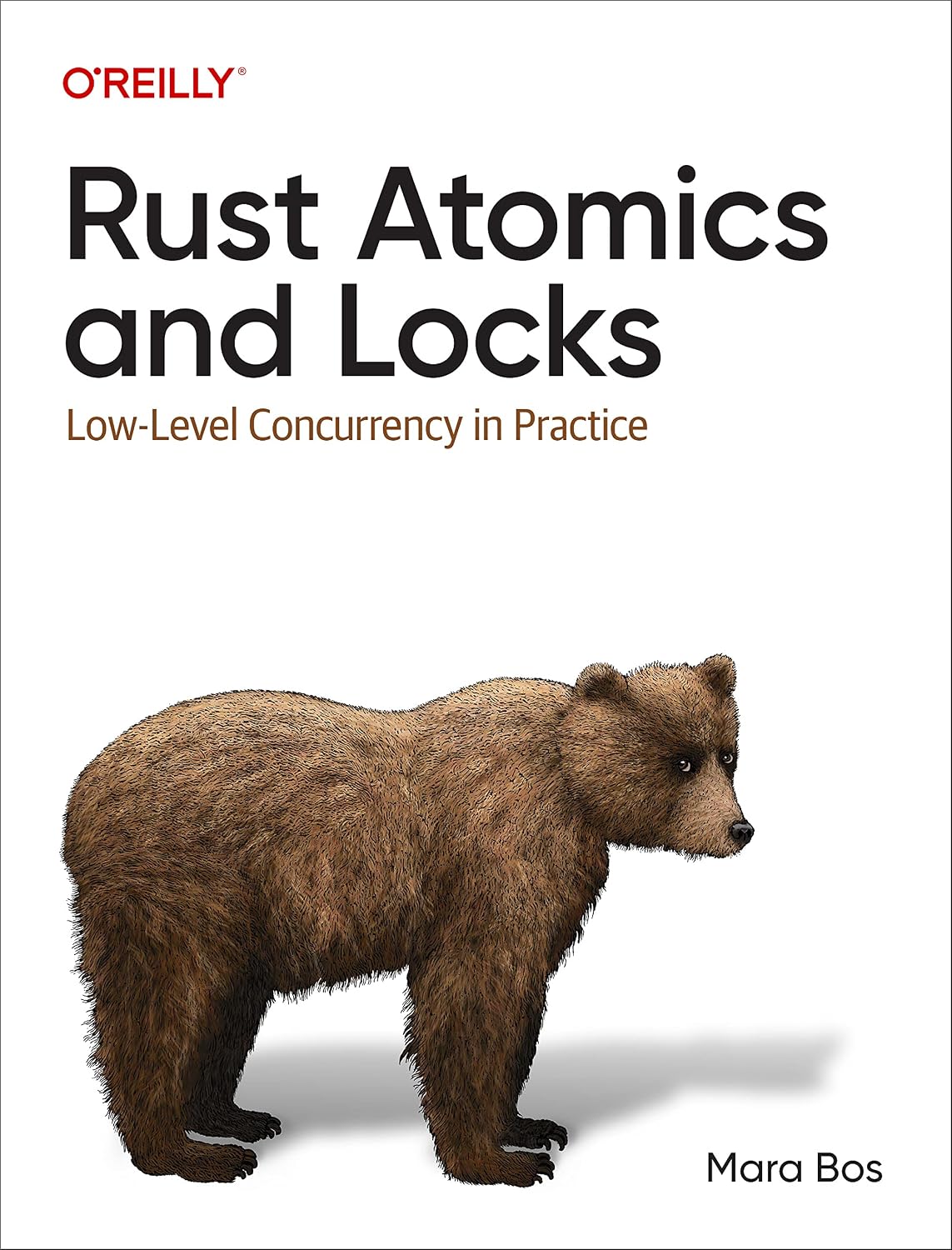
- Name: Rust Atomics and Locks: Low-Level Concurrency in Practice
- Type: Book
- Format: Paperback
- Dimensions: 18.42 x 1.27 x 24.13 cm
What stands out
The central value is the way the book links several layers of low-level concurrency. It covers the abstract ideas behind memory ordering alongside their relationship to real hardware, including processor instructions and cache coherence. It also considers the operating system’s role, helping readers build a broader picture before making design decisions or weighing basic optimization trade-offs.
That joined-up approach is particularly relevant when creating concurrency primitives. The book aims to give readers the understanding needed to design primitives that are correct, safe and ergonomic, while explaining the hardware context behind those choices. What makes this perspective helpful? It brings Rust’s safety and type-system concepts into the same discussion as the machine-level behaviour that concurrent programs rely on.
Readers describe the coverage as informative and in-depth, and appreciate a writing style that presents the material in a storytelling manner. That combination can make a technically demanding subject more engaging to work through, while keeping attention on the underlying concepts.
Compared with a resource focused only on abstract memory models or only on hardware details, this book takes a broader route across both. That makes it well suited to readers who want to connect language-level reasoning with how systems behave, rather than study either layer in isolation.
Should you buy it?
A solid pick if you have Rust fundamentals and want to progress into atomics, memory ordering and the design of low-level concurrency primitives. It also suits developers who want a Rust-centred introduction to the subject, with hardware and operating-system context to inform their understanding. Keep it close as a focused learning resource when working through how concurrent Rust systems are designed and reasoned about.