

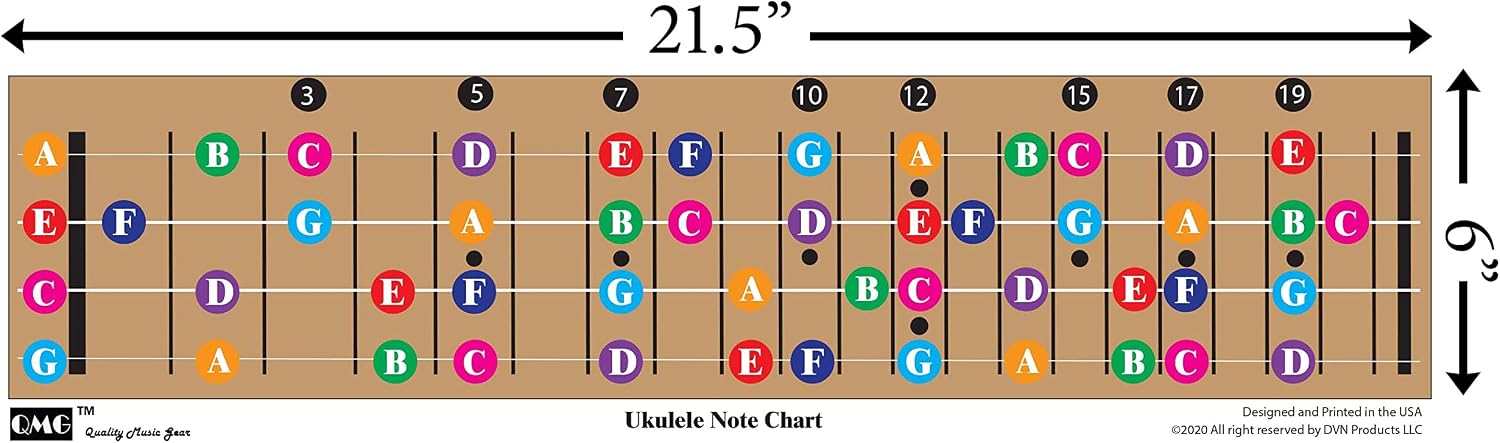
QMG Ukulele Fretboard Note Chart
Product description
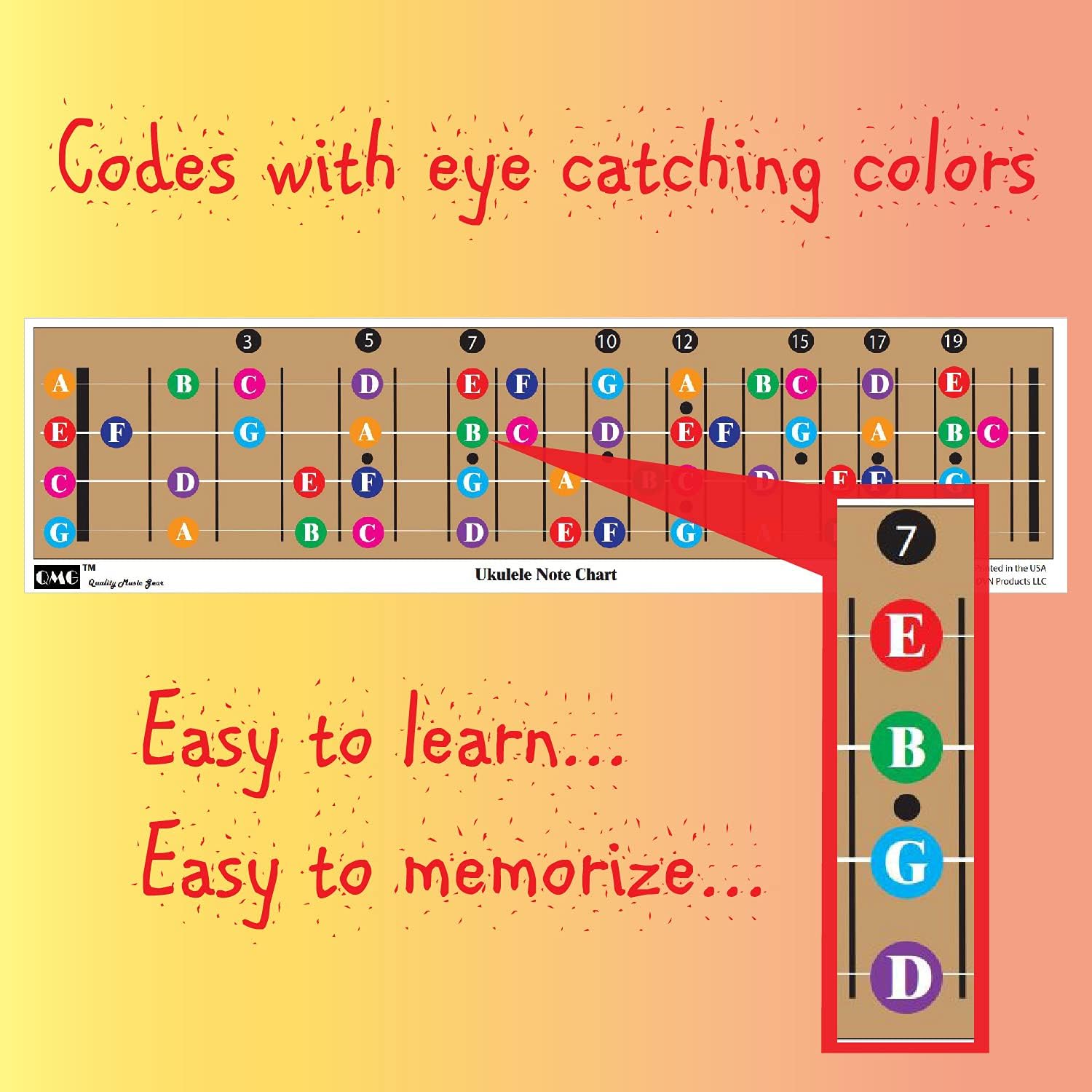
If you want a visual reference beside you while learning, this chart takes a different approach from putting note stickers directly on the instrument. It shows fretboard notes in colour, so you can look up a position without altering your ukulele.
It is designed for ukuleles in standard G, C, E, A tuning. That specific fit matters: the chart is not described as a general reference for other tunings or string instruments.
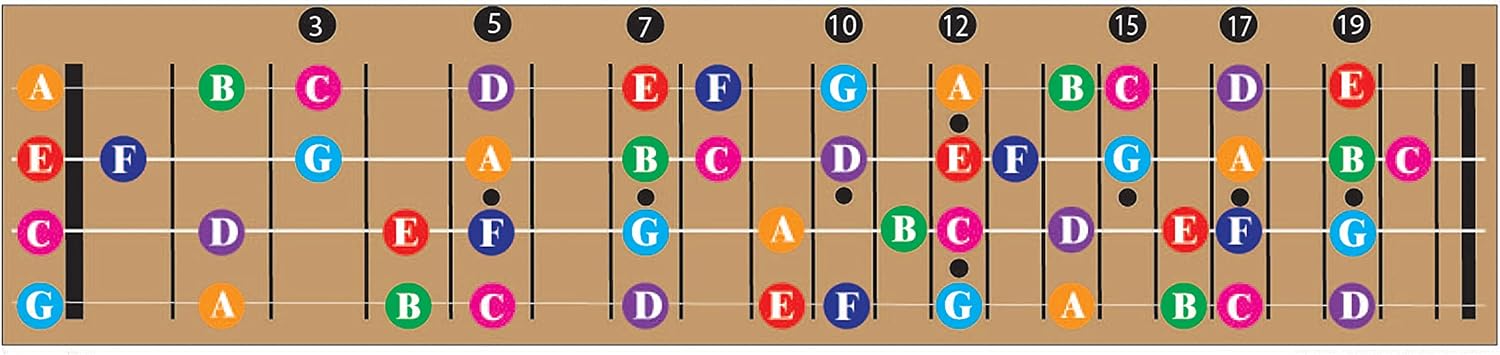
During practice, you could pause on a note you are unsure of, find its position on the chart, then return to the fretboard and try it again. The chart is a reference aid, rather than a substitute for practising the notes yourself.

How to use it
Keep the chart where you can see it during a practice session and use its colours to help identify notes on the ukulele fretboard. For a beginner, that can make a short exercise feel more manageable: check a position, play the note, then repeat without needing to mark the instrument. It may also suit visual learners who find a colour-coded layout easier to follow than memorizing note names from text alone.
The listing says it is easy to set up when you want to practise and can be used with multiple ukuleles, so you do not need a separate chart for each one. It does not specify the chart’s dimensions or how it is displayed, though, which makes it harder to judge how convenient it will be in a particular practice space. Would a visible reference help you focus, or would you rather learn without looking away from the fretboard? That depends on how you like to practise.

Pros
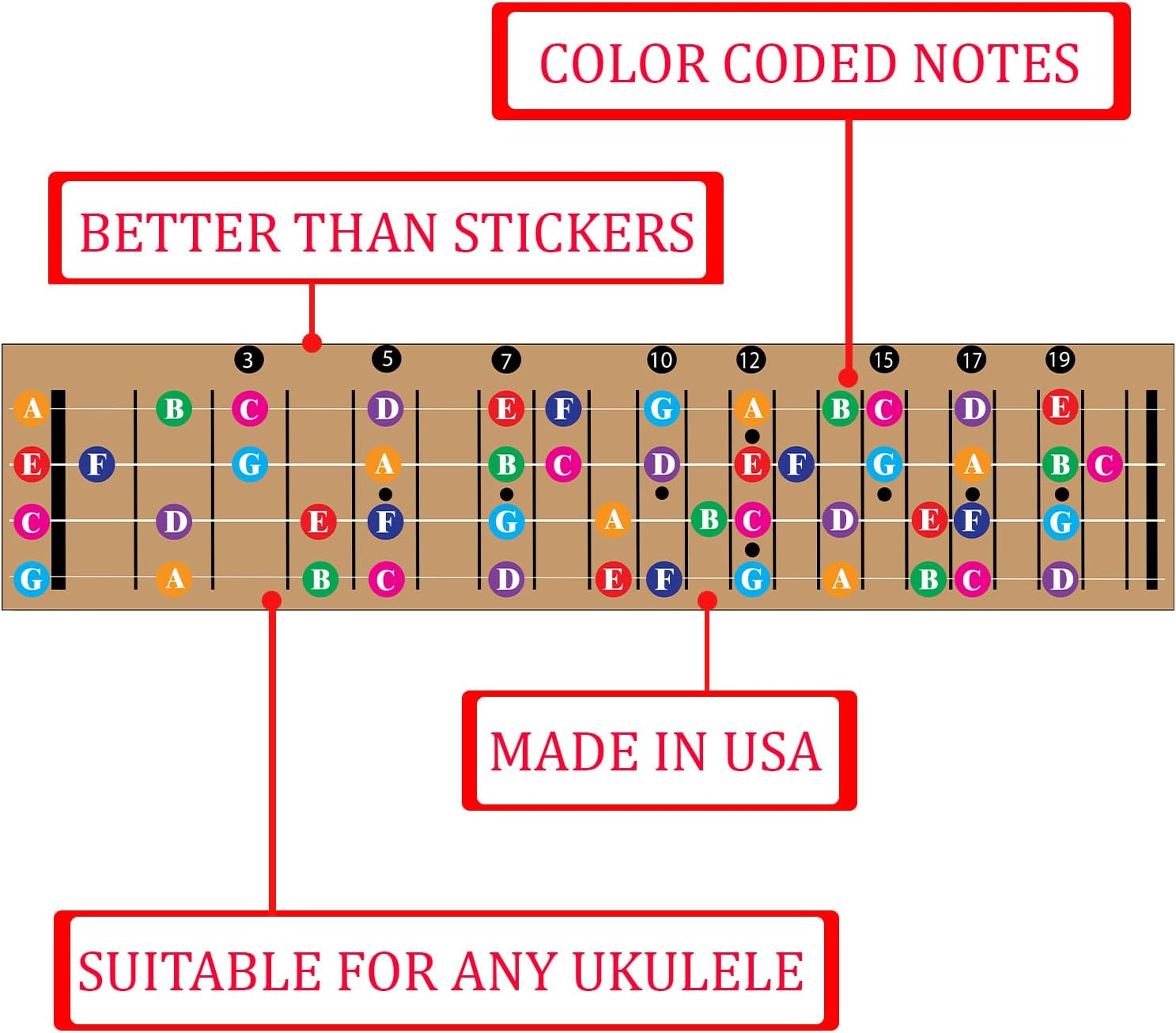
- Colour-coded notes offer a visual way to work on fretboard recognition.
- Using a chart avoids placing stickers on the instrument.
- One chart is presented as suitable for multiple ukuleles.
- It is designed for standard G, C, E, A tuning and described as suitable for all levels.
- It is designed, printed and packaged in the USA.
A useful distinction is that this is a note-learning aid, not a full music lesson. Its stated focus is identifying fretboard notes, the listing does not describe exercises, chord instruction or guidance on rhythm. If you want a reference to consult while practising, that narrower scope may be welcome. If you want a complete teaching resource, you may need more than a chart.

Spec sheet
- Product: Colour-coded ukulele fretboard note chart
- Instrument: Ukulele
- Tuning: Standard G, C, E, A
- Intended levels: All levels
- Origin: Made in the USA
The tuning specification is the main point to keep in mind. A chart mapped to standard tuning may not be the right reference if you use a different tuning. The product details also do not state its dimensions or material, so there is limited information for judging its size or finish before buying.
What I’d decide
It makes sense if you are learning ukulele notes and want a colour-coded reference that leaves the fretboard untouched, especially if you plan to use it across more than one instrument. You could keep it nearby for a few minutes of note-finding practice, then gradually rely less on the chart as recognition improves.
It is not for you if you need a guide for alternate tunings, want lessons that cover more than note positions, or need to know the chart’s exact size before choosing it. For those needs, a broader learning resource or a reference made for your tuning would be a more suitable approach. If standard G, C, E, A tuning and a visual note guide cover what you are trying to learn, this chart has a clear purpose, otherwise, its limited stated scope is worth weighing first.