

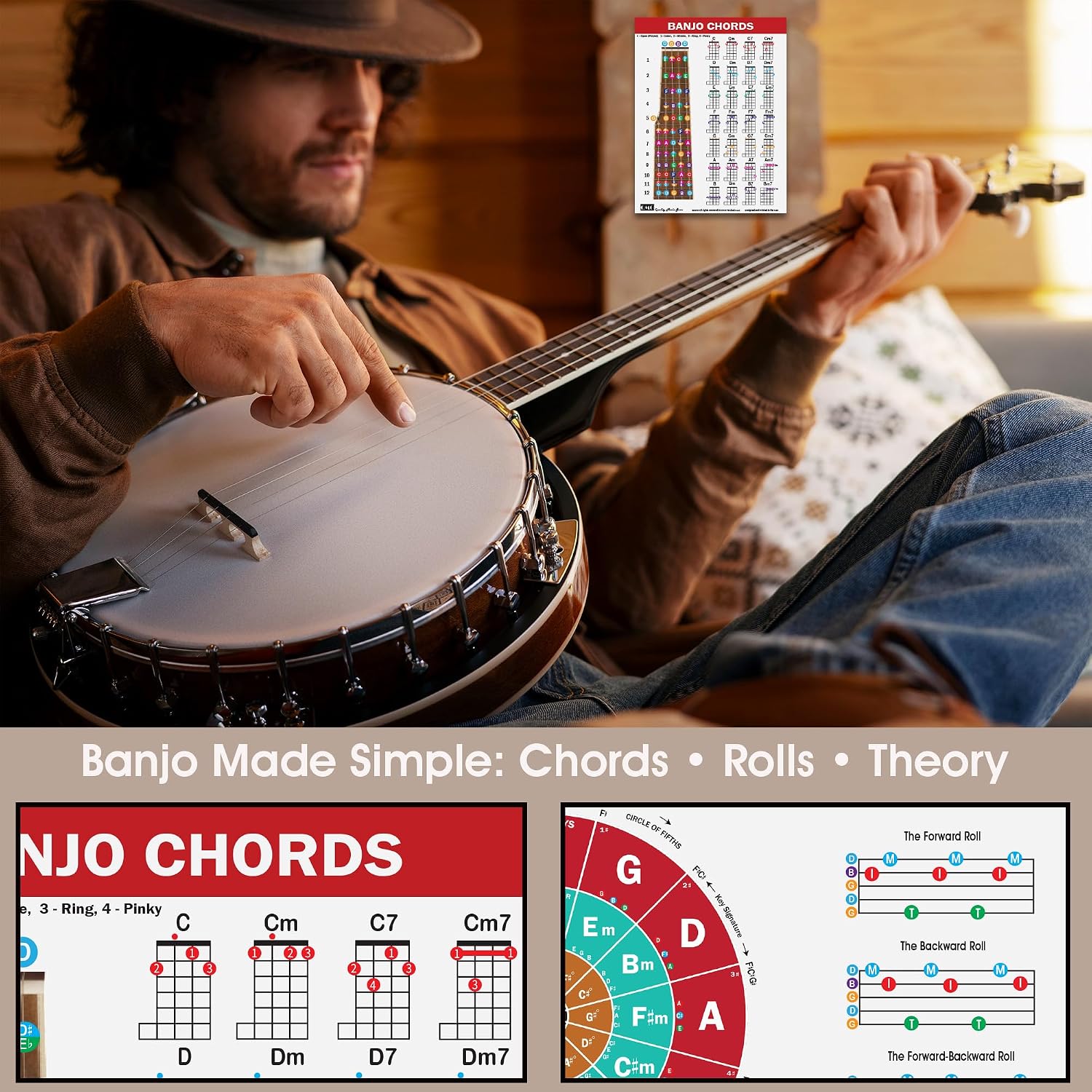
QMG Banjo Poster, Laminated
Product description
The laminated format gives this banjo chart a practical edge: it is designed to handle the wear of regular practice and is small enough to keep nearby rather than buried in a book. It brings chord shapes, rolls and theory references together for quick consultation.
Use it as a visual aid while practising, or keep it beside a lesson book as a reminder of the notes and patterns you are working on.
Technical details
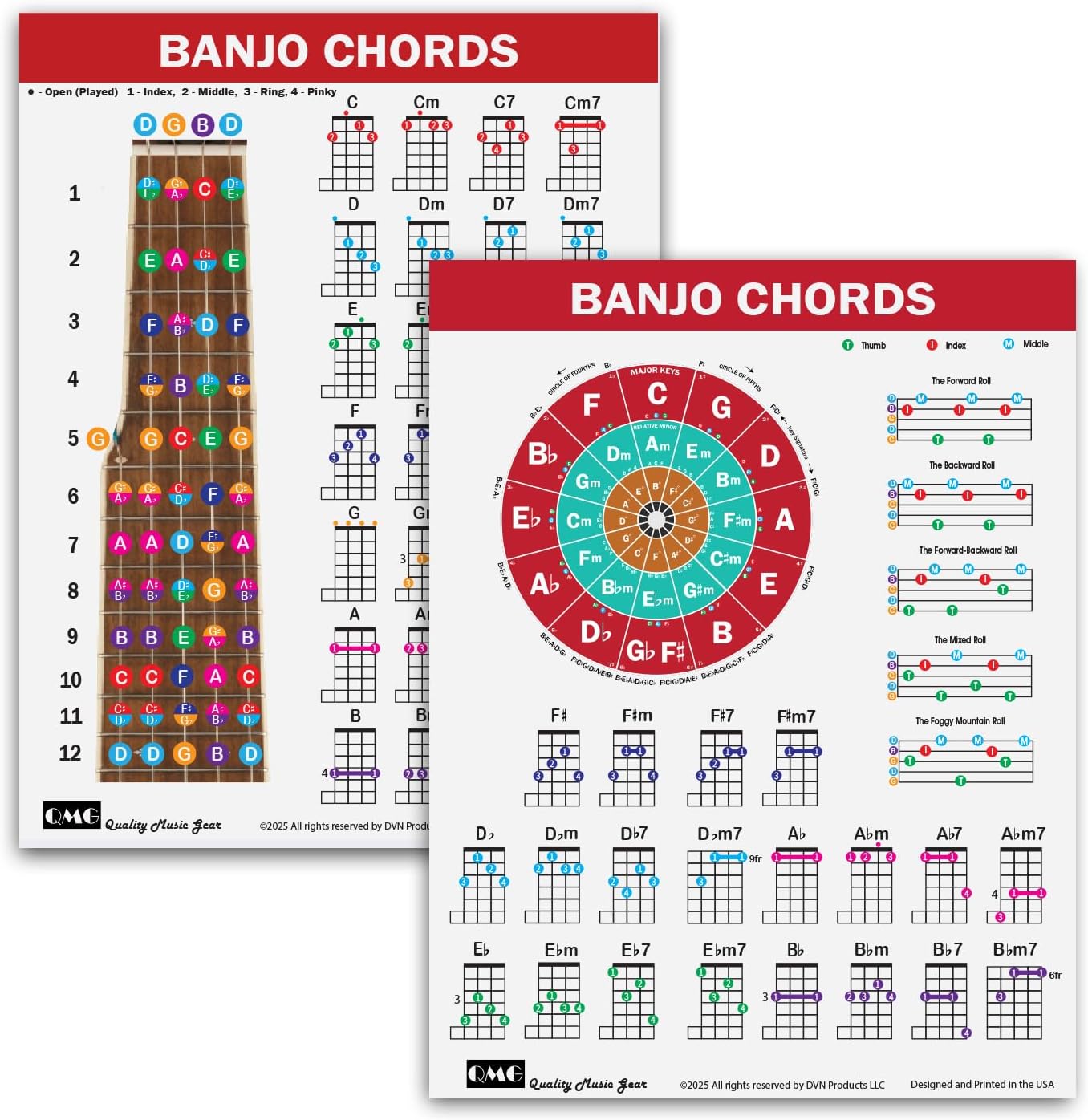
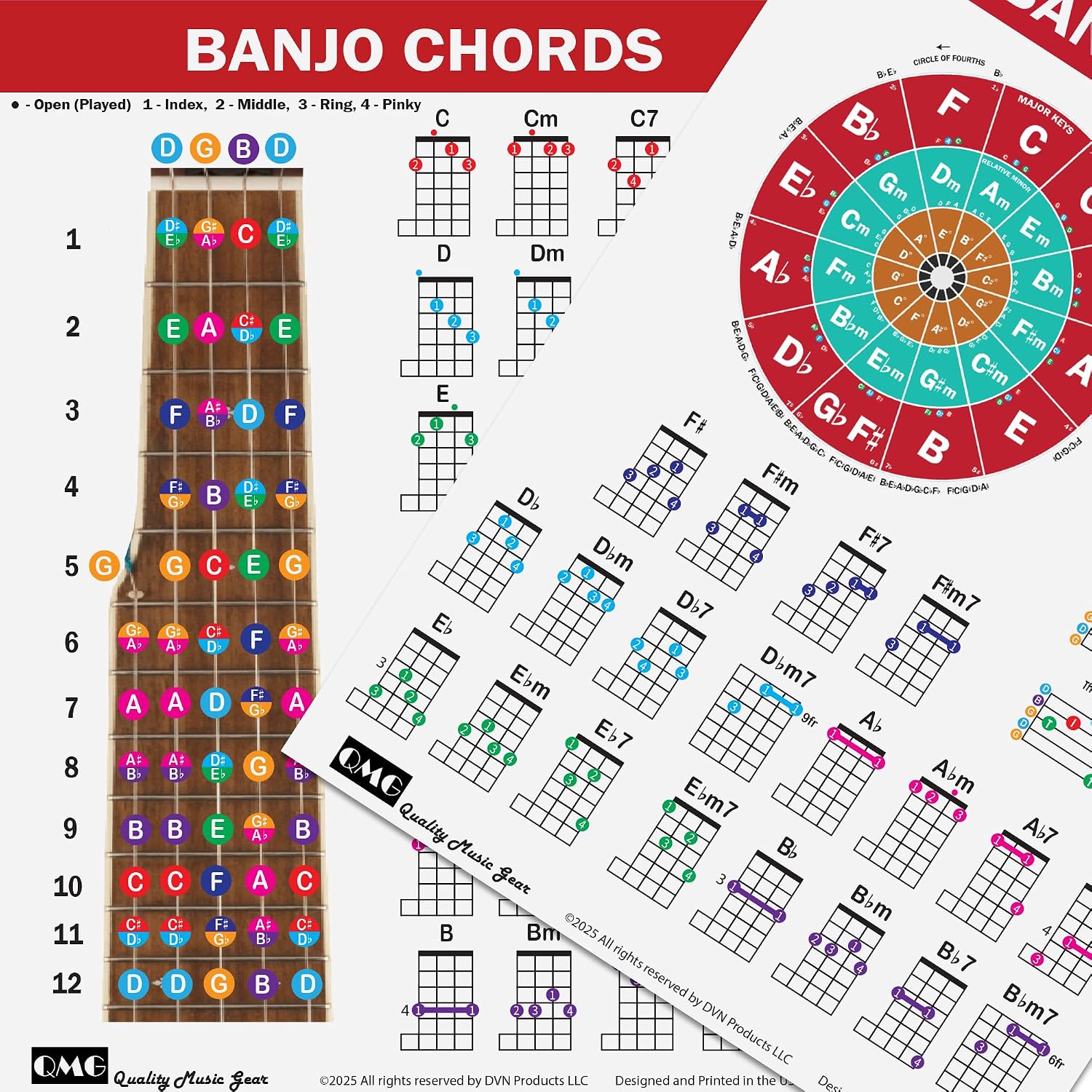
The poster measures 8.5 x 11 inches and has a laminated finish described as resistant to wear, spills and tears. Its reference material includes major, minor, seventh and minor seventh chords for every key, essential banjo rolls, a circle of fifths, and a colour-coded fretboard diagram for open G tuning. The product description also notes that it is designed and printed in the USA.
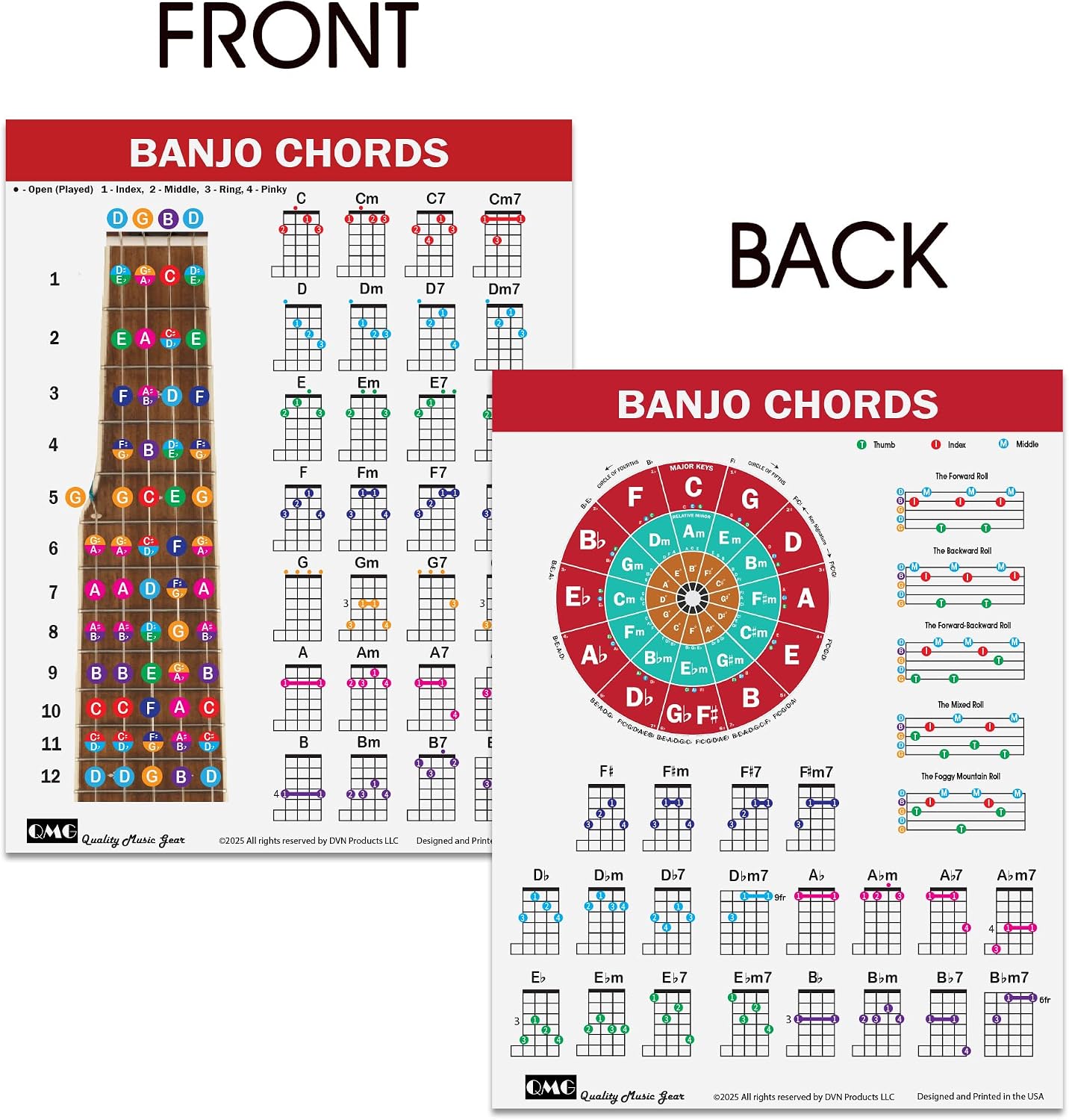
That range makes it more than a single chord sheet: a beginner can look up a chord, then use the circle of fifths or fretboard notes to connect it to a broader theory idea. More experienced players may value having several common references in one place, though the chart is still a quick guide rather than a substitute for a lesson or a full method book.
Getting the most from it
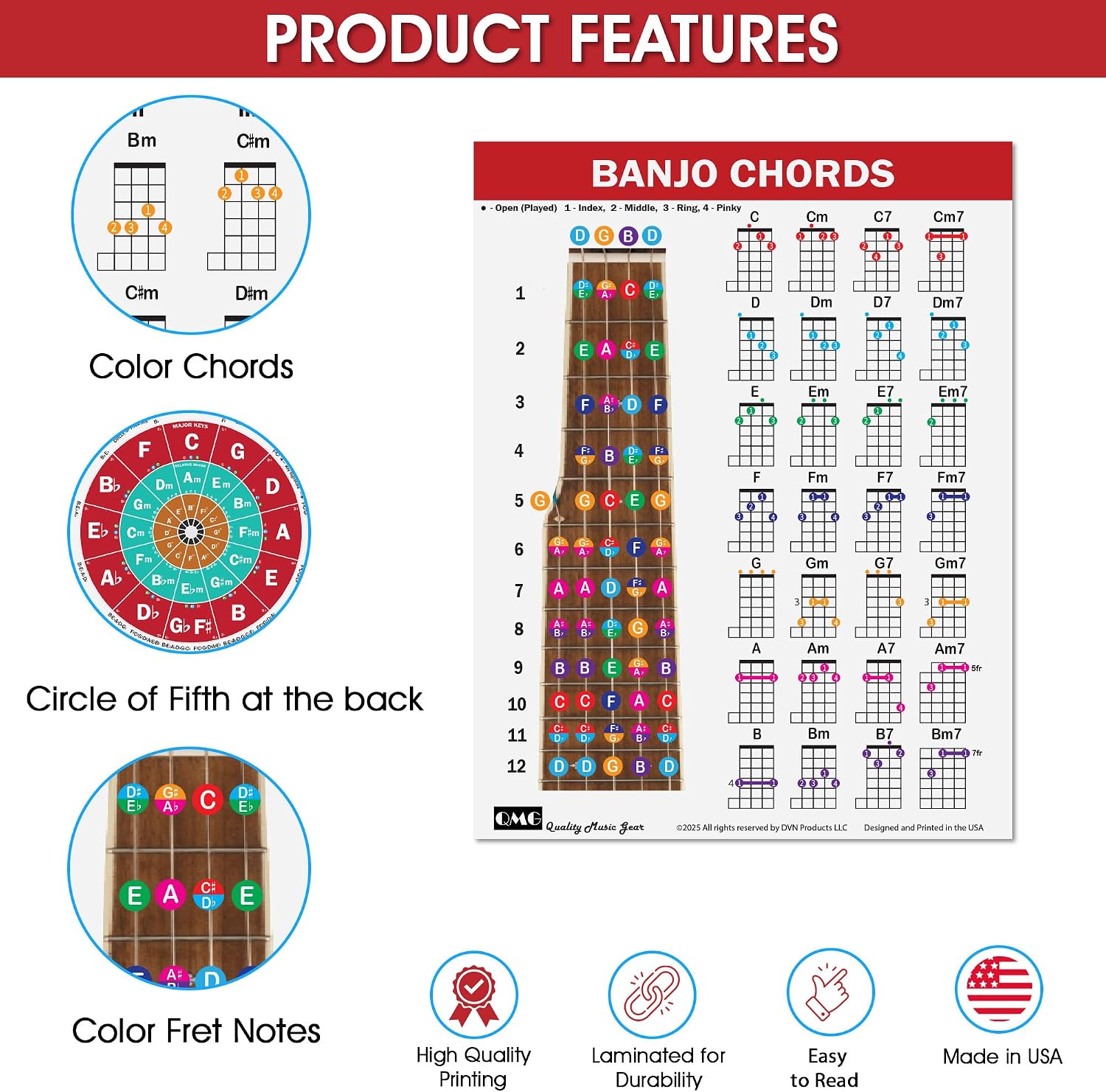
Place it where you practise so the information is easy to glance at between attempts. For example, when working through a roll, you can refer to the chart without pausing to search through a book, when changing keys, the chord list and circle of fifths offer a nearby reference. Its compact size may also suit a music binder or a spot on the wall.
The open G fretboard diagram is a specific part of the offer, not a general guide to every tuning. Puede interesarte si you want a compact visual companion for banjo practice, teaching, or learning from a book. No te encajará si you need detailed instruction, audio examples, or fretboard guidance for a different tuning, those features are not listed.

Usage tips
Keep the chart within sight while practising, and use it to check a pattern or note rather than trying to learn everything at once. Pair it with your current exercises: look up a chord when it appears, then return to the music. The colour-coded diagram may make the open G fretboard easier to scan, while the chord list gives you a quick place to start when practising in another key.
The laminated surface is intended to resist everyday wear, but the description does not specify how it should be cleaned or stored. Treat it as a reference sheet, not as a replacement for hands-on practice.
Three practical questions

Which tuning does the fretboard diagram cover? The chart identifies its fretboard notes for open G tuning.
What chord types are included? Major, minor, seventh and minor seventh chords are listed for every key.
Can it be used during lessons? The product is described as a companion for teachers and classroom teaching, as well as personal practice.
Before you buy
This chart suits players who want several banjo references gathered in one compact, laminated poster, especially if open G tuning is part of their practice. Compared with relying on a book alone, it puts chords, rolls and theory cues in view at once. The trade-off is scope: it offers reference material, not step-by-step lessons, and its fretboard guide is specifically for open G. Buy it for a visible practice aid, choose a more comprehensive learning resource if you need instruction beyond quick look-ups.